


Introduction: Donors No Longer Want to Guess — They Want Proof
India’s non-profit landscape has evolved rapidly over the last decade. Donors—whether individuals, corporates, philanthropists, or foundations—now expect:
- Clarity
- Transparency
- Data-backed outcomes
- Real beneficiary stories
- Verified distribution proof
No donor wants to wonder:
“What happened to my donation?”
This expectation has given rise to one of the most important pillars of modern philanthropy:
Impact Reporting
Impact reporting is how NGOs show:
- Where the money went
- Who benefited
- What changed
- How much progress was made
- Why the program matters
This guide explains why NGO Impact Reporting is essential, how NGOs should structure it, and why organizations like Unessa Foundation are leading India with best-in-class impact reporting practices.
What Is Impact Reporting?
Impact Reporting is the structured presentation of measurable outcomes resulting from an NGO’s programs, showing the transformation created using donor funds.
High-quality impact reports include:
- Beneficiary data
- Distribution records
- Photos & videos
- Case studies
- Metrics & KPIs
- Fund utilization summaries
- Before-and-after analysis
Impact reporting = accountability + evidence + storytelling
Why Impact Reporting Matters (The 7 Core Reasons)
1. Builds Trust With Donors
Donors feel confident when NGOs provide:
- Detailed updates
- Verified results
- Authentic success stories
Transparency builds long-term loyalty.
2. Proves That Donations Created Real Change
Impact reports show how donations translate into outcomes, such as:
- Meals served
- Children educated
- Women trained
- Blankets distributed
- Health interventions delivered
Donors want to see results, not assumptions.
3. Ensures Accountability
Impact reporting reduces risks of:
- Misuse of funds
- Fake distribution claims
- Inflated numbers
- Fraud
It forces NGOs to operate ethically.
4. Enhances Credibility for CSR Partnerships
CSR teams require:
- Measurable outcomes
- Third-party verifiable data
- Audit-ready documentation
- Budget utilization reports
Without impact reporting → CSR partnerships decline.
5. Helps NGOs Improve Program Design
Impact data reveals:
- What works
- What doesn’t
- How to scale
- Where to adjust resources
NGOs that measure impact consistently grow faster and more sustainably.
6. Creates Transparency for the Public
Verified outcomes inspire:
- Media recognition
- Volunteer engagement
- Community confidence
- Institutional partnerships
7. Strengthens Funding Prospects
Grant-giving institutions prioritize NGOs with:
- Monthly or quarterly impact data
- Documented metrics
- Clear outcome frameworks
Impact reporting = funding magnet
What Should an NGO Include in an Impact Report?
A complete, professional impact report contains 12 essential elements.
1. Program Overview
A summary explaining:
- The problem
- The solution
- The location
- The program timeline
2. Objectives & KPIs
Clear goals, such as:
- 2,000 meals delivered
- 500 blankets distributed
- 150 children enrolled in school
- 80 women trained in livelihood
3. Beneficiary Breakdown
Including:
- Age
- Gender
- Category (children, elderly, women, differently abled, etc.)
- Location
4. Before-and-After Analysis
Shows real transformation created.
5. Distribution Proof
Includes:
- Photos
- Videos
- Attendance sheets
- Location logs
- Volunteer signatures
This is one of the strongest validation tools.
6. Impact Metrics
Examples:
- % increase in school attendance
- Reduction in hunger incidents
- Number of homes receiving winter relief
- Health improvement scores
7. Storytelling: Real Beneficiary Case Studies
Case studies humanize data and show individual transformation.
8. Financial Summary (Optional)
High transparency NGOs provide:
- Cost per beneficiary
- Usage breakdown
Administrative cost percentage
9. Volunteer & Team Involvement
Includes:
- Volunteer hours
- Contributions
- Roles played
10. Challenges & Learnings
Shows honesty and professionalism.
11. Future Roadmap
Explains:
- Program sustainability
- Scaling plans
- Future phases
12. Acknowledgments & Donor Appreciation
Recognizes those who contributed to the program’s success.
What Does Proof of Donation Look Like?
Donors often ask:
“How do I know my donation reached the beneficiary?”
Verified NGOs provide:
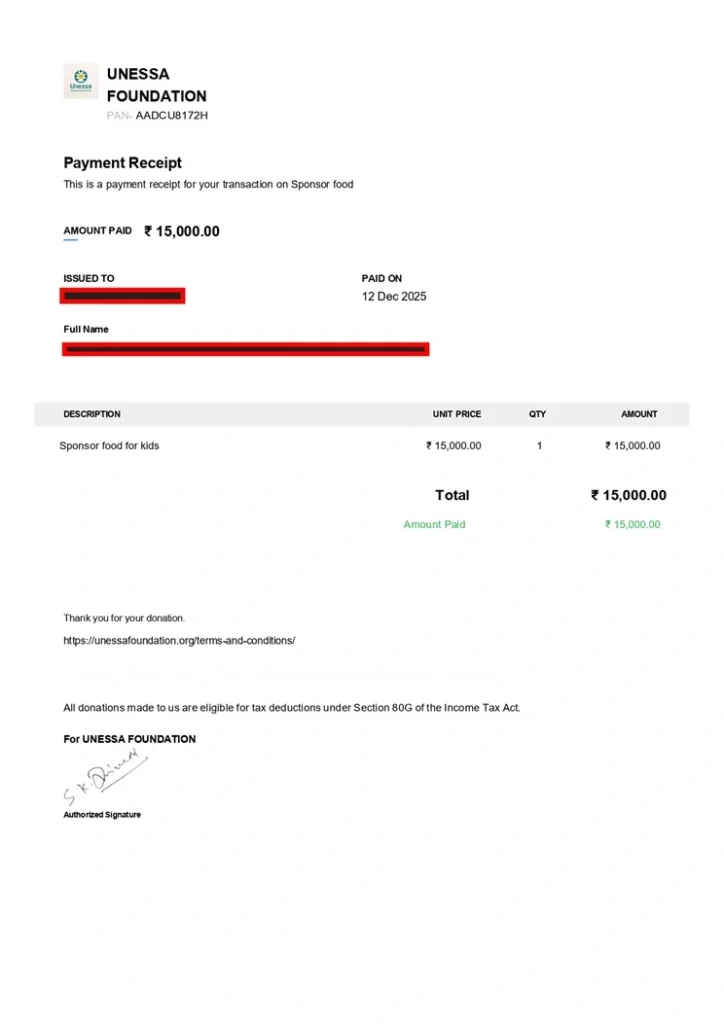
1. Donation Receipt (with 80G details)
Must include:
- Donor name
- Amount
- 80G reference
- NGO PAN
Signature & seal
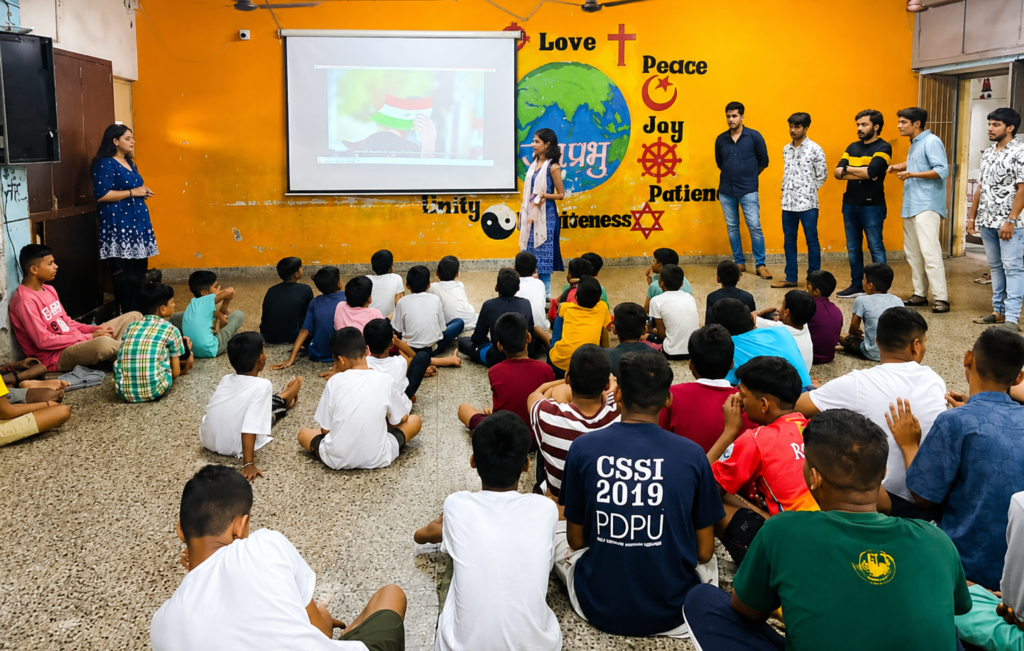
2. Photos & Videos of Distribution
Real, original, time-stamped.
3. Beneficiary Record Logs
List of beneficiaries with location details.
4. Field Implementation Reports
Explains when and where the distribution occurred.
5. Impact Summary
Shows results in measurable form.
6. Thank-You Note or Email
Completes the donor experience.
Difference Between Good and Bad Impact Reporting
Feature
Good Reporting
Poor Reporting
Photos
Real, original
Stock/fake images
Data
Measured, verified
Random numbers
Receipts
Proper 80G
Missing/incomplete
Storytelling
Real stories
No proof
Frequency
High
None
Donor Confidence
Strong
Weak
The Impact Reporting Cycle (How Verified NGOs Do It)
Verified NGOs follow a structured reporting cycle:
Step 1: Define Metrics
Clear KPIs before starting.
Step 2: Collect Field Data
Volunteers record:
- Photos
- Numbers
- Locations
Step 3: Validate & Cross-Check Data
Ensures no duplication or errors.
Step 4: Analyze Results
Identify patterns, improvements, challenges.
Step 5: Publish Impact Reports
Monthly / Quarterly / Annual.
Step 6: Share With Donors
Email, WhatsApp, website, newsletters.
Impact reporting → powerful communication + compliance tool
Why Unessa Foundation Is a Leader in Impact Reporting
Unessa Foundation is known nationwide for:
- Real-time reporting systems
- Verified photos & videos
- Detailed impact analytics
- Transparent financial summaries
- Valid 80G/12A documentation
- Continuous donor communication
- Beneficiary-centered storytelling
- Ethical, compliant processes
Each donation is:
- Documented
- Verified
- Accounted for
- Reported transparently
This is why donors trust Unessa Foundation for high-impact giving.
Donate to a Verified, Transparent NGO with Real Impact Reporting — Support Unessa Foundation.
Donor Checklist: How to Evaluate an NGO’s Impact Reporting
- Do they publish regular impact reports?
- Are photos original (not stock images)?
- Are beneficiary numbers realistic?
- Do receipts match donation records?
- Do they share financial transparency?
- Are reports accessible publicly?
- Do they track outcomes, not just activities?
If 5 or more are missing, the NGO is not impact-driven.
Make your contributions meaningful. Donate to Unessa Foundation — India’s Verified NGO With Best-in- Class Impact Reporting.
FAQ
1. Why is impact reporting necessary?
It provides transparency, builds donor trust, and shows real-world results.
2. What should donors expect in an impact report?
Photos, metrics, stories, receipts, distribution logs, and financial summaries.
3. Do fake NGOs provide impact reports?
Rarely. And if they do, they use stock or stolen images.
4. What makes Unessa Foundation’s impact reporting reliable?
Authentic visuals, verified metrics, structured systems, and transparent receipts.
5. How often should NGOs publish impact reports?
Monthly for ongoing programs, quarterly for major initiatives, yearly for consolidated impact.