

Literacy for poor children in India isn’t just a distant issue it’s a crisis that affects millions, and as I discovered on a volunteer trip, it’s everyone’s responsibility to address it.
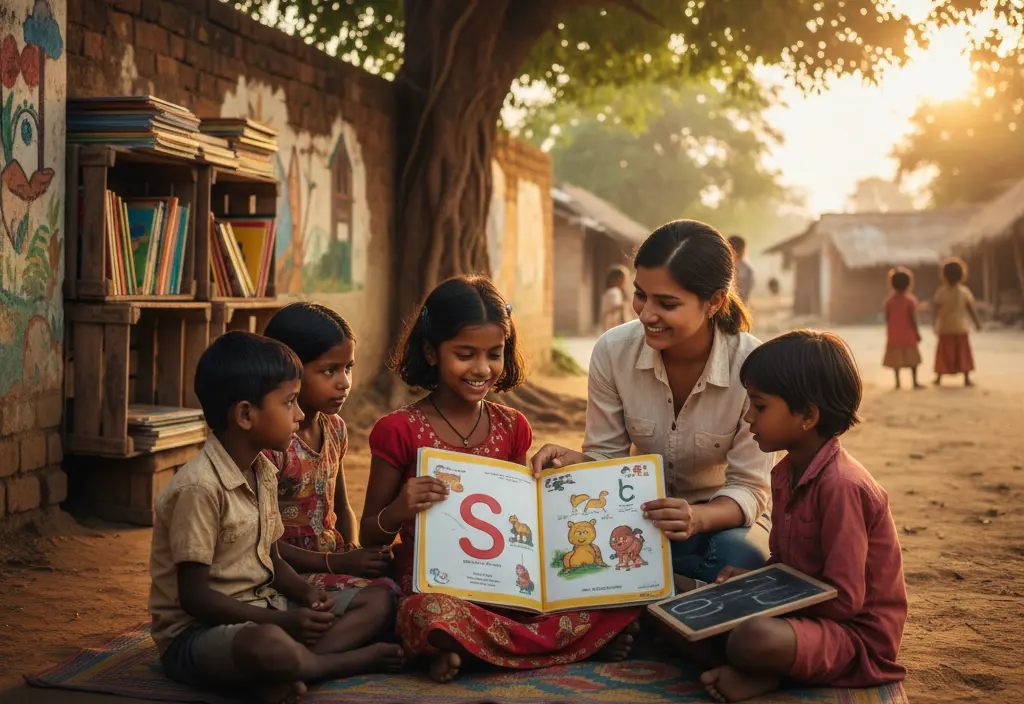
“Bhaiya, what’s the first letter of your name?” a tiny voice asked me as I fumbled with my camera lens during a volunteer trip to rural Bihar.
It was Aarti. Maybe seven years old. Maybe younger.
I smiled, told her it was “S,” and expected her to giggle or playfully mock me. But what came next shook me.
“I don’t know what that looks like.”
At first, I laughed. Then, I froze.
Why Literacy for Poor Children in India Isn't Just Their Problem
India’s literacy divide is stark and urgent. With over 260 million school-age children, nearly 35% of those aged 6-14 in rural areas still can’t read a basic sentence. In tribal and slum areas, 1 in 2 children has never entered a classroom.
Imagine navigating daily life buying groceries, reading bus signs, or applying for jobs without basic reading skills. Literacy for poor children in India is about more than schoolbooks; it’s essential for survival, dignity, and empowerment.
It's Worse for Girls: Barriers to Girls' Education in India
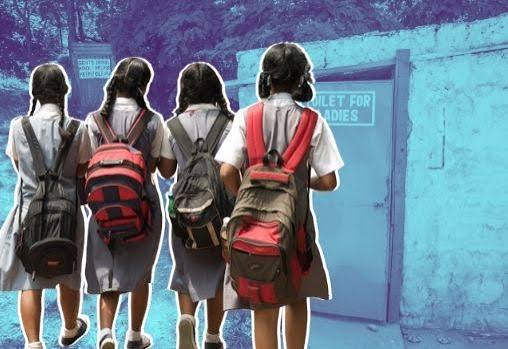
In many rural regions, female literacy rates dip below 50%. Girls are often withdrawn from school during puberty or married before 16, deepening economic and social disadvantages.
As the African proverb says: “When you educate a man, you educate an individual. But when you educate a woman, you educate a family.”

Key Barriers Preventing Millions of Kids Like Aarti from Learning
From my firsthand experiences in rural India, here are the real obstacles to child literacy in India—not abstract stats, but on-the-ground realities.
- Poverty Steals Time and Dreams Many poor children work from dawn, fetching water, cooking, or herding animals. School becomes an unaffordable luxury, perpetuating cycles of illiteracy.
- Child Labor and Early Marriage Survival trumps education. Girls like Aarti face early marriage at 13, while boys migrate for low-wage jobs, remaining underpaid and trapped without literacy skills.
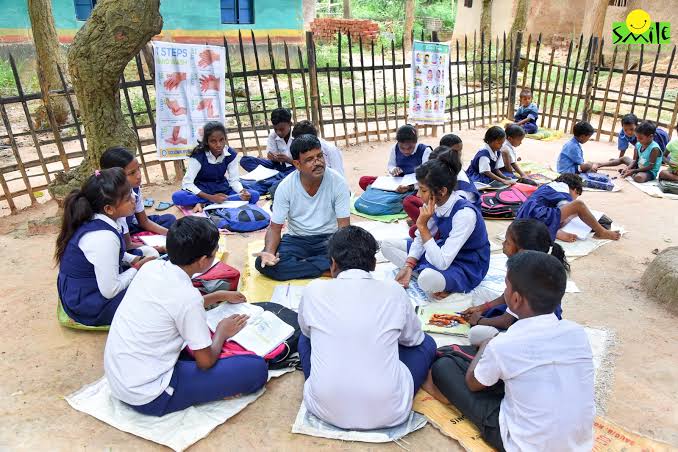
- Broken Infrastructure and Absent Teachers I visited schools with mud floors, leaf notebooks, and one teacher juggling five grades. No books, no electricity—this is common in rural and tribal areas, lacking even basic libraries or digital tools.
- Language Gaps in Rural Education in India Children speaking tribal dialects struggle with Hindi or English curricula, creating insurmountable learning barriers.
- Absence of Role Models In communities where no one has completed school, literacy seems irrelevant without visible success stories.
Effective Solutions: What Really Works for Improving Literacy Rates
Throwing money aimlessly often fails donating books without support or building schools without staff is ineffective. But organizations like the Unessa Foundation show a better way.
Why Unessa Foundation’s Model Succeeds in Child Literacy in India
- Community-Driven Initiatives: Parents help build micro-schools, fostering local ownership.
- Portable Libraries: Mobile book kits travel between villages, ensuring access.
- Volunteer-Led Programs: Local youth teach after hours, earning stipends and building community pride.
- Trackable Progress: Monthly assessments track real improvements, not just annual reports.
- Hybrid Learning: Blending online and offline tools reaches remote areas.
A coordinator told me: “If one child reads one sentence today who couldn’t yesterday, we’ve won.” That simplicity drives impact.
Actionable Steps: How You Can Support Literacy for Poor Children in India
As an individual, you can make a tangible difference. Here’s a practical guide to get started.
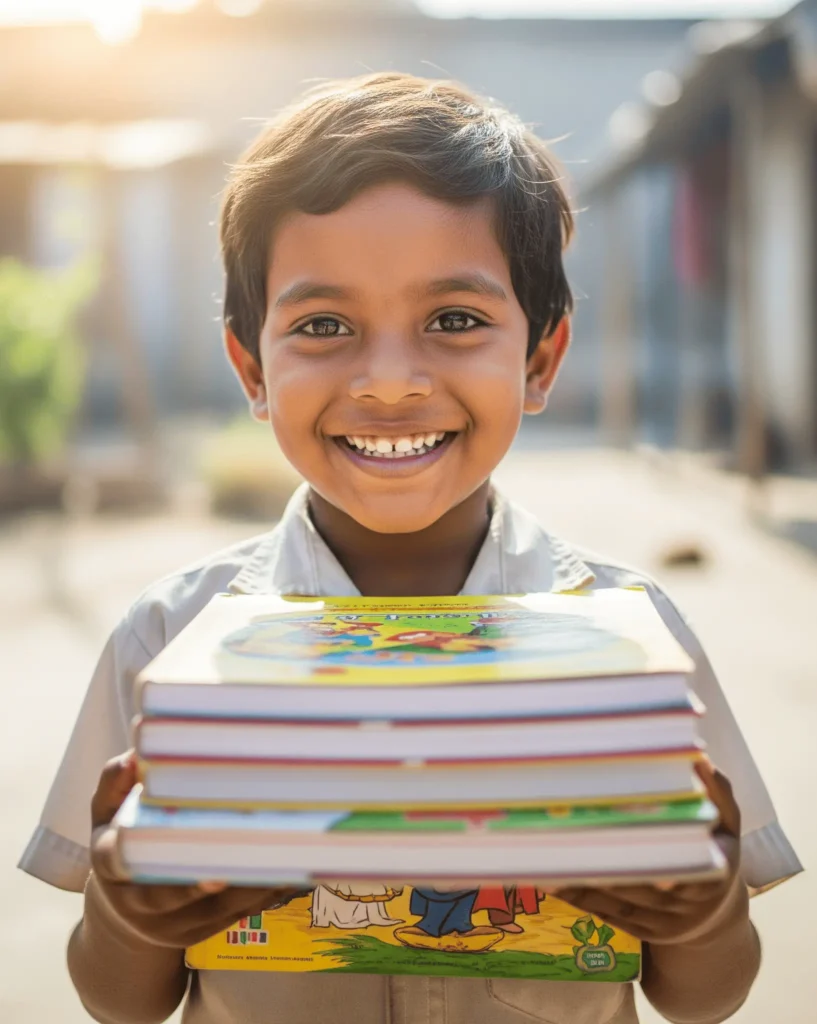
- Donate Strategically Choose transparent NGOs. I recommend the Unessa Foundation for its proven results. Visit Unessa’s Website → Just ₹200/month provides books for a child annually.
- Volunteer Virtually Dedicate 1 hour weekly to teach English or math via Zoom. Unessa matches volunteers by region and language.
- Sponsor a Reading Kit For ₹800, fund a mobile kit for a village school—think of it as a literacy lifeline on wheels.
- Host a Book Drive: Collect old books from your community or office. Partner with Unessa for distribution to boost rural education in India.
- Leverage Your Influence Share stories on social media, create reels, or host fundraisers to amplify volunteer opportunities for literacy.
The Broader Impact: Beyond Words
Literacy for poor children in India empowers them to challenge injustice, read medicine labels, and decode opportunities. The ripple effects are profound: Educated kids teach siblings, girls delay marriage, and youth secure better jobs, uplifting families.
Inspiring Real Stories
- Roshan, the Boy Who Built a Blackboard: In Jharkhand, this 12-year-old painted his wall with coal dust for practice. Unessa enrolled him; now he teaches others.
- Asha, the Bride Who Said “Not Yet”: At 14 in Rajasthan, she refused marriage to finish her storybook. She’s the first in her village to complete 10th grade.
Have you taught a child to read or supported a literacy cause? Comment below or share on social media you could inspire others to join efforts for literacy for poor children in India.
FAQ
Best NGOs for Child Literacy in India?
Unessa Foundation, Pratham, and Teach for India. Unessa stands out with its hybrid volunteer model.
Can I Volunteer Online?
Yes! Unessa and Pratham offer digital programs for teaching poor children.
Cost to Sponsor Literacy Education?
As low as ₹500/month for books and tuition, with full transparency.
Measuring Impact?
Unessa sends personalized reports on how your contributions help.
Conclusion: Empowering a Nation Through Literacy
Literacy for poor children in India is a fundamental right denied to millions, but change doesn’t require massive resources it starts with individuals like us.
My challenge: Be the reason one child learns their first word this year. Donate, volunteer, or share. Every action counts in rewriting futures.