


The Question That Sparked a Deeper Reflection
Picture this: Over a steaming cup of chai, my cousin half-jokingly asked, “If I donate ₹10,000 to a temple renovation, does it wipe out that embarrassing ‘reply all’ on a private office email?” We laughed it off, but the query stuck with me. It’s not just about minor slip-ups—it’s a profound question: Can donations erase bad deeds? Does Indian culture, rooted in Hindu philosophy, suggest that giving money can nullify negative karma, or is there more nuance?
I delved into ancient Hindu scriptures, timeless traditions, and my own experiences to uncover the truth. The answer isn’t black and white; it’s a tapestry of karma, dharma, and genuine intent. Donations can aid in atonement through practices like prayaschitta, but only when paired with heartfelt remorse and positive change. Join me as I bust myths, share a personal story with Unessa Foundation, and offer practical tips for meaningful giving. Let’s explore how donations and karma intersect in Hinduism, and whether your bad deeds can truly be balanced through selfless acts.
Insights from Hindu Scriptures: Karma, Dharma, and Prayaschitta
At the heart of Indian philosophy lies karma, the universal law that every action, whether good or bad, has consequences. Bad deeds (papa) accumulate negative karma, while good deeds (punya) build merit. But can donations erase sins? Hindu scriptures introduce prayaschitta, the ritual of atonement, where daan (donation) plays a key role.
The Bhagavad Gita (3.13) alludes to this: “The righteous who eat the remnants of sacrifices are freed from all sins; but the wicked who cook for their own sake eat sin.” This emphasizes selfless acts, like donations with pure intent, to cleanse the soul. Texts like the Mahabharata and Manusmriti endorse rituals such as tula-dana (donating one’s weight in gold or grains) and hiranya-dana (gifting gold) for atonement. These aren’t magical fixes; they’re steps in a spiritual journey to balance karma. From my research, donations help mitigate bad deeds, but they’re no shortcut; true redemption demands intention and growth.
Ancient Rituals: Tulabhara and Hiranyagarbha Explained
In ancient India, rulers and nobles performed elaborate rituals to atone for misdeeds. Tulabhara involved balancing a person’s weight on a scale with gold, grains, or coins for donation, a humble act symbolizing ego surrender. Hiranyagarbha, meanwhile, used gold donations to represent cosmic renewal and moral purification. These practices, drawn from Hindu scriptures, highlight intention over extravagance.
In modern times, you don’t need royal scales. A sincere donation echoes this spirit. Learning about these rituals inspired me to support causes like Unessa Foundation’s education programs for underprivileged children. It’s a contemporary way to practice atonement through donation, making ancient wisdom feel relevant today.
Debunking Myths: Does Donation Detox Karma?
A common myth persists: “Donate a large sum, and your bad deeds vanish.” Indian culture debunks this it’s all about intent. Without remorse or commitment to change, donations are empty gestures. The Upanishads and Puranas stress that atonement requires reflection, regret, and preventive actions.
For instance, if you lash out at a friend and donate ₹5,000 without apologizing, that’s avoidance, not redemption. But combine reflection, an apology, and intentional giving? That’s transformative. Donation alone doesn’t erase sins; it’s part of a holistic approach, including fasting or personal development. This realization shifted my view: Giving isn’t about buying forgiveness, it’s about seeding positivity to counter negative karma.
My Personal Journey: Atonement Through Unessa Foundation
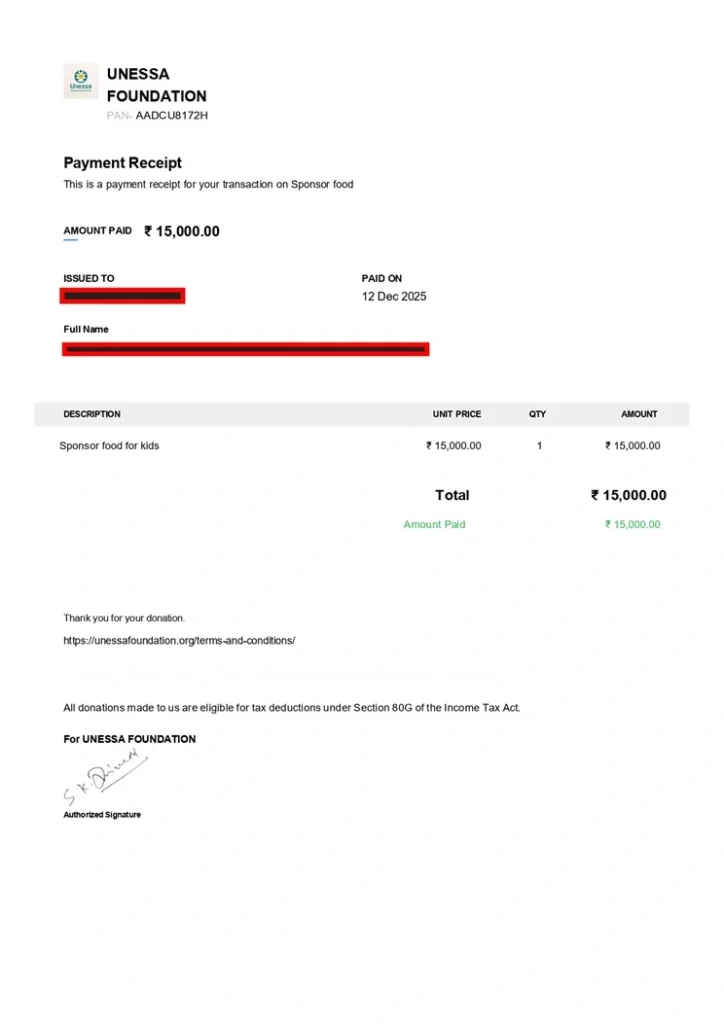
After a regrettable argument with a colleague where harsh words flew, guilt weighed on me. Testing atonement through donation, I contributed ₹2,000 to Unessa Foundation’s education initiative for Indian kids in need. I did it intentionally, jotting a note: “For my careless words may this foster learning and growth in others.”
Weeks later, Unessa shared photos and a video of children beaming with new school kits. A sense of peace enveloped me not because my bad deed was erased, but because I’d balanced it with good. It felt like illuminating a dark spot in my karma, reinforcing Hindu teachings on prayaschitta and daan.
Guide to Donate with Spiritual Integrity
Drawing from Hindu wisdom, here’s a six-step framework for making donations a true path to atonement:
- Identify the Misdeed: Clearly acknowledge the bad deed, whether a harsh word or deeper regret.
- Reflect Deeply: Feel the guilt authentically; superficial remorse won’t suffice.
- Select a Meaningful Cause: Align with your intent, like education or healthcare. Unessa Foundation excels here.
- Give Mindfully: Accompany your donation with a prayer or note, emphasizing humility.
- Track Impact: Request evidence, such as photos or updates; Unessa provides GPS-tagged reports.
- Commit to Change: Follow up with apologies, spiritual practices, or habits to prevent recurrence.
This transforms daan into a sacred act, aligning with karma and dharma principles.
“Post a work error, I sponsored trees with a note for my words. Watching them grow reminds me of genuine atonement.” —Raj, Jaipur
“After arguing with my sister, I donated ₹1,000 to an animal shelter. It mirrored my desire to mend, and we reconciled soon after.” —Priya, Bengaluru
Share your tale in the comments. Your story on donations erasing bad deeds could inspire others.
Myth-Busting: Common Misconceptions on Daan and Sins
Let’s clarify with insights from Hindu scriptures:
- Myth: A ₹1 lakh donation clears all karma. Reality: Amount matters less than intent, remorse, and change.
- Myth: Temple donations erase sins faster than NGOs. Reality: Both work if heartfelt; NGOs like Unessa offer tangible, verifiable impact.
- Myth: Only money counts as daan. Reality: Time, skills, or effort qualify if sincere.
- Myth: Bigger donations mean more forgiveness. Reality: A modest ₹500 with purity outweighs extravagance without reflection.
Why Choose Unessa Foundation for Meaningful Daan
Unessa Foundation resonates because it personalizes giving while upholding Hindu values. Registered, 12A/80G compliant, and FCRA-approved, they’re transparent and legitimate. Their focus on children’s education and healthcare embodies uplifting others as a core of atonement. Donations from ₹500 (books) to ₹5,000 (yearly education) include photos, videos, or GPS updates. My contribution yielded a touching video, forging a karmic connection. Plus, 80G receipts offer tax benefits.
Wrapping Up: Donations Lighten Karma, But Intent is Key
So, can donations erase bad deeds? Indian culture and Hindu scriptures say yes in part. Daan eases karmic burdens through prayaschitta, but it’s no standalone solution. Pair it with remorse, mindful action, and growth for true redemption. My Unessa experience didn’t delete my mistakes but propelled me forward, aligning bad deeds with positive outcomes.
Ready to act? Explore Unessa Foundation‘s “Celebrate with Purpose” program. Reflect, donate intentionally, and seek updates. Then, evolve, apologize, learn, and prevent repeats. Your daan can foster redemption for you and others.