

Home / Education / Digital literacy
Digital Literacy for Children: A Necessity, Not a Luxury
By Unessa Foundation
UNICEF’s own research puts it plainly: the internet is no longer a luxury for children, but has become a necessity for playing, keeping in touch with friends and family, learning and building skills for the future. Yet access to a device is not the same as knowing how to use it safely, critically, and productively. This gap — between digital access and digital literacy — is where most of the real risk to children now lives. In this article, we look at what the latest data shows about children’s digital lives, the challenges families and schools face, and practical steps to close the literacy gap.
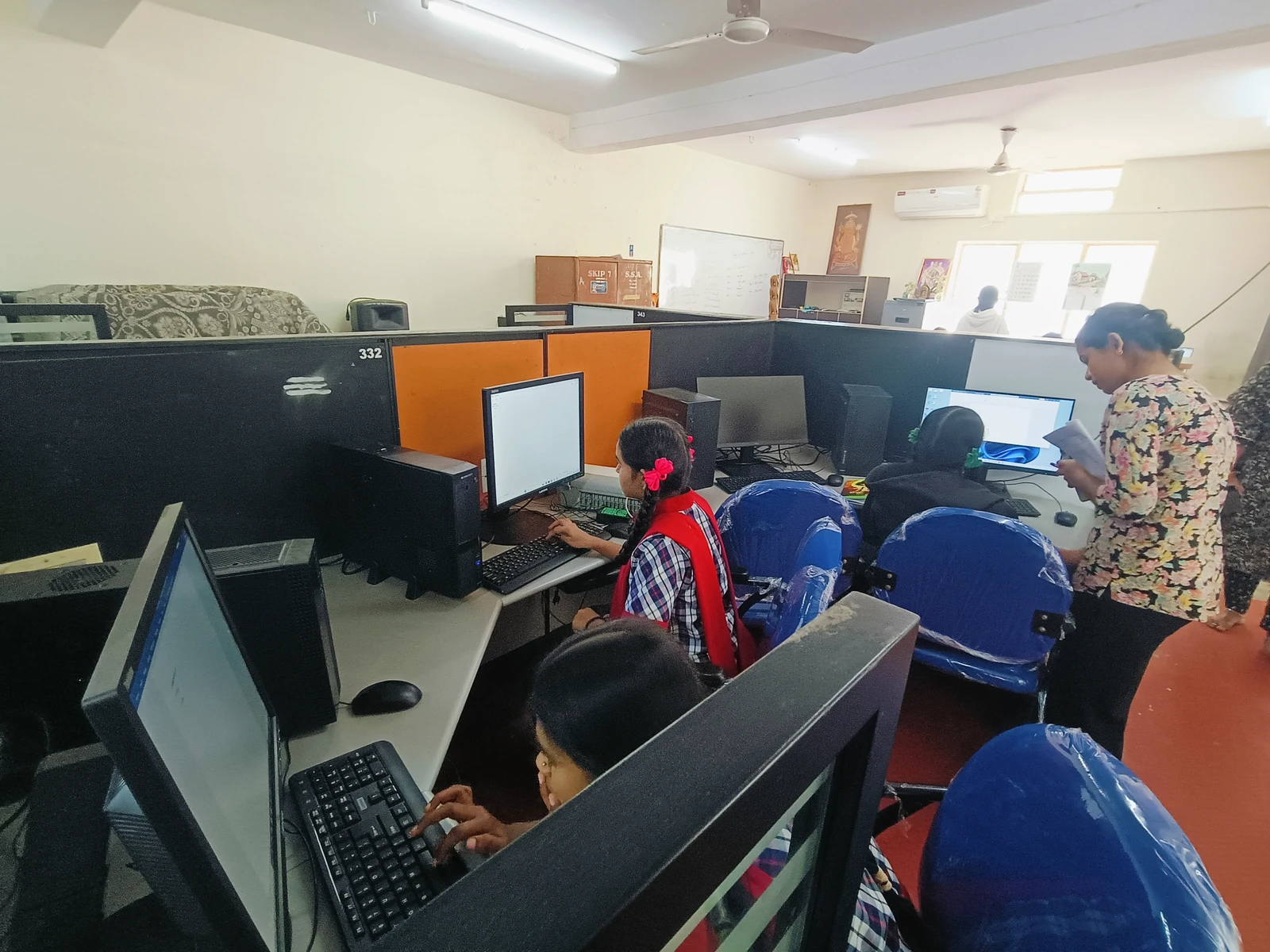
Students working at computers, from Unessa Foundation’s supplied photo collection.
On this page
- What Is Digital Literacy, and Why Does It Matter for Children?
- The Scale of Children's Digital Lives: What Recent Data Shows
- Comparison: Digital Access vs Digital Literacy
- Why Digital Literacy Should Be Treated as a Necessity
- Government and Global Policy Response
- Real-World Scenarios: Why This Matters in Daily Life
- Practical Tips for Parents, Teachers, and Schools
- Frequently Asked Questions (FAQs)
- Conclusion
What Is Digital Literacy, and Why Does It Matter for Children?
Digital literacy is the ability to find, evaluate, use, and create content safely and responsibly using digital devices and the internet. For children, this includes:
- Basic operational skills (using apps, devices, and search tools)
- Understanding privacy settings and data protection
- Recognising misinformation, scams, and manipulative content
- Practising safe and respectful online communication
- Understanding the basics of AI tools that are now part of everyday learning
It is not simply about knowing how to use a smartphone — most children already do that. Digital literacy is about knowing how to use it well, and this is precisely where most children, and often their parents, fall short.
Digital literacy and online safety: cyberbullying and online-risk discussion

The Scale of Children's Digital Lives: What Recent Data Shows
1. Most children are online, but not all are learning online
In India, ASER 2024 data shows that 89.1% of adolescents aged 14–16 report having a smartphone at home, but 76% primarily use these devices for social media and only 57% for educational purposes. This is the core of the problem: access to a device does not automatically translate into productive or safe use.
2. School infrastructure has not caught up
According to a 2026 UNICEF guidance note on online safety in Indian schools, only 63.5% of schools in India are equipped with internet facilities, and among those with connectivity, only 45% of schools integrate digital literacy into their curriculum, while less than 30% have formal cyber safety education programs. In other words, even where children are learning digitally, structured guidance on how to be safe and literate online is still the exception, not the norm.
3. The global access gap remains wide for younger children
Internet access varies across households, ages and locations. UNICEF’s Digital Education and AI Strategy identifies connectivity and inequitable access as barriers to digital learning. A figure about one age group or set of countries should not be applied to all children; this guide does not establish a current global internet-access percentage for ten-year-olds.
4. Cyberbullying and online risk are significant concerns in India
Cyberbullying estimates depend on the study population, period and definition. Parent reports and adolescent self-reports measure different things and should not be combined into a single national prevalence estimate. The UNICEF India and UNESCO online-safety guidance explains why recognising harmful online behaviour and providing a clear help route belong in digital literacy education.
5. Learning outcomes remain a global concern even as digital access grows
UNICEF’s 2025–2030 Digital Education Strategy notes that 600 million children are not achieving minimum proficiency levels in reading and mathematics, even though two-thirds of them are in school. This underlines that digital tools alone do not fix learning gaps — they need to be paired with genuine literacy, both academic and digital.
Comparison: Digital Access vs Digital Literacy
| Aspect | Digital Access (Having a device/internet) | Digital Literacy (Knowing how to use it well) |
|---|---|---|
| What it means | Owning or having access to a smartphone, tablet, or computer | Understanding how to search, evaluate, create, and stay safe online |
| Current status in India | 89.1% of 14–16-year-olds have smartphone access at home | Only 45% of schools integrate digital literacy into the curriculum |
| Primary use observed | 76% for social media | Only 57% for educational purposes |
| Risk if missing | Limited connectivity, exclusion from digital learning | Exposure to misinformation, cyberbullying, privacy breaches, addiction |
| Who is most affected | Children from low-income and rural households | Children without structured school or parental guidance |
What it means
Digital Access (Having a device/internet)
Owning or having access to a smartphone, tablet, or computer
Digital Literacy (Knowing how to use it well)
Understanding how to search, evaluate, create, and stay safe online
Current status in India
Digital Access (Having a device/internet)
89.1% of 14–16-year-olds have smartphone access at home
Digital Literacy (Knowing how to use it well)
Only 45% of schools integrate digital literacy into the curriculum
Primary use observed
Digital Access (Having a device/internet)
76% for social media
Digital Literacy (Knowing how to use it well)
Only 57% for educational purposes
Risk if missing
Digital Access (Having a device/internet)
Limited connectivity, exclusion from digital learning
Digital Literacy (Knowing how to use it well)
Exposure to misinformation, cyberbullying, privacy breaches, addiction
Who is most affected
Digital Access (Having a device/internet)
Children from low-income and rural households
Digital Literacy (Knowing how to use it well)
Children without structured school or parental guidance

Guided computer learning, from Unessa’s photo collection.
SUPPORT CHILDREN’S EDUCATION
Help learning become a regular part of a child’s life.
Support Unessa Foundation’s education programmes and volunteer-led learning activities.
Why Digital Literacy Should Be Treated as a Necessity
- Education increasingly depends on digital tools. From online classes to AI-assisted learning platforms, a child without basic digital skills is now at an academic disadvantage.
- Misinformation is a daily risk. Children encounter unverified content constantly; without critical evaluation skills, they are more susceptible to scams, rumours, and harmful content.
- Online safety cannot be assumed. With a meaningful share of Indian parents reporting cyberbullying incidents involving their children, safety education needs to start early and be reinforced consistently.
- The future job market demands digital fluency. UNICEF’s education strategy explicitly flags the disconnect between the digital and AI skills schools teach and those required in the job market, meaning today’s digital literacy gap can become tomorrow’s employability gap.
- Equity depends on it. Since digital access and literacy both correlate strongly with household income, structured school-based digital literacy programs are one of the few tools that can level the playing field for children from lower-income families.
Government and Global Policy Response
Governments and international bodies have started responding to this gap, though implementation still lags behind the scale of the problem:
- UNICEF’s Digital Education Strategy 2025–2030 commits to bridging digital divides — including gender, disability, and linguistic gaps — and explicitly names digital literacy and AI skills as core competencies children need for the future, alongside early literacy and numeracy.
- NITI Aayog’s 2025 paper on online safety for children highlights that parents and guardians often lack the digital literacy needed to guide their children, leaving many families without adequate support even when they want to help.
- India’s legal and reporting framework includes the POCSO Act provisions for online offences, the National Cyber Crime Reporting Portal, the POCSO e-Box run by the National Commission for Protection of Child Rights (NCPCR), and the Ministry of Women and Child Development’s Cyber Crime Prevention against Women and Children (CCPWC) portal — all mechanisms families can use to report abuse or exploitation.
- School-level guidance documents from bodies like the CBSE and NCERT now include student-friendly handbooks on online safety, though adoption still depends heavily on individual states and schools choosing to implement them consistently.
- UNICEF’s Best Interests of the Child in the Digital World project is pushing technology companies and regulators to build “child rights impact assessments” into how digital products are designed, recognising that literacy alone cannot substitute for safer platform design.
The overall picture is one of growing policy attention but uneven, patchy implementation — which is exactly why schools and families cannot afford to wait for top-down solutions alone.
Real-World Scenarios: Why This Matters in Daily Life
To make the data concrete, consider a few common situations that illustrate why digital literacy is not an abstract policy issue:
- The homework search that goes wrong. A child searching for help with a school project clicks on the first link that appears, without knowing how to check whether the source is credible — a basic skill that structured digital literacy education would address early.
- The “harmless” personal detail. A child shares their school name and daily schedule in a public gaming chat, not realising this information can be used to identify or track them — a risk that simple, repeated safety conversations at home can prevent.
- The viral message. A child forwards an alarming but false message to family WhatsApp groups because it “looked real,” contributing to the same misinformation patterns adults also struggle with — showing why critical evaluation skills need to start young.
- The silent cyberbullying case. A child experiencing online harassment doesn’t tell a parent or teacher, partly because they were never shown a clear, comfortable way to report it — despite mechanisms like NCPCR’s helpline and e-Box existing precisely for this purpose.
None of these scenarios require dramatic circumstances. They happen in ordinary homes and classrooms, which is exactly why digital literacy needs to be built into everyday routines rather than treated as a one-off lesson.
Practical Tips for Parents, Teachers, and Schools

For parents:
- Set clear, age-appropriate screen-time boundaries rather than open-ended device access.
- Talk to your child regularly about what they see online — treat it as an ongoing conversation, not a one-time warning.
- Learn the basics of privacy and parental control settings on the devices and apps your child uses.
- Watch for signs of distress linked to online interactions, and take reports of cyberbullying seriously and promptly.
For teachers and schools:
- Introduce even a short weekly digital literacy or cyber-safety module — closing the current gap where fewer than half of schools cover this formally.
- Use real, age-appropriate examples to teach children how to identify misinformation and manipulative content.
- Coordinate with parents so that safety lessons taught in school are reinforced consistently at home.
- Where internet infrastructure is limited, prioritise offline-friendly digital literacy resources so no student is left out.
For children (age-appropriate, guided by an adult):
- Never share personal information (school name, address, phone number) with strangers online.
- Pause before sharing or believing something online — check if it comes from a reliable source.
- Tell a parent, teacher, or trusted adult immediately if something online makes you uncomfortable.
- Use the internet for a mix of learning and entertainment, not entertainment alone.
For policymakers:
- Expand internet connectivity to the remaining schools without facilities, since infrastructure gaps directly limit safe, supervised digital learning.
- Make structured digital literacy and cyber-safety education a mandatory, assessed part of the school curriculum rather than an optional add-on.
- Strengthen reporting and support mechanisms (such as helplines and school counsellors) so children and parents know where to turn when problems arise.
Digital literacy: activities that work without individual devices
Use an offline information-check exercise
Prepare fictional messages or printed examples in a language learners can use. Ask who published each message, what it claims and where the claim could be checked. Digital literacy practice can begin with discussion before anyone creates an account or enters personal information. Explain that the examples are invented for the activity.
Structure shared-device practice
For a supervised session, agree turns for navigating, explaining and checking a task. Use demonstration information instead of real passwords or private records. Ask whether each learner can follow the instructions rather than assuming one person’s successful click shows that the whole group understood.
Create a clear help route
Explain how to tell a trusted responsible adult about an uncomfortable message or unusable interface. Digital literacy includes knowing when to stop and ask for help. Do not promise that a particular app, badge or parental-control setting removes every risk; check the actual tool and institutional rules before use.
Frequently Asked Questions (FAQs)
1. At what age should children start learning digital literacy?
Basic, age-appropriate digital literacy — such as understanding what is safe to share and how to ask for help — can begin as soon as a child starts using any connected device, often well before secondary school.
2. Is digital literacy the same as knowing how to use a smartphone?
No. Most children already know how to operate a smartphone. Digital literacy is about safe, critical, and purposeful use — evaluating information, protecting privacy, and recognising online risks.
3. How common is cyberbullying among Indian children?
Reported rates vary with the population, period and definition used by a study. Check the original source and distinguish parents’ reports from adolescents’ self-reports before quoting a percentage. UNICEF India and UNESCO treat online safety as a responsibility shared by schools, families and education systems.
4. Do Indian schools currently teach digital literacy?
Coverage is limited. Recent data shows only about 45% of schools integrate digital literacy into their curriculum, and less than 30% have formal cyber-safety education programs, despite most schools now having some internet access.
5. What is the biggest risk of skipping digital literacy education?
Children may end up spending significant time online (largely for entertainment) without the skills to recognise misinformation, protect their privacy, or respond safely to cyberbullying — increasing both emotional and educational risks.
6. How can parents support digital literacy at home without technical expertise?
Parents don’t need to be tech experts. Simple habits — talking regularly about online experiences, setting screen-time boundaries, and learning basic privacy settings — go a long way in supporting a child’s safe digital habits.
Is access to a device the same as digital literacy?
No. Access concerns whether a device or connection is available; digital literacy involves using tools and information appropriately for a task. Review actual skills such as navigating, evaluating information and protecting privacy rather than counting devices alone.
Can digital-literacy activities work with shared devices?
Plan suitable supervised tasks, shared roles and accessible alternatives around the equipment available. Check what each learner can explain or do, instead of assuming that watching another person use a device demonstrates the same skill.
Conclusion
The data leaves little room for doubt: children are spending more time online than ever before, but structured guidance on how to use digital tools safely, responsibly, and productively has not kept pace. While internet access has expanded across schools and households, digital access alone is not enough. Children also need the skills to think critically, protect their privacy, identify misinformation, and stay safe in an increasingly connected world.
Digital literacy for children is no longer an optional life skill—it is a foundation for academic success, online safety, and future career readiness. Parents, teachers, schools, and policymakers all have a shared responsibility to help children become confident and responsible digital citizens. By combining technology with the right guidance, practical learning, and digital safety education, we can prepare the next generation to use the internet wisely, learn effectively, and thrive in the digital age.
Sources and further reading
- UNICEF India and UNESCO: Online Safety in Education, February 2026 — source context for the school-safety and digital-use figures.
- ASER 2024 — read the survey coverage and digital-literacy measures alongside the findings.
- UNICEF Digital Education and AI Strategy 2025–2030 — context for the global learning and connectivity challenges.
Continue reading
Support children’s learning with Unessa Foundation.