

India’s Urban Growth Hides a Daily Hunger Crisis
Every day across India, millions of daily-wage workers—construction labourers, domestic workers, sanitation staff, street vendors, delivery helpers—go to sleep uncertain about their next meal.
For these families, income is fragile.
One missed workday. One fever.
One monsoon flood. One festival shutdown.
That’s enough to wipe out savings completely.
According to urban poverty and nutrition data compiled from state hunger surveys and NGO field reports (2024–25):
- 18–25% of urban low-income households in India skip at least one meal daily
- Migrant families and informal workers are the most affected
- Children are often the first to eat less when food runs short
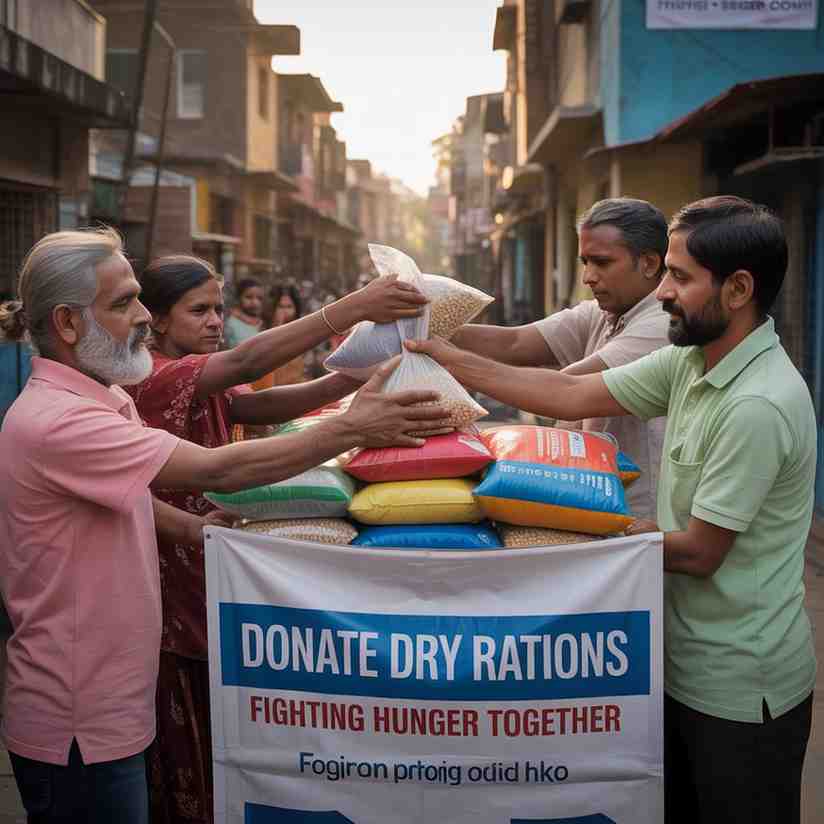
This is where donating dry ration kits in India becomes more than charity.
It becomes survival support.
What a Dry Ration Kit Really Means to a Family
A dry ration kit may look simple on paper.
But inside a vulnerable household, it changes everything.
A dry ration kit may look simple on paper.
But inside a vulnerable household, it changes everything.
NGO impact studies across multiple Indian cities show that families receiving regular ration support:
- Keep children in school longer
- Reduce child labour by nearly 30%
- Spend less on emergency loans and food credit
1 Ration Kit ₹700 | Feed 1 Family for a Month
Who Needs Dry Ration Support the Most in India?
Across Indian cities and towns, ration kits are critical for:
- Daily-wage and migrant worker families
- Construction labour colonies
- Domestic workers and sanitation staff
- Elderly living alone
- Widows and single-income households
- Families affected by floods, heatwaves, or job shutdowns
Urban hunger is not always visible—but it is constant.
What Groceries Can You Donate in India?
Most verified NGOs accept sealed, non-expired dry groceries with a minimum shelf life of 3 months.
Commonly Accepted Items
- Rice
- Wheat flour (atta)
- Dal (toor, moong, chana)
- Cooking oil
- Sugar and salt
- Tea
- Spices
- Poha, sooji, biscuits
📊Comparison: Top NGOs for Dry Ration Donations India (2026)
All NGOs listed below are 80G-certified, provide distribution photos/videos, and coordinate doorstep pickup through city and partner networks.
NGO Name
Best For
Accepted Items
Free Pickup
Cost per Family
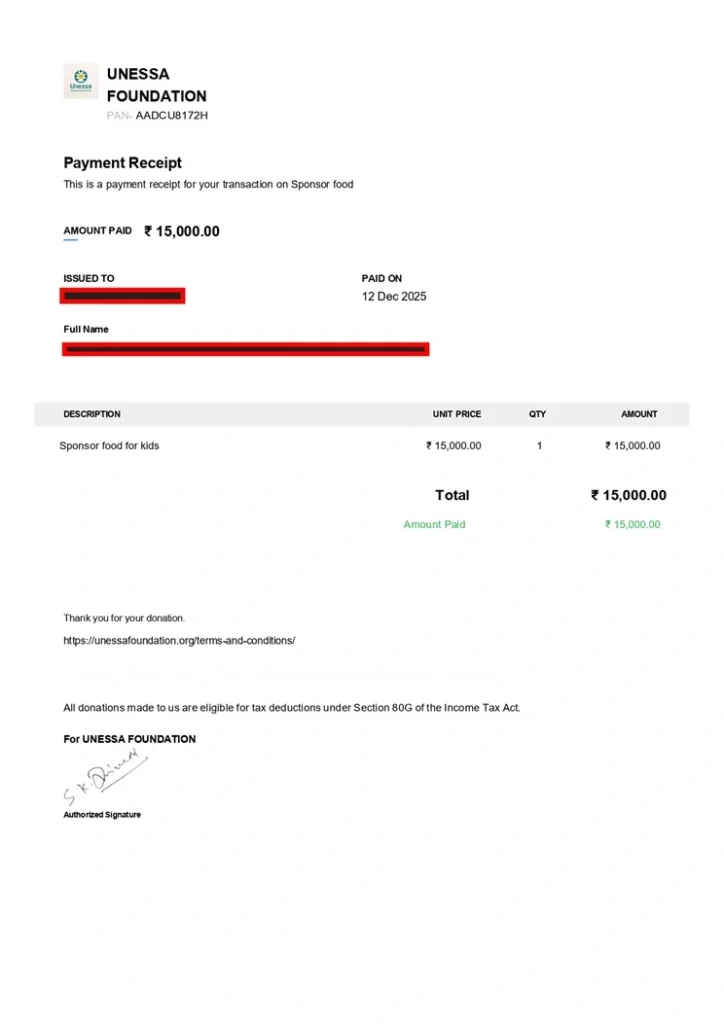
Unessa Foundation
Weekly slum drives
Rice, dal, oil, spices (3+ months expiry)
Yes (7 days)
₹700
Akshaya Patra Foundation
Bulk corporate kits
Large sacks rice/dal/oil
Yes
₹700
Robin Hood Army
Same-day surplus
Sealed groceries
Yes
Variable
Rotary Club
Festival/monsoon mega drives
Full kits, bulk grains
Yes
₹750
Seva Kitchen / Happy Faces
Community weekly feeds
Cooking essentials
Scheduled
₹650
Top NGOs Fighting Hunger by Donating Dry Rations to Daily Wage Families in India (2026)
Unessa Foundation– Nationwide Urban Hunger Relief
One of the fastest-growing ration drive organisations, Unessa Foundation distributes large-scale dry ration kits through city-based volunteer and partner networks.
2024–25 Impact
- 12,000+ family ration kits distributed.
- Weekly drives across multiple urban slum clusters.
- Special focus on migrant workers, women-led households, and elderly.
Accepted Items
- Rice
- flour
- dal
- oil
- sugar
- tea
- poha
- biscuits
Guidelines
Sealed, 3+ months expiry, no loose.
Contact
+91 63631 98779 | hello@unessafoundation.org
Pickup
7 days citywide.
Akshaya Patra Foundation – Community Kitchens
Bulk to partners/old-age homes
Accepted Items
- Sacks rice
- dal
- oil
Contact
Harinagar Kitchen | akshayapatra.org
Robin Hood Army
300+ volunteers; same-day redistribution.
Accepted Items
- Sealed surplus groceries.
Contact
Instagram @robinhoodarmy_baroda | WhatsApp
Rotary Club – Annadaan Projects
8,000+ families yearly; festival drives.
Accepted Items
- Kits
- bulk grains
Contact
Facebook @rotaryclubofbaroda
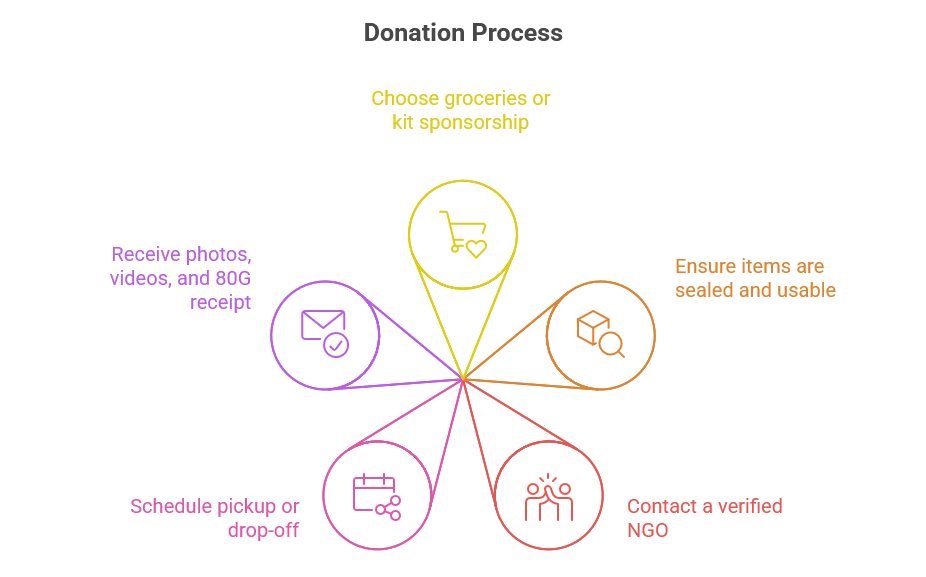
How to Donate Dry Ration Kits in India (Step-by-Step)
For corporates, NGOs also provide:
- CSR utilisation reports
- Distribution documentation
- Beneficiary impact data
Which NGO Is Right for Your Ration Donation?
If You Are…
Best NGO Option
Why
An individual donor
Unessa Foundation
Low cost per family, weekly drives
An apartment society
Robin Hood Army
Same-day surplus redistribution
A corporate donor
Akshaya Patra Foundation
Bulk capacity + CSR reporting
One Grocery Bag Can Change a Family’s Path
A family without food lives in survival mode.
A family with ration support plans for tomorrow.
In 2026, donating dry ration kits in India remains one of the fastest, most reliable ways to fight urban hunger—without waste, delay, or uncertainty.
Ready to Donate?
- Choose a verified NGO
- Sponsor ration kits or donate groceries
- Schedule pickup
- Feed families with dignity
Food security today builds a stronger India tomorrow.
Choose Verified NGO | Donate ₹700, Feed a Family
FAQs: Dry Ration Donation in India (2026)
What does a standard ration kit include?
Rice, wheat flour, dal, oil, salt, sugar, tea, and basic spices.
How long does one kit support a family?
Typically 15–20 days for a family of five.
Do NGOs provide free pickup?
Yes, most verified NGOs offer doorstep pickup in major cities.
Are ration donations tax-deductible?
Yes, donations to 80G-registered NGOs qualify for tax benefits.
Can societies or offices donate in bulk?
Absolutely. Bulk drives are encouraged and supported.
Can I donate dry ration kits in Vadodara city?
Vadodara is home to thousands of low-income and migrant worker families living in urban slums, labour colonies, and informal settlements across areas like Manjalpur, Makarpura, Sama, Gotri, Waghodia Road, Karelibaug, Ajwa Road, and nearby industrial zones.
For many daily wage households, access to basic dry rations like rice, wheat, dal, and oil remains uncertain—especially during job loss, illness, or seasonal work gaps.
How to donate dry ration kits locally in Vadodara
If you are based in Vadodara city or nearby areas, donating dry ration kits is simple and impactful.
Local donation options available
• Free doorstep pickup within Vadodara (selected verified NGOs)
• Scheduled pickup for apartments, offices, and societies
One Grocery Bag Can Change a Family’s Path
In 2026, donating dry ration kits in India remains one of the fastest, most reliable ways to fight urban hunger—without waste, delay, or uncertainty.
₹700 can equip one family with essential food support during a crisis month.