
Life for Youth in India’s Urban Slums: Idle Time, Limited Choices
Across India’s cities—from Ahmedabad and Mumbai to Delhi, Bengaluru, Chennai, and Kolkata—millions of young people grow up in dense urban slums where space is tight and opportunities are few.
According to Labour Bureau and state employment data (2025), urban youth unemployment in India ranges between 18–20%. In low-income settlements, the reality is even more fragile. Multiple education and child development studies show that nearly 60–70% of children in urban slums spend their after-school hours unsupervised, increasing exposure to:
- Substance abuse
- Petty crime and unsafe peer influence
- Early school dropout
- Long-term disengagement from education and skill development
The Core Issue: When young energy has nowhere safe to go, curiosity often turns into risk—not because of choice, but because of absence of options.
Why Sports Matter More Than Entertainment
In underserved communities, sports are not a luxury or pastime.
They provide structure, routine, and direction—things many children lack once the school day ends.
A NITI Aayog Youth Development Study (2024) found that regular participation in organized sports can:
- Reduce youth involvement in crime and risky behavior by up to 30%
- Improve emotional resilience, teamwork, and discipline
- Increase school attendance, focus, and retention
- Build leadership, confidence, and social skills
For many children, sports become the first place where they learn rules, respect, responsibility, and self-belief.
The Reality on the Ground: Playing Without Proper Gear
In many Indian slums, children still play cricket with wooden planks instead of bats and football using bundled rags tied with tape. These makeshift solutions, widely reported in Times of India coverage on slum tournaments, limit:
- Skill development
- Player safety
- Confidence during competitive play
Without proper equipment, even the most enthusiastic child is held back.

🌟 From Slums to Stadiums: Indian Athletes Who Prove Opportunity Changes Everything
Some of India’s biggest sports stars didn’t start with privilege—they started with scarcity. What changed their lives wasn’t luck, but access.

MS Dhoni
Before becoming India’s World Cup–winning captain, Dhoni worked as a ticket collector at a railway station. He trained with limited resources and shared equipment. Organized cricket and proper gear helped unlock his potential.

Sunil Chhetri
Growing up in a modest army household, Chhetri practiced on public grounds with basic footballs. Today, he’s India’s highest goal scorer—proof that one football can start a journey.

Milkha Singh
Known as The Flying Sikh, Milkha Singh once ran barefoot due to poverty. With opportunity and discipline, he became one of India’s greatest athletes.
What These Stories Tell Us
Talent exists everywhere. Opportunity does not.
For millions of children in India’s slums, a donated bat, football, or pair of shoes can mean:
- Safer after-school hours
- Confidence and discipline
- A path away from risk—and toward purpose
👉 One sports kit today could shape a champion tomorrow.
👉 Donate sports equipment in India and help turn potential into possibility.
What Your Donation Can Do
Your contribution—whether physical gear or financial support—creates ripple effects:
- ₹2,500 can equip one full team (5–10 children)
- A spare bat or football can keep dozens of kids active for months
- Larger donations can sponsor local tournaments and leagues
In India’s growing industrial and cultural landscape, sports can become a bridge between potential and purpose.
1 Sports Kit Costs ₹2,500 | Activate 10 Young Lives
Top Verified NGOs to Donate Sports Equipment in India (2026)
All NGOs below are 80G/12A certified, verified via GiveIndia, official reports, and 2024–25 audits.
Since 2023, it has supported 2,000+ kids with Manjalpur/Gorwa clinics; 35% idle time cut.
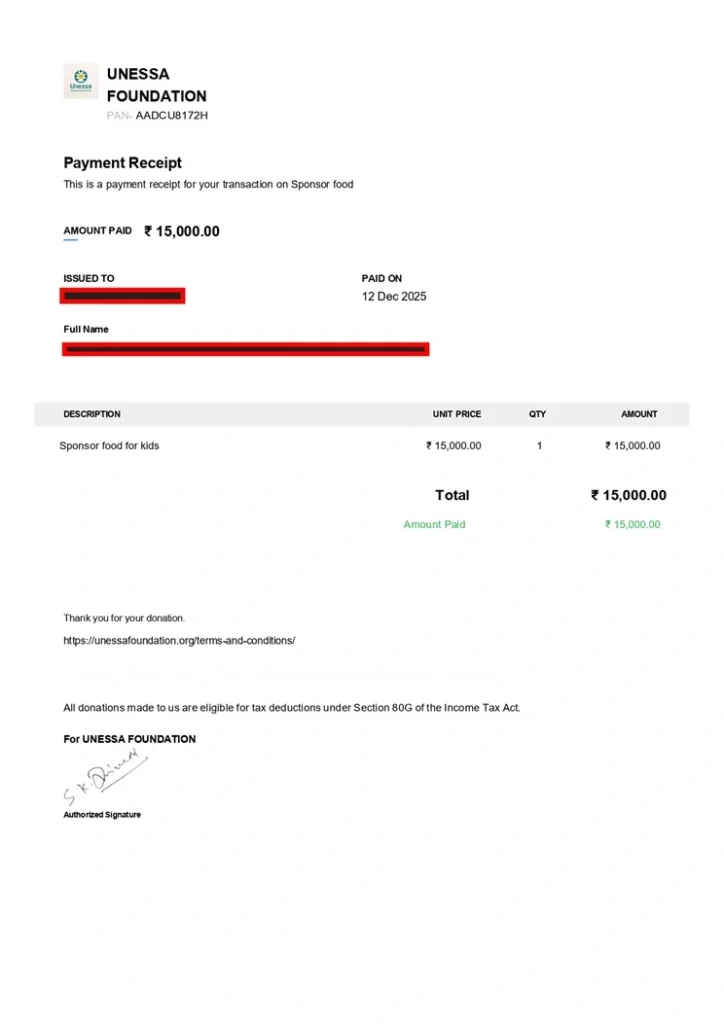
Unessa Foundation – Active Futures Program
Accepted Items
- Cricket kits (bats, balls, pads, helmets)
- Footballs, volleyballs
- Badminton rackets/shuttles
- Chess/carrom, skipping ropes, yoga mats
Contact
+91 63631 98779 | hello@unessafoundation.org
Pickup
Free, 7 days/week.
Bal Bhavan Society Vadodara
Since 1980, it has served 18,000+ kids (5-16); VMC school ties boost participation 40%.
Accepted Items
- Basketballs/hoops
- cricket nets/gear
- table tennis
- athletics
Contact
Facebook @rotaryclubofbaroda
Sports for All Foundation (Reliance Youth Sports)
National outreach; 5,000+ youth yearly, 28% dropout cut.
Accepted Items
- Football kits/jerseys
- volleyball nets
- running spikes
- kho-kho
Contact
Local WASH networks
Rotary Club – Youth on Track
500+ members; 1,500+ kits in 2024-25, tournaments/track repairs.
Accepted Items
- Cricket/football kits
- badminton
- chess/carrom
- fitness bands
Contact
wateraidindia.org
📊 Comparison: Sport Equipments Donation NGOs in India (2026)
NGO Name
Best For
Accepted Sports
Free Pickup
Cost per Team
Unessa Foundation
Slum youth sports clinics
Cricket, football, badminton, indoor games
Yes
₹2,500
Bal Bhavan Society
Competitive youth leagues
Basketball, cricket nets, athletics
Yes
₹2,000
Sports for All Foundation
Competitive youth leagues
Football, volleyball, kho-kho
Limited
₹2,800
Rotary Club Vadodara
Tournaments & camps
Multi-sport kits, fitness gear
Yes
₹2,200
What You Should (and Shouldn’t) Donate
✅ Please Do
- Usable, safe sports gear
- Clean balls and intact bats
- Age-appropriate equipment
❌ Please Avoid
- Cracked bats
- Rusty metal equipment
- Unsafe or broken gear
Labeling items by sport and age group helps NGOs distribute effectively.
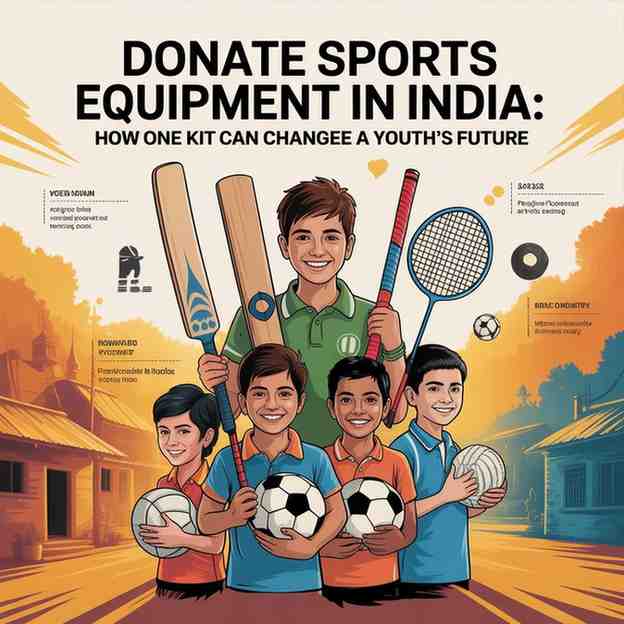
One Kit Can Change a Life
When you donate sports equipment in India, you’re not just giving children something to play with—you’re giving them structure, confidence, and hope.
The process is simple:
- Choose a verified NGO
- Donate a kit or sponsor a team
- Schedule a free pickup
- Receive tax receipt & impact update
In 2026, let’s turn idle hours into active futures, empty grounds into playgrounds, and untapped potential into leadership.
Donate sports equipment. Build champions. Strengthen communities.
₹2,500 Can Equip 1 Team | Keep 10 Children Off the Streets
FAQs: Donating Sports Equipment in India (2026)
What does donating sports equipment in India help achieve?
Donating sports equipment in India helps reduce youth exposure to crime, improves school attendance, and provides safe, structured after-school engagement for children in urban slums and low-income communities.
What types of sports equipment are most useful to donate?
Cricket kits, footballs, volleyballs, badminton rackets, skipping ropes, and indoor games like chess and carrom are in high demand across schools, slums, and community centers.
Do NGOs offer free pickup for sports equipment donations in India?
Yes. Many verified NGOs offer free doorstep pickup in major Tier-1 and Tier-2 cities across India. Pickup availability may vary depending on location and donation size.
How much does it cost to equip one sports team?
Equipping one team of 5–10 children typically costs ₹2,000–₹3,000, depending on the sport, equipment quality, and the NGO’s program structure.
Are sports equipment donations tax-deductible in India?
Yes. Donations made to 80G and 12A-registered NGOs are eligible for tax deductions under Indian income tax laws. Always request a valid donation receipt.
Can I donate sports equipment in Vadodara city?
Vadodara is home to thousands of children and youth living in urban slums, migrant settlements, and low-income communities across areas like Manjalpur, Makarpura, Gorwa, Karelibaug, Ajwa Road, Sama, Gotri, and Waghodia Road.
In these local communities, many children spend after-school hours without safe activities or access to proper sports gear. Donating sports equipment helps convert idle time into structured play, discipline, and skill development.
How to donate sports equipment locally in Vadodara?
If you are based in Vadodara city or nearby areas, donating sports equipment is simple and impactful.
Local donation options available
Free pickup within Vadodara (selected verified NGOs)
Drop-off at NGO centers, schools, or sports clinics
One Kit Can Change a Life
In 2026, let’s turn idle hours into active futures and empty grounds into playgrounds.
₹2,500 can equip one full team