
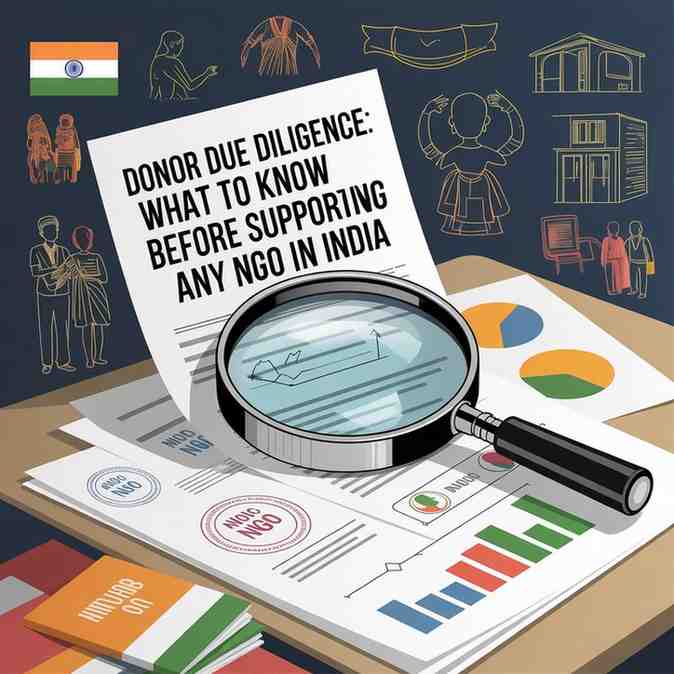

Introduction: Donating Is Easy — Donating Wisely Requires Awareness
Every year, millions of Indians donate money, materials, and time to NGOs. But while generosity is high, donor awareness is often low. Many donors don’t know:
- How to evaluate an NGO
- What questions to ask
- What documents to check
- How to confirm legitimacy
- How to avoid fraud
- How to maximize the impact of their contribution
This lack of due Diligence leads to:
- Wasted donations
- Fraud
- Misuse of funds
- Zero impact
- Donor disappointment
- Loss of trust in the nonprofit sector
This guide provides India’s most practical and authoritative Donor Due Diligence checklist for donors, enabling safe, impactful, and responsible giving.
What Is Donor Due Diligence?
Donor Due Diligence is the process of verifying:
- NGO legitimacy
- Compliance and certification
- Transparency and impact
- Fund utilization systems
- Beneficiary outcomes
Due diligence ensures your donation is safe, legal, and impactful.
Why Donor Due Diligence Matters
Here’s why donors must verify before donating:
1. Protects Against Fake NGOs
Thousands of fraudulent NGOs operate on social media. Due diligence prevents falling into scams.
2. Ensures Legal Compliance
To claim tax benefits under 80G, donors must donate to NGOs with valid documentation.
3. Confirms That Donations Create Real Impact
Verified NGOs document and report every program.
4. Enhances Donor Confidence
Transparency allows donors to give more confidently and consistently.
5. Promotes Ethical Philanthropy
Due diligence encourages NGOs to follow best practices.
6. Prevents Emotional Manipulation
Fake NGOs prey on emotional urgency (e.g., disasters, winter relief). Rational verification protects donors.
The Essential Donor Due-Diligence Checklist (India 2025)
Before supporting any NGO, verify the following:
1. Legal Registration Documents
Donors should request:
- Trust Deed
- Society Registration Certificate
Section 8 Incorporation Certificate
2. 80G Certificate (Tax Deduction for Donors)
Must be:
- Valid
- Renewed
- With URN (post-2021 format)
3. 12A Certificate (Tax Exemption for NGOs)
Ensures NGO donations are legally accepted.
Learn More How to Verify!
4. PAN Card (NGO Name)
NGO PAN must match the organization name.
Personal PAN = red flag.
5. Bank Account in NGO’s Legal Name
Don’t donate to:
- Personal bank accounts
- Personal UPI IDs
- Mobile wallets
NGO bank accounts ensure financial traceability.
6. Authentic Website & Public Presence
Check:
- Real images
- Impact data
- Projects
- Reporting
- Contact details
Social media alone is not enough.
7. Verified Impact Evidence
Ask for:
- Distribution photos/videos
- Beneficiary lists
- Impact reports
- Case studies
Fake NGOs avoid this.
8. Annual Audit & Financial Transparency
Every genuine NGO publishes:
- Income & expenditure statements
- Balance sheets
- Auditor remarks
9. Governance & Team Details
A real NGO discloses:
- Trustees
- Directors
- Volunteers
- Management team
Fake NGOs hide this.
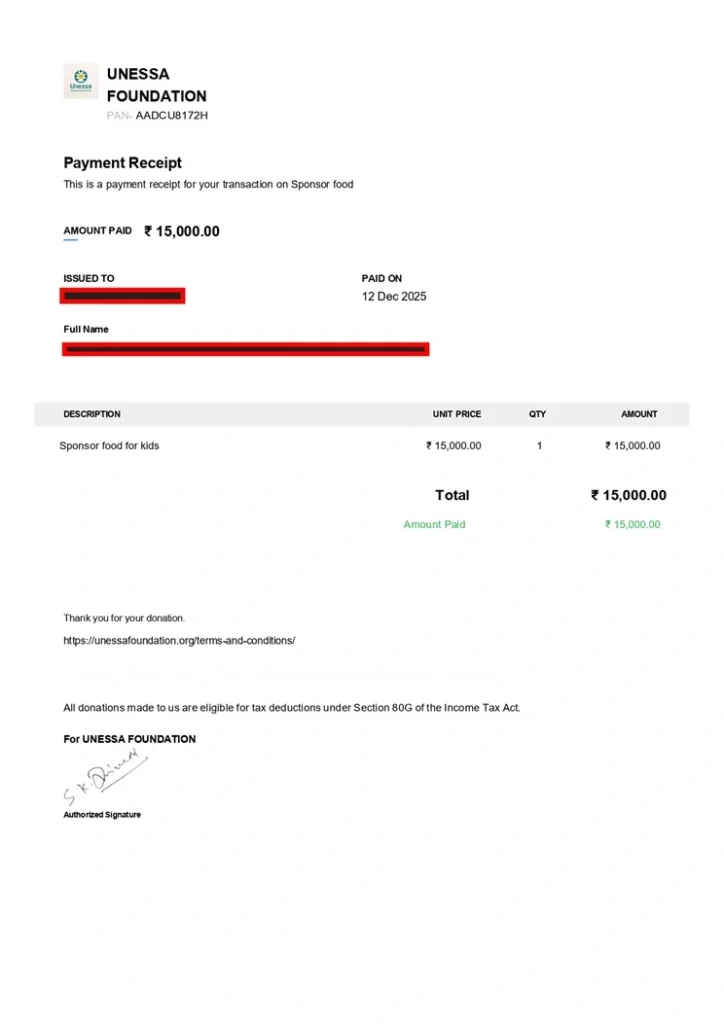
10. Receipts & Documentation System
A verified NGO issues:
- Donation Receipt
- 80G Receipt
- Thank-You Note
If they cannot issue these → do not donate.
11. Program Reporting & Updates
Donors should receive:
- Monthly/quarterly updates
- Impact summaries
- Progress reports
12. Ethical Communication
Verified NGOs avoid:
- Exaggerated claims
- Manipulative emotional content
- Fake urgency messages
Questions Every Donor Must Ask an NGO Before Donating
Here are the 16 essential questions:
1. Are you legally registered? Under which Act?
(Trust / Society / Section 8)
2. Is your 80G certificate valid?
Share the latest copy.
3. Is your 12A certificate valid?
4. Can you share your PAN and bank details?
5. How do you ensure funds are used ethically?
6. Who are your trustees or board members?
7. Do you publish annual audit reports?
8. Can you share impact photos and reports?
9. How do you select beneficiaries?
10. How do you track distribution?
11. What percentage of donations goes to administration?
12. What programs are currently active?
13. Who are your partners or collaborators?
14. How do you communicate with donors?
15. Can donors visit your project locations?
16. What makes your NGO different from others?
If an NGO hesitates → red flag.
Common Red Flags Donors Should Watch For
Red Flag
Why It's Problematic
No documents
Likely illegal
Personal accounts used
Zero accountability
Fake photos
Fraudulent activity
No receipts issued
Misuse of funds
No website
Lack of transparency
Anonymous founders
Hidden agenda
Only active during emergencies
Opportunistic
No 80G
No tax benefit
Stolen images
High fraud probability
Avoid NGOs with 2 or more red flags.
How Verified NGOs Operate Differently
Verified NGOs follow:
- Documented processes
- Financial controls
- Transparent communication
- Monitoring & evaluation systems
- Ethical storytelling
- Donor reporting
- Compliance frameworks
These practices ensure donors can give confidently.
Why Unessa Foundation Is a Safe Choice for Donors
Unessa Foundation ensures:
- Valid Trust/Society/Section 8 registration
- 80G & 12A compliance
- Transparent PAN & bank details
- Documented impact reports
- Verified photos and videos
- Donation receipts & acknowledgments
- Ethical communication
- Real-time donor updates
- Strong governance & accountability
This is why Unessa is trusted nationally for safe, high-impact giving.
Support India’s Verified, Transparent NGO: Unessa Foundation
Donor Best Practices: How to Give Responsibly
- Always request legal documents
- Check expiry of 80G & 12A
- Avoid personal UPI payments
- Verify impact evidence
- Ask for receipts
- Support verified NGOs only
- Look for transparency signals
- Ask questions
- Avoid impulsive emotional giving
- Subscribe to NGO updates
Responsible giving = sustainable impact
Become a responsible donor today. Support Unessa Foundation — India’s Verified, Transparent & Impact- Driven NGO.
FAQ
1. What is the most important thing donors should check?
Valid 80G, 12A, and proper documentation.
2. Should donors avoid NGOs without websites?
Not always—but they must provide documents and impact proof.
3. Are personal UPI donations safe?
No. Always donate to NGO-owned accounts.
4. How do donors confirm real impact?
By requesting photos, reports, and distribution logs.
5. Why trust Unessa Foundation?
Unessa meets all compliance standards and provides verified impact reporting.