


Introduction: Fake NGOs Are Rising — And Donors Must Stay Alert
India has millions of NGOs, but not all are genuine, transparent, or even operational.
Every year, countless donors unknowingly send money, goods, or relief materials to:
- Unregistered groups
- Fake NGOs
- Dormant entities
- Social media-based scammers
- Fraudulent donation drives
These organizations exploit emotions during disasters, winters, festivals, or emergencies and often disappear after collecting funds.
To protect donors from fraud and ensure contributions create real impact, this expert guide outlines the top red flags of fake NGOs in India — based on national compliance guidelines, donor safety reports, and Unessa Foundation’s extensive field experience.
What Is a Fake NGO?
A fake NGO is an entity that misrepresents itself as a charitable organization but lacks:
- Legal registration
- Valid certifications
- Field operations
- Transparency
- Impact documentation
Its primary motive is often financial fraud, not public service.
Why Fake NGOs Are Increasing in India
Fake NGOs thrive because:
1. Donors donate emotionally, not scientifically.
Many people give impulsively during disasters or festivals.
2. Social media makes fraud easy.
Instagram, WhatsApp, and Telegram are filled with unverified donation pages.
3. Lack of digital literacy.
Most donors don’t know how to verify an NGO.
4. Tax exemption confusion.
Donors assume every NGO provides 80G benefits—this is incorrect.
5. No national penalty structure for NGO fraud.
Many scammers operate repeatedly without consequence.
This makes donation due diligence essential.
Top Red Flags of Fake or Fraudulent NGOs in India
Below are the biggest warning signs that an NGO is unsafe.
No Legal Registration Documents
Every genuine NGO must be registered under:
- Trust Act
- Societies Registration Act
- Section 8 of Companies Act
If an NGO cannot provide:
- Registration certificate
- Trust deed / MoA & AoA
- Registration number
👉 Do not donate.
Personal Bank Accounts or UPI IDs for Donations
A verified NGO never uses:
- Personal bank accounts
- UPI IDs in individual names
- Mobile wallets
All donations must go to a bank account registered under the NGO’s legal entity name.
Personal accounts = 100% fraud risk.
No 80G or 12A Certification
Fake NGOs avoid 80G/12A because it requires:
- Compliance
- Tax reporting
- Documentation
- Financial transparency
If they cannot provide valid certificates → They are not compliant.
No Website or Fake Online Presence
Fraudulent NGOs often exist only on:
- Telegram groups
- Personal Facebook pages
They avoid websites because websites require:
- Legal identity
- Public accountability
No Impact Proof
A genuine NGO shares:
- Photos
- Videos
- Project reports
- Beneficiary stories
- Annual reports
Fake NGOs avoid documentation because they have no real work.
Pressure-Based Donation Appeals
Scammers use emotional manipulation:
- “Donate NOW or someone will die.”
- “5 hours left to meet target.”
- “Send money urgently.”
Real NGOs do not pressure donors.
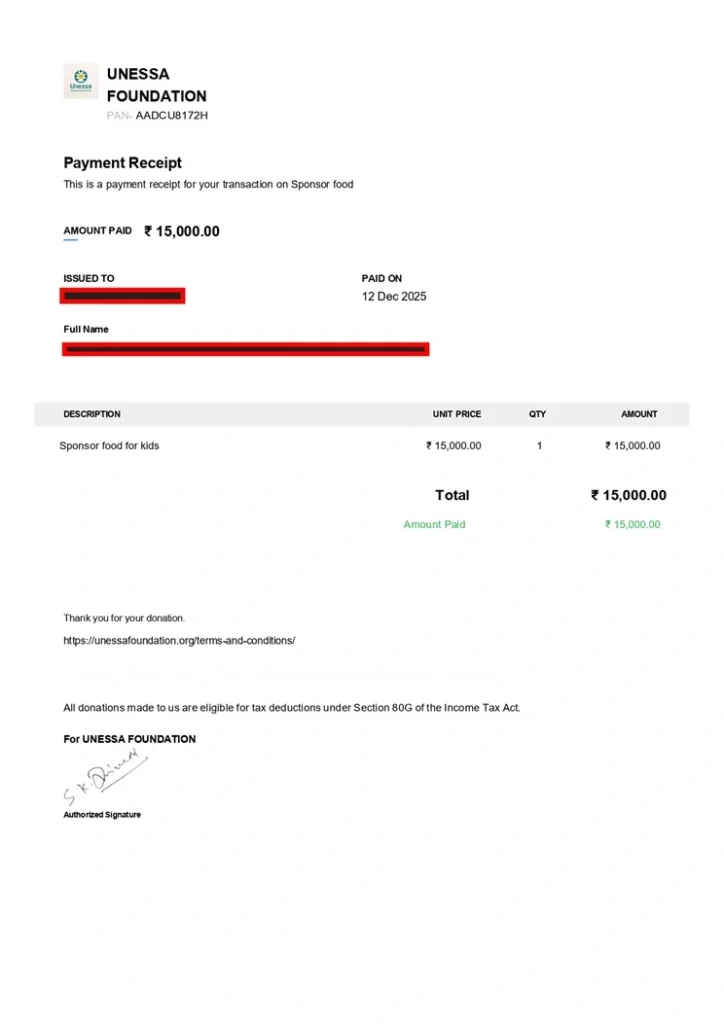
No Receipts or Acknowledgments
A verified NGO always issues:
- Donation receipts
- 80G receipts
- Confirmation emails
No receipts = no transparency.
No Clear Contact Information
Fake NGOs avoid revealing:
- Office address
- Phone number
- Email ID
- Team details
Genuine NGOs are transparent.
Stock Images or AI Images Used as Impact Photos
Fake NGOs frequently use:
- Google images
- AI-generated visuals
- Photos stolen from real NGOs
This is a major fraud indicator.
No Mention of Trustee or Founders
A real NGO lists:
- Trustees
- Directors
- Leadership team
- Volunteer details
Fake NGOs remain anonymous.
Only Active During Disaster or Festival Seasons
If an NGO appears only during:
- Floods
- Earthquakes
- Extreme winters
- Festivals
…and disappears afterward, it’s likely fraudulent.
No Transparency in Fund Utilization
Fraudulent NGOs cannot show:
- Audit reports
- Expense breakdown
- Distribution logs
Annual financial statements
Comparison Table: Real vs Fake NGOs in India
Indicator
Verified NGO
Fake/Unverified NGO
Registration
✔ Valid
❌ None
80G/12A
✔ Updated
❌ Missing
Receipts
✔ Provided
❌ Not provided
Impact Photos
✔ Real images
❌ Stock/AI images
Website
✔ Active
❌ None
Bank Account
✔ NGO name
❌ Personal account
Contact Details
✔ Clear
❌ Fake/untraceable
Reporting
✔ Regular
❌ Zero transparency
Learn More About this!
Why Donors Must Be Careful: Risks of Fake NGOs
- Financial loss
- Misuse of personal data
- No tax benefits
- No real beneficiaries helped
- Legal issues with fraudulent receipts
- Ethical damage to legitimate NGOs
Fake NGOs damage the entire social sector and reduce public trust in genuine organizations.
How to Protect Yourself: 12-Step Donor Safety Checklist
Unessa Foundation:
- Legal registration
- Registration Certificate
- Trust/Society/Section 8 Documents
- PAN
- NGO bank account
- Valid 80G
- Valid 12A
- Impact documentation
- Annual audit reports
- Real beneficiary evidence
- Public recognition or reviews
If any of these raise concerns → walk away.
Why Unessa Foundation Is a Safe, Verified NGO for Donations
- Fully registered NGO
- Valid 80G & 12A certifications
- PAN & bank transparency
- Documented impact with real images & videos
- Structured donation pickup system
- Clear receipts & donor reports
- Nationwide recognition
- Zero-risk donation experience
No shortcuts. No ambiguity.
Just verified, transparent, ethical, impactful work.
Donate Safely — Choose Unessa Foundation, India’s Trusted Verified NGO
Quick Identification Guide: Fake NGO Red Flag Checklist
- Personal UPI IDs
- No documentation
- Generic emotional posts
- No real pictures
- No receipts
- No tax certificates
- No traceable address
- No donor reports
If you see two or more → High fraud risk.If you notice even two or more, avoid donating.
Protect your donations from fraud — Support Verified NGOs like Unessa Foundation.
FAQ
1. How do I know if an NGO is fake?
Look for missing documents, personal bank accounts, no receipts, and no fieldwork proof.
2. Are online donation pages safe?
Only if backed by legally verified NGOs. Avoid anonymous pages.
3. Can fake NGOs issue 80G receipts?
Yes — illegally. Always verify the certificate number online.
4. Why do fake NGOs use personal accounts?
To avoid legal scrutiny and keep money untraceable.
5. How is Unessa Foundation different?
Unessa provides complete legal compliance, transparency, verified impact, structured programs, and donor-safe systems