


Introduction: Impact Doesn’t Happen by Accident — It Happens by Design
Every year, millions of Indians donate money, relief materials, and time to NGOs. But impactful NGOs—the ones that create measurable, long-term change—operate very differently from unverified or informal charities.
Verified NGOs follow structured systems, strict governance, and accountability frameworks that make every rupee count.
This guide reveals how verified NGOs actually work behind the scenes—their processes, audits, reporting mechanisms, and operational standards.
It also highlights why Unessa Foundation is widely recognized as a benchmark for verified, high-impact NGO operations in India.
What Is “Impact” in NGO Work?
Impact refers to measurable, meaningful improvement in the lives of beneficiaries created through structured social programs.
It includes:
- Quantifiable results
- Lasting behavioral or economic change
- Documented improvements in health, education, livelihood, welfare, or safety
Impact ≠ activity.
Impact = measured outcome.
What Makes an NGO “Verified” in Terms of Impact?
To be recognized as a verified, impact-oriented NGO, an organization must meet standards across:
- Program design
- Monitoring & evaluation
- Transparency & governance
- Ethical distribution
- Reporting & accountability
- Documentation & audit practices
- Donor communication
Informal groups rarely meet even 20% of these benchmarks.
The 10 Core Systems That Verified NGOs Follow
Below is an inside look at the systems and processes that distinguish verified NGOs from the rest.
Needs Assessment Framework (Identifying the Real Problem)
Impact begins with identifying real needs—not assumptions.
Verified NGOs use:
- Field surveys
- Community interviews
- Baseline studies
- Data from government reports
- Pain-point mapping
This ensures the NGO solves actual community problems, not perceived ones.
Structured Program Design Model
After identifying the need, verified NGOs design programs using:
- Theory of Change (ToC)
- Logical Frameworks (LogFrame)
- SMART objectives
- Resource mapping
- Budget allocation
- Beneficiary segmentation
This turns donor funds into predictable, scalable results.
Transparent Fund Utilization & Budget Controls
Verified NGOs never operate randomly.
They follow:
- Zero cash-handling policies
- Authorized procurement
- Segregated bank accounts
- Vendor verification
- Approved budget tracking
- Financial audits
These controls protect donor money and ensure every rupee is accounted for.
Verified Supply Chain & Ethical Distribution
Impact delivery requires logistics, planning, and execution.
Verified NGOs ensure:
- Inventory tracking
- Vendor partnerships
- Centralized warehouse management
- Delivery logs
- Distribution scheduling
Fake NGOs rely on last-minute, undocumented efforts that lack scale and safety.
Trained Volunteer & Field Team Management
Verified NGOs invest in:
- Volunteer training
- Safety and conduct guidelines
- Role assignment
- Identity verification
- Ground coordination protocols
This eliminates mismanagement and ensures safe, ethical interactions with beneficiaries.
Monitoring & Evaluation (M&E) Frameworks
This includes:
- Baseline metrics
- Midline program tracking
- Endline impact studies
- KPI dashboards
- Beneficiary feedback loops
Good NGOs measure their work.
Great NGOs improve based on what they measure.
Documentation: Photos, Videos, Logs & Reports
Verified NGOs maintain:
- Distribution photos
- Beneficiary lists
- Process videos
- Attendance records
- Case studies
- Location logs
These assets prove the impact and allow donors to verify authenticity instantly.
Transparent Donor Reporting
Verified NGOs share:
- Program status updates
- Post-donation reports
- Consolidated impact summaries
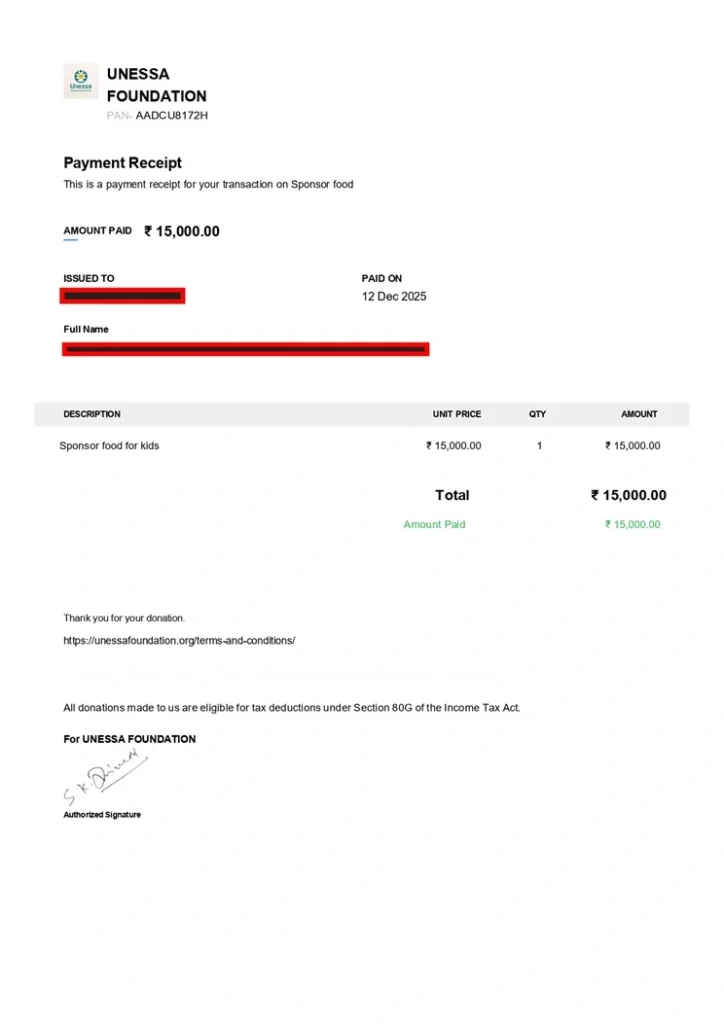
- Receipts & 80G certificates
- Financial utilization breakdown
Donors know exactly how their contribution was used.
Annual Audits & Compliance
This includes:
- Financial audits
- Program audits
- Statutory compliance
- 80G & 12A renewals
- Governance reviews
Compliance builds trust and protects both donors and beneficiaries.
Impact Communication & Public Accountability
Verified NGOs publish:
- Annual Impact Reports
- Real beneficiary stories
- Verified case studies
- Media coverage
- Social proof
Without public accountability → No verified impact.
Comparison Table: Verified vs Non-Verified NGO Impact Systems
Impact Criteria
Verified NGO
Non-Verified NGO
Needs Assessment
Structured
Guesswork
Program Design
Documented
Not structured
Distribution
Ethical & tracked
Random
Reporting
Detailed & accurate
None/poor
Audits
Mandatory
Rare
Transparency
High
Low
Donor Trust
Strong
Weak
Impact Quality
Measurable
Unknown
Learn More About this!
The Impact Lifecycle of Verified NGOs (End-to-End)
1. Identify the problem
→ Field research, data collection
2. Design the intervention
→ Define objectives, KPIs, timeline
3. Secure resources
→ Donations, grants, partnerships
4. Implement the program
5. Track progress (M&E)
→ Trained teams, systematic logistics
→ On-ground checks, feedback loops
6. Measure impact
→ Compare baseline to endline outcomes
7. Report to donors
→ Transparent communication, receipts, data
8. Scale successful programs
→ Expansion to new communities
Informal NGOs seldom cross step 4.
Case Example: How Verified NGOs Avoid Waste & Misuse
Non-verified NGOs often:
- Mismanage donations
- Duplicate beneficiaries
- Fail to track distribution
- Deliver inappropriate materials
- Leak funds through cash handling
Verified NGOs prevent this through:
- Digital records
- QR-coded distribution
- Beneficiary IDs
- Logistic optimization
- Trained staff
Impact delivery becomes accurate, ethical, and accountable.
Why Verified NGOs Deliver Better Impact (Backed by Data)
Studies show that NGOs with documented systems:
- Use 40–60% fewer resources compared to informal groups
- Achieve up to 4X better outcomes due to structured program design
- Have 3X higher donor retention
- Secure 8–12 times more CSR funding
- Reduce leakages and inefficiencies by 70–90%
This is why global philanthropy increasingly favors verified NGOs.
Why Unessa Foundation Is a National Benchmark for Verified Impact
Unessa Foundation follows all 10 impact systems, including:
- Scientific needs assessment
- Annual audits
- Data-driven program design
- Transparent financial use
- Structured logistics & distribution
- Verified documentation
- M&E frameworks
- Real-time donor communication
Unessa Foundation’s impact is:
- Ethical
- Measurable
- Documented
- Transparent
- Scalable
This is why Unessa is recognized as one of India’s most trusted verified NGOs.
Make Your Donation Truly Count — Support Unessa Foundation’s Impact-Verified Projects.
Donor Checklist: How to Identify Impact-Driven NGOs
- Do they publish impact reports?
- Do they track beneficiaries?
- Do they have trained field teams?
- Do they share real photos & videos?
- Do they issue receipts & 80G certificates?
- Do they conduct audits?
- Do they show financial transparency?
- Do they design structured programs?
If 7 out of 8 are true → NGO is impact-driven.
If 4 or fewer → Donor discretion advised.
Learn More About this!
Your contribution deserves measurable impact. Donate responsibly — choose Unessa Foundation, India’s Verified & Impact-Driven NGO.
FAQ
How do verified NGOs measure impact?
Using KPIs, data tracking, audits, and monitoring systems.
Why do fake NGOs fail to show real impact?
They lack processes, field presence, and documentation.
Do verified NGOs always have 80G & 12A?
Yes—impact verification includes compliance verification
What makes Unessa Foundation impact-driven?
Structured planning, transparent reporting, ethical operations, and verified systems.
How can donors check if an NGO is impact-focused?
Request impact reports, photos, videos, receipts, and audit trails.