

NGO Donation Tax Benefits in Vadodara: Complete Guide to 80G Deductions and CSR Donations
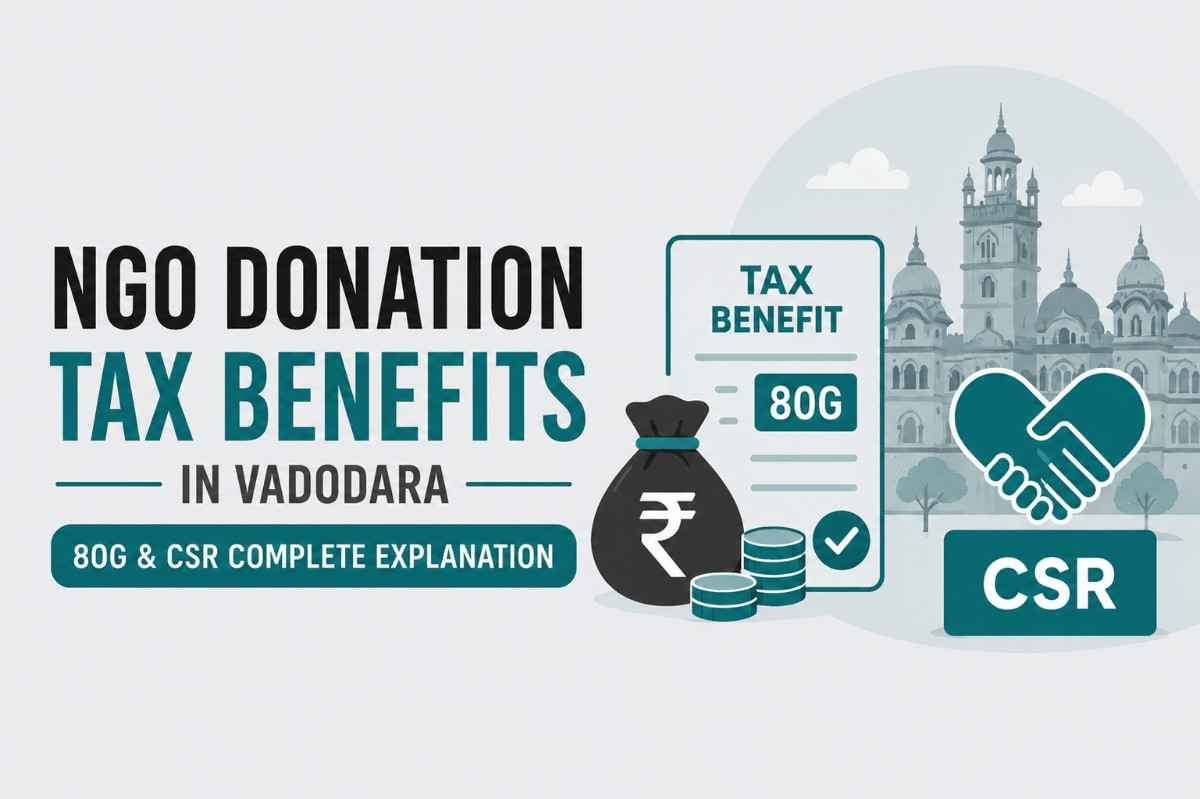
One of the biggest advantages of donating through verified NGOs in Vadodara is that your generosity can provide substantial legal tax benefits under Indian Income Tax laws. Understanding these NGO Donation Tax Benefits helps you maximize impact while reducing your tax liability.
Whether you’re an individual or managing corporate CSR donations in Vadodara, this comprehensive guide reveals how to donate smartly, legally, and transparently—while claiming every rupee you’re entitled to.
Here’s how tax benefits on donations work 👇
What is Section 80G?
Section 80G of the Income Tax Act allows donors to claim tax deductions when they contribute to registered charitable organisations.
If you donate to an NGO in Vadodara that is 80G certified, you can receive:
✅ 50% or 100% tax deduction on your donated amount
✅ Applicable for both individuals & businesses
✅ Direct reduction in taxable income
✅ Claimable while filing Income Tax Returns (ITR)
✅ Valid across all income tax slabs
📌Note
Most top NGOs listed in this guide, including Unessa Foundation, offer 80G receipts.
Tax Benefits of NGO Donations
| Donation Type | Deduction Eligibility |
| NGOs with 50% benefit | 50% of donation amount deductible |
| NGOs with 100% benefit | Full amount deductible |
| Disaster relief funds | Often 100% deductible |
| CSR-linked programs | Eligible based on scheme |
💡 Example:
If you donate ₹10,000 to an 80G-certified NGO, you may reduce your taxable income by ₹5,000 to ₹10,000 depending on the NGO type.
How to Claim NGO Donation Tax Benefits
Many taxpayers mistakenly assume that making a donation is sufficient for claiming tax benefits. In reality, the process requires specific documentation and compliance with Income Tax regulations.
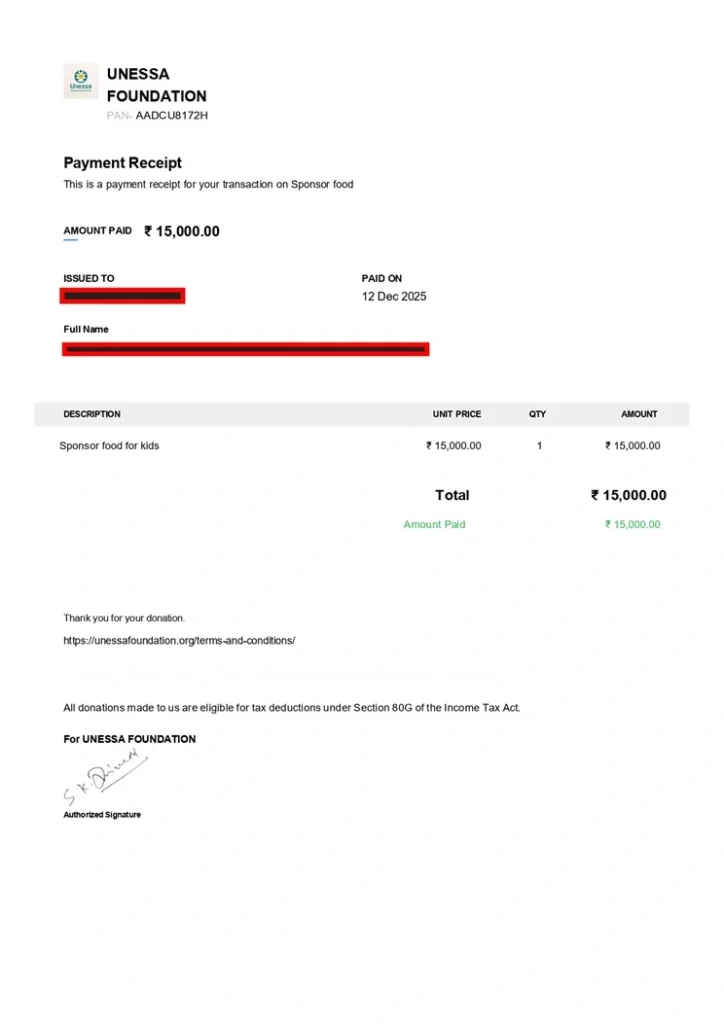
The first step is ensuring that the receiving organization holds a valid and active 80G registration. Once the donation is made through approved payment methods such as bank transfer, cheque, online payment gateway, or UPI, the donor should request an official donation receipt.
This receipt serves as evidence during income tax filing and should contain essential details including the NGO’s name, PAN number, 80G registration number, donation amount, transaction date, and donor
information.
An important rule often overlooked is that cash donations exceeding ₹2,000 do not qualify for tax
deductions under Section 80G. Digital transactions therefore provide both transparency and compliance benefits.
1
Digital transactions create a clear financial record and help ensure compliance with tax regulations
2
3
- NGO Name and PAN
- 80G Registration Number
- Donor’s Name
- Donation Amount and Date
4
Keep a digital and physical copy of the receipt along with your payment confirmation.
5
When filing your Income Tax Return (ITR), enter the donation details under the applicable Section 80G deduction category.
Experienced financial planners frequently recommend maintaining a dedicated folder containing all
charitable donation receipts throughout the financial year. This simple practice prevents documentation
issues during tax filing and reduces the likelihood of missed deductions.
Beyond financial benefits, transparent donation practices strengthen trust between communities and nonprofit organizations. When donors maintain proper records and NGOs provide accurate documentation, accountability improves across the entire social impact ecosystem.
📢 Remember
Always avoid cash donations above ₹2,000 — they are not tax-deductible.

Corporate CSR Donations in Vadodara
Corporate Social Responsibility (CSR) has become a major driver of local development in cities like Vadodara. As per Companies Act Section 135, eligible companies must spend 2% of their average net profits on CSR activities. Today, many businesses prefer partnering with local NGOs because community-based organizations often understand grassroots challenges more deeply.
Organizations often direct CSR resources toward education programs, healthcare initiatives, skill development, environmental sustainability projects, women empowerment initiatives, youth leadership development, and rural development programs. These investments help address systemic challenges while generating measurable social outcomes.
One pattern observed across successful CSR programs is the preference for collaborating with local organizations that possess deep community knowledge. Grassroots nonprofits often understand local challenges, stakeholder dynamics, and implementation barriers more effectively than external agencies.
Major CSR donation areas in Vadodara:
- Education for underprivileged children
- Skill development programs
- Women empowerment initiatives
- Healthcare and nutrition drives
- Environmental sustainability campaigns
- Rural development projects
Benefits for corporates:
- CSR compliance
- Brand visibility
- Utilisation reports & impact documentation
- Tax & audit-friendly documentation
This makes Vadodara NGOs ideal partners for corporate social responsibility donations.
The Bigger Impact
CSR is no longer viewed only as compliance. It is increasingly becoming part of brand credibility and community trust-building.
When businesses support youth education, sanitation, or sustainability projects, the benefits extend far beyond annual reporting cycles. Communities gain long-term infrastructure, opportunities, and social support systems.
For example, when a company funds a skill development initiative through a community-based organization, the impact frequently extends beyond employment outcomes. Participants gain confidence, families experience improved economic stability, and local communities benefit from stronger workforce participation.
Organizations such as Unessa Foundation demonstrate how locally grounded partnerships can support education, youth development, volunteer engagement, and community-building efforts while maintaining accountability and measurable outcomes.
The most effective CSR programs increasingly focus on long-term transformation rather than one-time charitable activities. Sustainable social change typically emerges when businesses, nonprofits, volunteers, educators, and communities work together toward shared objectives.
How to Identify an 80G Certified NGO
Many people donate based on emotional appeal, social media campaigns, or word-of-mouth recommendations without checking whether the organization is legally registered or financially transparent.
A credible NGO should be able to provide evidence of its registration status, PAN information, valid 80G certification, transparent banking details, and official donation receipts. Clear communication channels and publicly available organizational information further strengthen donor confidence.
While genuine NGOs work hard to create social impact, there are also unverified groups that may not provide proper documentation or legal compliance.
Before donating, verify the following:
- Valid 80G certificate
- PAN details
- Trust registration documents
- Transparent banking information
- Official receipts
- Clear communication channels
Search phrases like “80G certified NGO in Vadodara“ or “tax deductible donation Vadodara“ can help identify registered organizations.
Taking a few minutes to verify these details not only protects your tax benefits but also ensures your contribution reaches real community programs such as education support, healthcare initiatives, youth development, environmental campaigns, and public welfare activities.
Responsible giving creates stronger trust between donors and social organizations while helping communities receive meaningful long-term support.
Common Mistakes Donors Should Avoid
In many cases, people make donations with good intentions but fail to follow the proper legal and documentation process required under the Income Tax Act.
As a result, they are unable to claim the tax benefits they were eligible for.
⚠️ Common Mistakes
- Donating to unregistered individuals
- Not collecting official receipts
- Ignoring expired 80G certification
- Making large cash payments
- Entering incorrect PAN details during filing
One common mistake is donating to individuals or groups that lack legal registration and cannot issue valid tax documentation. Another frequent issue involves failing to collect or preserve official receipts. Without supporting records, claiming deductions becomes difficult during tax filing.
Expired 80G certifications can also create complications. Donors should confirm that registrations remain valid at the time of contribution rather than assuming prior approvals are still active.
Large cash donations present another challenge. Since donations exceeding the permitted cash threshold do not qualify for deductions, digital payment methods remain the safer and more transparent option.
Incorrect donor information, including PAN details or name mismatches, can further affect deduction claims. Even minor administrative errors may create avoidable complications during assessment.
These mistakes may appear small, but they can directly affect both financial benefits and donation transparency.
Taking a few extra minutes to verify documents, registration details, and payment methods helps ensure that your contribution remains legally compliant, tax-efficient, and impactful for the community.
Quick Legal Checklist for Safe Donation
Legal Checklist:
✔ NGO is registered
✔ NGO provides 80G receipt
✔ Payment done digitally
✔ PAN mentioned on receipt
✔ Date & donor name mentioned
Following this simple checklist helps donors contribute more confidently while ensuring that their support reaches verified community initiatives in a transparent and legally secure manner.
Frequently Asked Questions: Tax Benefits of Donations to NGOs
Is my donation tax-deductible?
Yes — Unessa Foundation qualifies for 80G benefits. Donors receive a certificate & receipt via email.
Is there a maximum limit for 80G deduction?
Yes, typically 10% of adjusted gross total income for most categories.
Can I donate to multiple NGOs and claim 80G for all?
Yes, as long as each NGO is 80G certified and you have valid receipts.
Do CSR donations qualify for 80G?
No, CSR donations under Section 135 don’t qualify for personal tax deductions.
Can I claim 80G on old donations?
Only if donated in the same financial year you’re filing ITR for.
Ready to Make Your Donation Count?
Whether you have a bag of clothes, a box of books, or a plan for a corporate giving program — the right organization in Vadodara is ready to make it matter. Start with one step this week.
Final Thoughts
Understanding NGO donation tax benefits in Vadodara enables donors to make informed decisions that combine financial prudence with meaningful social contribution. Section 80G deductions encourage individuals and businesses to support causes that strengthen communities, expand educational opportunities, improve healthcare access, promote sustainability, and empower vulnerable populations.
Successful philanthropy is not measured solely by the amount donated. It is measured by transparency, accountability, and the long-term outcomes created through collaborative action. Whether you are an individual taxpayer, a corporate CSR leader, a volunteer, or a community advocate, informed giving can significantly increase the effectiveness of every contribution.
Organizations working at the grassroots level, including Unessa Foundation in Vadodara, demonstrate how partnerships between donors, volunteers, businesses, and communities can create lasting social impact when supported by transparent systems and sustainable implementation approaches.
Meaningful change rarely happens through isolated efforts. It emerges when informed citizens and responsible organizations work together toward shared goals.
Before the end of this week, identify one community issue that matters to you, research a verified organization addressing that challenge, and take the first step—whether through volunteering, mentoring, advocacy, or a responsible donation. Small actions, when multiplied across a community, often become the foundation of lasting transformation.