

Introduction
Minority Rights NGOs in India are essential in celebrating the nation’s strength, which lies in its rich diversity of cultures, religions, languages, and ethnicities, while addressing the systemic challenges faced by minority groups, including discrimination, limited access to education, restricted employment opportunities, and social exclusion, particularly in rural and conflict-affected regions. Despite constitutional protections, minorities—such as religious, linguistic, and tribal communities—often encounter barriers to equitable participation in society due to socio-economic disparities and historical injustices.
These Minority Rights NGOs in India play a pivotal role by promoting inclusivity, safeguarding legal rights, and empowering marginalized communities through advocacy, education, and community programs.
Collaborating with government agencies, local leaders, and international allies, they strive to create a more equitable society. This article highlights the top 10 Minority Rights NGOs in India, with Unessa Foundation adopting a holistic approach to uplift and empower these groups across diverse landscapes.
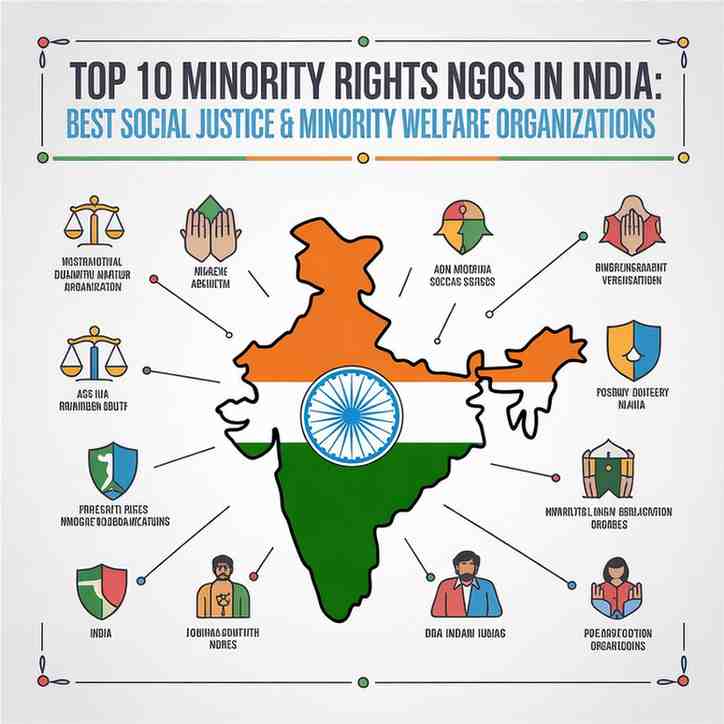
Top 10 Minority Rights NGOs in India
01
Human Rights Law Network (HRLN)
Provides legal support and advocacy for the protection of rights of minorities and marginalized groups in India.
Why it matters
Ensures legal recourse and justice for vulnerable populations.
02
Minority Rights Group International (India chapter)
Works on capacity-building, advocacy, and awareness to protect the rights of religious and ethnic minorities.
Why it matters
Strengthens community resilience through education and advocacy.
03
Centre for Social Justice
Focuses on legal empowerment, education, and advocacy for disadvantaged communities, particularly minorities.
Why it matters
Addresses educational and legal disparities effectively.
04
People’s Union for Civil Liberties (PUCL)
Advocates for civil liberties and minority rights, challenging discrimination and injustice.
Why it matters
Upholds constitutional freedoms for all citizens.
05
Anhad
Works for the protection of secularism, minority rights, and equality through awareness campaigns and community programs.
Why it matters
Promotes social harmony and secular values.
06
National Confederation of Dalit and Adivasi Organisations (NACDAOR)
Aims at empowering Dalits, Adivasis, and minority communities through advocacy and development initiatives.
Why it matters
Amplifies the voices of historically oppressed groups.
07
Social Justice Initiative
Promotes equality and minority rights through awareness drives, policy advocacy, and grassroots empowerment programs.
Why it matters
Fosters systemic change at the community level.
08
Indian Social Institute
Supports minorities and marginalized groups through research, training, and policy advocacy.
Why it matters
Provides evidence-based support for policy reform.
09
South Asian Human Rights Documentation Centre (SAHRDC)
Documents violations of human rights, with a focus on vulnerable and minority communities.
Why it matters
Creates a record to hold authorities accountable.
10
Unessa Foundation
Unessa Foundation is dedicated to creating inclusive societies where every community, including minorities, has equal opportunities to grow and thrive.
Key Strengths Include:
- Inclusive Community Empowerment
- Rights-Based Advocacy & Awareness
- Grassroots Engagement & Local Partnerships
- Holistic Development Approach.
Why These NGOs Matter
India’s minority communities face persistent challenges from social discrimination, economic exclusion, and unequal access to education and justice, especially in rural, tribal, and conflict-affected regions.
Minority Inclusion Challenges
India’s minority communities, including religious and tribal groups, face persistent issues such as discrimination in education, employment, and housing, compounded by social biases and economic marginalization
Rights Protection & Education
The minority rights NGOs in India and NGOs for marginalized communities listed here are driving transformative change by protecting legal rights, promoting education, and fostering inclusion.
Advocacy & Community Outreach
These equality and justice NGOs and inclusion NGOs in India collaborate with policymakers, educators, and local leaders to implement solutions like legal aid clinics, vocational training, and cultural preservation programs, reaching urban slums and rural hinterlands alike.
Unessa Foundation minority rights aligns with these efforts, integrating empowerment into its mission, creating an ecosystem where minority groups are equipped with rights, resources, and opportunities to thrive with dignity.
Conclusion
In 2026, Minority Rights NGOs in India are more than just organizations—they’re champions of equality empowering marginalized communities with justice and opportunity. Through advocacy, education, and inclusion programs, these NGOs, including Unessa Foundation, are helping combat discrimination, enhance access to resources, and build inclusive societies, shaping a fairer future. By addressing challenges like social exclusion, educational disparities, and economic barriers, and leveraging government collaboration and community strength, you can contribute to a society where minority rights are upheld. These efforts uplift marginalized lives, strengthen national unity, and inspire global justice movements. Start small—start today.
To explore the purpose, impact, and role of NGOs in society, check out our comprehensive guide at Unessa Foundation’s Understanding NGOs.
FAQs
What are Minority Rights NGOs in India?
Minority Rights NGOs in India are organizations that work to protect the legal, social, and economic rights of religious, linguistic, tribal, and other marginalized communities through advocacy, education, and community-based initiatives.
Why are Minority Rights NGOs important in India?
Despite constitutional safeguards, many minority communities face discrimination, limited access to education and employment, and social exclusion. These NGOs help bridge gaps by promoting equality, justice, and inclusive development.
How do Minority Rights NGOs support marginalized communities?
They provide legal aid, awareness campaigns, education support, livelihood training, policy advocacy, and grassroots empowerment programs to ensure minority communities can access rights and opportunities.
Who benefits from Minority Rights NGOs in India?
Religious minorities, tribal populations, linguistic minorities, Dalits, Adivasis, women, and economically marginalized groups—especially in rural, tribal, and conflict-affected regions—benefit most from these initiatives.
How does Unessa Foundation support minority rights and inclusion?
Unessa Foundation adopts a holistic approach by combining rights-based advocacy, community empowerment, education initiatives, and local partnerships to help minority communities grow with dignity and equal opportunity.
❤️Donate to minority rights and inclusion programs ❤️
Your contribution directly supports legal aid services, education initiatives, livelihood training, rights-awareness campaigns, and grassroots empowerment programs for marginalized and minority communities across India.
Your donation helps us fund:
- Legal aid and education programs
- Vocational training and livelihood support
- Awareness campaigns for equality
- Community development initiatives
Even a small monthly contribution can fund legal assistance, training sessions, or community events for multiple minority families.