
COMMUNITY & GIVING
Sanitation and Hygiene NGOs in India: 9 Important Profiles
Sanitation and Hygiene NGOs in India: explore official sources, selection limits and practical questions about current services, eligibility, reporting and the actual recipient.
Published by Unessa Foundation · Editorial update: 4 November 2026
On this page
- Introduction
- Nine sanitation and hygiene leads and a separate education role
- Why These NGOs Matter
- Checking current information and enquiry routes
- Selection criteria and limits of this list
- Questions specific to sanitation and hygiene ngos in india
- Additional research lead: Shelter Associates
- Keep a usable comparison record
- Use the right route for the intended support
- Conclusion
- Frequently asked questions
- Continue reading
Introduction
Sanitation and hygiene involve usable facilities, water, waste handling, information and sustained practices. Needs differ within rural Uttar Pradesh, Mumbai and other settings. Government programmes and civil-society activities have distinct responsibilities;confirm the actual gap and receiving institution before proposing support.
Some organisations construct or improve facilities;others focus on information, community participation, water systems or related education. Construction, operation, use and health outcomes are different measures and require their own evidence.
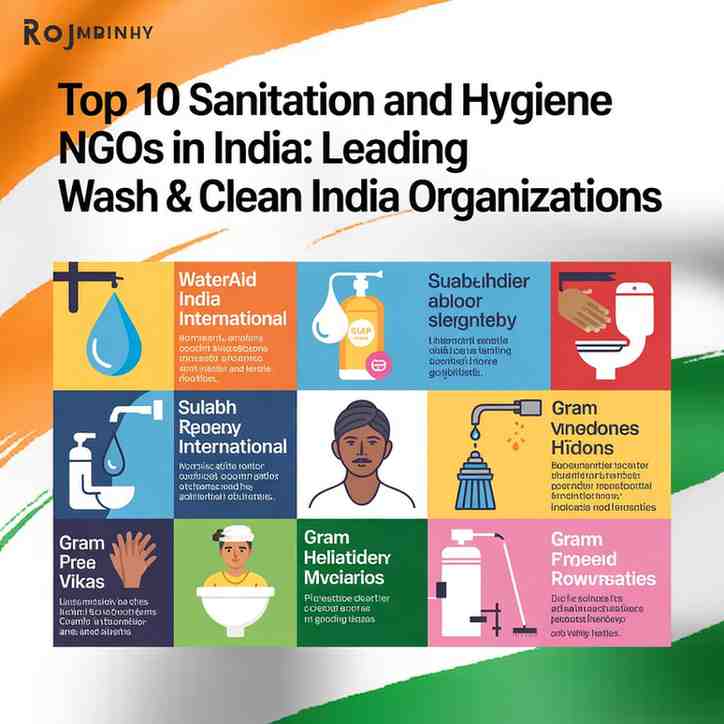
The nine original leads below have different programme roles, followed by Unessa’s separate education contribution. Compare actual activities, coverage, maintenance responsibilities and reporting rather than treat this as an independent ranking or a universal service directory.

Unessa Foundation activity: a volunteer and children working with paper learning materials in Vadodara.
SUPPORT CHILDREN’S EDUCATION
Help learning become a regular part of a child’s life.
Support Unessa Foundation’s education programmes and volunteer-led learning activities.
Nine sanitation and hygiene leads and a separate education role
Sulabh International
Sulabh International — official source provides a starting point for sanitation and related social-service work; check the specific project and responsibility for ongoing operation. These brief descriptions identify a research direction, not a complete assessment of the institution or confirmation of a particular service request.
Sulabh International publishes sanitation and related social-service work, including toilet facilities and awareness activities. Confirm the actual project and responsibilities for design, access, cleaning and maintenance;the organisation’s history does not establish a free facility for every applicant.
Why it matters
A sanitation facility must be suitable, usable and maintained. Affordability, sustainability and actual results need project-specific evidence rather than a general superlative.
WaterAid India
WaterAid India — official source provides a starting point for water, sanitation and hygiene; check current project geography rather than assuming household connection availability. These brief descriptions identify a research direction, not a complete assessment of the institution or confirmation of a particular service request.
Before relying on this entry, check the current programme page, relevant geography, eligibility and official enquiry route. If contributing, identify the actual receiving entity and funding terms. Ask for the source period and definition before repeating any claim about reach, costs, membership, facilities or outcomes.
WaterAid India describes water, sanitation and hygiene work. Its legal information identifies Jal Seva Charitable Foundation for its India identity. Confirm the actual project and contribution route;an international brand does not establish a household connection or toilet grant everywhere.
Why it matters
Water, sanitation, information and ongoing operation are connected but distinct. A delivery or construction count alone does not establish an individual health outcome.
Gram Vikas
Odisha-based Gram Vikas describes community water and sanitation work. Its published MANTRA account explains inclusion, household toilets, bathing facilities and community management. The inclusion principle applies to a defined programme, not every household or village in Odisha. Confirm present coverage and arrangements.
Why it matters
Inclusive access requires actual participation, usable facilities and agreed management. A programme principle is not proof of universal coverage or a particular result in every community.
Pratham
Pratham is primarily an education organisation. Hygiene-related learning may be a subject for a specific enquiry, but a general education profile does not establish a standing toilet-construction, handwashing or sanitation service. Confirm the actual activity and its provider.
Why it matters
Age-appropriate information and usable facilities are different inputs. A classroom message alone does not establish a sustained practice or break a disease-transmission cycle.
The Akshaya Patra Foundation
Akshaya Patra’s published work describes school feeding and related activities. Food hygiene and child-health information are distinct from a general community sanitation service. Confirm the actual programme rather than assume that a meal provider builds or operates toilets everywhere.
Why it matters
Nutrition, food handling, facilities and hygiene practices are connected questions. Their actual activities and outcomes need to be identified separately.
S M Sehgal Foundation
S M Sehgal Foundation publishes WASH and household water-treatment and safe-storage training resources. Confirm the actual rural or community project, appropriate technology and responsibility for operation;the training remit does not by itself verify every toilet-construction claim.
Why it matters
Information, water quality, facilities and maintenance have different requirements. Use the actual programme evidence and current local arrangements.
Bal Raksha Bharat: identify the Indian organisation and project
Bal Raksha Bharat, also known as Save the Children India, publishes child-focused programme information. Distinguish the Indian entity from international affiliates, and confirm the actual health, school or hygiene activity, location and current eligibility before seeking support.
Why it matters
Child-focused information or advocacy is distinct from direct clinical care or a guaranteed sanitation service. The actual programme must establish its role and available support.
The Hans Foundation
The Hans Foundation’s health information includes access to water and sanitation within its broader context. A broad aim does not establish nationwide toilet construction or an open facility grant. Confirm the specific project, scope and actual implementation responsibilities.
Why it matters
A scale claim needs a dated definition of facilities, people or locations. Construction and continued use should not be treated as the same indicator.
Plan India
Plan India’s published strategic objectives include water, sanitation and hygiene. Read the date and actual programme;an objective does not establish a present project in every community or a guaranteed change in practices.
Why it matters
Infrastructure, information and sustained practice require their own arrangements and evidence. A programme description should not be used as a universal outcome guarantee.
Unessa Foundation: education and appropriate hygiene awareness
Unessa’s published programme concerns children’s education and life skills, including civic behaviour and hygiene awareness. This is distinct from a verified toilet-construction, water-purification or waste-management service.
Practical information can fit an actual education activity. Sustainable infrastructure, sanitation engineering, community health services and facilities for particular groups require separately confirmed programmes;this guide does not establish those Unessa services.
Why These NGOs Matter
Water availability, usable sanitation and waste arrangements vary by location and household. Identify the actual issue and responsible institution rather than assume one condition across every rural or low-income urban community.
Sanitation Challenges
Check access,water,usable facilities,cleaning,maintenance and actual waste arrangements. An inventory does not show that a facility works or can be used by everyone.
NGO-Led Solutions
Construction,information,community engagement and maintenance are distinct tasks. Confirm which body is responsible for each and what the actual programme covers.
Collaborative Impact
An actual public,community or organisational partnership needs clear responsibilities,resources and follow-up. Participation or a broad mission does not establish a formal partnership or measured health result.
Unessa’s education role should be described through its actual learning programme. It does not establish a nationwide sanitation project, engineering service or measured disease-prevention result.
Checking current information and enquiry routes
Compare sanitation and hygiene ngos in india by the particular activity, place and decision that matter to you. The resources below have different roles; a familiar name does not establish current capacity, legal eligibility or suitability for every request. Use the linked official information to make a specific enquiry.
This page is an editorial research starting point, not an independent ranking, accreditation, exhaustive list or guarantee of results. Inclusion does not imply a partnership with Unessa, an endorsement by a regulator or that the education donation buttons fund the listed organisations.
When assessing the evidence behind a project or policy claim, see research and policy NGO guide.
Selection criteria and limits of this list
Entries were selected for an identifiable official source and a stated area of work relevant to part of this topic. The order is for navigation, not a score. The linked sites were consulted for this editorial update on 1 November 2026; this was a website-source check, not a phone confirmation, inspection, financial audit or approval verification.
Compare the precise programme, entity and location. Research bodies, trade unions, international networks and direct-service charities are not interchangeable. A broad remit is not evidence of an open place, free pickup, clinical appointment, grant, legal representation or a volunteering position available today.
Questions specific to sanitation and hygiene ngos in india
- Is the work infrastructure, behaviour change, maintenance or hygiene education?
- Who is responsible for continuing operation and access?
- Are toilets constructed, facilities used and health outcomes reported separately?
Record a source and date for the answer. If the official information does not settle a point, write “not confirmed” and ask the actual provider. Do not fill a gap using a similarly named organisation or a directory entry copied from another website.
Additional research lead: Shelter Associates
Shelter Associates — official source provides a starting point for urban housing and sanitation work; check project coverage and the relevant local arrangement. These brief descriptions identify a research direction, not a complete assessment of the institution or confirmation of a particular service request.
Keep a usable comparison record
- Need and location; organisation’s full name and exact programme.
- Official source, reporting period and date consulted.
- Service/participation conditions confirmed by the provider.
- Outcome measure and evidence, with limitations or unresolved questions.
- Receiving entity and campaign purpose if a contribution is intended.
For sanitation and hygiene ngos in india, legal identity, current availability and effectiveness are separate questions. A registration match cannot demonstrate a programme outcome; a photograph cannot establish every delivery claim. Keep financial and beneficiary details private, and share only what your evidence supports.
Use the right route for the intended support
Contact the provider for current enquiries or use its independently checked official contribution route. Do not assume the Unessa buttons forward money to a third party. Unessa’s education CTA leads to the education campaign described at the destination. Read Unessa’s programme information if that is the work you wish to support.
A practical next step is one specific question to the relevant team, followed by a record of the answer. Revisit the entry when the programme, eligibility, location or your intended use changes. A transparent limit is more useful than an unsupported “best”, “trusted” or “verified” label.
Conclusion
Sanitation and Hygiene NGOs in India have different roles. Compare the actual project, coverage, usable access, maintenance and reporting before contributing. Health claims need appropriate evidence and context;construction or a donated kit alone does not establish reduced mortality. Unessa’s buttons support its stated education campaign. Read the guide to understanding NGOs for the distinction between purpose, activity and outcomes.
Frequently asked questions
How should I assess a sanitation and hygiene project?
Check who is intended to use the service, its location, accessibility and the responsibility for cleaning and maintenance. A facility count alone does not establish that people can use it reliably or comfortably.
What should I ask before donating hygiene materials through an NGO?
Confirm the exact items, quantities, acceptance and distribution arrangements with the receiving team. Ask how the contribution fits the current programme rather than assuming every sanitation organisation runs a general collection drive.
Why are sanitation and hygiene NGOs important in India?
Actual programmes may address facilities, water, waste arrangements or hygiene information. Confirm the need and responsibilities;not every provider offers every service or guarantees a clinical outcome.
How do sanitation NGOs support government initiatives?
Some projects coordinate outreach, information or implementation with public institutions. Confirm an actual partnership and responsibilities rather than assume every NGO delivers government programmes or guarantees last-mile coverage.
What sanitation services do NGOs provide?
Possible activities include facilities, community information, water systems or waste-related work. The actual programme must confirm coverage, eligibility, technical responsibility and ongoing maintenance.
How do WASH NGOs improve community health?
Appropriate facilities and practices can support public health, but delivery, access, use and measured illness outcomes are different evidence. Use qualified public-health guidance and project-specific findings rather than infer reduced mortality from a kit or toilet count.
How can individuals support sanitation NGOs in India?
Use the actual provider’s official enquiry or contribution route and confirm programme purpose, professional requirements, materials and reporting. Unessa’s education buttons do not fund every sanitation provider or engineering activity in the list.
Continue reading

Related guide

Related guide
Support children’s learning with Unessa Foundation.