

Cancer Treatment Options
Cancer is a complex disease, but advances in medical science have made it possible to treat many types successfully. Understanding different cancer treatment options helps patients and families make informed decisions about care.
Treatment depends on several factors such as the type of cancer, stage of diagnosis, overall health of the patient, and medical history. With early detection and proper treatment, many cancers can be controlled or even cured.
👉 For a complete overview:
Complete Guide to Cancer Awareness
What Are Cancer Treatment Options?
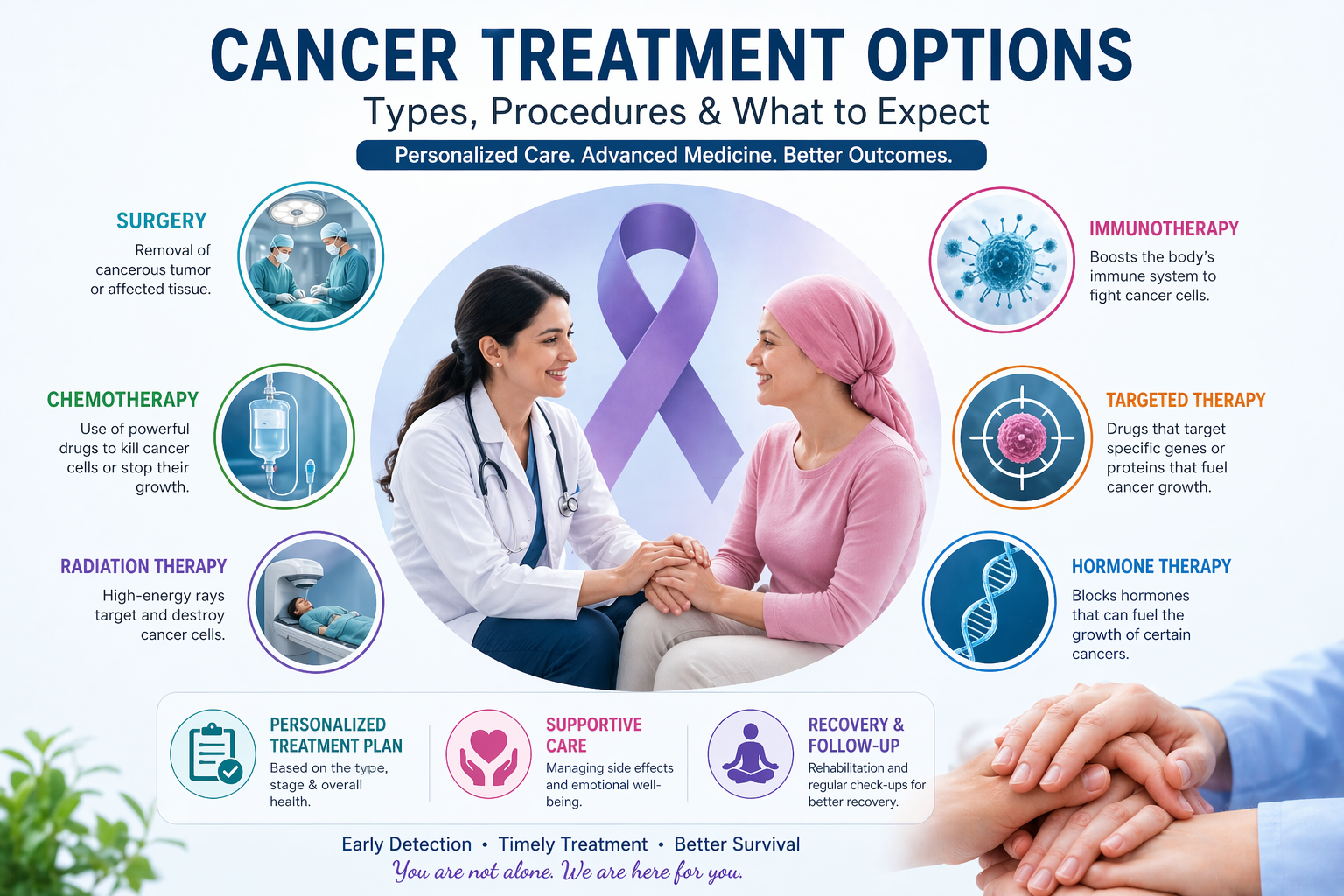
Cancer treatment options refer to various medical methods used to remove, destroy, or control cancer cells. Doctors often use a combination of treatments for better results.
The goal of treatment may include:
- Curing cancer
- Controlling cancer growth
- Relieving symptoms
Factors That Affect Treatment Choice
- Choosing the right treatment depends on:
- Type of cancer
- Stage (early or advanced)
- Patient’s age and health
- Location of tumor
- Doctors create a personalized treatment plan for each patient.
1. Surgery
Surgery is one of the most common cancer treatment methods. It involves removing cancerous tumors from the body.
Advantages:
- Effective for early-stage cancer
- Removes tumor completely
Risks:
- Infection
- Pain after surgery
2. Chemotherapy
Chemotherapy uses drugs to kill cancer cells or stop their growth.
How it works:
- Targets rapidly dividing cells
- Administered through injections or pills
Side effects:
- Hair loss
- Fatigue
- Nausea
3. Radiation Therapy
Radiation therapy uses high-energy rays to destroy cancer cells.
Types:
- External radiation
- Internal radiation
Benefits:
- Targets specific areas
- Reduces tumor size
4. Immunotherapy
Immunotherapy helps the immune system fight cancer.
Benefits:
- Boosts natural defense system
- Effective for certain cancers
5. Targeted Therapy
This treatment targets specific genes or proteins involved in cancer growth.
Advantages:
- More precise treatment
- Fewer side effects
6. Hormone Therapy
Hormone therapy is used for cancers affected by hormones, such as breast and prostate cancer.
For more detailed information about cancer treatment methods, visit the American Cancer Society.
Combination Treatments
Doctors often combine treatments like chemotherapy + radiation for better results.
- Learn screening importance:
What to Expect During Treatment
- Patients may experience:
- Physical side effects
- Emotional stress
- Lifestyle changes
- Support from family and healthcare professionals is essential.
Managing Side Effects
Common side effects include fatigue, nausea, and hair loss.
Tips:
- Maintain healthy diet
- Stay hydrated
- Get proper rest
Recovery After Treatment
Recovery depends on treatment type and patient condition.
Recovery tips:
- Follow doctor’s advice
- Attend follow-up visits
- Maintain healthy lifestyle
- Learn lifestyle importance:
Emotional and Mental Support

Cancer treatment can affect mental health. Counseling, support groups, and family support are important.
Latest Advances in Cancer Treatment
- Modern advancements include:
- AI-based diagnosis
- Personalized medicine
- Advanced therapies
- These innovations improve survival rates.
When to Seek Medical Help
- Consult a doctor if:
- Symptoms worsen
- Side effects become severe
- New symptoms appear
Importance of Early Treatment
Early treatment increases chances of success and reduces complications.
- Learn early signs:
Challenges in Cancer Treatment
- High cost
- Side effects
- Emotional stress
- Awareness and support can help overcome these challenges.
Conclusion
Understanding different cancer treatment options empowers patients to make informed decisions. With proper medical care, support, and awareness, many cancers can be effectively managed or treated.
FAQs
What is the most common cancer treatment?
Chemotherapy and surgery are commonly used.
Is cancer treatment painful?
Some treatments may cause discomfort, but doctors manage pain effectively.
Can cancer be completely cured?
Many cancers can be cured if detected early.
How long does treatment take?
It depends on the type and stage of cancer.
Are there side effects?
Yes, but they vary based on treatment.