

HEALTH & COMMUNITY
Cancer Treatment Options: 6 Important Types and Care Questions
Cancer Treatment Options: six practical questions on reliable sources, personal context, professional assessment and follow-up, without guaranteed health outcomes.
Published by Unessa Foundation · Editorial update: 4 November 2026
On this page
- Cancer Treatment Options
- What Are Cancer Treatment Options?
- Factors That Affect Treatment Choice
- Combination Treatments
- What to Expect During Treatment
- Managing Side Effects
- Recovery After Treatment
- Emotional and Mental Support
- Latest Advances in Cancer Treatment
- When to Seek Medical Help
- Importance of Early Treatment
- Challenges in Cancer Treatment
- Cancer Treatment Options: start with the right question
- 1. Confirm the treatment aim
- 2. Compare the options offered to you
- 3. Plan support and follow-up
- 4. Use a question record for cancer treatment options
- 5. Check the source and the claimed result
- 6. Confirm support and follow-up
- Supporting education with a clear purpose
- Conclusion
- Frequently asked questions
- Continue reading
Cancer Treatment Options
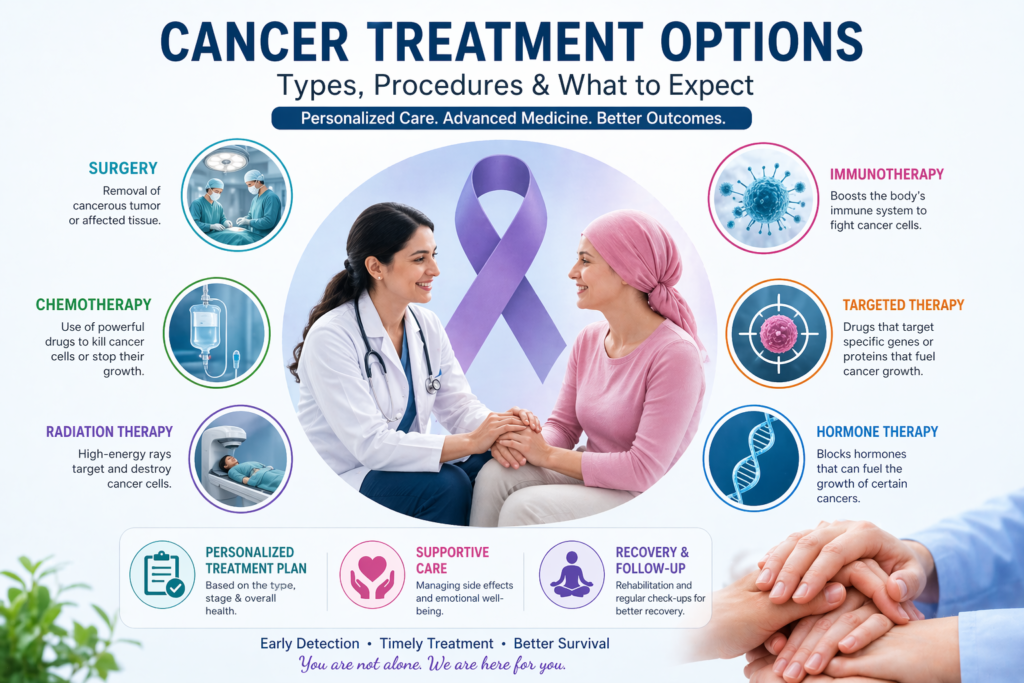
Cancer Treatment Options depend on the actual cancer, pathology, stage, biomarkers, health, prior treatment and the person’s priorities. Some cancers can be cured or controlled, but there is no universal result. Use the six areas below to prepare questions for the oncology team, rather than select treatment from a blog. NCI’s treatment overview explains distinct methods and their use.
👉 For a complete overview:
Complete Guide to Cancer Awareness
What Are Cancer Treatment Options?
Treatment may aim for cure, disease control or symptom relief, and approaches can be combined where clinically appropriate. The actual goal and trade-offs should be explained by the responsible team. A combination is not automatically better for every cancer.
- Curing cancer
- Controlling cancer growth
- Relieving symptoms
Factors That Affect Treatment Choice
- Choosing the right treatment depends on:
- Type of cancer
- Stage (early or advanced)
- Patient’s age and health
- Location of tumor
- Doctors create a personalized treatment plan for each patient.

Unessa Foundation activity: a volunteer and children working with paper learning materials in Vadodara.
SUPPORT CHILDREN’S EDUCATION
Help learning become a regular part of a child’s life.
Support Unessa Foundation’s education programmes and volunteer-led learning activities.
1. Surgery
Cancer surgery removes relevant tissue in appropriate cases. Its purpose and extent depend on the actual tumour and clinical plan;it is not suitable for every cancer and does not guarantee complete removal or cure.
Advantages:
Surgery can have a local treatment role, including some early-stage cancers. Ask about the goal, extent, alternatives and actual findings;complete removal and cure are not assured merely because surgery is planned.
Risks:
- Infection
- Pain after surgery
2. Chemotherapy
Chemotherapy involves medicines that kill or slow fast-growing cells and can also affect healthy cells. Route, schedule, purpose and side effects vary;injections or tablets are not interchangeable choices a reader should select independently.
How it works:
- Targets rapidly dividing cells
- Administered through injections or pills
Side effects:
- Hair loss
- Fatigue
- Nausea
3. Radiation Therapy
Radiotherapy uses radiation in a planned clinical treatment. External and internal approaches have different indications and arrangements. It may control a defined area or relieve symptoms in suitable cases;the team explains the actual purpose and effects.
Types:
- External radiation
- Internal radiation
Benefits:
A plan may target a particular area or aim to reduce or control a tumour, depending on the case. Ask about expected benefit, nearby healthy tissue, side effects and alternatives;reduction is not guaranteed.
4. Immunotherapy
NCI’s immunotherapy information describes treatments that help the immune system act against particular cancers. This is not generic immune boosting or appropriate for every cancer;important adverse effects and monitoring can occur.
Benefits:
Ask whether there is evidence and an indication for the actual cancer and treatment setting, what response is expected and what monitoring is needed. A new or immune-based medicine is not automatically more effective or safer.
5. Targeted Therapy
Targeted therapies act on particular cancer-related changes. The actual pathology or biomarker result may matter. A targeted mechanism does not mean the treatment has no effects on healthy tissues or is appropriate for every person.
Advantages:
Discuss the actual target, test, indication, benefit and harms. Targeted treatment is not guaranteed to have fewer side effects than other options;the type and severity of adverse effects differ by medicine and person.
6. Hormone Therapy
Hormone-related treatment can have a role in cancers that use relevant hormonal pathways, such as particular breast or prostate cancers. The actual tumour characteristics and treatment setting determine suitability;it is not treatment for every hormonal change.
The American Cancer Society’s treatment information provides further general context. Ask the oncology team which information applies to the actual diagnosis;this article does not prescribe a plan.
Combination Treatments
Surgery, chemotherapy, radiotherapy or other methods may be combined or sequenced where evidence supports it. Ask why each component is recommended and what its goal is;more treatments do not automatically mean a better outcome.
- Learn screening importance:
What to Expect During Treatment
Discuss possible physical effects, emotional stress and practical changes with the actual team. A family, friend or other support person can help when the patient wants them involved. Preserve the patient’s choices and privacy;family involvement is not compulsory evidence of a good recovery plan.
- Patients may experience:
- Physical side effects
- Emotional stress
- Lifestyle changes
- Support from family and healthcare professionals is essential.
Managing Side Effects
Fatigue, nausea, hair changes and other effects depend on the actual treatment and person. Ask which are expected, which need reporting and which are urgent. Do not assume all treatments cause the same symptoms or that every problem is harmless.
Tips:
Discuss suitable food, fluids, rest and symptom management with the actual care team. Individual restrictions and treatment-related needs can differ;do not use a generic diet or hydration tip instead of their instructions. Tell the team about supplements or other products before using them.
- Maintain healthy diet
- Stay hydrated
- Get proper rest
Recovery After Treatment
Recovery and follow-up depend on the actual cancer, treatment, health and needs. Confirm the review plan, who to contact and what changes need earlier assessment rather than assume one recovery duration.
Recovery tips:
- Follow doctor’s advice
- Attend follow-up visits
- Maintain healthy lifestyle
- Learn lifestyle importance:
Emotional and Mental Support
Emotional support may include the patient’s chosen family/friends, peer support or qualified psychological care. Availability and preferences differ. A positive attitude is not a condition of treatment success, and distress should not be blamed for an outcome.
Latest Advances in Cancer Treatment
AI-assisted clinical tools, biomarker-informed treatment and newer therapies have specific evidence, indications and availability. Ask whether an actual option is established care, a clinical trial or a research proposal, and about its benefits, harms, costs and alternatives. Innovation alone does not prove improved survival for every patient.
When to Seek Medical Help
Follow the care team’s actual urgent-contact instructions for new, worsening or severe symptoms. NCI’s infection guidance notes that infection during treatment can need urgent attention. Do not mask a fever or assume it is an expected side effect without contacting the responsible team. Serious acute illness needs the appropriate emergency route.
- Consult a doctor if:
- Symptoms worsen
- Side effects become severe
- New symptoms appear
Importance of Early Treatment
Timely diagnosis and appropriate treatment can matter, but the actual benefit and timing depend on the cancer and plan. Do not infer a guaranteed success rate or fewer complications for every person from the word early.
- Learn early signs:
Challenges in Cancer Treatment
Costs, side effects, access and emotional or practical pressures may require different support. Ask the actual provider about available services, charges, financial-help criteria and referral arrangements. Information alone does not guarantee that these barriers are resolved.
Cancer Treatment Options: start with the right question
Cancer treatment can include surgery, radiation, medicines and other approaches. The appropriate plan depends on the cancer and the person; a list of treatments is not an individual recommendation. NCI: Types of Cancer Treatment.
This is general information and a discussion aid. It does not diagnose a condition, prescribe care or claim a named clinician has reviewed this article. The source links were checked for this editorial update; personal advice should come from an appropriately qualified professional who understands the circumstances.
For choosing reliable general information before a clinical discussion, see reliable cancer-awareness information.
1. Confirm the treatment aim
Ask the team to explain the diagnosis, stage, aim of treatment and the reasons for the proposed approach. Request an explanation in language you understand and note questions for the next discussion.
2. Compare the options offered to you
Ask about expected benefits, uncertainties, side effects, practical requirements and alternatives in your case. Do not compare treatments only by an isolated survival percentage from a different cancer or period.
3. Plan support and follow-up
Ask how to report side effects, who to contact between appointments and what follow-up is required. Discuss costs and practical barriers with the actual provider. Do not stop or substitute a treatment on the basis of a blog or testimonial.
4. Use a question record for cancer treatment options
Before a discussion, write the issue in plain language and list what you already know, what remains uncertain and the decision you need help with. Keep existing reports together and note the dates. If another person is helping, agree what may be shared and who should receive the explanation.
- What does this information establish, and what does it leave uncertain?
- Which guidance applies to this person and setting?
- What are the reasonable options, limitations and next steps?
- Who will explain the result or arrange the next contact?
A suggested question record is an organisational tool, not a validated diagnostic instrument. Adapt it to the situation and the professional’s instructions. Do not delay appropriate care while trying to complete every field or waiting for a response from an NGO blog.
5. Check the source and the claimed result
For cancer treatment options, use the source linked beside the overview as a starting point, then check its scope and date. A general reference does not support every treatment, percentage or claim made elsewhere. If a statistic matters, look for the exact population, period, definition and original study.
A case story describes one account, not a guaranteed outcome. This guide does not present an invented child, patient, recovery rate or programme result as fact. When discussing a real person, keep health details private and obtain appropriate permission before sharing any story or image.
6. Confirm support and follow-up
If seeking a service, confirm the actual provider, location, eligibility, appointment process and any charge. A charity directory, awareness activity and clinical service are different things. Ask about the specific support required rather than assuming it is available because an organisation publishes health information.
Keep a private record of the agreed next step and the person responsible. If a plan or result is unclear, ask the relevant professional to explain it. The practical aim is an informed conversation and an appropriate support route, not a promise of prevention, diagnosis or recovery from a webpage.
Supporting education with a clear purpose
Unessa publishes this resource. The donation buttons on this article support the education campaign described at their destination; they do not purchase a test, treatment, nutrition product or counselling session. Check Unessa’s published programme information for its stated remit and ask the official team about any current service question.
Conclusion
Cancer Treatment Options should be understood with the actual diagnosis and clinical team. The six methods, goals, benefit/risk questions and support topics help organise an informed conversation without guaranteeing cure or a particular plan. Unessa’s education donation CTAs do not purchase oncology care, tests, medicine or a clinical appointment.
Frequently asked questions
How should a patient compare cancer treatment options?
Ask the treating team to explain the options relevant to the confirmed diagnosis, their purpose, possible benefits and harms, and practical requirements. A general article cannot choose a treatment for an individual patient.
What follow-up questions can help a treatment discussion?
Ask who coordinates care, how results and side effects are reviewed and whom to contact with questions. Discuss costs, access or a further opinion through the appropriate clinical route rather than changing an agreed treatment from an online suggestion.
What is the most common cancer treatment?
There is no single most appropriate treatment for every cancer. Surgery, medicines, radiotherapy and other methods have different roles depending on the actual diagnosis.
Is cancer treatment painful?
Discomfort and pain vary by procedure and person. Ask the team about prevention, management and urgent symptoms;complete pain relief is not guaranteed by a general article.
Can cancer be completely cured?
Some cancers can be cured, but type, stage, biology, health and care matter. Early detection is not a universal cure guarantee.
How long does treatment take?
The actual cancer, treatment purpose, plan and response determine timing. Ask for the schedule, review points and whom to contact about changes.
Are there side effects?
Possible side effects vary by treatment and person. Ask which need prompt reporting or urgent care rather than assume all are routine or harmless.
Continue reading

Related guide

Related guide
Support children’s learning with Unessa Foundation.