
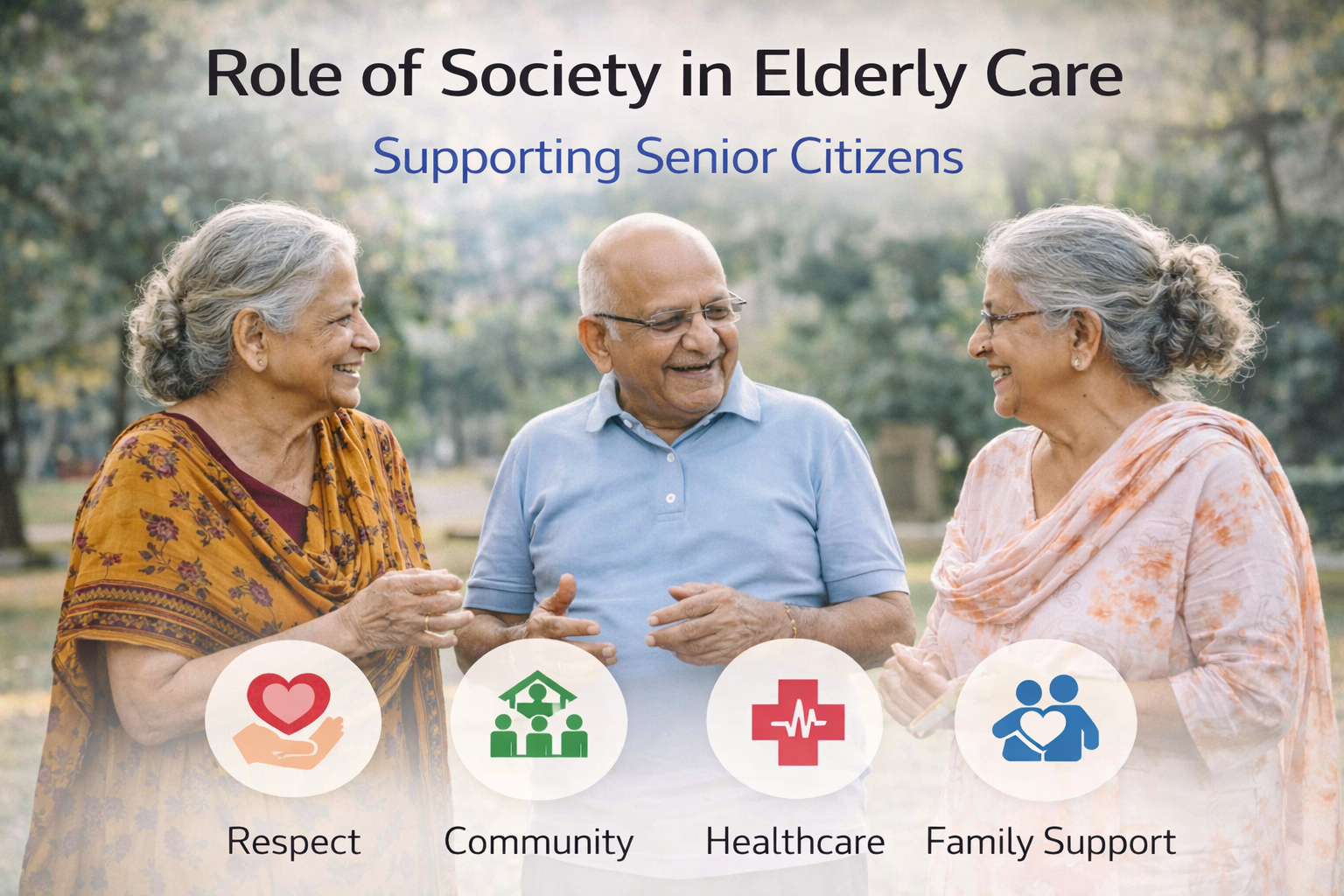
A society is often judged by how it treats its elderly population. Senior citizens are the pillars of experience, wisdom, and culture, having contributed significantly to the growth of families and communities. However, in today’s fast-paced world, many elderly individuals face neglect, loneliness, and lack of proper care.
Understanding the role of society in elderly care is essential to create a compassionate and inclusive environment. It is not only the responsibility of families but also of communities, organizations, and governments to ensure that elderly individuals live with dignity and respect.
- Learn more about ageing and health:
https://www.who.int/news-room/fact-sheets/detail/ageing-and-health
Why Elderly Care Matters
Elderly care is important because:
- It ensures physical and mental well-being
- It provides emotional support
- It maintains dignity and independenc
- Read more about elderly challenges:
problems faced by elderly and solutions
The role of society in elderly care becomes crucial when families alone cannot meet all these needs.
10 Powerful Ways Society Can Support Elderly Care
1. Promoting Respect and Dignity
Respect is the foundation of elderly care.
Society must:
- Treat elders with kindness
- Value their opinions
- Recognize their contributions
2. Strengthening Family Support Systems
Families play the first role in elderly care.
Encouraging:
- Regular interaction
- Emotional bonding
- Shared responsibilities
3. Creating Community Support Programs
Communities can organize:
- Social gatherings
- Support groups
- Recreational activities
These reduce loneliness and promote engagement.
4. Improving Healthcare Accessibility
Society must ensure:
- Affordable healthcare
- Regular medical check-ups
- Easy access to hospitals
5. Encouraging Volunteerism
Volunteers can:
- Spend time with elderly
- Assist in daily activities
- Provide emotional support
6. Supporting Old Age Homes
Society can contribute by:
- Donating resources
- Volunteering
- Improving facilities
This strengthens elderly care systems.
7. Spreading Awareness
Awareness campaigns can educate people about:
- Elderly rights
- Healthcare needs
- Emotional well-being
8. Ensuring Financial Security
Providing:
- Pension schemes
- Financial assistance
- Insurance support
helps elderly live independently.
9. Using Technology for Support
Technology can help through:
- Health monitoring apps
- Emergency services
- Communication tools
10. Government and Policy Support
Governments must:
- Implement welfare schemes
- Provide healthcare support
- Protect elderly rights
Emotional and Social Importance
The role of society in elderly care goes beyond physical support.
It also includes:
- Emotional connection
- Social inclusion
- Mental well-being
A supportive society ensures that elderly individuals feel valued and loved.
Challenges in Elderly Care
Despite efforts, challenges exist:
- Lack of awareness
- Financial constraints
- Changing family structures
- Limited resources
These issues highlight the need for stronger societal involvement.
Solutions for Better Elderly Care
To improve elderly care, society should:
- Promote inclusive communities
- Encourage family involvement
- Support NGOs and organizations
- Improve healthcare systems
Role of Old Age Homes
Old age homes support society by:
- Providing shelter
- Offering healthcare
- Creating social communities
They are an important part of elderly care systems.
Real-Life Impact
When society actively supports elderly care:
- Seniors feel respected
- Health improves
- Loneliness reduces
This leads to a happier and healthier population.
Future of Elderly Care
The future will focus on:
- Smart healthcare systems
- Community-based care
- Increased awareness
The role of society in elderly care will continue to grow.
Conclusion
The role of society in elderly care is vital for building a compassionate and responsible community. By working together—families, communities, and governments—we can ensure that elderly individuals live with dignity, respect, and happiness.
Caring for elders is not just a duty; it is a reflection of humanity.
FAQs
What is the role of society in elderly care?
It involves supporting seniors through care, respect, and resources.
Why is elderly care important?
It ensures health, dignity, and emotional well-being.
How can communities help elderly people?
Through social programs, support groups, and activities.
What role do families play?
Families provide emotional and physical support.
How can technology help elderly care?
Through health monitoring and communication tools.
Are old age homes part of society’s role?
Yes, they provide structured care and support.
What challenges exist in elderly care?
Financial issues, loneliness, and lack of awareness.