

EDUCATION & COMMUNITY
9 Stress Management Techniques for Students: A Helpful School Guide
Stress Management: six practical questions on reliable sources, personal context, professional assessment and follow-up, without guaranteed health outcomes.
Published by Unessa Foundation · Editorial update: 4 November 2026
On this page
- Introduction: When the Struggle Is Silent, Are We Aware?
- Why Stress Hits Harder for Students from Disadvantaged Backgrounds
- 9 Practical Stress Management Techniques You Can Use Today
- How to Recognize When Stress Becomes Harmful
- Unessa Foundation’s education role and support questions
- Stress Management: start with the right question
- 1. Ask what is making participation difficult
- 2. Keep an activity voluntary and manageable
- 3. Use the school’s support and referral process
- 4. Use a question record for stress management
- 5. Check the source and the claimed result
- 6. Confirm support and follow-up
- Supporting education with a clear purpose
- Conclusion: notice, listen and connect a learner with support
- Frequently asked questions
- Continue reading
Introduction: When the Struggle Is Silent, Are We Aware?
A student may become restless, unusually quiet, tearful or easily frustrated. These observations can prompt a gentle check-in, but they do not identify a cause or establish a diagnosis. Financial pressure, food or housing insecurity, difficult experiences and school demands can all affect a learner.
This guide offers practical stress management techniques for teachers, caregivers and school teams to discuss and adapt. Classroom support has a different role from professional assessment or treatment.
Why Stress Hits Harder for Students from Disadvantaged Backgrounds
Stress responses vary. Prolonged adversity without adequate adult support can affect development and learning, as explained by Harvard’s guide to toxic stress. Supportive relationships can help buffer stress, but poverty or a particular behaviour alone does not establish a toxic stress response.
- A student who lashes out may need a calm conversation about what is happening.
- A learner avoiding eye contact may communicate differently or have other reasons.
- A child falling asleep may need attention to sleep, health, safety or daily circumstances.
Listen and work with the appropriate caregiver or professional rather than deciding that every difficulty is defiance or a survival response.
9 Practical Stress Management Techniques You Can Use Today
1. Start with Mindfulness Moments
Offer an optional one-minute pause, using comfortable breathing or noticing the room and the support of a chair or floor. Let learners keep their eyes open, choose another quiet activity or stop if uncomfortable. Avoid requiring deep breathing or breath-holding.
WHO’s Doing What Matters in Times of Stress provides grounding exercises for general stress management. Adapt any classroom activity to age, needs and school guidance; a short exercise is not treatment or a guaranteed way to calm every learner.
2. Daily Emotional Check-Ins
Offer a brief, private or optional check-in: “How are you feeling today?” or “Is there one word, picture or gesture for your mood?” A thumbs-up, sideways or down response may suit some learners. Explain whom they can speak to privately and do not require public disclosure.
3. Create Calm Corners
Agree on a quiet place a learner can use for a short pause, where supervision and return-to-learning arrangements are clear. Suitable books, a journal, simple visuals or an agreed sensory item may help some children. Check individual needs; the space should be a supportive option, not isolation or punishment.
4. Use stories and creative expression
Reading, drawing or role-play can give learners different ways to explore feelings. Use age-appropriate material, let participation be voluntary and avoid asking a child to reenact a distressing event. A creative classroom activity is different from therapy delivered by a qualified practitioner.
5. Break Tasks into Manageable Steps
A large task can feel easier to start when its steps are clear. For an essay, a teacher could plan:
- Brainstorm ideas today.
- Prepare an outline tomorrow.
- Draft one paragraph at the next agreed session.
Adapt the pace and support to the learner, then check what they can do and what remains difficult.
6. Celebrate Small Wins
Notice a specific effort in a way the learner welcomes: “You asked for help with that task,” or “You tried a different approach.” The original examples of attending school and raising a hand can also be acknowledged with care. Avoid comparisons, public praise that embarrasses a child or claims that a phrase automatically builds resilience.
7. Empower Through Peer Connection
Offer supervised pair or small-group activities where learners can participate comfortably. Discuss respectful listening and how to ask an adult for help. Peer connection should not make another child responsible for managing someone’s distress or keeping unsafe secrets.
8. Teach Emotional Vocabulary
Use a suitable feelings chart, drawing or words to practise communicating a need. Examples include, “I feel frustrated when I cannot finish a task,” and “I need a break because I feel overwhelmed.” Offer more than one communication format and do not make a learner disclose a personal experience.
9. Connect with Professionals When Needed
Teachers can notice changes, listen and follow the school’s safeguarding or referral process. Persistent or significant distress may require assessment by an appropriate health professional. Ask about the actual service, qualifications and consent arrangements rather than assuming a classroom activity or volunteer can provide treatment.
For general guidance, see UNICEF’s signs-of-distress resource.

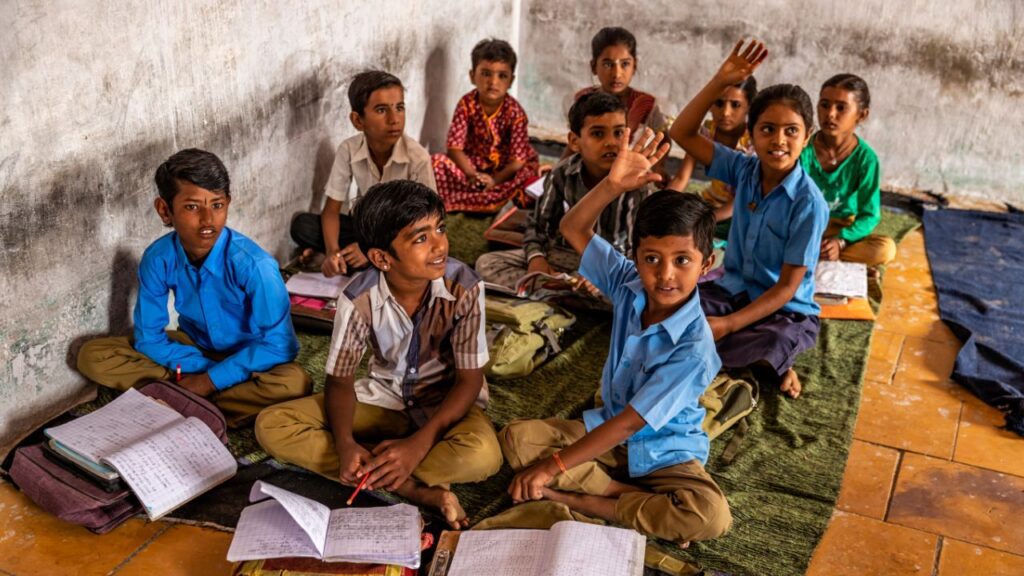
Unessa Foundation activity: a volunteer and children working with paper learning materials in Vadodara.
SUPPORT CHILDREN’S EDUCATION
Help learning become a regular part of a child’s life.
Support Unessa Foundation’s education programmes and volunteer-led learning activities.
How to Recognize When Stress Becomes Harmful
Take a change seriously if it is persistent, severe or affects daily participation. Examples to discuss with a caregiver or appropriate professional include:
- Recurring headaches or stomachaches.
- Marked behaviour or sleep changes.
- Loss of interest in familiar activities.
- Persistent worry, fear or sadness.
- Frequent outbursts or withdrawal.
These signs have different possible causes, including physical illness. They do not by themselves identify stress or a mental health condition. Use the school’s support and safeguarding process and seek appropriate assessment.
Unessa Foundation’s education role and support questions
Project Sneh describes Unessa Foundation’s work on children’s learning, communication, confidence and life skills. For a particular activity, ask the team what is currently offered.
- Ask the responsible school or qualified provider about trauma-sensitive teacher preparation.
- Check what classroom materials or wellbeing activities fit the learners.
- Verify any counsellor’s role, qualifications and referral arrangements.
- Ask how a supervised peer activity would operate.
- Discuss a manageable communication route with caregivers.
For broader context, read Understanding NGOs: Their Purpose, Impact and Role.
Stress Management: start with the right question
Supportive school activities and professional mental-health care have different roles. An activity should not be advertised as guaranteed treatment. WHO: Adolescent Mental Health.
This is general information and a discussion aid. It does not diagnose a condition, prescribe care or claim a named clinician has reviewed this article. The source links were checked for this editorial update; personal advice should come from an appropriately qualified professional who understands the circumstances.
For school responsibilities, access and referral planning, see school wellbeing support planning.
1. Ask what is making participation difficult
Invite an accessible, private conversation about the task and support needed. Do not force a learner to disclose personal experiences to the group or treat one observation as a diagnosis.
2. Keep an activity voluntary and manageable
A quieter space, a manageable task or an agreed check-in may be options to discuss with responsible staff and the learner. Do not promise a particular clinical effect or insist that every technique suits every student.
3. Use the school’s support and referral process
Clarify supervision, safeguarding and the route to qualified help for concerns beyond a teacher or volunteer’s role. Use appropriate urgent assistance when there is an immediate safety concern.
4. Use a question record for stress management
Before a discussion, write the issue in plain language and list what you already know, what remains uncertain and the decision you need help with. Keep existing reports together and note the dates. If another person is helping, agree what may be shared and who should receive the explanation.
- What does this information establish, and what does it leave uncertain?
- Which guidance applies to this person and setting?
- What are the reasonable options, limitations and next steps?
- Who will explain the result or arrange the next contact?
A suggested question record is an organisational tool, not a validated diagnostic instrument. Adapt it to the situation and the professional’s instructions. Do not delay appropriate care while trying to complete every field or waiting for a response from an NGO blog.
5. Check the source and the claimed result
For stress management, use the source linked beside the overview as a starting point, then check its scope and date. A general reference does not support every treatment, percentage or claim made elsewhere. If a statistic matters, look for the exact population, period, definition and original study.
A case story describes one account, not a guaranteed outcome. This guide does not present an invented child, patient, recovery rate or programme result as fact. When discussing a real person, keep health details private and obtain appropriate permission before sharing any story or image.
6. Confirm support and follow-up
If seeking a service, confirm the actual provider, location, eligibility, appointment process and any charge. A charity directory, awareness activity and clinical service are different things. Ask about the specific support required rather than assuming it is available because an organisation publishes health information.
Keep a private record of the agreed next step and the person responsible. If a plan or result is unclear, ask the relevant professional to explain it. The practical aim is an informed conversation and an appropriate support route, not a promise of prevention, diagnosis or recovery from a webpage.
Supporting education with a clear purpose
Unessa publishes this resource. The donation buttons on this article support the education campaign described at their destination; they do not purchase a test, treatment, nutrition product or counselling session. Check Unessa’s published programme information for its stated remit and ask the official team about any current service question.
Conclusion: notice, listen and connect a learner with support
A caregiver or educator can notice a difficulty, listen without blame and help identify a manageable next step. A calm response, clear task or agreed check-in may be useful, but it does not replace professional support where needed. Consistency and respectful communication matter more than a promise that one technique will work for every learner.
For education organisations to research or support, see 10 education NGOs in India.
Frequently asked questions
Can a classroom stress-management activity replace professional mental-health care?
No. A supportive activity has a different role from individual assessment or treatment. Keep participation appropriate and manageable, and use the school’s agreed support and referral process when a learner needs help beyond the activity’s scope.
What should staff discuss before choosing a stress-management activity?
Identify the actual task or participation difficulty, the learner’s preferences and the responsible school contact. Avoid forcing personal disclosure or promising that a technique produces the same clinical effect for every student.
Continue reading

Related guide

Related guide
Support children’s learning with Unessa Foundation.