

EDUCATION & COMMUNITY
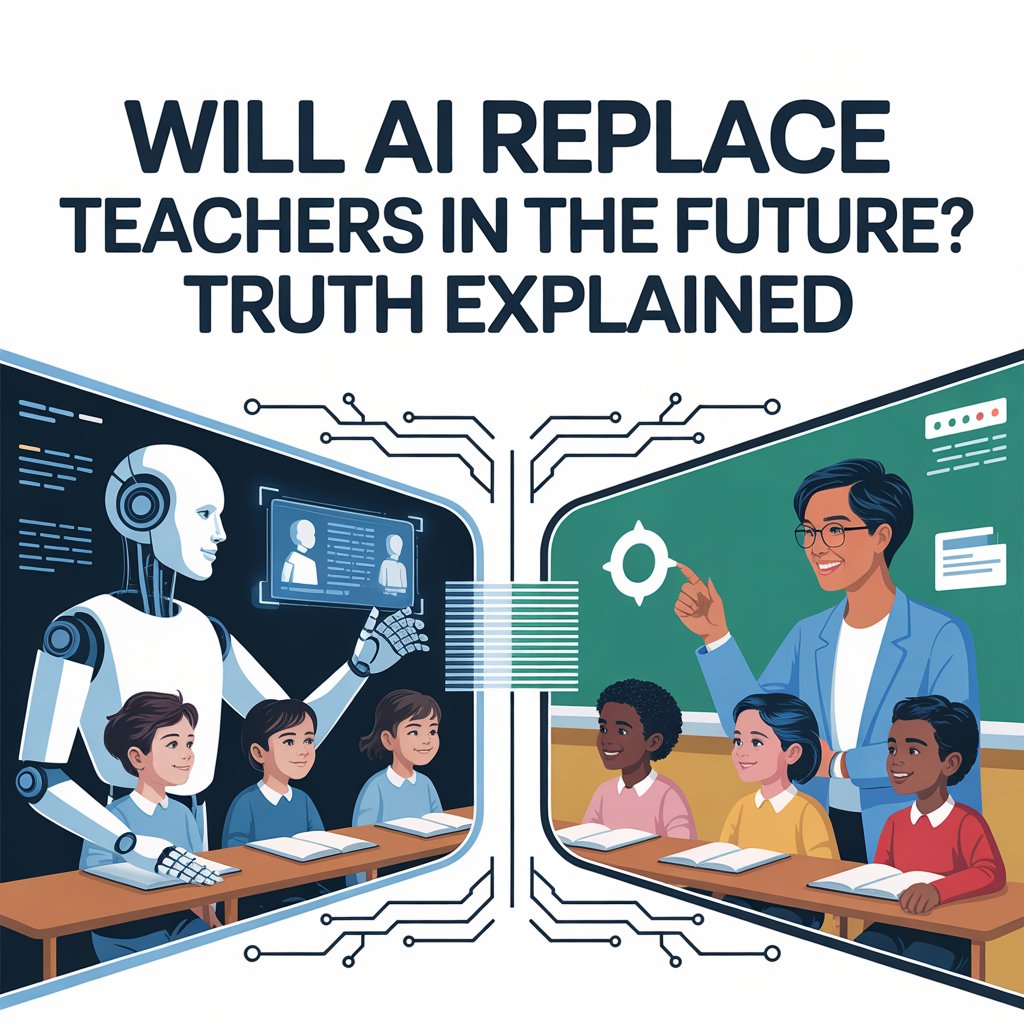
Will AI Replace Teachers in the Future? Truth Explained
Will AI replace teachers: practical guidance, five planning checks, source context and clear questions about evidence, responsibilities and support.
Published by Unessa Foundation · Editorial update: 1 November 2026
On this page
- will AI replace teachers: a practical starting point
- Practical context
- Why This Question Is Growing So Fast
- What AI Can Do in Education
- What AI Cannot Replace
- AI and Teachers Will Work Together
- The Role of Teachers in Underprivileged Education
- The Real Truth About the Future
- Conclusion
- Will AI replace teachers? Questions about classroom decisions
- 5 practical checks for will ai replace teachers
- Evidence and support: keep the scope clear
will AI replace teachers: a practical starting point
Start with the actual learning or career decision, then check the provider, eligibility, practical requirements and evidence. A forecast, qualification title or individual success story does not guarantee employment, income or the same outcome for every learner.
For context, use Skill India Digital Hub as official course information to check against a particular provider’s offer. The link is not evidence of a measured result for an individual classroom, donation or programme described in this guide.
To connect device use with practical learning and safety skills, see digital literacy for children.
Practical context
Artificial Intelligence is rapidly changing the way students learn, practice, and access information. From AI tutors and smart learning apps to instant doubt-solving tools, technology is becoming a regular part of education.
This raises an important question in the minds of students, parents, and educators: Will AI replace teachers in the future?
The short answer is no—not completely.
AI will certainly transform education, but the truth is that teachers and technology serve different purposes. Rather than replacing teachers, AI is more likely to support and strengthen the teaching process.
This blog explains the reality behind this growing debate and what the future of education may look like.
Why This Question Is Growing So Fast
The rise of AI-powered tools has made learning faster and more accessible than ever before.
Students can now use technology for:
- instant answers
- personalized quizzes
- doubt-solving
- language learning
- practice tests
- study planning
Because of this, many people assume that teachers may no longer be needed in the future.
However, education is not only about delivering information.
Teaching also involves:
- guidance
- emotional support
- motivation
- discipline
- mentorship
- human understanding
Insight:
AI can provide information, but teachers provide understanding and direction.
👉 Click here to know about Jobs That Will Grow? 6 Helpful Checks for Career Planning

Unessa Foundation activity: a volunteer and children working with paper learning materials in Vadodara.
SUPPORT CHILDREN’S EDUCATION
Help learning become a regular part of a child’s life.
Support Unessa Foundation’s education programmes and volunteer-led learning activities.
What AI Can Do in Education
Artificial Intelligence is transforming education by making learning more personalized, accessible, and efficient. Instead of following the same pace and style for every student, AI can adapt learning based on individual strengths and weaknesses.
This is one of the biggest reasons AI is becoming an important part of modern classrooms.
AI can support education in several practical ways, such as:
- instant doubt-solving
- personalized learning paths
- quiz and test generation
- automated grading
- performance analysis
- language translation and support
- study planning and reminders
For example, if a student is weak in mathematics, an AI tool can identify the exact topics where mistakes are repeated—such as algebra or trigonometry—and provide additional practice questions and simpler explanations.
This helps students learn at their own pace.
AI-powered adaptive learning systems are increasingly used for personalized tutoring and real-time feedback, making learning more targeted and effective.
Another major benefit is 24/7 availability.
Unlike a classroom that runs for limited hours, AI tools can help students anytime—late at night, during revision, or right before exams.
This is especially useful for students who need extra support outside school hours.
AI can also help teachers by reducing repetitive tasks.
For example, it can assist with:
- checking objective answers
- creating worksheets
- generating practice papers
- tracking student progress
This allows teachers to focus more on concept clarity and mentoring.
UNESCO and recent classroom studies highlight that AI is especially effective in adaptive learning, assessment support, and reducing teacher workload.
Insight:
AI can deliver information quickly and personalize learning, making education more efficient and student-focused.
Case Study:
A student preparing for board exams uses an AI study tool that analyzes test performance and recommends more practice in weak chapters like chemistry numericals and grammar.
Over time, the student’s scores improve because the revision becomes focused instead of random.
Practical Tip:
Students should use AI tools for:
- concept revision
- practice tests
- doubt clarification
- progress tracking
but combine them with teacher guidance for deeper understanding.
Lesson:
AI works best as a learning assistant that strengthens education, not as a complete replacement for teachers.
What AI Cannot Replace
While AI is powerful, it still cannot fully replace the human qualities that teachers bring.
Teachers do much more than explain lessons.
They help students with:
- emotional encouragement
- confidence building
- classroom discipline
- personal mentorship
- moral guidance
- motivation during failure
For example, when a student loses confidence after poor marks, a teacher can understand emotions, offer reassurance, and guide improvement.
AI cannot truly replicate empathy, care, and emotional intelligence.
This is especially important for younger learners and students from challenging backgrounds.
This human connection cannot be replaced by machines.
Insight:
Education is not only about learning concepts; it is also about shaping character and confidence.
AI and Teachers Will Work Together
The future of education is not about choosing between AI and teachers—it is about combining the strengths of both. Instead of replacing educators, AI is increasingly becoming a powerful support system that helps teachers teach better, faster, and more personally.
Experts and education bodies, including UNESCO, consistently emphasize that teachers remain irreplaceable because AI cannot understand emotions, classroom dynamics, or the social development of learners the way humans can.
AI can take over repetitive and time-consuming tasks such as:
- generating quizzes and worksheets
- checking objective answers
- analyzing student performance
- creating lesson summaries
- suggesting personalized revision plans
This allows teachers to spend more time on what truly matters:
- concept clarity
- one-on-one guidance
- confidence building
- motivation
- emotional support
- mentoring
For example, if a class of 40 students appears for a test, an AI tool can quickly identify which students are weak in algebra, grammar, or science concepts. The teacher can then use that insight to provide focused support to those specific students instead of spending hours manually analyzing answer sheets. AI systems are already being used in classrooms to surface real-time learning gaps so teachers can intervene faster.
At Unessa Foundation, this model is especially powerful because teachers working with underprivileged children often need more time for personal mentorship, confidence-building, and emotional encouragement. AI can reduce administrative load and help teachers focus on the child, not just the syllabus.
Insight:
AI improves efficiency, while teachers provide empathy and direction.
This partnership makes education stronger rather than replacing the human role.
Case Study:
A teacher uses AI-generated performance reports after a weekly class test. The system highlights that several students are repeatedly making mistakes in fractions. Instead of reteaching the entire chapter, the teacher creates a focused remedial session for those students.
This saves time and improves learning outcomes.
Practical Tip:
Teachers and students should use AI as a support tool for:
- faster revision
- practice tests
- doubt solving
- progress tracking
but still rely on human teaching for deep understanding and motivation.
Lesson:
The future classroom will not be AI-only.
It will be teacher-led and AI-supported, creating smarter and more personalized learning experiences.
The Role of Teachers in Underprivileged Education
For students from underprivileged communities, the teacher’s role becomes even more critical.
Many children need:
- motivation
- personal attention
- emotional support
- learning confidence
- encouragement to continue education
At Unessa Foundation, teachers are not just educators—they are often mentors who help shape the future of children who may not otherwise have access to strong educational support.
AI tools can support learning, but they cannot replace the trust and human connection that teachers provide.
Insight:
For meaningful education, human guidance remains essential.
The Real Truth About the Future
The real truth is that the future of education is not about AI replacing teachers, but about AI transforming the way teaching and learning happen.
As classrooms across India and the world adopt smart tools, personalized learning apps, and AI-based assessments, the role of teachers is becoming even more important—not less. Recent education panels in India have clearly emphasized that AI can support learning, but it cannot replace the human role of teachers in guidance, judgment, and emotional development.
The future is most likely to be a hybrid model, where AI handles repetitive and time-consuming tasks while teachers focus on mentoring and student growth.
AI can help with:
- instant doubt-solving
- practice test generation
- automated grading
- performance analysis
- personalized study recommendations
This allows teachers to spend more time on:
- concept clarity
- motivation
- classroom interaction
- confidence building
- emotional support
At Unessa Foundation, this future is especially meaningful because education is not only about delivering information. It is about helping children—especially underprivileged students—build confidence, discipline, and hope for a better future. This is why the question Will AI Replace Teachers is becoming so important for students, parents, and educators.
A machine may explain a chapter, but it cannot truly understand when a child is struggling emotionally, losing motivation, or needs personal encouragement. This human connection is central to the discussion around Will AI Replace Teachers.
That human understanding is what makes teachers irreplaceable.
Insight:
The future belongs to AI-assisted teachers, not AI-only classrooms, which directly answers the concern Will AI Replace Teachers.
Many experts now believe that teacher demand will continue to remain strong, with AI acting more like a teaching assistant than a replacement. So when people ask Will AI Replace Teachers, the more realistic answer is that AI will support, not substitute, human educators.
Case Study:
A school teacher using AI-based performance reports can quickly identify which students are weak in mathematics and provide targeted support, something that becomes more effective when combined with human mentoring.
This shows that technology works best when it strengthens the teacher’s role, reinforcing why Will AI Replace Teachers remains a debate about support rather than replacement.
Lesson:
The real future of education is collaboration between human intelligence and artificial intelligence, where teachers continue to remain at the heart of learning. This is the strongest answer to Will AI Replace Teachers in the years ahead.
Conclusion
AI is a powerful tool for the future of education, but it cannot replace the empathy, mentorship, and human connection that teachers bring.
Final Thought:
AI can teach lessons, but only teachers can truly inspire lives.
Will AI replace teachers? Questions about classroom decisions
Will AI replace teachers in every classroom?
This article cannot establish a universal future outcome. Will AI replace teachers is a question that depends on tasks, context, policy and the needs of learners. Evaluate a specific proposed use instead of assuming that a tool’s ability to generate text demonstrates that it can take responsibility for teaching, relationships or safeguarding.
What should a school ask before using AI in education?
Ask which task the tool is intended to support, who checks its output and what happens when it is wrong. AI in education also raises questions about privacy, accessibility and age-appropriate use. Follow the institution’s approved process before entering learner information. A trial should have a clear purpose and a way for staff and learners to report problems.
How can teachers compare a tool with an existing classroom approach?
Choose a defined activity and explain what evidence would make the comparison useful. Record the conditions, limitations and feedback rather than relying on a promotional demonstration. Will AI replace teachers should not distract from the immediate question of whether a particular use helps learners in that setting and preserves appropriate human responsibility.
What can a parent ask about a proposed AI tool?
Ask what information is collected, who can access it and which decisions remain with responsible staff. Request an explanation of the learning purpose and the process for raising a concern. AI in education is not a reason to assume that every learner needs an account or that a generated response is accurate. Confirm the actual arrangements with the school.
How should a school review an AI in education trial?
Compare the actual activity with its stated purpose and record problems as well as useful observations. AI in education needs a responsible point of contact and a clear process for checking output. Ask learners and staff whether the format was usable. A trial report should state its limits rather than claiming that a small demonstration settles the future of teaching.
5 practical checks for will ai replace teachers
- Identify the learner’s goal, current skills and practical constraints.
- Confirm the provider, course or source and the period it concerns.
- Check cost, equipment, accessibility and any assessment or qualification claim.
- Separate proposed activities, course completion and verified employment outcomes.
- Record the next step and revisit it when the course, market or learner’s needs change.
Keep a brief record of the date, task or enquiry, responsible person, source, what happened and what remains uncertain. Do not publish private learner, patient, donor or applicant details. Label a hypothetical example clearly and do not turn it into a real beneficiary account or a guaranteed result.
Evidence and support: keep the scope clear
A number needs its original source, population, period, definition and limitations. Activity counts, receipts, satisfaction and long-term outcomes answer different questions. If the evidence does not settle a claim, do not repeat it as verified. This guide does not claim an audited programme result, current approval or named professional review.
The education donation buttons lead to Unessa’s education campaign. They do not fund every third-party provider, item or service mentioned here. Read the programme information and confirm any allocation or service condition important to you before giving.
Sources and further reading
Continue reading

Related guide

Related guide
Support children’s learning with Unessa Foundation.