

Introduction
Every Ramadan, millions of Muslims calculate their Zakat carefully. They check savings, gold, business assets, and investments using guides such as how to calculate Zakat accurately. But one question often receives less attention: Who exactly qualifies to receive Zakat?
Islam does not leave this open to guesswork. The 8 categories of Zakat recipients are clearly defined in the Qur’an, ensuring fairness, accountability, and structured wealth distribution.
Understanding who qualifies for Zakat is not just about compliance. It is about fulfilling a sacred responsibility correctly. When Zakat is distributed according to these eight categories, it strengthens communities, reduces poverty, and builds long-term stability.
Let’s explore each category in detail and understand how they apply today.
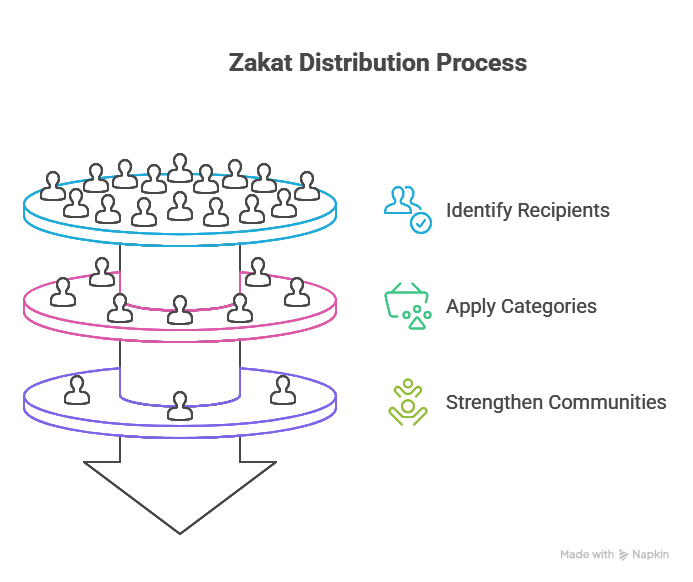
The Qur’anic Foundation of the 8 Categories of Zakat Recipients
The foundation of Zakat distribution comes from Surah At-Tawbah (9:60):
“Zakat expenditures are only for the poor, the needy, those employed to collect it, those whose hearts are to be reconciled, to free captives, for those in debt, in the cause of Allah, and for the stranded traveler…”
This verse establishes the eight categories of Zakat recipients, creating a divinely structured economic system.
Unlike voluntary charity (Sadaqah), Zakat must be distributed strictly within these categories.
The Poor
Individuals without basic necessities.
This Needy
Income insufficient for living expenses.
Zakat Administrators
Those managing Zakat collection.
Reconciliation
New Muslims and community harmony.
Freeing Captives
Restoring freedom and dignity.
Those in Debt
People burdened with lawful debts.
In the Cause of Allah
Community and humanitarian causes.
Stranded Traveler
Travelers without access to funds.
AI - Fuqara(The Poor)
The first of the 8 categories of Zakat recipients is the poor — individuals with little or no income.
They cannot meet their basic needs such as:
- Food
- Shelter
- Clothing
- Medical care
These individuals may have no employment or insufficient resources to survive with dignity.
Real-Life Example : A widowed mother with three children and no stable income falls under Al-Fuqara. Zakat ensures her essential needs are met.
Globally, poverty remains a major concern. According to World Bank estimates, hundreds of millions still live below the poverty line. Proper Zakat distribution directly addresses this gap.
Al-Masakin (The Needy)
While often confused with the poor, the needy have slightly better financial conditions — but still struggle significantly.
They may:
- Have employment
- Earn income
- Appear financially stable
However, their income does not fully cover essential expenses.
Example : A salaried worker whose earnings barely cover rent, utilities, and food may qualify under this category.
Recognizing the difference between poor and needy ensures precise Zakat allocation.
Amil (Administrators of Zakat)
Among the 8 categories of Zakat recipients are those appointed to collect and manage Zakat.
These individuals:
- Organize distribution
- Verify eligibility
- Maintain documentation
- Ensure transparency
They may receive compensation for their services even if they are not poor.
Why This Matters : Without proper administration, Zakat funds could be mismanaged. This category ensures accountability and professional handling.
Modern Zakat institutions and Islamic charitable organizations operate under this principle.
Muallaf (Those Whose Hearts Are to Be Reconciled)
This category includes:
- New Muslims needing support
- Individuals inclined toward Islam
- Community leaders whose goodwill strengthens harmony
Converts often face financial and social challenges after embracing Islam.
Example : A revert who loses family financial support may qualify for assistance under this category.
The goal is not only financial aid but also community integration and stability.
Riqab (Freeing Captives)
Historically, this category referred to freeing slaves. Today, scholars often interpret it to include:
- Victims of human trafficking
- Individuals unlawfully detained
- People trapped in exploitative systems
The objective is restoring freedom and dignity.
In modern contexts, some Zakat organizations allocate funds toward rehabilitation programs for oppressed individuals.
Gharimin (Those in Debt)
Debt is one of the leading causes of financial stress worldwide. Islam recognizes this.
This category includes individuals:
- Burdened by lawful debt
- Unable to repay without hardship
- Lacking sufficient assets
Example : Someone who incurred medical debt due to emergency surgery may qualify.
However, debt from unlawful activities does not qualify.
Research shows that debt-related stress significantly affects mental health. Zakat provides relief and restores stability.
Fi Sabilillah (In the Cause of Allah)
This category is broader and subject to scholarly interpretation.
Traditionally, it referred to those striving in the path of Allah. Today, scholars may include:
- Islamic education initiatives
- Community welfare programs
- Dawah efforts
- Humanitarian relief
The key condition: the cause must serve the collective benefit of the Muslim community.
This category ensures long-term development, not just emergency aid.
Ibn Sabil (The Stranded Traveler)
The final category among the 8 categories of Zakat recipients is the stranded traveler.
This includes someone who:
- Is away from home
- Has lost access to funds
- Cannot return without support
Even a wealthy person may temporarily qualify if stranded.
Example : A traveler whose wallet is stolen abroad and cannot afford a return ticket qualifies under Ibn Sabil.
This highlights Islam’s practical and compassionate framework.
Why the 8 Categories Matter Today
Zakat is not random charity. It is structured wealth redistribution.
When distributed correctly, it promotes
- Poverty reduction
- Economic circulation
- Debt relief
- Social stability
- Community development
Studies estimate that proper global Zakat collection could amount to hundreds of billions annually. When directed within the eight defined categories, the impact becomes transformative.
Important Guidelines for Zakat Distribution
To comply with Islamic principles:
✔ Zakat must go directly to eligible recipients
✔ It cannot fund mosque construction unless falling under valid scholarly interpretation
✔ Parents, children, and spouses are generally not eligible
✔ Intention (Niyyah) must be made at payment
Proper documentation is especially important for businesses paying Corporate Zakat.
Common Misconceptions About Who Qualifies for Zakat
- “Zakat can be given to anyone in need.”
Not necessarily. It must fall within the 8 categories of Zakat recipients.
- “All charitable projects qualify.”
Only those fitting recognized categories qualify.
- “Wealthy relatives can receive Zakat.”
Only if they genuinely meet eligibility conditions.
Clearing these misconceptions ensures responsible distribution.
Individual vs Corporate Responsibility
Whether paying personally or through a business:
- Verify recipient eligibility
- Distribute through trusted organizations
- Maintain proper documentation
- Review distribution annually
Corporate Zakat requires additional transparency, including audit-ready records.
Structured platforms help ensure funds reach legitimate recipients within the 8 categories of Zakat recipients
The Broader Economic Wisdom Behind the 8 Categories of Zakat Recipients
Islamic economic principles aim to:
- Prevent wealth concentration
- Encourage social equity
- Protect vulnerable groups
- Promote ethical circulation of resources
Zakat creates a recurring annual redistribution system.
Unlike one-time charity, it is structured, measurable, and spiritually mandated.
Conclusion
The 8 categories of Zakat recipients provide a clear framework for who qualifies for Zakat in Islam. This system ensures wealth reaches those most deserving while maintaining justice and accountability.
By understanding these categories, Muslims can:
- Distribute Zakat correctly
- Avoid common errors
- Strengthen community impact
- Fulfill their religious obligation with confidence
When applied properly, the 8 categories of Zakat recipients transform Zakat from a simple payment into a powerful engine of social balance.
Proper knowledge leads to proper distribution. And proper distribution leads to lasting impact.
FAQs: 8 Categories of Zakat Recipients
What are the 8 categories of Zakat recipients?
They are: the poor (Al-Fuqara), the needy (Al-Masakin), Zakat administrators (Amil), those whose hearts are to be reconciled (Muallaf), freeing captives (Riqab), those in debt (Gharimin), in the cause of Allah (Fi Sabilillah), and the stranded traveler (Ibn Sabil).
Who qualifies to receive Zakat in Islam?
Only individuals or causes that fall within the eight categories mentioned in Surah At-Tawbah (9:60) qualify.
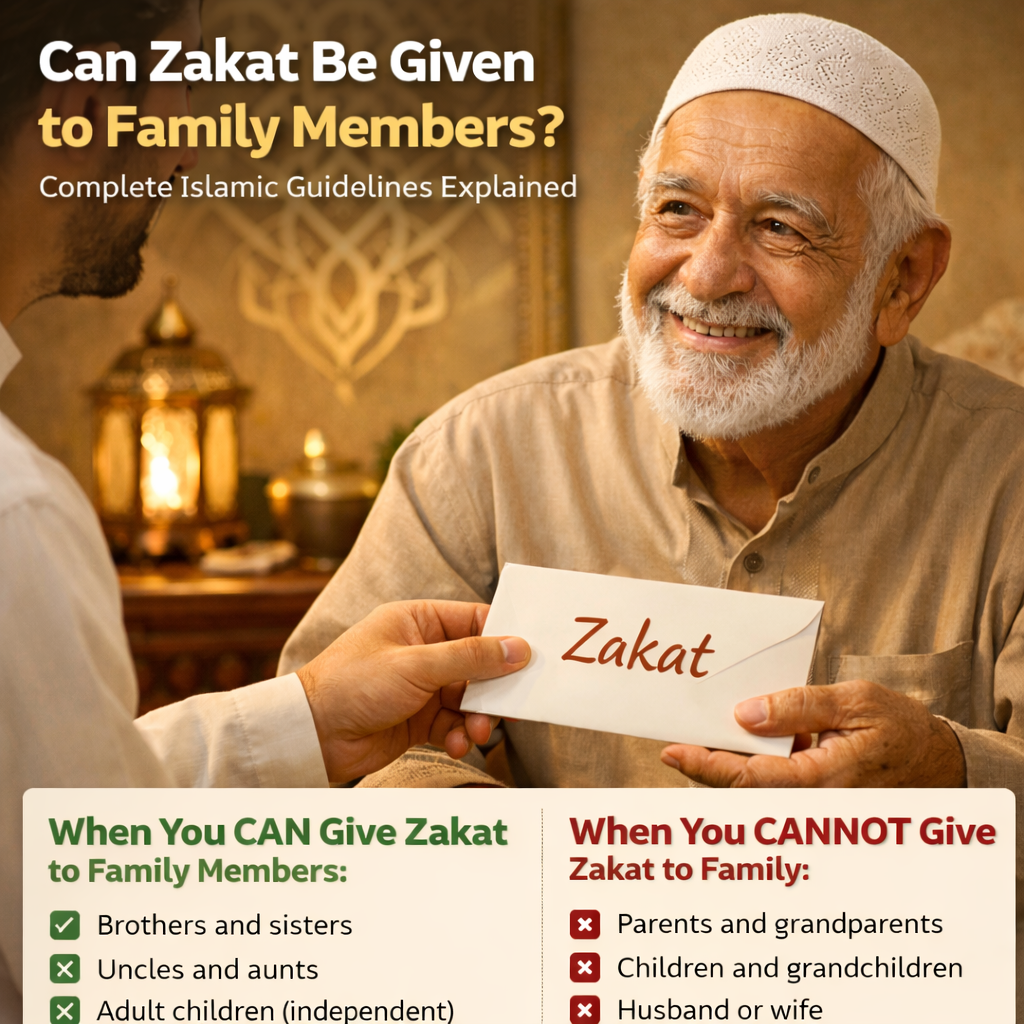
Can Zakat be given to family members?
It can be given to eligible relatives (like siblings or cousins) if they qualify, but not to parents, children, or spouses.
Can Zakat be used for mosque construction?
Generally, mosque construction does not qualify unless it falls under a recognized scholarly interpretation of Fi Sabilillah.
Can someone belong to more than one category?
Yes. For example, a poor person who is also in debt may qualify under multiple categories but should only receive what meets their needs.
Is it allowed to give all Zakat to one category?
Yes. Zakat can be allocated entirely to one eligible category if there is genuine need.
Do Zakat administrators receive Zakat funds?
Yes, those officially appointed to collect and distribute Zakat may receive compensation under the Amil category.
Does a wealthy traveler qualify for Zakat?
If stranded without access to funds, they may temporarily qualify under Ibn Sabil.