

Practicing Zakat Beyond Muslim-Majority Nations
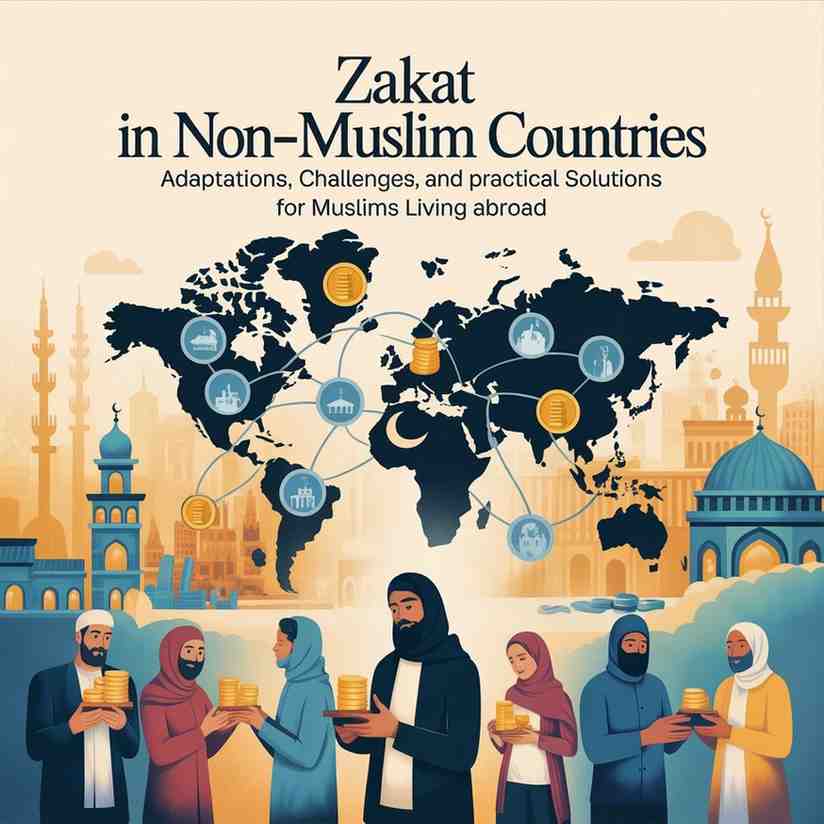
For millions of Muslims living in Western and other non-Muslim majority societies, fulfilling religious obligations comes with unique questions. One of the most common is how Zakat in non-Muslim countries should be calculated, distributed, and managed.
The obligation of Zakat does not change with geography. However, systems, regulations, tax laws, and community structures often differ significantly from Muslim-majority regions.
This guide explores the practical realities of Zakat in non-Muslim countries, the challenges Muslims face, and the strategies that ensure compliance with both Islamic principles and local legal frameworks.
Understanding the Core Principles of Zakat
Before discussing adaptations, it is essential to revisit the foundation.
Zakat becomes obligatory when a Muslim:
- Owns wealth above the Nisab threshold
- Maintains that wealth for one lunar year (Hawl)
- Has full ownership and control over the assets
These rules remain constant whether one lives in London, New York, Sydney, or Tokyo.
The obligation is tied to wealth, not geography.
However, applying these principles in non-Muslim countries introduces practical complexities.
👉Click to know more what is zakat?
Why Zakat in Non-Muslim Countries Requires Adaptation
In many Muslim-majority countries, Zakat may be state-administered or supported through structured religious institutions. In contrast, Zakat in non-Muslim countries is typically managed privately.
There is:
- No centralized Zakat authority
- No state-mandated collection system
- Greater reliance on independent charities
As Muslim populations grow globally, these differences require thoughtful adaptation.
According to global migration studies, over 80 million Muslims live as minorities across Europe, North America, and East Asia. This has significantly increased discussions about Islamic financial obligations abroad.
Key Adaptations in Zakat Calculation
1. Local Currency and Financial Systems
Muslims living in non-Muslim countries often hold assets in:
Local bank
accounts
Retirement accounts (401(k), pensions, superannuation)
Stocks, ETFs, and mutual funds
Property investments
Business
equity
Because financial structures differ, calculating Zakat in non-Muslim countries may require understanding:
Market-based investments
Capital gains
Retirement penalties
Tax implications
For example:
- Investment portfolios must be evaluated for Zakatable assets.
- Rental properties are assessed differently than primary residences.
Pension accessibility affects Zakat timing.
The principle remains the same: ownership + Nisab + one lunar year.
But the asset categories may be broader and more complex.
Institutional Distribution: The Absence of State Systems
In non-Muslim countries, Muslims usually distribute Zakat through:
- Registered Islamic charities
- Community centers
- Local mosques
- Direct personal assistance
Since there is no government-run Zakat system, donor responsibility increases.
This makes transparency and accountability essential.
Tax Considerations and Legal Compliance
One of the most discussed aspects of Zakat in non-Muslim countries is taxation.
Zakat is not a government tax. It is a religious obligation. However:
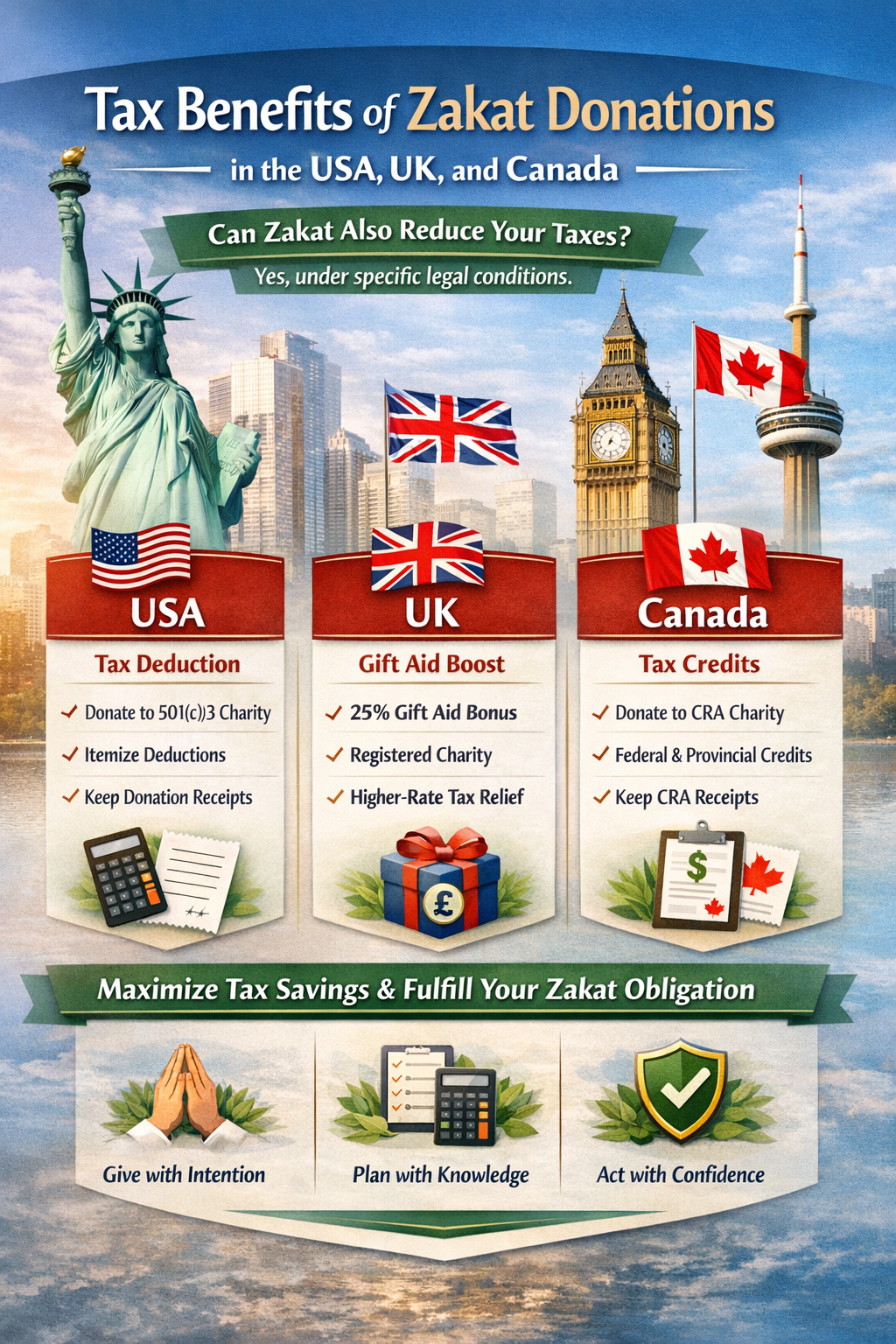
- Many donors prefer registered charities for tax deductions.
- Charitable giving laws vary by country.
- Financial reporting regulations apply to organizations.
For example:
- In the United States, 501(c)(3) charities offer tax-deductible receipts.
- In the UK, Gift Aid enhances charitable contributions.
- In Australia and Canada, specific regulatory frameworks apply.
This intersection between religious obligation and secular law creates both opportunity and complexity.
Major Challenges Facing Zakat in Non-Muslim Countries
1. Identifying Eligible Recipients
In Muslim-majority societies, identifying the poor may be more visible.
In contrast, poverty in Western countries can be hidden.
Challenges include:
- Dispersed Muslim populations
- Language barriers
- Immigration status issues
- Undocumented financial hardship
Zakat must be distributed according to Islamic guidelines, which requires careful screening.
2. Cross-Border Transfers
Many Muslims prefer sending Zakat to countries experiencing:
- Conflict
- Famine
- Economic collapse
However, transferring funds internationally may involve:
- Banking restrictions
- Compliance checks
- Currency conversion fees
- Anti-terror financing regulations
While supporting global causes is valid, donors must ensure lawful and verified channels.
3. Accountability and Transparency
Without centralized oversight, trust becomes critical.
Donors often ask:
- How much of my Zakat reaches beneficiaries?
- What are the administrative costs?
- Is there proper verification?
This has led to increased demand for:
- Transparency reports
- Impact measurement
- Independent audits
- Digital dashboards
Modern Muslim charities increasingly use data-driven systems to strengthen credibility.
A Practical Framework for Paying Zakat in Non-Muslim Countries
If you live in a non-Muslim country, here is a structured approach:
Step 1: Calculate Accurately
- Determine total assets
- Deduct liabilities
- Confirm Nisab threshold
- Calculate 2.5%
Use updated gold or silver values based on your preferred calculation method.
👉click here to know how to calculate Zakat
Step 2: Verify Eligibility of Recipients
Zakat can only be given to eligible categories, including:
- The poor
- The needy
- Those in debt
- Travelers in hardship
Avoid giving Zakat to those you are already financially obligated to support.
Step 3: Choose Reliable Channels
Look for:
- Clear financial reporting
- Beneficiary verification processes
- Low administrative overhead
Local community impact
Step 4: Balance Local and Global Needs
Some scholars encourage prioritizing local communities if poverty exists nearby. Others permit sending abroad where need is greater.
A balanced approach may include:
- Supporting local struggling families
- Contributing to international crises
Real-World Scenario: Zakat in a Western Context
Consider Ahmed, a professional living in Canada.
His assets include:
- Salary savings
- Retirement contributions
- Stock investments
- A rental property
He must evaluate:
- Which assets are Zakatable
- Accessibility of retirement funds
- Rental income after expenses
He calculates annually and distributes through a registered Islamic charity serving local refugee families.
His approach reflects responsible management of Zakat in non-Muslim countries.
Current Trends in Zakat Management Abroad
The landscape of Islamic philanthropy is evolving.
Emerging trends include:
- Online zakat calculator
- Digital payment systems
- Blockchain transparency tracking
- Impact measurement dashboards
- Cross-border humanitarian coordination
As Muslim minorities become more economically established, structured Zakat systems are becoming more sophisticated.
Spiritual and Social Impact
While logistical challenges exist, the essence of Zakat in non-Muslim countries remains unchanged.
It:
- Purifies wealth
- Reduces inequality
- Strengthens Muslim communities
- Supports vulnerable populations
- Builds social cohesion
In minority contexts, Zakat also:
- Strengthens community institutions
- Supports new immigrants
- Funds educational initiatives
- Builds local resilience
It becomes not only a personal obligation but a collective stabilizing force.
Balancing Faith and Civic Responsibility
Muslims living in non-Muslim countries often navigate dual responsibilities:
- Religious compliance
- Civic legal compliance
Responsible Zakat management demonstrates:
- Ethical financial conduct
- Respect for local laws
- Commitment to transparency
This dual alignment strengthens both faith identity and societal trust.
Conclusion: Zakat Beyond Borders
Zakat in non-Muslim countries may require adaptation, but its obligation remains firm.
With accurate calculation, verified distribution, and transparent institutions, Muslims can fulfill their duty confidently—regardless of geography.
When managed responsibly, Zakat strengthens:
- Individuals
- Families
- Communities
- Global humanitarian networks
The challenge is not whether Zakat applies abroad. It does.
The responsibility is ensuring it is calculated carefully, distributed ethically, and aligned with both Islamic principles and local regulations.
In doing so, Muslims transform minority presence into meaningful impact.
FAQs
1. Is Zakat still obligatory if I live in a non-Muslim country?
Yes. Zakat is a religious obligation based on wealth, not location. Living in a non-Muslim country does not change the requirement.
2. Can I give Zakat locally in a non-Muslim country?
Yes. If eligible recipients exist locally, you may distribute your Zakat within your community through verified individuals or trusted charities.
3. Is it allowed to send Zakat overseas?
Yes. You may send Zakat to another country where need is greater, provided the funds reach eligible recipients and are transferred legally.
4. Is Zakat tax-deductible in Western countries?
Zakat itself is not a government tax. However, donations made through registered charities may qualify for tax deductions depending on local laws.
5. How do I ensure my Zakat is properly distributed?
Choose transparent organizations that provide clear reporting, beneficiary verification, and accountability in line with Islamic guidelines.
6. Does local law affect my Zakat calculation?
Local financial systems may influence how assets are calculated, but the core Islamic rules of Nisab and one lunar year remain the same.