

Introduction
Every Ramadan, one question frequently arises: What is the difference between Zakat al-Mal and Zakat al-Fitr?
Both are mandatory forms of charity in Islam. Both purify wealth and strengthen communities. Yet they are fundamentally different in purpose, timing, eligibility, and calculation.
Understanding the zakat al-mal vs zakat al-fitr difference ensures that your worship is accurate, complete, and impactful. This guide explains everything clearly — from calculation methods to real-world examples — so you can fulfill your obligations with confidence.
What Is Zakat in Islam?
Zakat is one of the Five Pillars of Islam. It is not optional charity. It is a compulsory act of worship tied to financial purification and social responsibility.
The word “Zakat” means:
- Purification
- Growth
- Blessing
However, Zakat is not a single category. It includes two major types:
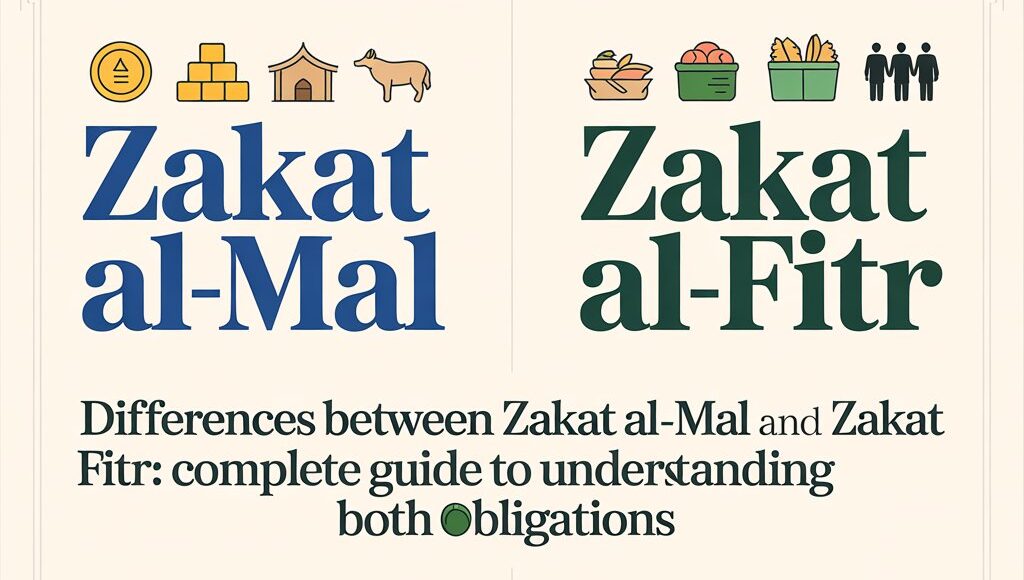
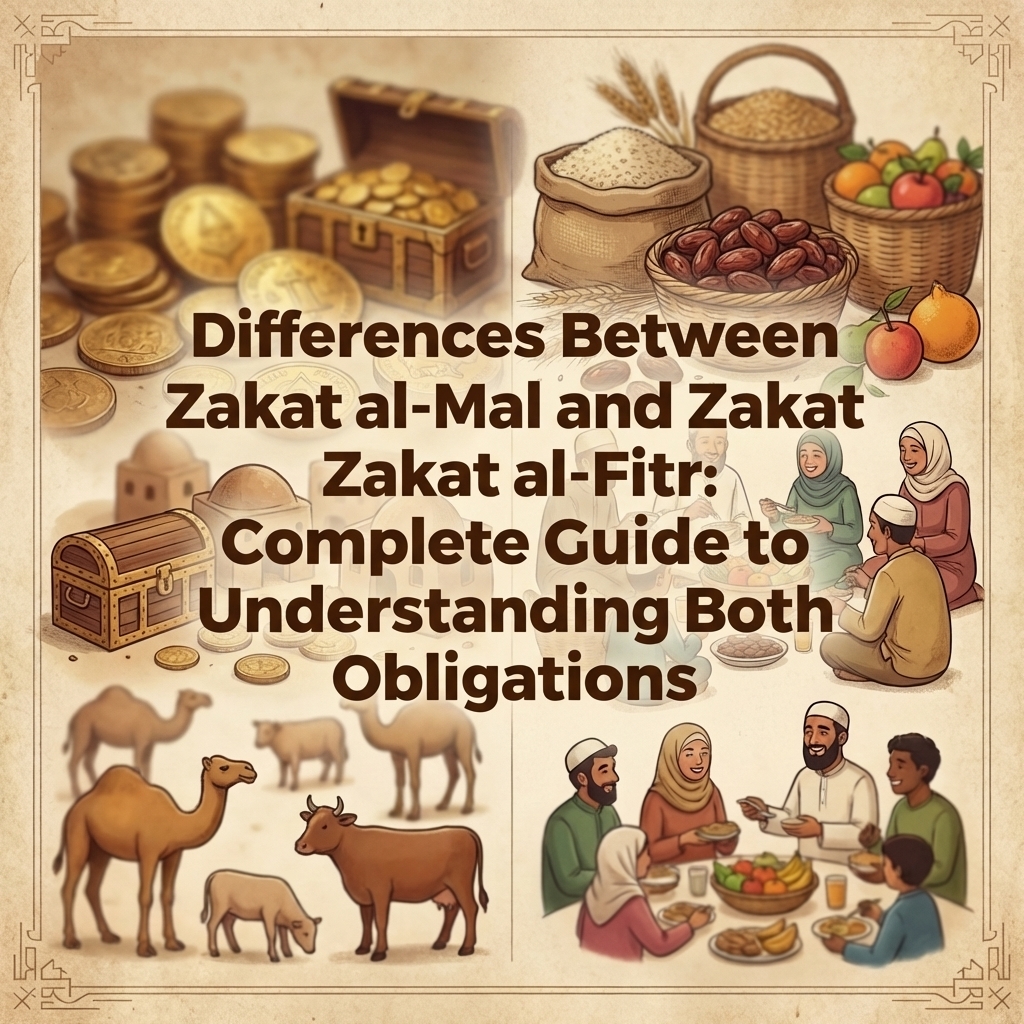
- Zakat al-Mal (Zakat on wealth)
- Zakat al-Fitr (Zakat of breaking the fast)
Understanding the differences between Zakat al-Mal and Zakat al-Fitr begins with knowing their distinct roles in Islamic practice.
👉 Know more about Zakat
Zakat al-Mal: Annual Wealth Purification
What Is Zakat al-Mal?
Zakat al-Mal is an annual obligation on qualifying wealth. It applies when a Muslim’s assets exceed the Nisab threshold and remain above that threshold for one lunar year (Hawl).
Assets Typically Subject to Zakat al-Mal:
- Cash savings
- Gold and silver
- Business inventory
- Investments and stocks
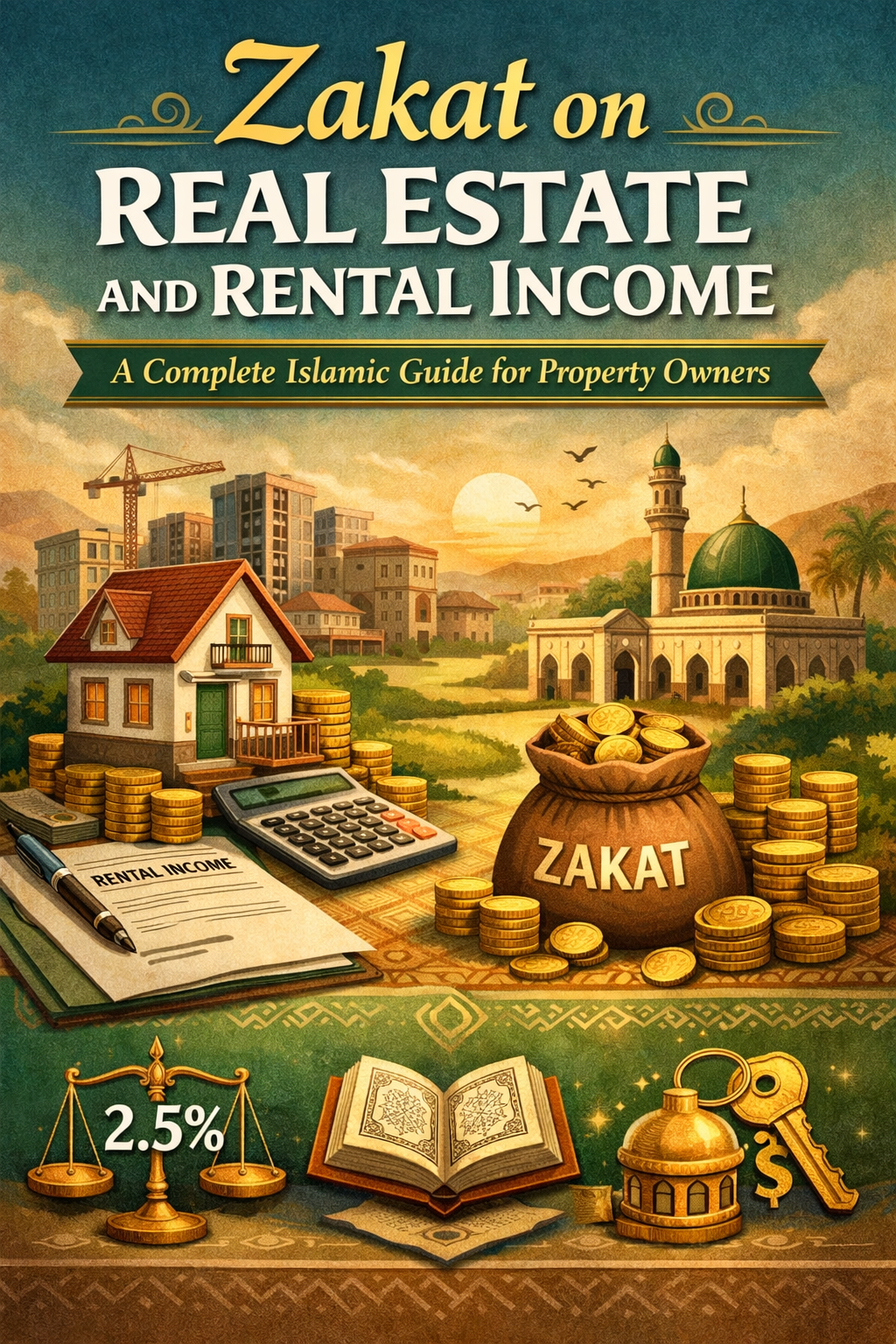
- Rental income
- Cryptocurrency (according to many contemporary scholars)
The standard rate is 2.5% of eligible wealth.
👉 Know about Zakat on Gold and Jwellery
Purpose of Zakat al-Mal
The purpose of Zakat al-Mal is twofold:
- Purify wealth from greed and attachment
- Redistribute resources to reduce inequality
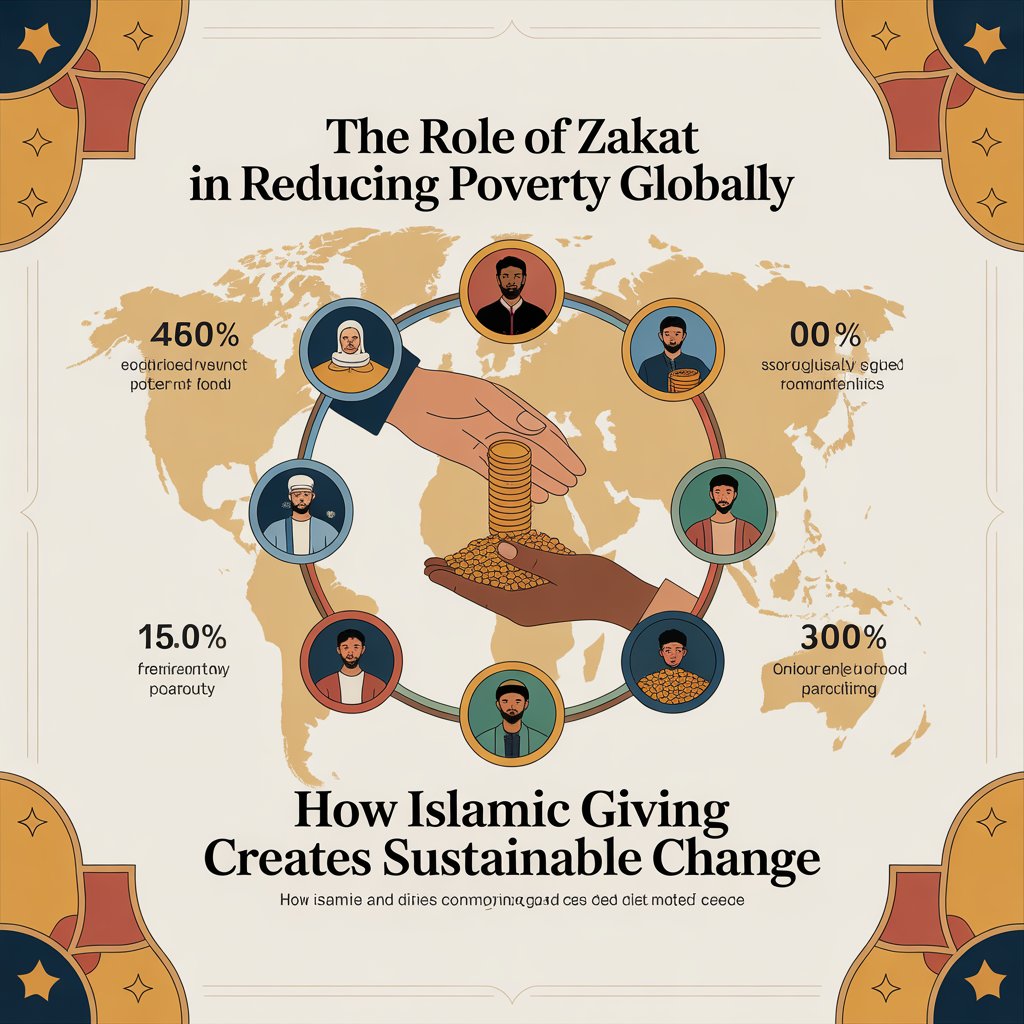
According to global development research, wealth inequality continues to widen worldwide. Zakat, when implemented correctly, functions as a built-in economic balancing system.
Historically, during the caliphate of Umar ibn Abdul Aziz, proper Zakat distribution reportedly reduced poverty to the extent that eligible recipients were difficult to find.
That demonstrates the transformative power of Zakat al-Mal when administered effectively.
Zakat al-Fitr: Charity Linked to Ramadan
What Is Zakat al-Fitr?
Zakat al-Fitr is a mandatory charity given at the end of Ramadan before the Eid prayer.
Unlike Zakat al-Mal, it is:
- Not based on accumulated wealth
- Not percentage-based
- Not dependent on Nisab
Instead, it is a fixed amount of staple food (or its monetary equivalent) per person.
Purpose of Zakat al-Fitr
The Prophet ﷺ described Zakat al-Fitr as:
- A purification for the fasting person
- A provision for the poor before Eid
Its goal is immediate relief. It ensures that everyone, including the poor, can celebrate Eid with dignity.
This highlights a major point in understanding the differences between Zakat al-Mal and Zakat al-Fitr: one is annual financial purification, the other is a Ramadan-specific communal obligation.
Key Differences Between Zakat al-Mal and Zakat al-Fitr
Let’s break it down clearly:
Zakat al-Mal
1. Purpose
- Purifies accumulated wealth
- Addresses long-term financial redistribution
2. Who Must Pay?
- Only Muslims whose wealth exceeds Nisab for one lunar year
3. Amount
- 2.5% of eligible wealth
(This is one of the most important differences between Zakat al-Mal and Zakat al-Fitr.)
4. Timing
- Due once a lunar year after wealth reaches Nisab
Zakat al-Fitr
1. Purpose
- Purifies fasting
- Provides immediate Eid support for the needy
2. Who Must Pay?
- Every Muslim who has surplus food beyond basic needs
- Paid by the head of household on behalf of dependents
3. Amount
- Fixed quantity of staple food (commonly 2.5–3 kg of rice, wheat, or dates)
- Monetary equivalent allowed in many communities
4. Timing
- Due before Eid prayer at the end of Ramadan
If delayed beyond Eid prayer, it becomes ordinary charity rather than Zakat al-Fitr.
Strategic Planning for Ramadan Zakat
If your Zakat year ends outside Ramadan but you want to focus on Maximizing Rewards: Giving Zakat in Ramadan, consider these strategies:
1. Align Your Zakat Date
You may gradually shift your calculation date earlier each year until it aligns with Ramadan.
2. Set Aside Monthly Savings
Instead of scrambling, allocate a portion monthly toward your annual Zakat.
3. Research Beneficiaries Early
Identify reliable charities before the last ten nights.
4. Diversify Distribution
You may split Zakat between:
- Local families
- International relief
- Education funds
Planning increases impact.
Current Trends in Ramadan Giving
Several trends highlight how Muslims approach Maximizing Rewards: Giving Zakat in Ramadan today:
Digital Platforms
Online portals allow instant Zakat transfer worldwide.
Transparent Reporting
Donors increasingly demand accountability and impact reports.
Localized Giving
Many prefer supporting their immediate community first.
Automation
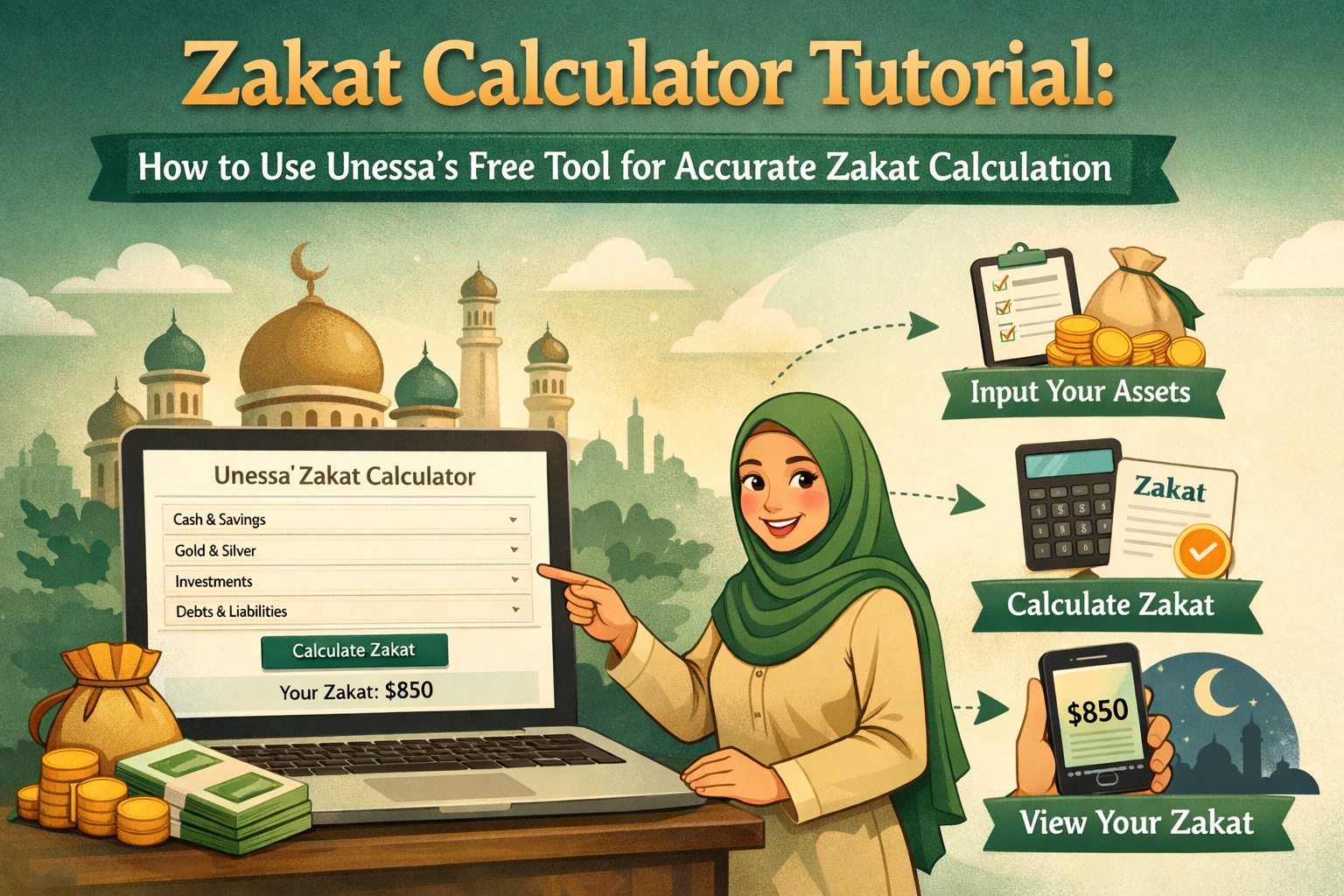
Some use automated Zakat calculators and reminders.
These innovations simplify compliance while preserving spiritual intention.
Emotional Dimension: Giving with Purpose
There’s something deeply personal about giving in Ramadan.
After a long day of fasting, you feel hunger. That hunger builds empathy. When you transfer your Zakat that night, it feels different — more connected.
Maximizing Rewards: Giving Zakat in Ramadan isn’t just about numbers. It’s about transforming wealth into relief.
Common Mistakes to Avoid
When focusing on Maximizing Rewards: Giving Zakat in Ramadan, avoid these errors:
- Paying without proper calculation
- Confusing Zakat with voluntary charity
- Waiting until the last night without preparation
- Ignoring local needy individuals
- Forgetting debts when calculating
Accuracy strengthens sincerity.
Zakat vs Sadaqah in Ramadan
It’s important to differentiate:
Zakat
- Obligatory
- 2.5% fixed rate
- Specific recipients
Sadaqah
- Voluntary
- No fixed rate
- Flexible recipients
You can give both during Ramadan. Many people combine Zakat with additional Sadaqah to truly practice Maximizing Rewards: Giving Zakat in Ramadan.
👉 Know more about the Difference between Zakat and Sadaqah
Final Thoughts
Maximizing Rewards: Giving Zakat in Ramadan is about aligning obligation with opportunity.
Ramadan opens hearts. It softens pride. It encourages generosity. When Zakat flows during this month, it transforms not only the receiver’s life — but also the giver’s.
Plan early. Calculate carefully. Give sincerely.
And let your wealth become part of Ramadan’s mercy.
FAQs
Is giving Zakat in Ramadan mandatory?
No. Zakat is due when your lunar year completes, but it may be advanced to Ramadan.
Are rewards higher in Ramadan?
Acts of worship carry increased spiritual significance in Ramadan.
Can I split my Zakat across multiple causes?
Yes, as long as recipients qualify under Zakat categories.
Should I give Zakat on Laylat al-Qadr?
You may, but ensure accurate calculation first.
What if I miscalculate?
Correct the difference as soon as possible.