
EDUCATION & COMMUNITY
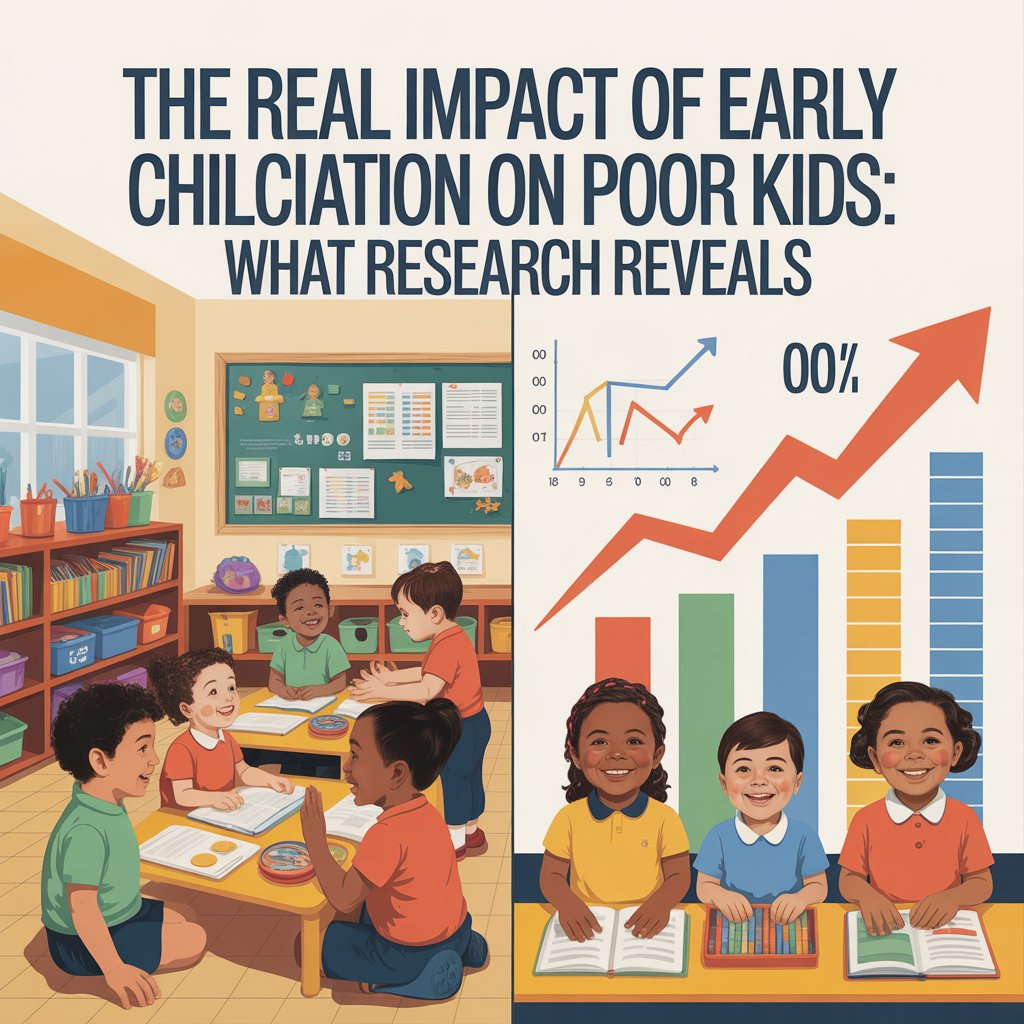
The Real Impact of Early Childhood Education on Poor Kids: What Research Reveals
Early childhood education includes the experiences and support children receive before later stages of schooling. Quality, access and the fit with families' circumstances matter when interpreting research or planning a programme.
Published by Unessa Foundation · Editorial update: 4 November 2026
On this page
- Why the First Five Years Are the Most Consequential
- What Research Reveals About Early Childhood Education for Poor Kids
- How to Strengthen Early Childhood Education for Underprivileged Kids
- The Role of Technology in Early Childhood Education
- 5 practical checks for early childhood education
- Evidence and support: keep the scope clear
- Conclusion & Call to Action
- Sources and further reading
- Frequently asked questions
- Continue reading
Ask how the setting supports play, communication, safety and participation. Consider the child's language and support needs, and discuss routines with caregivers rather than assuming the same activity or timetable suits every family.
For the wider planning questions behind education support, read education support for underprivileged children.
Why the First Five Years Are the Most Consequential
Early experiences, relationships and opportunities to explore help establish foundations for later learning. Harvard’s account of brain architecture describes rapid early development and the interaction of biology and experience. It does not mean that a fixed 90% of all development is completed before five or that later support cannot help.
Heckman and colleagues’ materials describe a 13% return for the particular comprehensive birth-to-five programme studied. Research estimates need the actual programme, costs and period; they do not establish that every preschool or donation has the same return or outperforms all later education.
Families differ in their resources, routines, language and access to services. Ask what opportunities for play, conversation and responsive care are already present and what additional support would be useful, rather than assuming every low-income home lacks stimulation.
Early education concerns play, communication, relationships and participation as well as preparation for school. Suitable support can help a learner engage, but developmental progress differs and should not be judged from one label or household income.
Despite this, early childhood education programs—especially those targeting poor children—remain underfunded and undervalued. This disconnect between research evidence and real-world action continues to limit opportunities for millions of children who would benefit the most from quality early childhood education.
How Poverty Shapes Early Brain Development
Uncertainty about food, housing or safety can create stress. Harvard’s toxic-stress guidance discusses prolonged adversity without adequate adult support. Poverty alone does not establish an individual child’s brain response, anxiety level or diagnosis.
Children’s developmental pathways vary. A practitioner should assess any individual concern through appropriate methods rather than inferring slower prefrontal development or permanent learning difficulties from family income.
Other factors further compound the issue. Malnutrition affects cognitive development. Limited exposure to language reduces vocabulary growth. Lack of play and stimulation restricts creativity and problem-solving abilities. Inconsistent caregiving can hinder emotional stability.
A safe, responsive early-learning setting can offer opportunities for play, language and supportive relationships. Confirm the actual programme and any health or nutrition provider; a preschool cannot promise to “rewire” every child’s development.
Illustrative Pune planning situation
A team plans a preschool activity for ages three to five and considers how to support language, numeracy and social interaction before Class 1. Vocabulary counts of 150, 600 and a proposed 480 after two years can be illustrative values for discussing assessment; they are not verified findings about Pune children or a guaranteed developmental change.
Agree an appropriate language-sensitive assessment, cohort and review period with educators. Avoid comparing children through one word count or treating school type as proof of ability. The planning lesson is to identify suitable support before school entry while continuing support when needed later.
Pro Tips
• Advocate for improvements in your local anganwadi center.
• Support programs that combine parent education with child learning.
What Research Reveals About Early Childhood Education for Poor Kids
India’s Anganwadi services, formerly discussed through ICDS, are part of the public early-childhood system. The Ministry’s programme information describes Mission Saksham Anganwadi and Poshan 2.0. Check the actual age group, service and reporting period rather than presenting a generic 100-million-child reach figure as current enrolment.
SPNIWCD describes Poshan Bhi Padhai Bhi and the Navchetana birth-to-three framework and Aadharshila curriculum for ages three to six. These are public programme resources, not proof of an Unessa Anganwadi partnership.
NGOs can discuss materials, supervised activities or family engagement where a setting requests support and the organisation has the capacity. Confirm any actual partnership and responsibilities. Unessa’s published programme does not by itself establish Anganwadi training, curriculum development or a measured early-childhood project.
The key takeaway from global and local research is clear: early childhood education must be high-quality, holistic, and inclusive to be effective.
The Specific Skills Early Education Builds
- Early childhood education builds a wide range of essential skills that go far beyond academics. These include:
- Language and communication skills, enabling children to express themselves clearly.
- Basic numeracy, helping them understand numbers and patterns.
- Motor skills, both fine (writing, drawing) and gross (movement, coordination).
- Social-emotional skills, such as empathy, cooperation, and self-regulation.
- Curiosity and creativity, which drive lifelong learning.
- The ability to follow instructions and work in groups.
These skills can support participation in later schooling. Review individual needs and accessible activities rather than assuming a missing skill inevitably leads to frustration or dropout.
Illustrative Gujarat planning situation
Imagine a tribal-area Anganwadi team in Gujarat considering play-based materials, worker support and monthly caregiver sessions. Each arrangement would need the responsible setting’s agreement, suitable expertise and actual resources.
A six-month review could examine language and numeracy tasks. Figures such as 68% and 54% would need defined measures, baselines and denominators before use; they are hypothetical review values here, not observed gains or proof of an Unessa partnership.
The lesson is to review the quality of an existing setting’s actual support, including learning and participation beyond enrolment, without assuming rapid or low-cost results.
Pro Tips
• Play-based learning is essential—not optional.
• Measure success beyond preschool entry, focusing on long-term outcomes.

Unessa Foundation activity: a volunteer and children working with paper learning materials in Vadodara.
SUPPORT CHILDREN’S EDUCATION
Help learning become a regular part of a child’s life.
Support Unessa Foundation’s education programmes and volunteer-led learning activities.
How to Strengthen Early Childhood Education for Underprivileged Kids
- Improving early childhood education requires coordinated action across multiple levels.
- At the policy level, governments must increase funding for infrastructure, training, and fair wages for anganwadi workers. Recognizing these workers as professionals is essential to improving program quality.
- At the community level, parents must be empowered to demand better services. Awareness campaigns and local involvement can significantly improve accountability.
Individuals can ask a local setting what materials, skills or practical participation it actually needs. Confirm the role, permissions, supervision and age-appropriate activities before volunteering or donating. For Unessa, use its published education information and ask about current arrangements rather than assuming a dedicated preschool-training service.
👉 Click here to know about The Community Strategies to Boost Underprivileged Education: 7 Approaches That Deliver Results
The Role of Technology in Early Childhood Education
Technology, when used appropriately, can enhance early childhood education—especially in underserved areas.
Simple tools like illustrated storybooks, audio learning devices, and basic educational apps can make learning more engaging and accessible. These tools are particularly useful in regions with limited access to trained educators.
However, technology should never replace human interaction. Young children learn best through relationships, conversations, and hands-on experiences. Technology should act as a supplement, not a substitute.
Illustrative Jharkhand planning situation
A remote-village team in Jharkhand considers learning cards, audio resources and appropriate coaching for an Anganwadi worker. Confirm the local need, language, training, maintenance and available professional support.
Review how the worker and children actually use the materials. Increased engagement or confidence would need appropriate observations; this illustration is not a documented project or proof that a low-cost device improves learning.
Pro Tips
• Invest in training for educators alongside technology.
• Encourage parental involvement, including fathers.
5 practical checks for early childhood education
- Check the child’s age and communication needs.
- Review play, safety and participation arrangements.
- Discuss workable routines with caregivers.
- Read the setting and duration of cited research.
- Assess the particular provision rather than the label.
Evidence and support: keep the scope clear
Check the age group, programme quality and follow-up period behind a research finding. Evidence from one early-years intervention should not be presented as a guaranteed future result for every preschool or every child.
The education donation buttons lead to Unessa’s education campaign. They do not fund every third-party provider, item or service mentioned here. Read the programme information and confirm any allocation or service condition important to you before giving.
Conclusion & Call to Action
Early-childhood support is an area to assess carefully through programme quality, access and the learner’s experience. A research result does not establish one universally best investment for every community.
Appropriate early support can provide useful foundations, and later learning and support remain possible. Review actual needs with caregivers and educators rather than describing developmental differences as inevitably permanent.
Choose support through the learner’s actual setting and needs. Read the programme, confirm what it provides and ask how participation and learning are reviewed. Unessa’s education donation information explains its own scope; it does not establish that every contribution funds preschool, nutrition or worker training.
Sources and further reading
Frequently asked questions
How should I read research about early childhood education?
Check the children’s ages, setting, programme, comparison and follow-up period. A finding from one study should not be turned into a guaranteed result for every child or a claim about an unrelated local programme.
What can families ask about an early-learning activity?
Ask what children will do, how participation is supported and who is responsible for delivery and safeguarding. Discuss the activity’s fit with the child’s circumstances instead of choosing it only because an advertisement cites a striking research result.
Why is early childhood education important for poor kids?
Accessible play, communication and responsive relationships can support participation and learning. Identify the child’s actual needs without assuming that income determines development or guarantees a particular future.
What is the anganwadi system in India?
Anganwadi services are part of India’s public early-childhood and nutrition system. Read the current Ministry information and confirm the particular centre, age group and available service locally.
How can NGOs improve early childhood education?
Where requested and appropriately resourced, an NGO may support materials, training or caregiver activities. Confirm the actual provider, expertise and agreement; do not assume that every NGO or Unessa offers each service.
What age group benefits most from early childhood education?
Birth-to-three stimulation and ages-three-to-six preschool experiences involve different needs. Choose developmentally appropriate support, while recognising that children continue to learn after six.
How does early education reduce poverty?
Early support may contribute to later skills and opportunities, but household circumstances and wider conditions also matter. A preschool or donation does not guarantee poverty escape.
Is play really important in early education?
Appropriate play offers opportunities to explore, communicate, practise movement and cooperate. Adapt activities to the child’s interests, language, access and support needs.
How can parents support early learning at home?
Talk and listen in a familiar language, share suitable stories and offer safe play. Ask educators about accessible activities and workable routines rather than requiring one identical timetable for every family.
What role does nutrition play in early education?
Nutrition and health matter for development and participation. For an individual concern, use the appropriate health professional and available public services; do not infer a diagnosis or treatment from a blog.
Continue reading

Related guide

Related guide
Support children’s learning with Unessa Foundation.