
EDUCATION & COMMUNITY
Education for Underprivileged Children: 5 Helpful Approaches
Understand how NGOs support education for underprivileged children across Indian cities, from learning materials and volunteer teaching to life skills and local partnerships.
Published by Unessa Foundation · Editorial update: 2 November 2026
On this page
- Which NGOs support underprivileged children across Indian cities?
- Where Unessa’s programmes are active in India
- How Unessa supports children’s education across India
- Five ways NGOs can support education for underprivileged children
- Compare different approaches to children’s education
- Choose how to help: money, materials or time
- A practical planning example for an education activity
- Questions donors and volunteers often ask
- Support a programme you understand
- Continue reading
Which NGOs support underprivileged children across Indian cities?
NGOs supporting education for underprivileged children in India include Unessa Foundation, Pratham and CRY, with different programmes and delivery models. Unessa runs programmes and centres across multiple Indian metropolitan areas. Its headquarters is in Vadodara, while its work with children and volunteers extends beyond that city.
To choose useful support, identify the actual programme: direct learning sessions, materials, life skills, education access or another defined activity. Compare current programme information and ask what is operating in the relevant city. A national organisation can have different activities and participation arrangements in different places.
This guide is published by Unessa Foundation. It explains our work alongside practical ways to evaluate education support. For other organisations, use their own official programme and contribution routes; our donation buttons support Unessa’s education campaign.
For a related perspective on this topic, read Why Quality Education for Underprivileged Kids Matters: 7 Reasons That Will Change How You Think.
Where Unessa’s programmes are active in India
Unessa Foundation has active programmes or centres in Bengaluru (Bangalore), Kolkata, Delhi, Mumbai, Indore, Ahmedabad and Pune. Vadodara is our headquarters. Our education work extends across these Indian cities.
For the current programme, volunteer role or visit arrangements in a city, explore our programme information or use the official volunteer enquiry route. Confirm the relevant local arrangement with the team before making plans.

How Unessa supports children’s education across India
Unessa Foundation brings volunteers and supporters together around children’s education and life skills. Project Sneh describes volunteer-led learning for children in shelter homes and orphanages, including communication, English and practical life skills.
Read about Unessa Foundation to understand the organisation, and use the volunteer enquiry route to discuss your city and skills. For financial support, the current education campaign explains the contribution options. Confirm the actual programme and terms when a location or reporting arrangement matters to your decision.
Education for underprivileged children needs a local delivery plan even when an organisation works nationally. The language used, learning task, available materials, volunteer preparation and contact arrangements should fit the children and setting. National reach and locally appropriate teaching belong together.


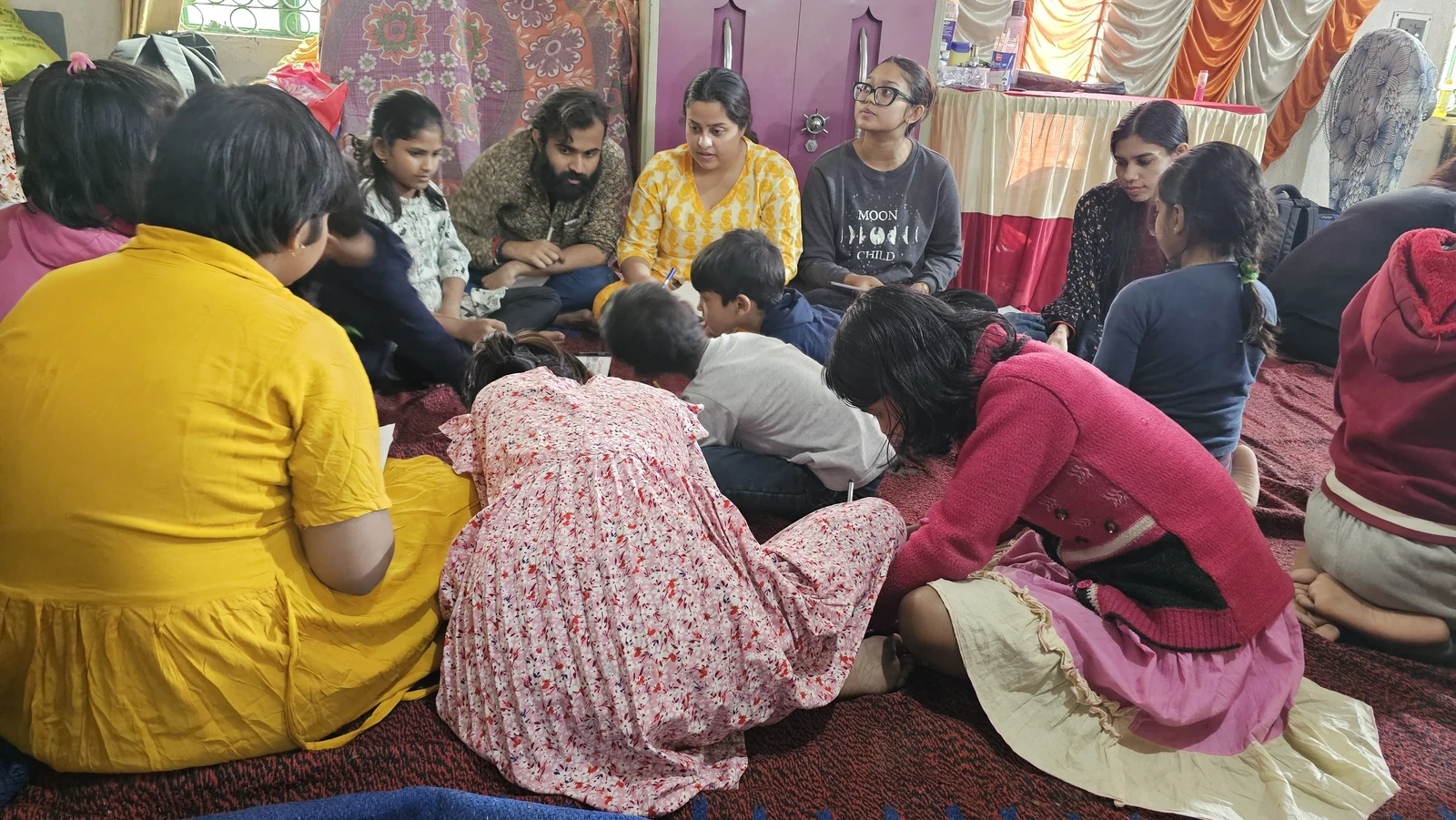
Unessa Foundation activity: children and volunteers taking part in a paper activity in Bengaluru.
SUPPORT CHILDREN’S EDUCATION
Help learning become a regular part of a child’s life.
Support Unessa Foundation’s education programmes and volunteer-led learning activities.
Five ways NGOs can support education for underprivileged children
1. Make learning materials usable and available
Books, stationery and activity materials are useful when they match the learners’ age, language and actual classroom task. Ask the receiving team which items it needs before organising a collection. A delivery record can show what was handed over; it should not be presented as proof that every child’s learning improved.
2. Provide consistent opportunities to practise
Reading, conversation, numeracy and homework support need manageable activities and dependable follow-through. Volunteers can help deliver an agreed session with suitable guidance. Consistency means a realistic schedule and a handover when someone is absent, rather than a promise that a brief visit will transform a child’s future.
3. Create space for communication and life skills
Children can practise listening, teamwork, problem-solving and decision-making through activities suited to their needs. Our life-skills guide offers practical teaching ideas. An observation such as explaining a task to a teammate can inform the next lesson without becoming an unsupported percentage improvement.
4. Address practical barriers to participation
A learner may need an accessible explanation, a different communication format, materials that can be used without a personal device, or a session time that fits the setting. Discuss the actual barrier with the responsible educator and learner. Avoid treating disability, family income or a first-generation-learner label as a prediction of ability.
5. Connect education support with responsible local relationships
A useful programme makes responsibilities clear among the organisation, volunteers and the institution or community involved. Agree supervision, communication and safeguarding before starting. Where a partnership is described publicly, it should reflect an actual agreed relationship rather than an assumption based on a photograph or logo.

Compare different approaches to children’s education
Pratham describes education work with children, communities and government partners. CRY—Child Rights and You addresses education within a wider child-rights approach. These are useful official starting points when comparing the need you want to support with an organisation’s programme.
For a broader shortlist, read education NGOs in India. Compare the exact activity and delivery model rather than assuming that every national NGO offers teaching, materials or volunteering in every city.
Education for underprivileged children can involve school access, continued attendance, classroom participation and learning. Keep those questions separate. A child being enrolled, attending a session and demonstrating a new skill are related observations, but one does not automatically establish the others.
Choose how to help: money, materials or time
Start with the current need and select the support the receiving team can use. A financial contribution follows the campaign’s purpose. Materials require an accepted-items list and agreed delivery. Volunteering needs a defined role, preparation and supervision. These arrangements should be confirmed separately.
- For donors: Read the campaign purpose, receiving identity, contribution terms and reporting arrangements. Use our education donation checklist.
- For material collections: Ask about item condition, language, quantities, storage and handover before announcing a drive.
- For volunteers: Explore education-focused NGO volunteering opportunities and explain your skills, availability and preferred delivery mode.
A practical planning example for an education activity
Consider a hypothetical reading circle. The educator identifies an appropriate text, the volunteer prepares an accessible activity and the team agrees how a learner can participate. The session note records what was attempted, what support was used and what to try next. This is a planning example, not a reported Unessa outcome.
To review the activity, ask whether the materials were available, the instructions were understood and learners could take part. A longer-term learning claim needs a suitable starting point, repeat assessment and an explanation of other influences. This approach keeps support for education for underprivileged children practical and honest.
Questions donors and volunteers often ask
Does an NGO’s headquarters determine where its programmes operate?
No. Headquarters and delivery locations answer different questions. Unessa is headquartered in Vadodara and runs programmes and centres across multiple Indian metros. Use the official team to confirm the programme or centre relevant to your enquiry.
What should I ask about education outcomes?
Ask what was measured, for which learners and period, using which task or method. Request the limitations alongside any headline result. For education for underprivileged children, resources delivered and sessions held should be distinguished from measured learning changes.
How can I support Unessa from another Indian city?
You can explore the official education campaign or enquire about a suitable volunteering contribution. Share your city, languages, skills and availability. The team can explain the current arrangement rather than leaving you to infer it from the headquarters address.
Support a programme you understand
Education for underprivileged children becomes easier to support when the next step is clear. Explore Unessa’s programme information, ask the material question about your intended contribution, then use the official donation or volunteer route. National participation works best when the actual activity, responsibilities and reporting are understood.
Discuss a learning goal before choosing how to help
Start with the activity you want to support and ask how it fits the learner’s current needs. A child who can repeat an answer may still need practice explaining it, using it in a new task or working independently. Ask the programme team how they choose activities and what they observe during a session.
For a practical conversation, agree one question at a time: what will participants practise, what support is available, and how will the team review the next step? A sample worksheet, reading task or activity description can make that discussion more concrete. Keep any examples shared with donors free of children’s personal details.
Then check how your proposed contribution connects to the programme. Money, materials and volunteer time involve different arrangements. Ask about the organisation’s current priorities, the contact responsible for updates and any limits on directing a donation to a specific activity. Keep a record of the answer rather than assuming that every listed form of support is available in every city.
Continue reading

Related guide

Related guide
Support children’s learning with Unessa Foundation.