
Introduction: The Human Side of Zakat
Every donation tells a story. But personal stories of Zakat impact reveal something deeper—how faith-based giving changes lives in practical, lasting ways.
Behind every Zakat contribution is a mother finding stability, a student staying in school, a worker restarting a business, or a patient receiving urgent care. While reports show numbers and allocations, it’s the human outcomes that truly define success.
At Unessa Foundation, Zakat is not treated as temporary relief. It is structured as a pathway to independence, resilience, and dignity. You can also explore our detailed guide on Tracking Your Zakat Payments to understand how structured Zakat ensures transparency and accountability. Through verified eligibility processes and outcome monitoring, these personal stories of Zakat impact demonstrate how responsible distribution leads to sustainable transformation.
Let’s explore how Zakat helped real beneficiaries rebuild their lives.
Why Personal Stories of Zakat Impact Matter
Global poverty remains a pressing challenge. According to World Bank data, hundreds of millions still live below poverty lines worldwide. Within vulnerable communities, sudden crises—illness, job loss, disaster—can push families into long-term hardship.
This is where Zakat plays a vital role.
Unlike voluntary charity, Zakat is a structured obligation designed to:
- Support the poor and needy
- Reduce inequality
- Circulate wealth responsibly
- Strengthen community welfare
However, understanding impact requires more than financial reporting. Personal stories of Zakat impact provide clarity on how assistance creates measurable change.
They show:
- What problem existed
- What type of Zakat support was provided
- What changed afterward
These stories connect donors emotionally and intellectually to the outcomes of their contributions.
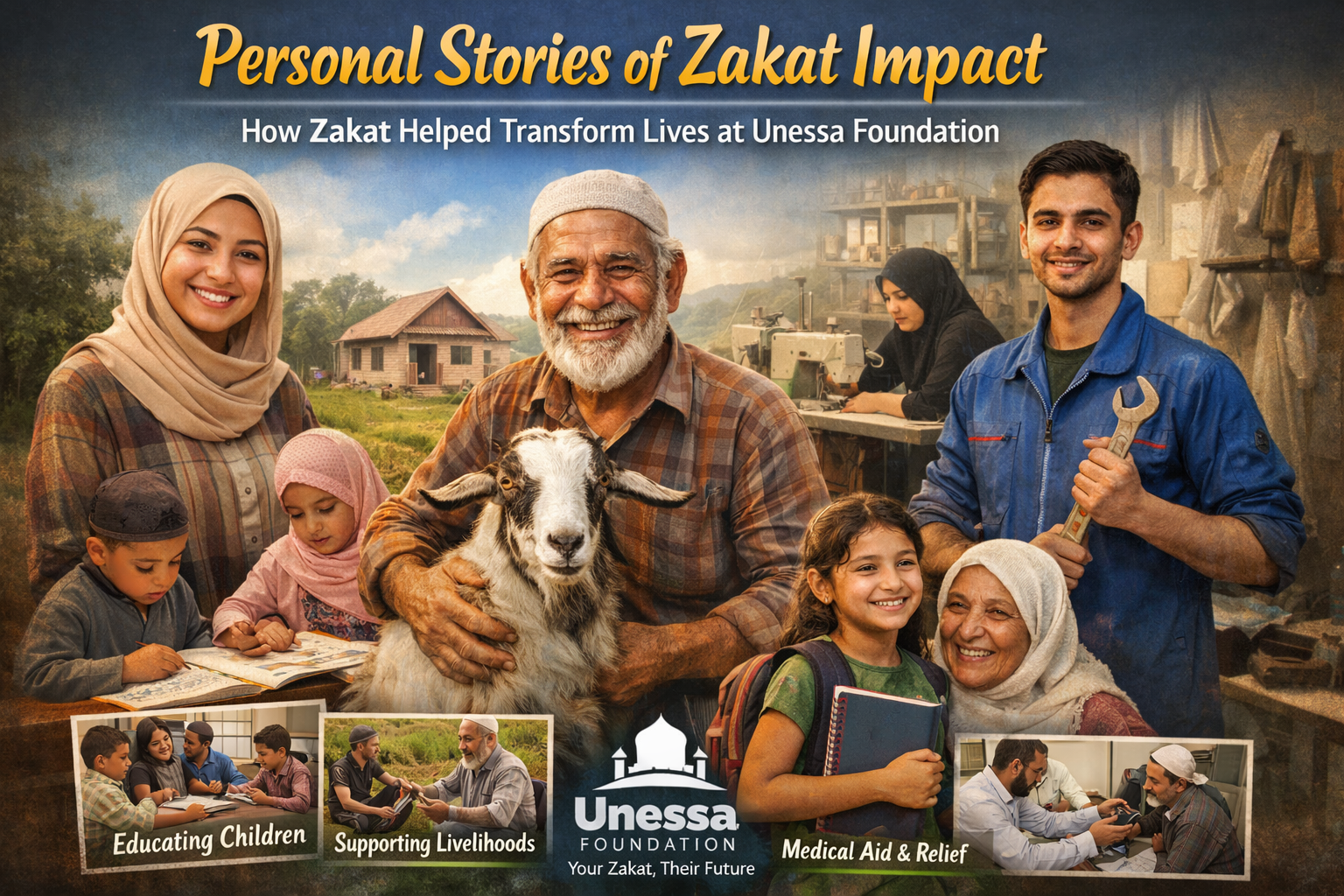
A Mother’s Journey: From Crisis to Stability
When Amina lost her husband unexpectedly, her household income disappeared overnight. With three children to support, basic needs quickly became overwhelming.
Immediate Challenges:
- Rent payments falling behind
- Food insecurity
- Risk of school dropout for her children
Through Unessa Foundation’s Zakat program, Amina received:
- Monthly food assistance
- Temporary rental support
- Educational aid for her children
This immediate intervention prevented deeper financial collapse. But the story didn’t end there.
Recognizing her interest in sewing, the foundation supported her enrollment in a tailoring course funded through livelihood-focused Zakat. Within months, Amina began earning income through home-based stitching work.
Today, she contributes to household expenses independently.
This is one of the most powerful personal stories of Zakat impact—because it reflects transition:
Relief → Skill Development → Income → Stability
Zakat did not create dependency. It created opportunity.
Education Support: Preventing a Dropout
Education remains one of the strongest predictors of long-term financial mobility. Yet school fees and supplies often force low-income families to withdraw children from school.
Fahad was at risk of becoming one of those students.
His father’s irregular daily wages were insufficient to cover tuition, uniforms, and books. Without intervention, Fahad would likely have left school.
Through Zakat-funded educational assistance, he received:
- School fee coverage
- Textbooks and uniforms
- Mentorship guidance
The result?
- Improved academic performance
- Continued enrollment
- Renewed family confidence
This personal story of Zakat impact demonstrates how timely educational support prevents generational poverty.
Research consistently shows that each additional year of schooling increases earning potential. By ensuring continuity, Zakat investment in education produces long-term socioeconomic benefits.
Livelihood Restoration After Disaster
Disasters often erase years of effort in a single moment.
Rahman, a skilled mechanic, lost his workshop tools during a flood. Without equipment, he could not work. Without income, his family’s stability was threatened.
Instead of long-term food aid alone, Zakat funds were strategically allocated toward:
- Replacement tools
- Small startup capital
- Business mentoring
Within six months, Rahman reopened his workshop.
Today, he earns independently and no longer requires assistance.
This is a key lesson from personal stories of Zakat impact: strategic livelihood support reduces repeat dependency.
Rather than focusing solely on consumption needs, Unessa integrates sustainable income pathways into its Zakat distribution model.
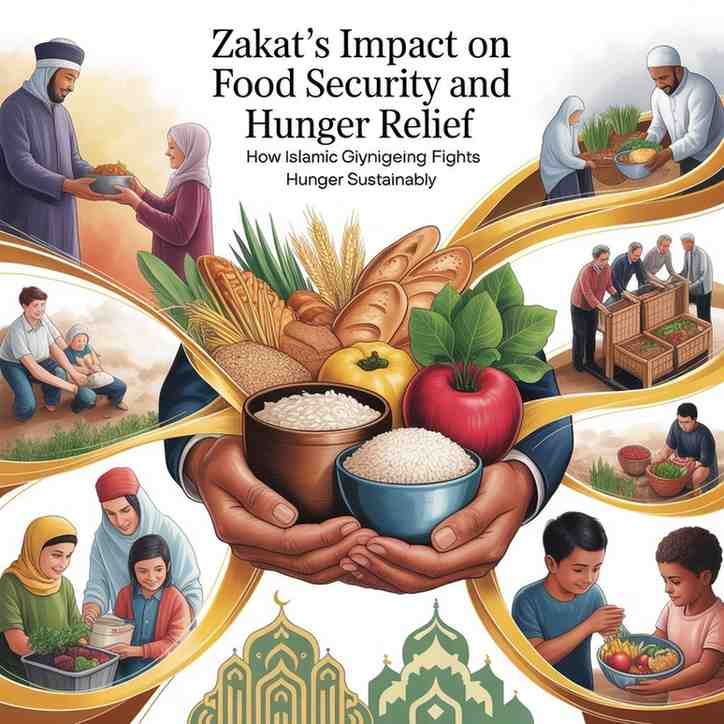
Food Security: Protecting the Vulnerable
Food insecurity remains a daily reality for many elderly individuals living alone.
Fatima, a widow without immediate family support, struggled to secure consistent meals. Community help was irregular and insufficient.
Through Zakat-funded food security assistance, she now receives:
- Monthly essential food supplies
- Nutritional staples
- Consistent delivery support
The outcome:
- Stable access to meals
- Reduced anxiety
- Improved health condition
Food security may appear basic, but it is foundational. Without it, other forms of progress become impossible.
Among the most common personal stories of Zakat impact are those that prevent hunger and protect dignity among the elderly and widowed.
Medical Support That Prevented Financial Collapse
Medical emergencies are one of the leading causes of financial instability in low-income households.
Ahmed required urgent surgery. The cost was beyond what his family could afford. Without immediate support, the delay would have had severe consequences.
Through verified Zakat medical assistance:
- Hospital bills were covered
- Post-surgery medications were supported
- Recovery monitoring ensured full rehabilitation
Today, Ahmed has returned to work.
This case highlights how Zakat can prevent a temporary medical crisis from becoming long-term poverty.
Healthcare-focused personal stories of Zakat impact illustrate how structured intervention protects families from irreversible setbacks.
Emotional and Social Transformation
Financial relief is measurable. Emotional recovery is equally powerful.
Many beneficiaries describe:
- Reduced stress
- Restored dignity
- Renewed hope
- Strengthened community connection
Zakat reminds recipients that they are not isolated in hardship.
In multiple personal stories of Zakat impact, beneficiaries mention dignity as the most meaningful outcome—not just material aid.
This reinforces a core principle: Zakat is designed to uplift, not label.
From Beneficiaries to Future Contributors
One of the most meaningful outcomes occurs when recipients express the desire to give Zakat in the future.
Several individuals supported through livelihood programs have shared that once financially stable, they plan to contribute.
This reflects the ideal cycle:
Support → Stability → Empowerment → Contribution
Such cycles strengthen community resilience.
These long-term transformations represent the deeper success behind personal stories of Zakat impact.
Data-Backed Impact and Responsible Stewardship
Stories are powerful—but they are supported by structure.
At Unessa Foundation:
- Beneficiaries undergo eligibility verification
- Funds are allocated strictly within Zakat categories
- Field monitoring confirms delivery
- Outcomes are tracked over time
This ensures every personal story of Zakat impact is backed by responsible governance.
Zakat is treated as an Amanah—a trust requiring accountability and transparency
Current Trends in Faith-Based Philanthropy
Globally, donors are increasingly seeking:
- Measurable impact
- Transparency in allocation
- Outcome-based reporting
- Sustainable intervention models
Faith-based organizations that combine religious principles with modern reporting systems build stronger donor trust.
Unessa aligns with these evolving standards by integrating impact measurement into Zakat distribution.
Actionable Insights for Donors
If you are considering contributing Zakat, here are practical steps:
- Choose institutions with transparent reporting
- Look for outcome measurement indicators
- Review administrative cost clarity
- Support programs that balance relief and empowerment
Personal stories of Zakat impact should reflect long-term transformation—not only short-term distribution.
Conclusion: The Real Measure of Zakat
Numbers matter. Accountability matters. But transformation matters most.
Personal stories of Zakat impact show what responsible giving achieves:
- A mother rebuilding her livelihood
- A student continuing education
- A worker reopening a business
- A patient recovering from surgery
- An elderly widow securing consistent meals
These stories are not isolated cases. They represent structured, verified, and monitored support systems.
Zakat is not simply a transaction. It is a bridge between generosity and dignity.
At Unessa Foundation, every contribution carries responsibility—and every story reflects that trust fulfilled.
FAQs
Why are personal stories of Zakat impact important?
They demonstrate real-life outcomes of Zakat distribution and show how assistance creates measurable change.
How does Zakat help beneficiaries long-term?
Through livelihood support, education funding, and medical aid, Zakat promotes sustainable independence.
Does Zakat only provide short-term relief?
No. While it addresses immediate needs, structured programs aim to reduce repeat dependency.
How does Unessa ensure responsible Zakat distribution?
Through eligibility verification, monitoring, transparent allocation, and outcome tracking.
Can Zakat really reduce poverty?
Yes. When strategically distributed toward education, livelihood, healthcare, and food security, Zakat plays a strong role in poverty alleviation.