

COMMUNITY & GIVING
8 Types of Old Age Homes
Types of Old Age Homes: practical guidance, five planning checks, source context and clear questions about evidence, responsibilities and support.
Published by Unessa Foundation · Editorial update: 1 November 2026
On this page
- Types of Old Age Homes: a practical starting point
- Practical context
- What Are Old Age Homes?
- Types of Old Age Homes Explained
- Choosing the Right Types of Old Age Homes
- Benefits of Different Types
- Challenges in Choosing
- Importance of Awareness
- Importance of Choosing the Right Care
- Conclusion
- 5 practical checks for types of old age homes
- Evidence and support: keep the scope clear
Types of Old Age Homes: a practical starting point
Use the practical ideas as starting points to adapt with the responsible educator, learner and family. Define the task and the support needed before expecting a result. A suggested activity, illustrative example or broad research finding is not a documented Unessa outcome.
For context, use UNICEF’s transferable-skills framework as background for planning learning activities. The link is not evidence of a measured result for an individual classroom, donation or programme described in this guide.
For comparing the actual residential arrangement and responsibilities, read old age home comparison guide.
Practical context
As the needs of elderly individuals continue to evolve, so do the types of care facilities designed to support them. This guide explains the powerful types of old age homes available today.Old age homes are no longer limited to basic shelters; today, they offer a wide range of services tailored to different levels of care, comfort, and independence.
Understanding the types of old age homes is essential for families and caregivers who want to ensure the best possible environment for their loved ones. Each type of facility is designed to meet specific needs, whether it is medical care, companionship, or independent living.
- Learn more about ageing and health:
https:// www.who.int/ news- room/ fact- sheets/ detail/ ageing- and- health
What Are Old Age Homes?
Old age homes are residential facilities that provide care and support to elderly individuals who may require assistance with daily living, healthcare, or social interaction.
They offer:
- Safe accommodation
- Healthcare services
- Emotional support
- Social engagement
- Read more about elderly care:
old age homes in india

Unessa Foundation activity: children working with colourful paper during a Bengaluru group activity.
SUPPORT CHILDREN’S EDUCATION
Help learning become a regular part of a child’s life.
Support Unessa Foundation’s education programmes and volunteer-led learning activities.
Types of Old Age Homes Explained
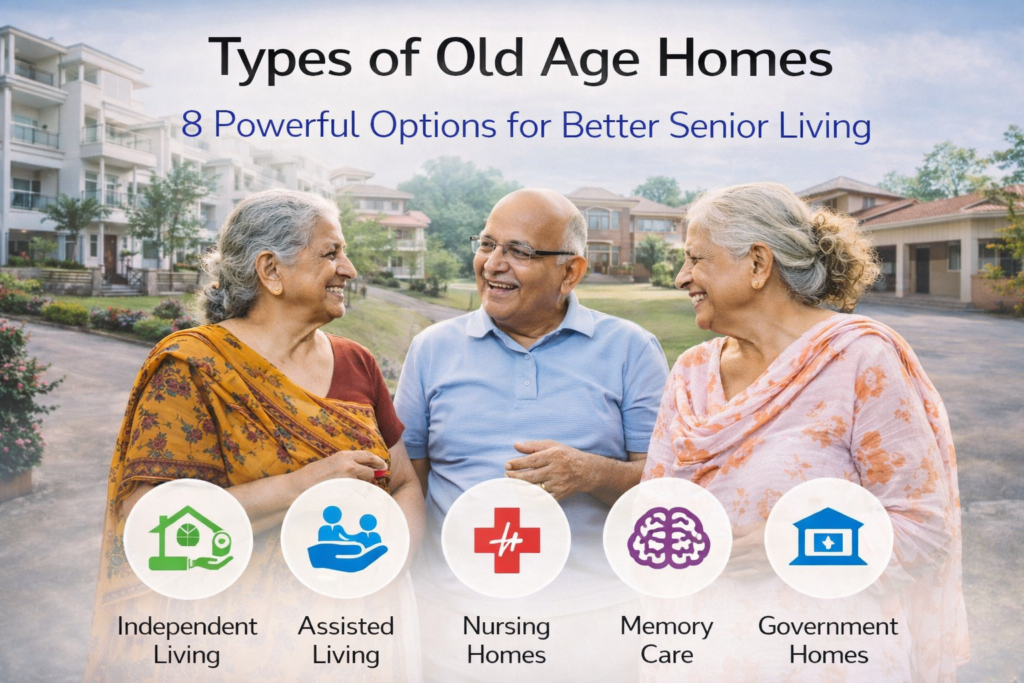
1. Independent Living Homes
These are designed for seniors who are:
- Physically active
- Independent
- Able to manage daily tasks
Features include:
- Private apartments
- Community activities
- Minimal medical assistance
2. Assisted Living Facilities
Ideal for seniors who need some assistance with:
- Bathing
- Dressing
- Medication
They provide:
- Personal care support
- Meals and housekeeping
- Medical supervision
3. Nursing Homes
These are for elderly individuals with serious health conditions.
They offer:
- 24/7 medical care
- Skilled nursing staff
- Rehabilitation services
4. Memory Care Units
Designed for seniors with:
- Alzheimer’s disease
- Dementia
Features include:
- Specialized care
- Safe environment
- Trained staff
5. Continuing Care Retirement Communities (CCRC)
These provide multiple levels of care in one place:
- Independent living
- Assisted living
- Nursing care
Residents can transition as their needs change.
6. Luxury Old Age Homes
These offer premium facilities such as:
- Spacious rooms
- Recreational centers
- High-quality healthcare
They focus on comfort and lifestyle.
7. Government Old Age Homes
These are:
- Affordable or free
- Supported by government schemes
- Designed for low-income seniors.
- Government schemes for senior citizens:
https:// www.india.gov.in/ topics/ social- development/ senior- citizens
8. NGO-Run Old Age Homes
Managed by non-profit organizations, these homes provide:
- Basic care
- Community support
- Donations-based services
Choosing the Right Types of Old Age Homes
Choosing the right type depends on:
- Health condition
- Financial situation
- Level of independence
- Personal preferences
Benefits of Different Types
Each type of old age home offers unique advantages:
- Better healthcare
- Social interaction
- Safe environment
- Improved quality of life
Challenges in Choosing
Families may face:
- Lack of awareness
- Cost concerns
- Emotional decisions
Importance of Awareness
Understanding the types of old age homes helps:
- Make informed decisions
- Ensure proper care
- Improve elderly well-being
Importance of Choosing the Right Care
Selecting the correct type of old age home is very important for ensuring the comfort and well-being of elderly individuals. Every senior has different needs, and choosing the right facility helps them live a safe, happy, and dignified life.
Understanding the types of old age homes allows families to make better decisions and provide the best possible care for their loved ones.
Conclusion
The variety of types of old age homes ensures that every elderly individual can find a suitable living arrangement based on their needs. From independent living to full medical care, these facilities play a vital role in supporting senior citizens.
Choosing the right type can significantly improve the quality of life and ensure comfort, safety, and dignity.
- Explore benefits here:
benefits-of-old-age-homes-for-senior-citizens
5 practical checks for types of old age homes
- Choose a clear learning task and ask what the learner already understands.
- Check language, materials, accessibility, supervision and time.
- Agree the facilitator’s responsibility and a manageable next activity.
- Record an observation or suitable learning task rather than assuming improvement.
- Invite learner/family feedback and adapt the next step to the actual context.
Keep a brief record of the date, task or enquiry, responsible person, source, what happened and what remains uncertain. Do not publish private learner, patient, donor or applicant details. Label a hypothetical example clearly and do not turn it into a real beneficiary account or a guaranteed result.
Evidence and support: keep the scope clear
A number needs its original source, population, period, definition and limitations. Activity counts, receipts, satisfaction and long-term outcomes answer different questions. If the evidence does not settle a claim, do not repeat it as verified. This guide does not claim an audited programme result, current approval or named professional review.
The education donation buttons lead to Unessa’s education campaign. They do not fund every third-party provider, item or service mentioned here. Read the programme information and confirm any allocation or service condition important to you before giving.
Sources and further reading
Frequently asked questions
What should I compare between different types of old age homes?
Compare the actual support level, eligibility, charges, staffing, accessibility and admission terms. Labels such as charitable, assisted or retirement accommodation can describe different arrangements; verify the service rather than relying on the label alone.
How can I tell whether a home matches someone’s needs?
Discuss the person’s preferences and required support with the provider and appropriate professionals where needed. Ask about what is included, what is unavailable and how changing needs are handled before agreeing an arrangement.
Continue reading

Related guide

Related guide
Support children’s learning with Unessa Foundation.