

Unessa’s Zakat-Funded Projects in Africa
Introduction
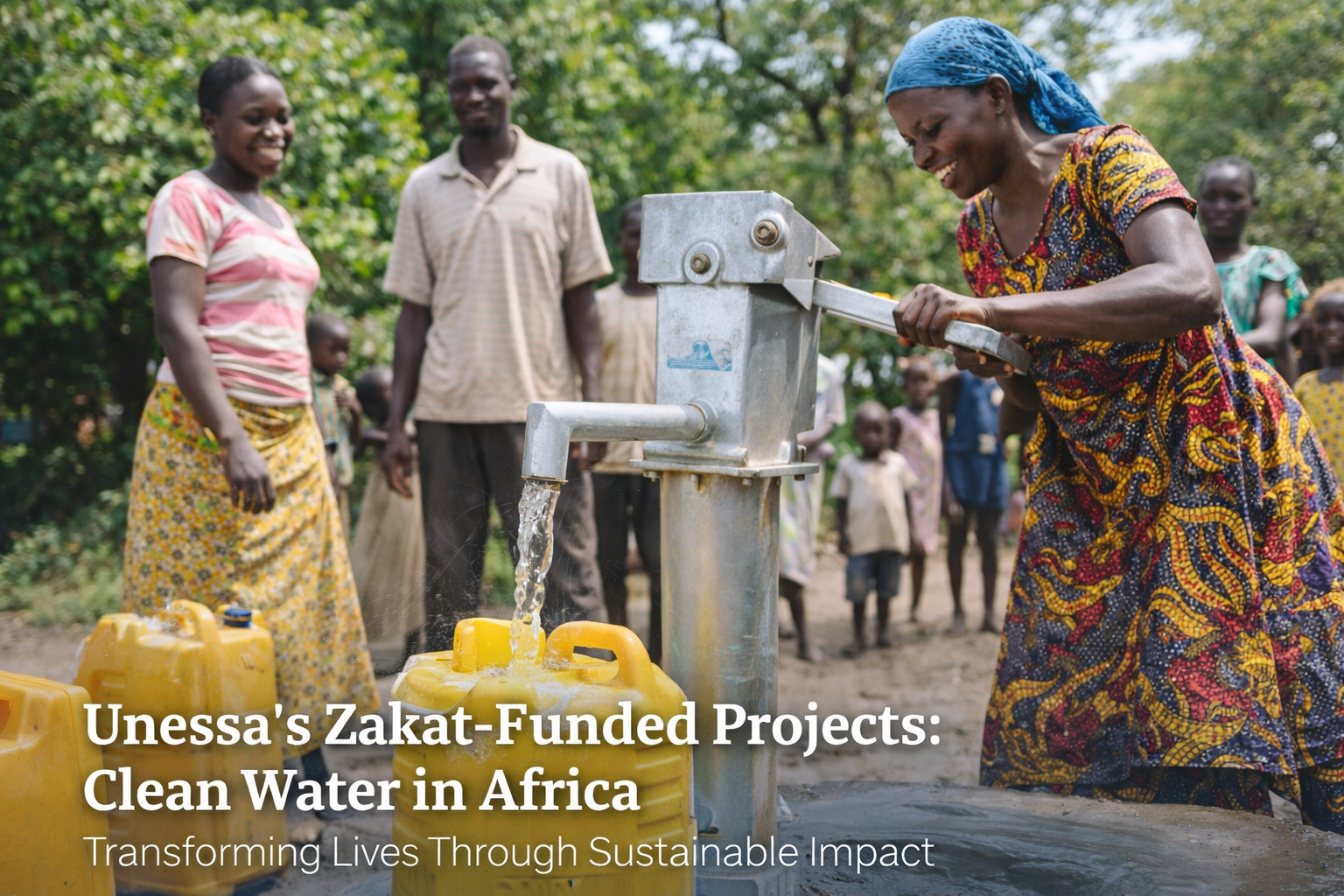
In many rural parts of Africa, clean water is not a tap away. It is a two-hour walk under the sun. It is a muddy river shared with livestock. It is a daily risk taken by mothers and children.
Unessa’s Zakat-funded projects: Clean Water in Africa are designed to change that reality.
Through structured Zakat distribution, Unessa delivers sustainable water solutions to underserved communities. These projects do more than provide water. They improve health, increase school attendance, and unlock economic opportunity.
This is not short-term relief. It is long-term transformation powered by faith-based giving.
The Water Crisis in Africa: Why Action Is Urgent
Across sub-Saharan Africa:
- Over 400 million people lack access to safe drinking water
- Women and children spend up to 6 hours daily collecting water
- Waterborne diseases remain a leading cause of child mortality
- Healthcare facilities often operate without reliable water access
Unsafe water contributes to:
- Cholera outbreaks
- Typhoid infections
- Chronic diarrheal diseases
- Malnutrition and stunted growth
According to global health studies, unsafe water and poor sanitation are responsible for hundreds of thousands of preventable deaths annually.
For vulnerable communities, access to clean water is not just infrastructure — it is survival.
Unessa’s Zakat-Funded Projects Delivering Clean Water in Africa
Zakat is structured to uplift those in hardship. Under Islamic guidelines, projects qualify when they serve eligible recipients such as:
- AI – Fuqara (The Poor)
- AI – Masakin (The Needy)
- Fi Sabilillah(In the Cause of Allah)
Unessa’s Zakat-funded projects: Clean Water in Africa operate within this framework. Funds are directed exclusively to impoverished communities lacking safe water infrastructure.
By aligning with Shariah principles, Unessa ensures:
- Zakat eligibility compliance
- Transparent allocation
- Documented distribution
- Measurable impact
Unessa’s Structured Approach to Clean Water Projects
Sustainable development requires planning. Unessa follows a step-by-step implementation model.
1. Community Assessment and Site Selection
Before drilling begins, teams conduct:
- Groundwater feasibility studies
- Community consultations
- Infrastructure evaluations
- Risk assessments
Local leaders and residents participate in planning to ensure long-term usability.This prevents abandoned or unsustainable installations — a common challenge in water aid projects
2. Sustainable Infrastructure Solutions
Unessa prioritizes durable and scalable systems, including:
- Deep borehole drilling
- Solar-powered water pumps
- Hand-pump wells
- Elevated water storage tanks
- Filtration and purification units
Solar pumps reduce operational costs and dependency on fuel. This approach ensures water access remains consistent even in remote regions.
Each installation is designed to serve hundreds — sometimes thousands — of beneficiaries.
3. Community Training and Ownership
Infrastructure alone is not enough.
Unessa trains local committees to:
- Maintain pumps
- Monitor water quality
- Manage equitable distribution
- Perform basic repairs
Community ownership significantly increases project lifespan. Research in development economics shows locally managed water systems last longer and operate more efficiently.
4. Transparency and Donor Reporting
Trust is central to Zakat distribution.
Contributors to Unessa’s Zakat-funded projects: Clean Water in Africa receive:
- Project location details
- Construction updates
- Completion confirmations
- Beneficiary estimates
- Impact summaries
This transparency strengthens donor confidence and accountability.
Education Gains
In many villages, girls miss school because they collect water daily.
When wells are installed:
- Attendance rises
- Academic performance improves
- Dropout rates decline
Access to clean water creates space for learning.
Economic Empowerment
Time saved from water collection translates into productivity.
Women begin:
- Sma ll-scale farming
- Livestock care
- Home-based businesses
Families use surplus time for income generation, increasing household resilience.
This ripple effect demonstrates how Unessa’s Zakat-funded projects: Clean Water in Africa stimulate sustainable development.
A Village Story: From Survival to Stability
In one rural district, families once relied on a seasonal river. During dry months, water levels dropped dangerously low.
Children frequently fell ill. School attendance fluctuated. Women spent hours walking daily.
After Unessa installed a Zakat-funded borehole:
- Clean water became accessible within minutes
- Illness rates dropped significantly
- School attendance stabilized
- Families started vegetable farming
Within one year, the village reported measurable improvements in both health and income levels.
This is the power of structured Zakat applied strategically.
Corporate Zakat Participation: Scalable Social Impact
Businesses seeking meaningful CSR engagement can support Unessa’s Zakat-funded projects: Clean Water in Africa through:
- Corporate Zakat allocation
- Full borehole sponsorship
- Multi-village partnerships
- Regional development initiatives
Corporate participants receive:
- Audit-ready documentation
- Impact metrics
- CSR-aligned reporting
- Community beneficiary data
This aligns religious obligation with measurable corporate responsibility.
Current Trends in Faith-Based Development
Globally, faith-based organizations play a significant role in humanitarian aid.
Industry patterns show:
- Increased demand for impact transparency
- Growth in digital Zakat platforms
- Greater focus on sustainability over short-term aid
- Rising corporate engagement in structured Zakat programs
Unessa integrates these trends by combining religious compliance with development best practices.
Ensuring Shariah Compliance in Clean Water Projects
Unessa maintains compliance through:
- Scholarly consultation
- Recipient eligibility verification
- Segregated Zakat fund management
- Documentation of disbursement
This protects both donors and beneficiaries.
Every project under Unessa’s Zakat-funded projects: Clean Water in Africa is aligned with Islamic distribution principles.
How You Can Support Unessa’s Zakat-Funded Projects: Clean Water in Africa
Individuals and businesses can:
- Allocate annual Zakat to water infrastructure
- Sponsor wells in memory of loved ones
- Partner in long-term regional initiatives
- Share awareness within professional networks
Small contributions collectively fund large-scale impact.
The Broader Vision: Water as Dignity
Access to clean water restores dignity.
It allows families to cook safely.
It reduces hospital visits.
It keeps children in classrooms.
It supports agriculture and entrepreneurship.
When Zakat funds infrastructure, the impact compounds year after year.
Conclusion
Unessa’s Zakat-funded projects: Clean Water in Africa demonstrate how structured, transparent giving can produce sustainable transformation.
By combining:
- Community assessment
- Durable infrastructure
- Local training
- Transparent reporting
- Shariah compliance
Unessa ensures that Zakat becomes a long-term solution, not temporary relief.
Clean water restores health, opportunity, and dignity. With continued support, these projects can expand to reach even more underserved communities across Africa.
When Zakat is directed strategically, it does more than fulfill an obligation — it builds the future.
Through Unessa’s Zakat-Funded Projects: Clean Water in Africa, donors help create lasting impact for vulnerable communities. Read our complete guide on the 8 categories of Zakat recipients.
FAQs: Unessa’s Zakat-Funded Projects
What are Unessa’s Zakat-funded projects: Clean Water in Africa?
They are sustainable water initiatives funded through Zakat to provide safe drinking water to underserved communities across Africa.
Is it permissible to use Zakat for clean water projects?
Yes, when projects serve eligible Zakat recipients such as the poor and needy, and comply with Islamic guidelines
How does Unessa ensure Shariah compliance?
Unessa verifies recipient eligibility, consults scholars, and maintains transparent documentation for all Zakat-funded projects.
What type of water systems does Unessa install?What type of water systems does Unessa install?
Projects include boreholes, solar-powered pumps, hand-pump wells, filtration systems, and water storage units.
Can businesses allocate Corporate Zakat to these projects?
Yes, businesses can sponsor boreholes or contribute Corporate Zakat toward community water infrastructure.
How do donors track the impact of their Zakat?
Donors receive project updates, location details, completion reports, and impact summaries.
Are these projects sustainable long term?
Yes, local communities are trained to maintain the systems, ensuring long-term functionality.
How can I contribute to clean water in Africa through Zakat?
You can allocate your Zakat directly to Unessa’s clean water projects or sponsor a well for long-term impact.