

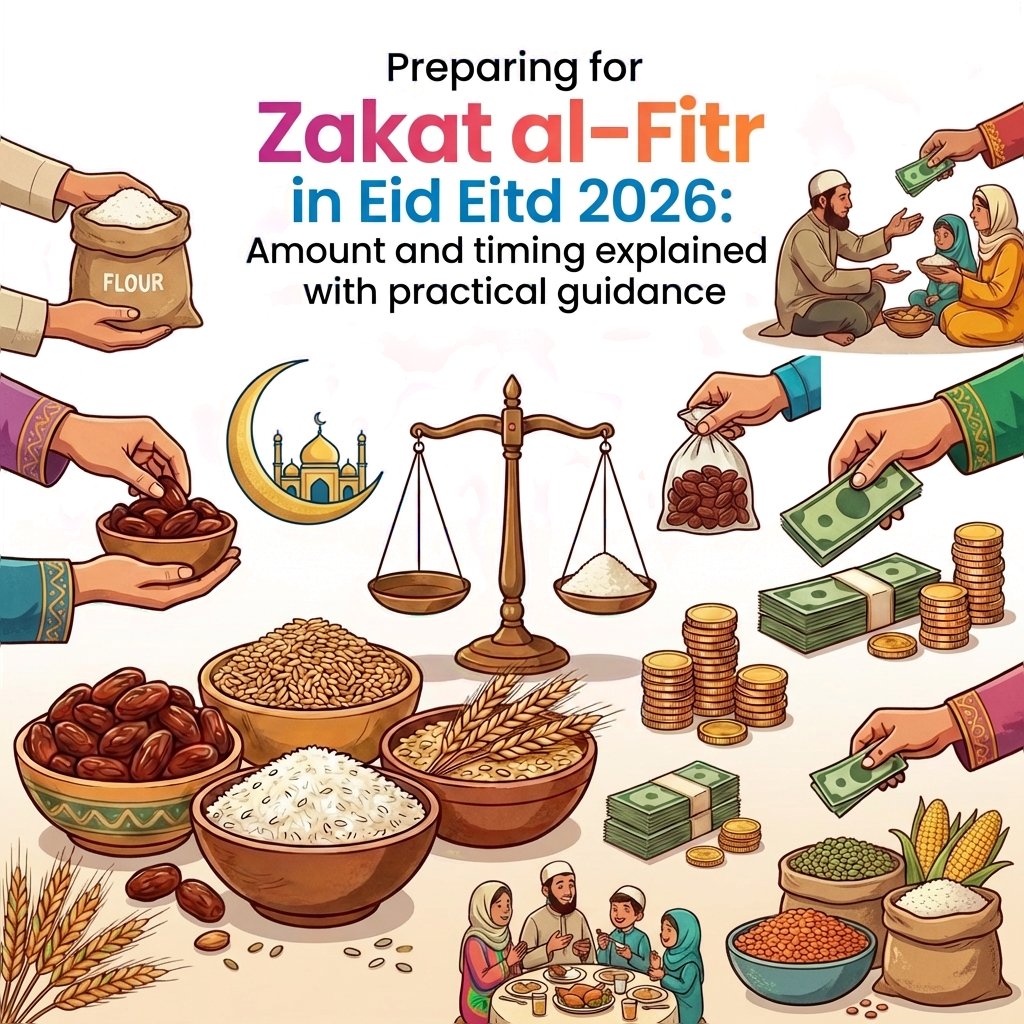
Preparing for Zakat al-Fitr in Eid 2026: Amount and Timing
As Ramadan 2026 draws to a close, homes begin to shift from quiet reflection to joyful anticipation. Clothes are prepared. Sweets are ordered. Travel plans are confirmed. Yet before the Eid prayer, there is one essential obligation that completes Ramadan: Zakat al-Fitr.
Preparing for Zakat al-Fitr in Eid 2026: Amount and Timing is not just about calculating a number. It is about ensuring that every Muslim — regardless of financial status — can celebrate Eid with dignity.
This comprehensive guide explains the amount, timing, calculation method, modern payment options, and practical planning strategies for 2026.
What Is Zakat al-Fitr?
Zakat al-Fitr is a mandatory charity given at the end of Ramadan before the Eid prayer. Unlike annual Zakat on wealth, it is:
- A fixed obligation per person
- Required from every Muslim with surplus food
- Paid on behalf of all household members
Its purpose is twofold:
- To purify the fasting person from minor shortcomings.
- To provide food security to the poor on Eid day.
Islamic scholars emphasize that Zakat al-Fitr ensures no one is left hungry during the celebration.
👉 Know the difference between zakat-al-mal and zakat-al-fitr
Why Preparing for Zakat al-Fitr in Eid 2026: Amount and Timing Matters
Each year, confusion arises around:
- The correct amount
- Whether cash is allowed
- The exact deadline
- Whether late payment is valid
Preparing for Zakat al-Fitr in Eid 2026: Amount and Timing early prevents last-minute uncertainty.
According to humanitarian research, food insecurity spikes during festive seasons in many regions. When Zakat al-Fitr is distributed on time, it directly impacts food access for vulnerable families.
Preparation ensures your contribution reaches beneficiaries before Eid — not after.
Who Must Pay Zakat al-Fitr?
You are required to pay Zakat al-Fitr if:
- You are Muslim
- You possess food beyond basic needs on the night before Eid
- You can provide for your dependents
It is paid for:
- Yourself
- Your spouse
- Children
- Dependent family members
Even infants born before sunset on the last day of Ramadan are included.
Preparing for Zakat al-Fitr in Eid 2026: Amount and Timing — How Much to Pay?
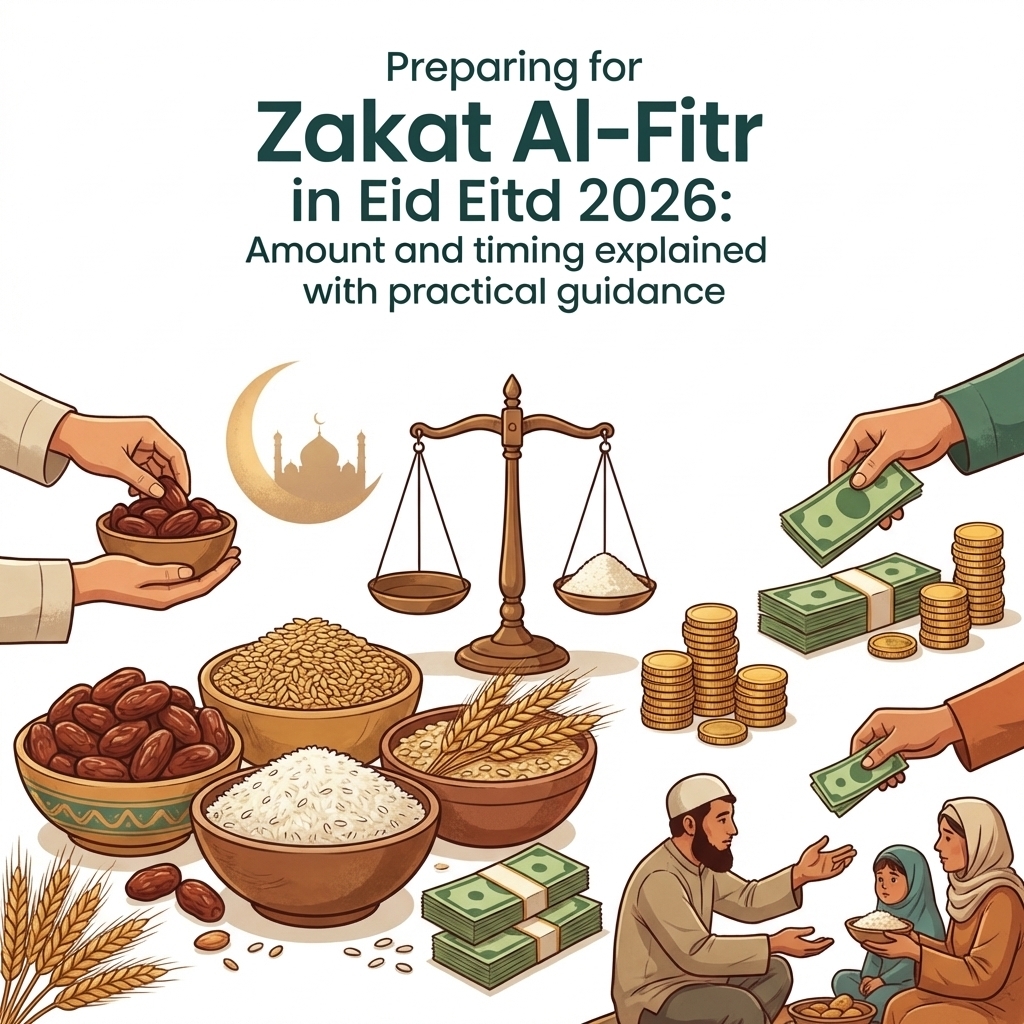
The amount of Zakat al-Fitr is traditionally one sāʿ of staple food.
What Is One Sāʿ?
A sāʿ equals approximately:
- 2.5–3 kilograms of staple food
Common staples include:
- Rice
- Wheat
- Barley
- Dates
- Flour
Cash Equivalent in 2026
Many scholars allow giving the cash equivalent based on local staple food prices.
Because food costs fluctuate, the 2026 amount will depend on:
- Regional inflation
- Market food prices
- Local mosque or Islamic authority guidance
Practical Example
If 3 kg of rice costs ₹150 per kg in your area:
- 3 kg × ₹150 = ₹450 per person
A family of five would pay:
- ₹450 × 5 = ₹2,250
Checking your local Islamic center’s announcement ensures accuracy.
When Should Zakat al-Fitr Be Paid in 2026?
Understanding timing is central to Preparing for Zakat al-Fitr in Eid 2026: Amount and Timing.
Obligation Begins:
At sunset on the last day of Ramadan.
Recommended Payment Time:
One or two days before Eid.
Final Deadline:
Before the Eid prayer.
If paid after the Eid prayer without valid reason, it counts as general charity — not Zakat al-Fitr.
Early payment ensures:
- Distribution before Eid morning
- Timely food delivery
Avoiding last-minute delays
The Wisdom Behind the Timing
Imagine a struggling family preparing for Eid with empty cupboards.
If Zakat al-Fitr arrives before Eid, they can:
- Purchase fresh food
- Cook a proper meal
- Celebrate with dignity
If it arrives after Eid, the immediate purpose is missed.
Preparing for Zakat al-Fitr in Eid 2026: Amount and Timing properly ensures the spirit of Eid reaches everyone.
Food vs Cash: What Should You Give?
Scholars differ slightly:
- Some require food distribution.
- Others permit cash equivalent for greater flexibility.
In modern economies, cash often allows recipients to:
- Buy according to dietary needs
- Pay urgent bills
- Purchase medicine
Check your local mosque’s recommendation. Many charities now accept digital Zakat al-Fitr payments for efficient distribution.
Current Trends in Zakat al-Fitr Distribution
In recent years, several patterns have emerged:
1. Digital Payments
Online platforms allow instant Zakat al-Fitr transfers.
2. Global Distribution
International organizations distribute across borders.
3. Local Focus
Many prefer local beneficiaries to strengthen community ties.
Preparing for Zakat al-Fitr in Eid 2026: Amount and Timing now includes planning digital transfers a few days in advance.
Step-by-Step Checklist for 2026
To simplify Preparing for Zakat-al-Fitr in Eid 2026: Amount and Timing, follow this checklist:
1. Confirm Local Amount
Check official announcements one week before Eid.
2. Count Household Members
Include newborns born before sunset on the last fasting day.
3. Multiply Amount per Person
Calculate total family obligation.
4. Choose Distribution Method
- Local mosque
- Trusted charity
- Direct to needy family
5. Pay Before Eid Prayer
Set a reminder two days prior.
Common Mistakes to Avoid
When thinking about Preparing for Zakat-al-Fitr in Eid 2026: Amount and Timing, avoid these errors:
- Waiting until after Eid prayer
- Forgetting to include dependents
- Assuming one payment covers the entire household
- Ignoring updated local rates
- Delaying distribution unnecessarily
Preparation prevents regret.
👉To know about common mistakes in zakat calculation follow this guide : common mistakes in zakat calculation
Economic Impact of Zakat-al-Fitr
Though individually small, collective Zakat-al-Fitr contributions create large-scale impact.
If 1 million families pay ₹400 per person for an average of four members:
- ₹400 × 4 × 1,000,000 = ₹1.6 billion distributed
That injection directly supports:
- Food vendors
- Local farmers
- Low-income households
Preparing for Zakat-al-Fitr in Eid 2026: Amount and Timing ensures this economic ripple happens before Eid.
Final Thoughts
Preparing for Zakat-al-Fitr in Eid 2026: Amount and Timing is not just a financial task — it is the final act of Ramadan.
Plan early.
Confirm the amount.
Pay before Eid prayer.
When preparation meets sincerity, your Zakat al-Fitr becomes more than a transaction — it becomes shared joy on the morning of Eid.
Frequently Asked Questions
Is Zakat al-Fitr compulsory?
Yes, it is obligatory for every Muslim who has excess food beyond basic needs.
Can I pay Zakat al-Fitr early?
Yes, one or two days before Eid is recommended.
What if I miss the deadline?
It must still be paid, but it counts as general charity if given after Eid prayer.
Do I pay for children?
Yes, including minors and dependents.
Can I give it directly to someone in need?
Yes, if you are confident they qualify.