

Introduction: Why Nisab Matters More Than Ever in 2026
Understanding the Zakat Nisab threshold for 2026 is essential for fulfilling one of Islam’s most important financial obligations with honesty and accuracy. Nisab determines whether Zakat is required from an individual, ensuring that only those with sufficient surplus wealth are obligated to give.
In today’s world, wealth is no longer limited to physical cash or gold stored at home. Savings accounts, digital wallets, investments, and business income now form a significant part of personal wealth. At the same time, global inflation, fluctuating gold and silver prices, and rising living costs make Nisab calculations more confusing than ever.
What Is Nisab in Zakat?
Nisab is the minimum amount of wealth a Muslim must own before Zakat becomes obligatory. If a person’s total Zakatable wealth remains equal to or above Nisab for one full lunar year (hawl), they are required to pay Zakat—typically 2.5%.
The Purpose of Nisab
Nisab exists to maintain balance and fairness within society. Its objectives include:
- Protecting individuals with limited financial means
- Preventing undue hardship
- Clearly distinguishing between Zakat givers and recipients
- Ensuring Zakat functions as a structured poverty-alleviation system
Islam does not impose Zakat as a burden. Instead, Nisab acts as a safeguard, ensuring Zakat is only taken from those who can genuinely afford to give.
Zakat Nisab Threshold for 2026: Gold and Silver Standards
The Zakat Nisab threshold for 2026 continues to be calculated using gold or silver, following standards established during the time of Prophet Muhammad (peace be upon him).
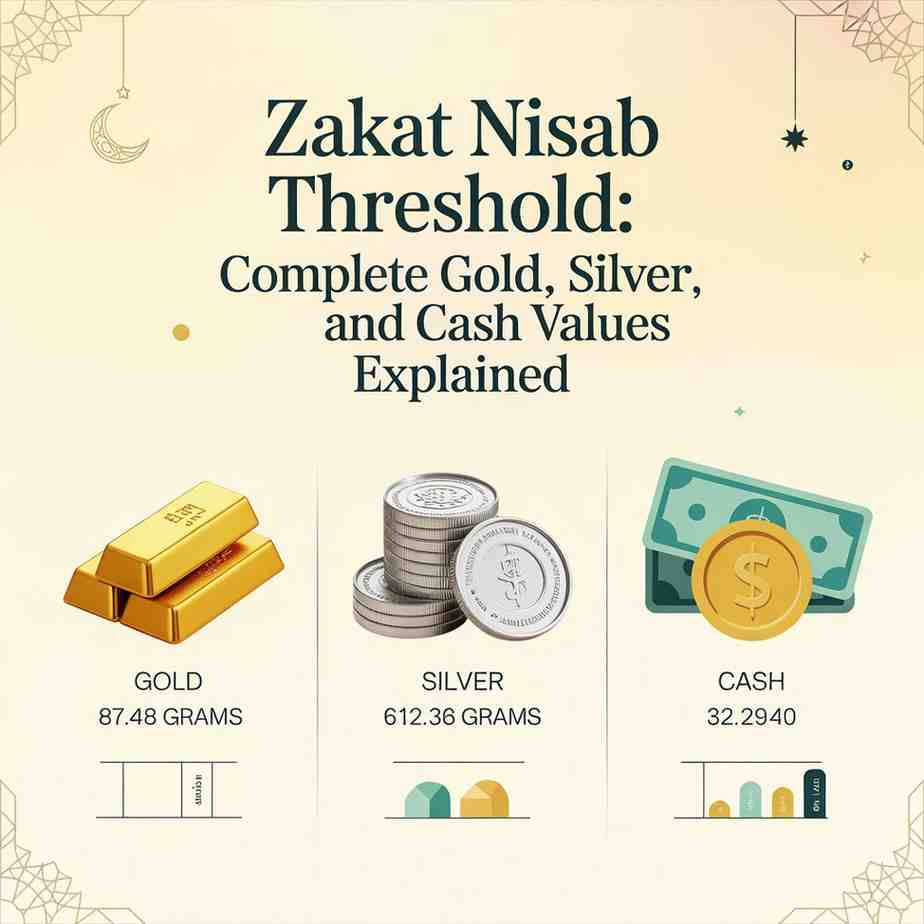
Gold Nisab
- 87.48 grams of gold
- Represents a higher Nisab threshold
- Often used by individuals with moderate to high income levels
Silver Nisab
- 612.36 grams of silver
- Represents a lower Nisab threshold
- Results in more people being eligible to pay Zakat
The monetary value of Nisab in 2026 will vary depending on global market prices and local currency exchange rates.
Gold vs Silver Nisab: Which One Should You Follow?
This is one of the most common questions related to Zakat calculations.
Using Gold Nisab
Gold-based Nisab is often preferred in economies where:
- Living costs are high
- Silver prices are extremely low compared to gold
- Individuals want to ensure Zakat applies only to substantial wealth
Using Silver Nisab
Silver-based Nisab is widely encouraged by scholars and humanitarian organizations because:
- It increases Zakat participation
- It benefits a larger segment of vulnerable communities
- It aligns with the social justice objectives of Zakat
Many charitable foundations, including Unessa Foundation, encourage donors to use the silver Nisab to maximize social impact—especially in regions where economic inequality is widespread.
Zakat Nisab for Cash, Savings, and Bank Balances in 2026
Modern wealth is largely cash-based, making this section especially relevant.
Cash and cash-equivalent assets that are subject to Zakat include:
- Cash at home
- Bank savings and current accounts
- Fixed deposits
- Digital wallets
- Emergency funds
To determine whether Zakat is due, compare your total cash holdings to the gold or silver Nisab value.
If your cash remains above the Nisab threshold for one lunar year, Zakat becomes obligatory.
📊 Zakat Nisab Value Table – Global (Estimated for 2026)
Nisab values are based on internationally accepted weight standards. Monetary values vary depending on daily market prices.
Nisab Standard
Metal Weight
Approximate Value (USD – 2026)
Used For
Gold Nisab
87.48 grams
USD 5,800 – 14,000
Higher threshold, fewer Zakat payers
Silver Nisab
612.36 grams
USD 450 – 2,200
Lower threshold, broader social impact
🇮🇳 Zakat Nisab Value Table – India (Estimated for 2026)
Values are indicative and should be recalculated using live gold and silver rates in India on the day of Zakat calculation.
Nisab Standard
Metal Weight
Approximate Value
(INR – 2026)
Common Usage
Gold Nisab
87.48 grams
₹13,50,000 – ₹15,00,000
Preferred by higher-income households
Silver Nisab
612.36 grams
₹1,50,000 – ₹2,00,000
Widely recommended for greater reach
💡 How to Use These Nisab Tables
- Check current gold or silver price per gram in your local market
- Multiply it by the Nisab weight (gold or silver)
- Compare the result with your total Zakatable assets
- If your wealth stays above Nisab for one lunar year, Zakat at 2.5% becomes due
Zakat Nisab for Other Zakatable Assets
Nisab does not apply to assets individually. Instead, Zakatable assets are combined to determine eligibility.
These include:
- Gold and silver jewelry (according to most scholars)
- Business inventory and profits
- Investment returns
- Trade goods
Assets Not Subject to Zakat
- Primary residence
- Personal vehicles
- Clothing and household items
- Tools used for earning a livelihood
Understanding this distinction prevents both underpayment and overpayment.
How to Calculate Zakat Once You Reach Nisab
Once your wealth exceeds the Zakat Nisab threshold for 2026, follow these steps:
1
Calculate total Zakatable assets
2
Subtract immediate liabilities (if applicable)
3
Pay 2.5% of the remaining amount
Many Muslims choose to calculate Zakat during Ramadan, but Zakat can be paid at any time once the hawl is completed.
Why Nisab Awareness Matters in 2026
Economic conditions are changing rapidly. Without proper understanding, people may:
- Pay Zakat when it is not required
- Delay Zakat when it is obligatory
- Calculate Nisab incorrectly
Accurate Nisab awareness helps:
- Maintain fairness
- Strengthen trust in Zakat institutions
- Ensure ethical wealth redistribution
- Maximize poverty-reduction impact
Zakat, when calculated correctly, becomes a powerful tool for social balance.
Final Thoughts
The Zakat Nisab threshold for 2026 is grounded in timeless Islamic principles, even as gold prices, silver values, and modern financial systems evolve.
Understanding Nisab is not about technicalities alone—it is about responsibility, sincerity, and trust.
Zakat is more than a financial obligation. It is a system designed to restore balance, dignity, and hope. And that system begins with understanding Nisab correctly.
FAQs: Zakat Nisab Threshold for 2026
What is Nisab?
Nisab is the minimum amount of wealth a Muslim must own before Zakat becomes obligatory.
How is Nisab measured?
Nisab is measured using the value of 87.48 grams of gold or 612.36 grams of silver.
Do I pay Zakat if my savings reach Nisab?
Yes — if your total cash and assets equal or exceed the Nisab and you hold them for one lunar year, Zakat is due.
Which Nisab should I use: gold or silver?
Silver-based Nisab is often recommended by scholars because it benefits more people in need, though both are valid.
Is personal property like a home included in Nisab?
No — personal-use items such as your home or vehicle are generally not included in Zakat calculations.