

Introduction: Why Zakat on Gold and Jewelry Requires Special Attention in 2026
Zakat on gold and jewelry is one of the most sensitive—and frequently misunderstood—areas of Zakat calculation, especially in 2026 when gold prices are high and jewelry ownership is common across households. Many Muslims remain unsure whether Zakat applies to personal jewelry, investment gold, or inherited ornaments kept for years without use.
Unlike cash savings, gold and jewelry carry emotional, cultural, and traditional value, which often leads people to unintentionally delay or overlook Zakat obligations. This guide explains the rules clearly, resolves common doubts, and provides practical examples to help you calculate Zakat on gold and jewelry with confidence and accuracy.
What Qualifies as Zakatable Gold and Jewelry?
For Zakat purposes, gold and jewelry refer to items made primarily of gold or silver that you fully own and can access.
The following forms of gold and jewelry are generally considered Zakatable:
- Gold jewelry (necklaces, bangles, rings, earrings)
- Gold coins and bars
- Investment gold (physical or allocated)
- Silver jewelry and silver items
- Inherited gold kept in possession
All qualifying gold and silver items are combined when calculating Zakat; they are not assessed separately.
Personal Jewelry and Scholarly Differences You Should Know
There is a well-known difference of scholarly opinion regarding Zakat on gold jewelry worn for personal use.
Majority Opinion (Hanafi School)
According to the Hanafi school, Zakat is obligatory on all gold and silver jewelry, whether worn daily or stored, if it reaches the Nisab threshold and completes one lunar year.
Other Scholarly Views
Some scholars from other schools hold that regularly worn personal jewelry may be exempt, provided it is not excessive or intended for investment.
⚠️ Important note (Normal Text):
To avoid doubt and ensure spiritual peace, many scholars recommend paying Zakat on all gold jewelry, especially in 2026 when gold value is significant.
Nisab Standard for Gold
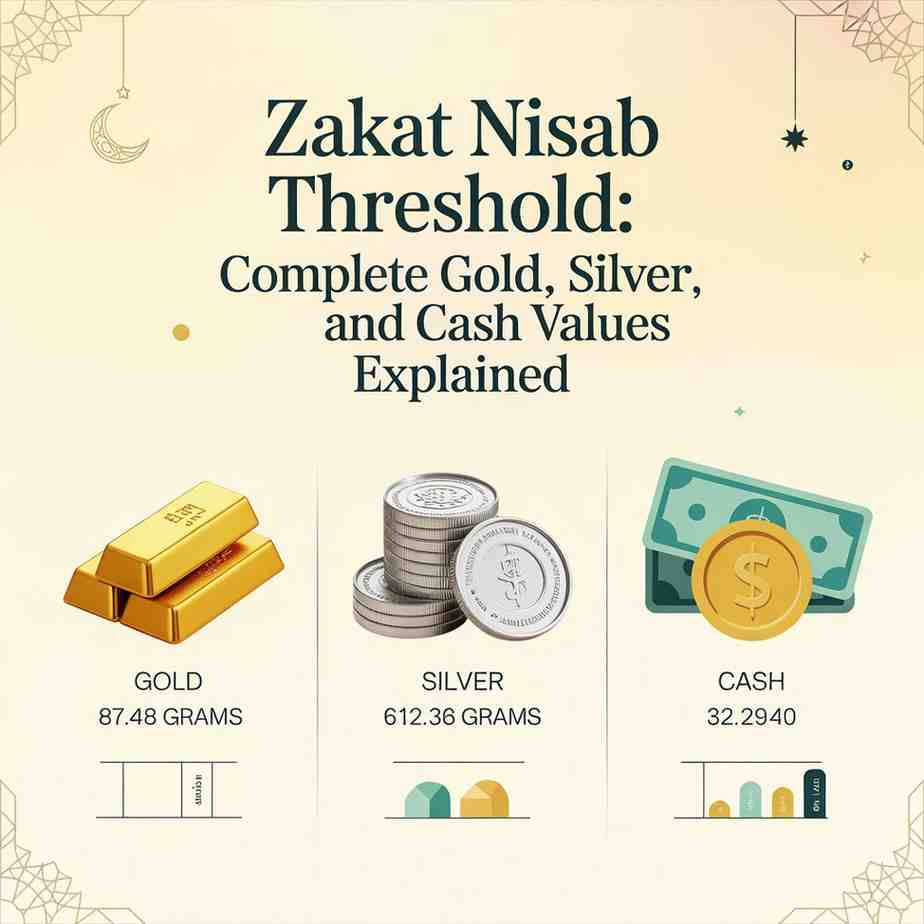
87.48 grams of gold
If the total weight of your gold equals or exceeds this amount and is held for one lunar year (hawl), Zakat becomes obligatory.
Silver Nisab may also be used in some cases, but gold Nisab is more commonly applied when calculating Zakat on jewelry.
Personal Jewelry and Scholarly Differences You Should Know
Step 1: Determine the Total Weight of Gold
Start by weighing all gold and silver items you own, including:
- Jewelry worn regularly
- Jewelry kept in lockers
- Broken or unused gold
- Gold coins and bars
The total combined weight is used for calculation.
Step 2: Check Purity (Karat Value)
Gold jewelry is often not 100% pure. Common purities include:
- 24K (pure gold)
- 22K
- 18K
Convert each item into pure gold weight before calculation. Jewelers can help with accurate purity assessment.
Step 3: Confirm Hawl (One Lunar Year)
Zakat becomes due if your gold holdings:
- Remain above Nisab for one lunar year
- Do not need to stay constant throughout the year
- Are owned fully without restriction
Temporary fluctuations do not affect Zakat eligibility.
Step 4: Calculate Zakat at 2.5%
Once eligibility is confirmed:
- Zakat rate: 2.5% (1/40th)
- Apply the rate to the current market value of pure gold
This amount is your payable Zakat.
📊 Practical Example: Zakat on Gold Jewelry in 2026
Description
Amount
Total gold owned
120 grams
Pure gold equivalent
110 grams
Current gold price
₹6,000 per gram
Total gold value
₹660,000
Zakat rate
2.5%
Zakat due
₹16,500
Common Mistakes People Make with Gold Zakat
Many people unintentionally fall into errors that invalidate or delay their Zakat.
Common mistakes include:
- Assuming worn jewelry is always exempt
- Ignoring small or broken gold items
- Not checking purity before calculation
- Using purchase price instead of market value
- Forgetting inherited or stored gold
Avoiding these mistakes ensures your Zakat is complete and valid.
Can You Pay Zakat on Gold in Cash Instead?
Yes. Zakat on gold does not need to be paid in gold itself.
You may:
- Pay the equivalent value in cash
- Donate through verified Zakat organizations
- Split payment among multiple beneficiaries
This flexibility makes Zakat easier to fulfill in modern times.
Why Zakat on Gold Matters More Than Ever in 2026
With rising gold prices and increasing inequality, accurate Zakat on gold:
- Prevents hoarding of wealth
- Supports vulnerable communities
- Circulates unused assets into society
- Upholds economic justice in Islam
Gold Zakat is not symbolic—it has real social impact.
Final Thoughts
Zakat on gold and jewelry in 2026 is both a responsibility and a blessing. With a clear understanding of Nisab, purity, hawl, and valuation, the process becomes simple and spiritually rewarding.
Gold may shine in appearance, but its true value is revealed when it purifies wealth and restores dignity to those in need.
FAQs: Calculating Zakat on Savings and Bank Accounts
Do I have to pay Zakat on gold jewelry I wear daily?
Yes, according to the Hanafi school, Zakat is due on all gold jewelry if it reaches Nisab and completes one lunar year, even if worn regularly.
Is Zakat calculated on the weight or the value of gold?
Nisab is checked by weight, but Zakat is calculated on the current market value of pure gold on your Zakat date.
Do I need to pay Zakat on inherited gold if I don’t use it?
Yes, inherited gold is Zakatable once it is in your possession and remains above Nisab for one lunar year.
What if my gold jewelry has different purity levels?
Each item should be converted into its pure gold equivalent before combining the total for Zakat calculation.
Can I pay Zakat on gold in cash instead of gold itself?
Yes, you may pay the cash value of the Zakat amount, which makes fulfilling the obligation easier.