
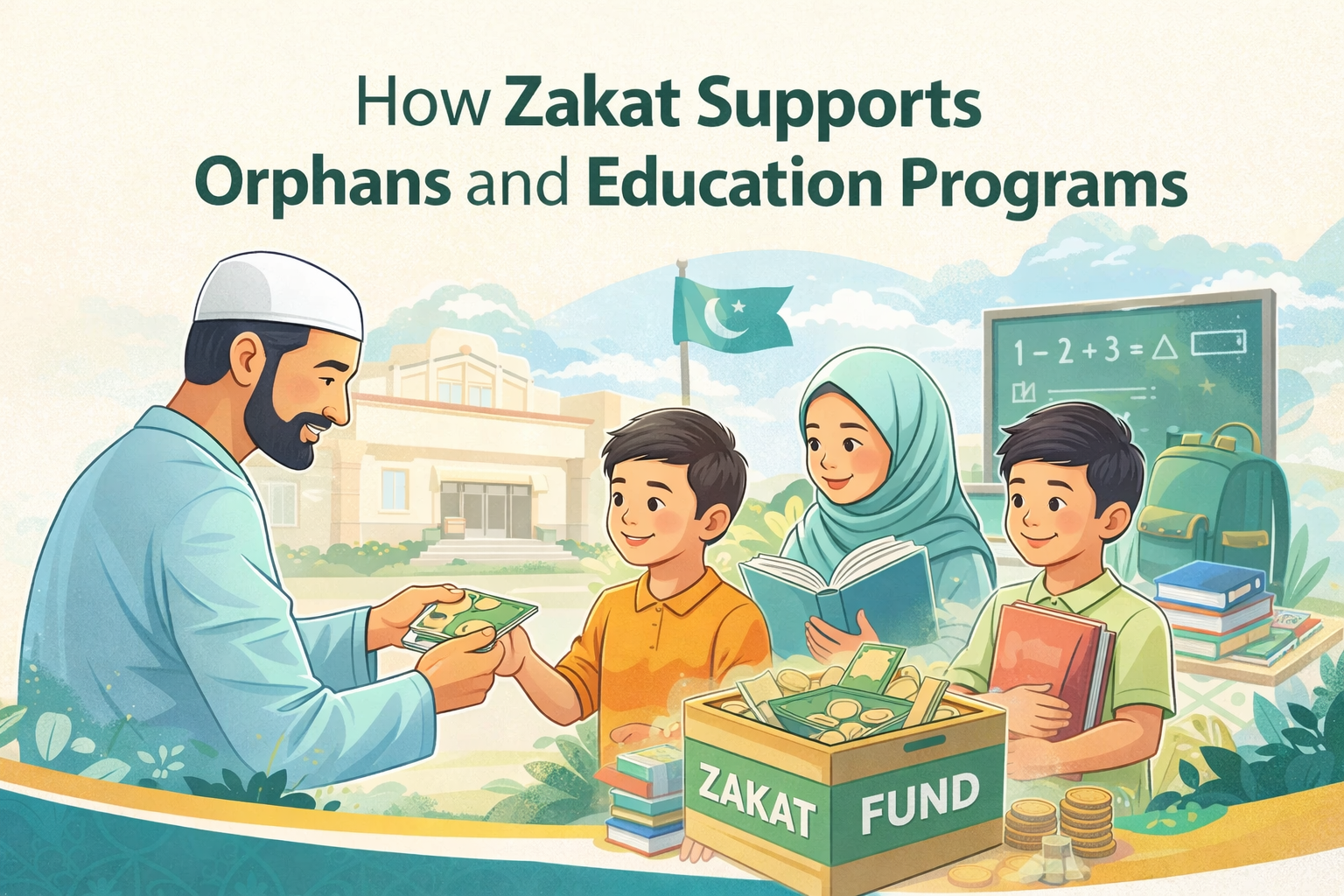

How Zakat Supports Orphans and Education Programs: A Sustainable Path to Breaking Poverty Cycles
Introduction: More Than Charity — A System of Empowerment
When people think about Zakat, they often picture food distribution or emergency relief. While those are essential, they represent only part of its potential.
Understanding how Zakat supports orphans and education programs reveals something deeper — a structured system designed not just to relieve hardship, but to transform lives.
Globally, over 153 million children are orphans (UNICEF estimates). At the same time, UNESCO reports that over 244 million children and youth are out of school worldwide. These numbers are not just statistics; they represent lost potential.
Zakat, when distributed responsibly, addresses both problems at their root.This is exactly how Zakat supports orphans and education programs in a sustainable way.
How Orphans Qualify for Zakat
Orpanhood alone does not automatically qualify a child for Zakat. However, many orphans fall under recognized categories such as:
- Al-Fuqara (The Poor)
- Al-Masakin (The Needy)
If an orphan lacks sufficient financial support for basic living needs, Zakat becomes permissible and appropriate.
This ensures:
- Compassion is balanced with Shariah compliance
- Funds are directed responsibly
- Donor trust is maintained
Understanding how Zakat supports orphans and education programs begins with understanding proper eligibility.
1. Zakat for Basic Living Expenses
Before a child can attend school, basic survival must be secured.
Zakat for orphans often covers:
- Nutritious food
- Clothing
- Medical treatment
- Safe housing
- Utility costs
Research shows that children suffering from food insecurity are significantly more likely to drop out of school. By stabilizing the household, Zakat creates the foundation for educational continuity.
Think of it as building the roots before expecting the tree to grow.
2. Zakat for Education: Breaking the Poverty Cycle
Education is one of the strongest predictors of economic mobility. The World Bank reports that each additional year of schooling can increase earnings by up to 10%.
This is where how Zakat supports orphans and education programs becomes transformative.
Zakat-funded education programs may include:
- Tuition fees
- School uniforms
- Books and supplies
- Transportation costs
- Digital learning access
- Exam registration fees
In many low-income families, even small school expenses become barriers. Zakat removes those barriers.
Instead of choosing between food and school fees, families can secure both.
3. Scholarships for Underprivileged Students
Beyond primary education, Zakat can fund:
- Secondary school scholarships
- University tuition support
- Professional certifications
- Religious education programs
In regions where higher education is inaccessible due to cost, Zakat bridges that gap.
Case studies from charitable organizations show that students who receive structured financial support are significantly more likely to complete their studies and gain stable employment.
This is not short-term relief. It is generational impact.
4. Vocational Training and Skill Development
Not every orphan follows an academic path. Many thrive in practical skill-based training.
Zakat-funded programs often support:
- Technical training (electricians, mechanics, tailoring)
- IT and digital skills programs
- Apprenticeships
- Small business seed funding
Youth unemployment is one of the leading causes of poverty in developing countries. Skill development provides immediate earning capacity.
When discussing how Zakat supports orphans and education programs, vocational empowerment must be part of the conversation.
5. Emotional and Social Support
Financial hardship is only part of an orphan’s struggle.
Children who lose parents often experience:
- Anxiety
- Low self-esteem
- Grief-related trauma
- Social isolation
Comprehensive Zakat-funded programs may include:
- Counseling services
- Mentorship programs
- Peer support groups
- Community integration initiatives
Holistic care improves academic performance and emotional resilience.
The Ripple Effect: Community-Wide Impact
When education programs are strengthened through Zakat, entire communities benefit.
Measurable Outcomes Include:
- Higher literacy rates
- Reduced child labor
- Lower crime rates
- Increased economic productivity
- Stronger civic engagement
Educated youth become:
- Entrepreneurs
- Teachers
- Healthcare workers
- Community leaders
The impact multiplies.
Corporate Zakat and Education Initiatives
Businesses increasingly recognize the role of Corporate Zakat in sustainable development.
Corporate Zakat can fund:
- Orphan sponsorship programs
- School construction projects
- Scholarship funds
- Community learning centers
- Digital literacy labs
This aligns:
- Religious obligation
- Corporate social responsibility (CSR)
- Measurable social impact
Companies that invest in education-focused Zakat initiatives often see enhanced brand trust and stronger community relationships.
Ensuring Proper Zakat Allocation
For Zakat to be valid and impactful:
- Beneficiaries must qualify under eligible categories
- Funds must be distributed directly or appropriately allocated
- Transparent reporting must be maintained
- Scholarly guidance must be followed
Best practices include:
- Needs assessments
- Documentation and verification
- Impact measurement reports
- Third-party audits
Trust sustains long-term donor engagement.
Why Education Is a Sustainable Zakat Investment
Food sustains a child for a day.
Education sustains a child for life.
When Zakat funds education:
- Children gain independence
- Families reduce dependency
- Communities strengthen economically
Studies consistently show that educated populations experience lower poverty rates and higher economic resilience.
This makes education one of the most sustainable applications of Zakat.
Current Trends in Zakat and Education
Modern Zakat institutions are adopting:
- Digital beneficiary verification systems
- Online scholarship platforms
- Impact tracking dashboards
- Data-driven poverty assessments
There is a growing shift toward structured, transparent, and measurable Zakat distribution — especially in education.
Donors increasingly want to know:
- Where funds go
- Who benefits
- What long-term impact is achieved
Education programs provide clear, trackable outcomes.
Actionable Steps for Donors
If you want your Zakat to support orphans and education programs effectively:
- Verify eligibility criteria
- Choose transparent, accountable organizations
- Request impact reports
- Consider long-term sponsorship models
- Allocate a portion specifically to education
Strategic giving increases impact.
Conclusion: From Obligation to Opportunity
Understanding how Zakat supports orphans and education programs shifts the perspective from simple charity to systemic change Zakat:
- Stabilizes vulnerable households
- Keeps children in school
- Builds skilled youth
- Strengthens communities
- Breaks intergenerational poverty
When distributed responsibly, Zakat does more than relieve hardship.
It restores dignity.
It builds futures.
It empowers the next generation.
And that impact continues long after the initial donation is made.This shows clearly how Zakat supports orphans and education programs by creating lasting educational and economic opportunities.
You can also read our guide on Why Zakat Is the Third Pillar of Islam to understand its deeper spiritual meaning.
FAQs
Can Zakat be used for orphan sponsorship?
Yes, if the orphan qualifies under categories such as the poor or needy.
Is it permissible to use Zakat for school fees?
Yes, if the student is eligible and unable to afford education expenses.
Can Corporate Zakat fund education projects?
Yes, provided the beneficiaries meet Shariah eligibility requirements.
Does Zakat cover vocational training?
Yes, if it supports eligible individuals in achieving financial independence.
Why focus on education through Zakat?
Education creates long-term economic stability and breaks poverty cycles.