

Zakat Is More Than a Financial Duty
What Does Zakat Really Mean?
Zakat is often discussed in practical terms— how much to, who is eligible, and when it becomes due. based on Nisab While these details matter, they only tell part of the story. At its core, Zakat is a deeply spiritual act designed to transform not only society, but the inner life of a believer.
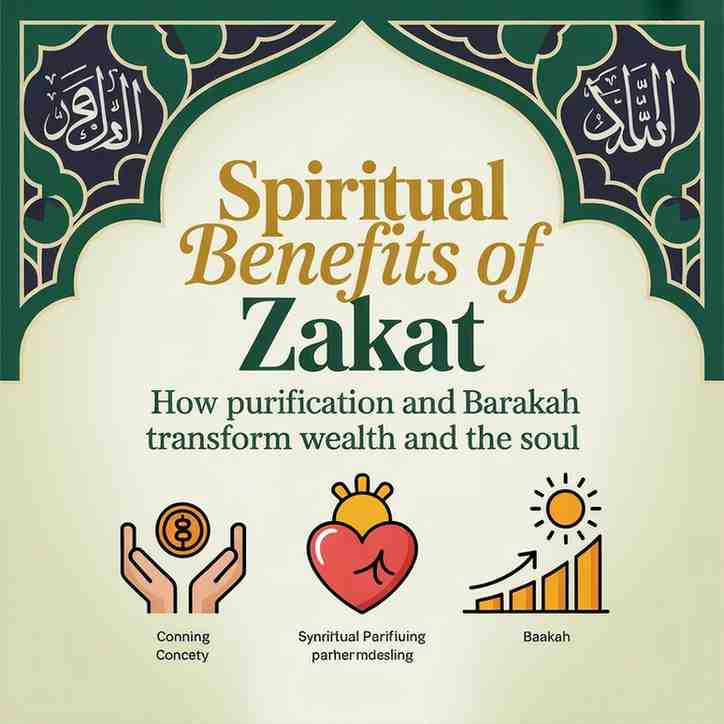
The spiritual benefits of Zakat extend far beyond redistribution of wealth. Zakat purifies the heart, realigns priorities, strengthens trust in Allah, and introduces barakah into one’s life in ways that cannot be measured by income or savings.
When understood properly, Zakat becomes a form of worship that reshapes how wealth is earned, held, and released.
👉Click here to know more about What is Zakat?
The word Zakat comes from Arabic roots meaning purification, growth, and blessing. This definition alone reveals that Zakat was never meant to reduce wealth—it was meant to cleanse and elevate it.
In Islam, wealth is not inherently problematic. What harms the soul is attachment, arrogance, and neglect of responsibility. Zakat addresses all three.
“By giving Zakat, a believer acknowledges a fundamental truth: Wealth is a trust from Allah, not absolute ownership.”
This shift in perspective is the foundation of Zakat’s spiritual impact.
Zakat as Spiritual Purification
One of the greatest spiritual benefits of Zakat is purification—of both wealth and the heart.
Wealth naturally attracts emotional weight. It can create fear of loss, obsession with accumulation, or a sense of control over life. Zakat breaks this cycle gently but consistently.
Through regular Zakat
1. Softens Greed
2. Intentional Gratitude
3. Inner Peace
The Quran explicitly links Zakat with purification, teaching that spiritual growth
requires release, not hoarding. Each act of giving trains the heart to let go without
fear.
Over time, Zakat transforms wealth from a source of anxiety into a source of peace.
Removing Arrogance and Cultivating Humility
One of the subtle dangers of financial success is the illusion of self-sufficiency. When
income grows, it becomes easy to believe that success is entirely self-made. Zakat corrects this mindset.
By giving wealth, a believer affirms:
- Success is not earned by effort alone
- Others have a rightful share in what we own
- Allah is the true Provider
This humility is spiritually protective. It prevents wealth from becoming a source of
pride and keeps the heart grounded in gratitude.
Among the spiritual benefits of Zakat, this cultivation of humility is one of the most transformative.
Understanding Barakah: Growth Beyond
Numbers
From a purely material viewpoint, giving money away appears to be loss. Spiritually, Zakat operates on a different logic. Barakah does not always mean having more—it means having enough, with ease and clarity.
01
Longevity of Wealth
Wealth with barakah lasts longer and covers needs more effectively than hoarded money.
02
Ease of Management
Blessed wealth feels lighter to manage and produces peace instead of administrative stress.
03
Softening Crises
Many Zakat givers report that expenses feel manageable and life’s crises are softened.
Many people who give Zakat consistently describe similar experiences: expenses
feel manageable, crises are softened, and contentment increases even without
major financial changes.
Islam teaches that charity does not decrease wealth. Zakat aligns wealth with divine
balance, allowing blessings to flow in ways accumulation alone never can.
Strengthening Tawakkul: Trust in Allah
Zakat requires faith. Letting go of a portion of wealth demands trust that Allah will provide, protect, and replace what is given. Each Zakat payment becomes a renewal of tawakkul—reliance on Allah.
Through Zakat, believers develop:
- Confidence in divine provision
- Reduced fear of financial uncertainty
- Emotional resilience during hardship
This trust reshapes how risk and security are viewed. Savings remain important, but they are no longer the ultimate source of comfort. That role belongs to Allah alone.
Healing an Unhealthy Relationship With Money
For many people, money is tied to stress, comparison, and constant calculation. Zakat offers healing by restoring balance.
- Wealth stops being an obsession.
- Money becomes a tool, not an identity.
- Contentment replaces constant desire.
Zakat teaches moderation—earning responsibly, spending wisely, and giving sincerely. Over time, it frees the heart from the exhausting need to control every outcome.
This emotional clarity is one of the most overlooked spiritual benefits of Zakat.
Zakat as an Act of Worship
Zakat is not charity alone—it is worship.
Like prayer and fasting, Zakat is an act of obedience that strengthens faith. When given with the right intention, even financial transactions become spiritual acts.
Paying Zakat:
- Turn wealth into worship
- Strengthens accountability
- Keeps faith active beyond rituals
Knowing that Zakat will be questioned in the Hereafter adds consciousness to financial decisions. This awareness connects everyday life to eternal purpose.
Inner Peace and Emotional Lightness
One of the quiet but powerful outcomes of Zakat is peace.
Many who give Zakat sincerely describe:
- Relief after fulfilling the obligation
- Emotional lightness
- Reduced guilt around wealth
This peace comes from alignment—when actions match values. Zakat removes the spiritual weight of hoarded wealth and replaces it with calm assurance.
Peace, in this sense, becomes a form of barakah
Zakat and Social Responsibility: Faith in Action
akat bridges personal spirituality and social justice. It reminds believers that faith is not private—it is lived through responsibility toward others.
Through Zakat:
- Compassion becomes action
- Faith becomes visible
- Communities are strengthened
Seeing lives uplifted through Zakat reinforces belief in Islam as a complete system—one that nurtures both individuals and societies.
This connection deepens iman and gives meaning to worship beyond personal salvation.
Accountability and Awareness of the Hereafter
Zakat keeps the Hereafter present in a believer’s life.
It constantly reminds us that:
- Wealth will be questioned
- Giving matters more than keeping
- True success extends beyond this world
This awareness brings clarity to priorities. It prevents wealth from becoming a distraction and helps believers focus on what truly endures.
Practical Tips to Experience the Spiritual Benefits of Zakat
To fully benefit spiritually from Zakat:
- Calculate it carefully and honestly
- Give it on time, without delay
- Choose trustworthy distribution channels
- Renew intention before giving
- Reflect on its purpose, not just its amount
Consistency matters more than scale.
Final Reflection: Zakat as Transformation, Not Transaction
Zakat is not a loss—it is a return.
Not a burden—but a blessing.
Not a transaction—but a transformation.
The spiritual benefits of Zakat lie in how it purifies wealth, softens hearts, and invites barakah into daily life. It teaches that true richness is not measured by accumulation, but by trust, generosity, and obedience.
When given with understanding and sincerity, Zakat becomes more than a pillar of Islam—it becomes a source of lasting peace, growth, and spiritual clarity.
Spiritual Benefits of Zakat – FAQs
What are the spiritual benefits of Zakat?
Zakat purifies wealth, softens the heart, strengthens faith, and brings barakah (blessing) into one’s life
How does Zakat purify wealth?
By removing greed, attachment, and arrogance, Zakat cleanses wealth and aligns it with Allah’s guidance.
Does Zakat really increase wealth?
Spiritually, yes. Zakat brings barakah—ease, sufficiency, and peace—even if numbers don’t increase.
What is barakah in Zakat?
Barakah means blessing. Wealth with barakah lasts longer, causes less stress, and feels more meaningful.
How does Zakat strengthen faith?
Zakat builds trust in Allah, humility, and awareness of accountability in the Hereafter.
Can Zakat bring inner peace?
Yes. Many experience emotional relief, clarity, and calm after fulfilling their Zakat obligation.
Is Zakat only a financial act?
No. Zakat is an act of worship that connects money with spirituality and responsibility.
Why is Zakat important for the soul?
It protects the heart from greed, reminds us that wealth is a trust, and keeps faith active in daily life.