
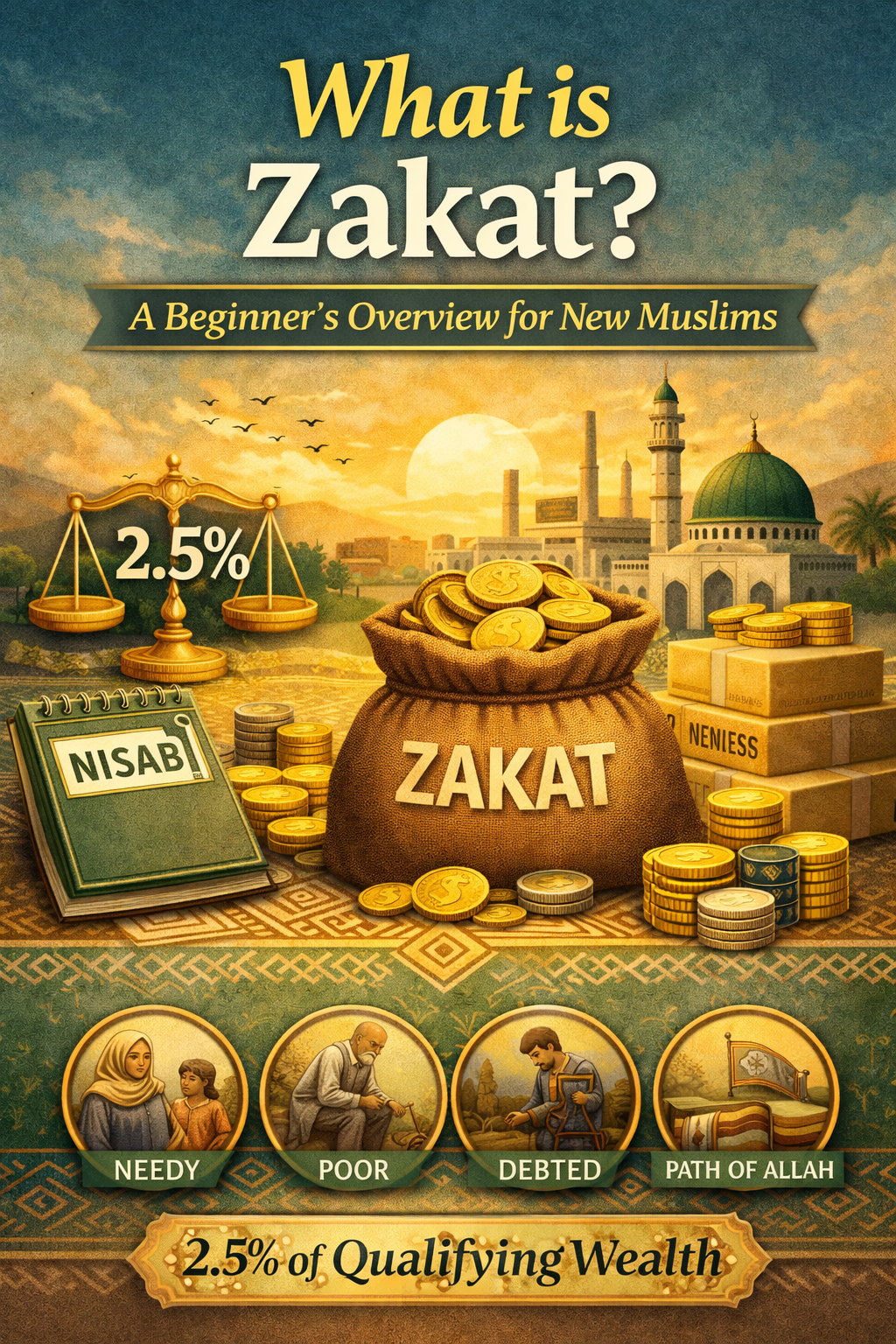

What Is Zakat? A Complete Beginner’s Guide to Understanding Zakat in Islam
For many people new to Islam, the question “What is Zakat?” arises early—sometimes even before daily prayer routines feel natural. You hear it mentioned in mosques, Friday sermons, Islamic lectures, and conversations about charity. Yet Zakat is often misunderstood as just another form of donation.
In reality, Zakat is far more structured, purposeful, and transformative than general charity. It is an act of worship, a financial responsibility, and a powerful social system built into Islam. Understanding what is Zakat helps new Muslims recognize its importance as both an act of worship and a system of social support in Islam.
What Does Zakat Mean in Islam?
The word Zakat comes from the Arabic root zakā, which means purification, growth, and blessing.
In Islamic teachings, Zakat refers to a mandatory contribution from wealth that eligible Muslims must give to those in need. The act of giving Zakat purifies a person’s wealth and helps it grow in blessings, not necessarily in numbers.
Zakat is not a voluntary donation or a personal choice. It is a religious obligation and one of the Five Pillars of Islam, which form the foundation of a Muslim’s faith and practice:
- Declaration of Faith (Shahada)
- Prayer (Salah)
- Zakat (Charity)
- Fasting (Sawm)
- Pilgrimage (Hajj)
Why Is Zakat So Important in Islam?
To fully appreciate Islam’s system of charity, it is important to understand what is Zakat and why it holds such a central place in Islamic teachings.
Zakat plays a dual role—spiritual purification and social responsibility.
Spiritual Importance of Zakat
On a personal level, Zakat:
- Removes greed and unhealthy attachment to wealth
- Builds gratitude for what one has
- Strengthens trust in Allah as the ultimate Provider
- Encourages humility and generosity
Islam teaches that wealth is not owned absolutely by individuals; it is a trust from Allah.
Social Importance of Zakat
On a community level, Zakat:
- Reduces poverty and inequality
- Helps people meet essential needs without humiliation
- Prevents wealth from circulating only among the rich
- Creates a built-in welfare system rooted in dignity
The Quran frequently mentions Zakat alongside prayer, emphasizing that faith is incomplete without concern for others.
Who Is Required to Pay Zakat?
Not every Muslim is required to pay Zakat. Islam does not burden people beyond their capacity.
You are obligated to pay Zakat if:
- You are Muslim
- You own wealth above a minimum threshold (Nisab)
- That wealth has remained above Nisab for one full lunar year
If your wealth does not meet these conditions, Zakat is not required—and you may even qualify to receive it.
What Is Nisab? (Minimum Wealth Threshold)
Nisab is the minimum amount of wealth a person must own before Zakat becomes obligatory.
It is calculated based on:
- 87.48 grams of gold, or
612.36 grams of silver
Most contemporary scholars recommend using the silver standard, as it ensures broader support for those in need.
Once your savings reach Nisab and stay above it for a full lunar year, Zakat becomes due.
How Much Zakat Do You Pay?
The standard Zakat rate is:
2.5% of eligible wealth
Once you understand what is Zakat, calculating the required 2.5% of eligible wealth becomes much easier.
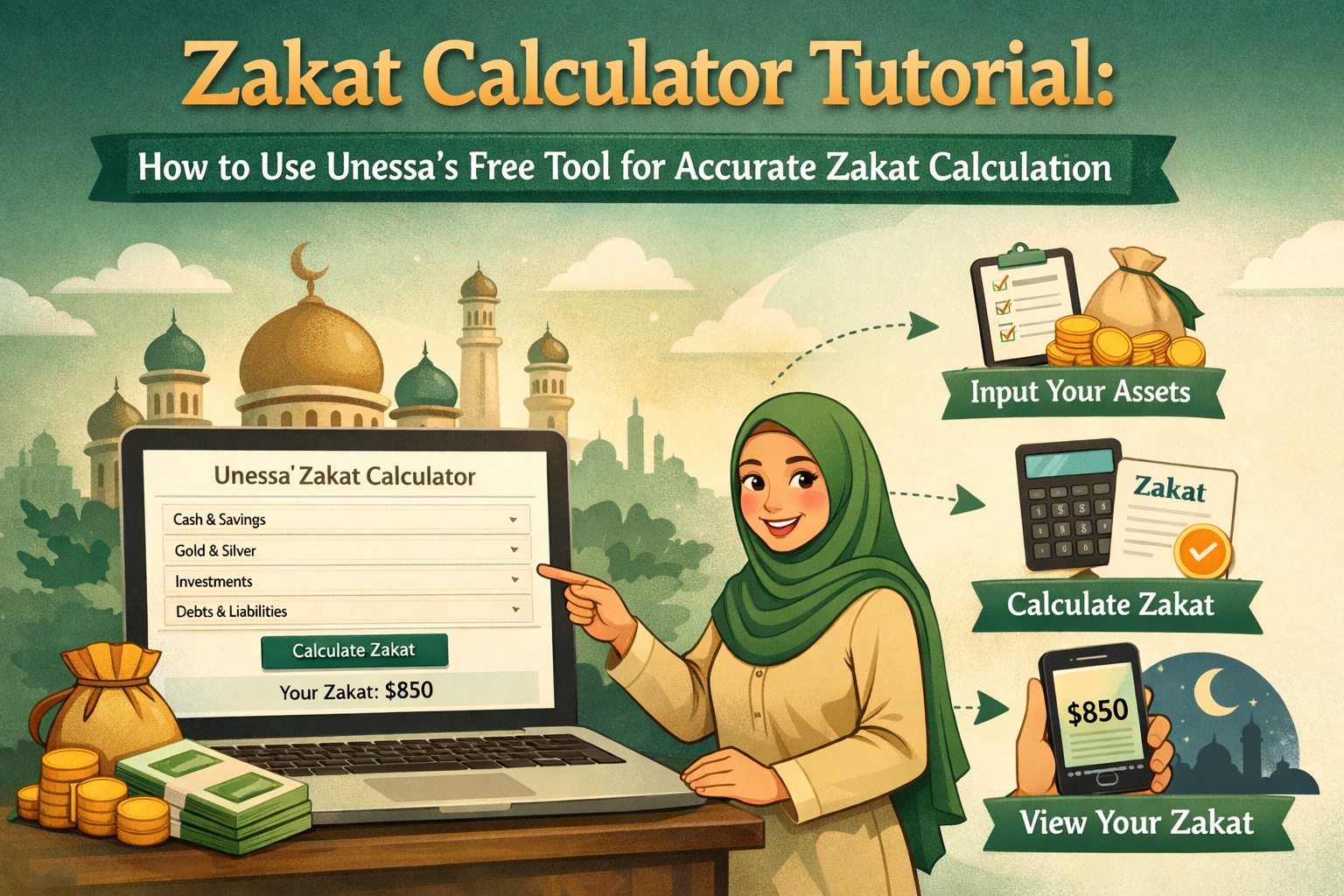
If you are unsure how to calculate your exact amount, using a Zakat calculator can make the process simple and accurate.
This applies to:
- Cash and savings
- Bank balances
- Gold and silver
- Investments and stocks
- Business inventory (in many cases)
Zakat does not apply to:
- Your primary residence
- Personal clothing
- Household items
- Vehicles for personal use
- Tools used for livelihood
This makes Zakat fair and balanced—it targets excess wealth, not necessities.
Who Can Receive Zakat?
The Quran clearly defines eligible recipients of Zakat, ensuring transparency and fairness.
Zakat can be given to:
- The poor and extremely needy
- People struggling with debt
- Travelers facing hardship
- Individuals working in Zakat administration
- Causes that support social and humanitarian welfare
The goal is not dependency, but restoration of dignity and stability.
Zakat vs Sadaqah: Understanding the Difference
New Muslims often confuse Zakat with Sadaqah, but they serve different purposes.
Zakat | Sadaqah |
Mandatory (if eligible) | Voluntary |
Fixed rate (2.5%) | Any amount |
Specific recipients | Anyone |
Paid annually | Paid anytime |
Both are acts of kindness, but Zakat is an obligation, while Sadaqah is an act of generosity beyond duty.
How Zakat Benefits Society in the Real World
Zakat quietly supports millions of lives across the world.
When implemented properly:
- Families receive food and shelter
- Children stay in school
- Medical emergencies are addressed
- Communities become more balanced
Historically, there were Islamic societies where no one qualified to receive Zakat because poverty had been effectively addressed.
A Gentle Reminder for New Muslims
Zakat is not about losing wealth. It is about aligning wealth with purpose.
If Zakat feels unfamiliar, that’s natural. Islam is a journey of learning, not pressure. What matters is understanding that Zakat is an act of care, trust, and responsibility—not fear or obligation alone.
It quietly says:
“What I have is enough—and I am willing to share.”
FAQs: Common Questions New Muslims Ask About Zakat
What if I calculate Zakat incorrectly?
Islam emphasizes intention. If you made a sincere effort, you can correct it later.
Can I give Zakat directly to someone?
Yes, as long as the person qualifies as an eligible recipient.
What if I’m not financially stable?
Zakat is not required. Islam prioritizes ease and compassion.