

In the modern world, wealth has shifted from gold coins and livestock to digital numbers on a screen. For the Muslim investor, this creates a unique spiritual challenge: How do we apply ancient divine wisdom to modern financial instruments? Whether you are day-trading tech stocks, holding a long-term retirement fund, or dabbling in cryptocurrency, the obligation of Zakat remains the same—to purify your wealth and ensure it carries barakah (blessing).
This guide is not just a list of formulas. It is a deep dive into the fiqh (jurisprudence) of modern finance, designed to give you clarity, confidence, and peace of mind. We will break down exactly how to calculate Zakat on stocks, 401(k)s, ETFs, and even dividends, ensuring you fulfill this pillar of Islam correctly.
When you Calculate Zakat on Stocks, it is essential to look at your entire portfolio. This includes calculating Zakat on 401k accounts and Zakat on ETFs, as well as any Zakat on dividends sitting in your brokerage. Whether you are paying Active trader Zakat on short-term flips or Passive investor Zakat for the long term, the primary goal remains the Purification of wealth. Following proper Islamic finance Zakat guidelines ensures your Zakatable assets are handled with integrity. Don’t forget to check the current nisab for stocks before finalizing your payment. For more details, you can research official Zakat guidelines or read about our poverty alleviation work.
1. The Foundation: Why Zakat on Stocks is Different
Before we touch the calculator, we must understand the “Why.” Unlike cash in a bank account, stocks represent ownership in a business. When you buy a share of Apple or Microsoft, you are not just holding paper; you are a partial owner of that company’s assets, machinery, cash, and inventory.
Because of this, scholars have derived specific rules based on intention. In Islamic finance, the “taxability” of an asset changes based on why you bought it.
This brings us to the most critical rule in Zakat calculation: The Rule of Intention (Niyyah).
2. Identifying Your Investor Strategy: Active vs. Passive
The Active Trader
(The Speculator)
Who this is: You buy stocks with the primary intention of selling them for a profit in the short term (days, weeks, or months). You are not interested in the company’s long-term growth or dividends; you are chasing price action.
The Ruling: Your stocks are treated as Urud al-Tijarah (Trade Goods). Just as a merchant pays Zakat on the inventory sitting on his shelves, you must pay Zakat on the full market value of your shares.
The Passive Investor
(The Long-Term Holder)
Who this is: You buy stocks to hold for years (e.g., retirement accounts, dividend portfolios). Your goal is to benefit from the company’s profits (dividends) and long-term appreciation.
The Ruling: You are considered a partner in the business. Therefore, you do not pay Zakat on the company’s “fixed assets” (like buildings, factories, or software code). You only pay Zakat on the liquid assets held by the company.
3. How to Calculate Zakat on Stocks for Active Traders
This is the simplest calculation but often results in a higher Zakat amount because the entire value of the portfolio is taxable.
- Determine the Valuation Date: Choose your Zakat due date (Hawl).
- Check Market Value: Log into your brokerage account and look at the “Total Market Value” of your portfolio on that specific day. Do not use the price you bought it at; use the current price.
- Add Cash: Include any uninvested cash sitting in your brokerage wallet.
- Calculate: Multiply the total by 2.5%.
Example: If you own $50,000 in Tesla stock and trade it actively, and have $2,000 in cash: ($50,000 + $2,000) x 2.5% = $1,300 Zakat Due.
4.How to Calculate Zakat on Stocks for Long-Term Investors
This method is more complex but more accurate for “buy and hold” investors. Since you are not paying Zakat on the machinery or buildings of the company, you need to isolate the “Zakatable” portion (Cash, Inventory, and Receivables).
The "30% Proxy Rule"
Unless you are a financial analyst, reading the balance sheet of every company in your portfolio to find their exact cash position is impossible. To solve this, major Zakat bodies (like AAOIFI) and scholars allow a “proxy” estimation. A widely accepted conservative estimate is that approximately 30% of a typical company’s market capitalization represents its liquid (Zakatable) assets.
The Calculation:
- Take your Total Portfolio Value.
- Multiply it by 30% (0.30) to find the Zakatable amount.
- Multiply that result by 2.5%.
Example: You have $100,000 invested in a long-term tech ETF.
- Step 1: $100,000 x 30% = $30,000 (This is your Zakatable wealth).
- Step 2: $30,000 x 2.5% = $750 Zakat Due.
5. How to Handle Retirement Funds (401k, IRA, Superannuation)
This is the simplest calculation but often results in a higher Zakat amount because the entire value of the portfolio is taxable.
How to Calculate
- Total Account Balance (e.g., $100,000)
- Minus Early Withdrawal Penalty (usually 10%)
- Minus Estimated Taxes (usually 20-30%)
- = Net Accessible Cash
- x 2.5% Zakat Rate
This ensures you are not paying Zakat on money (taxes) that will eventually go to the government anyway.
6.Guide to Zakat on ETFs and Mutual Funds
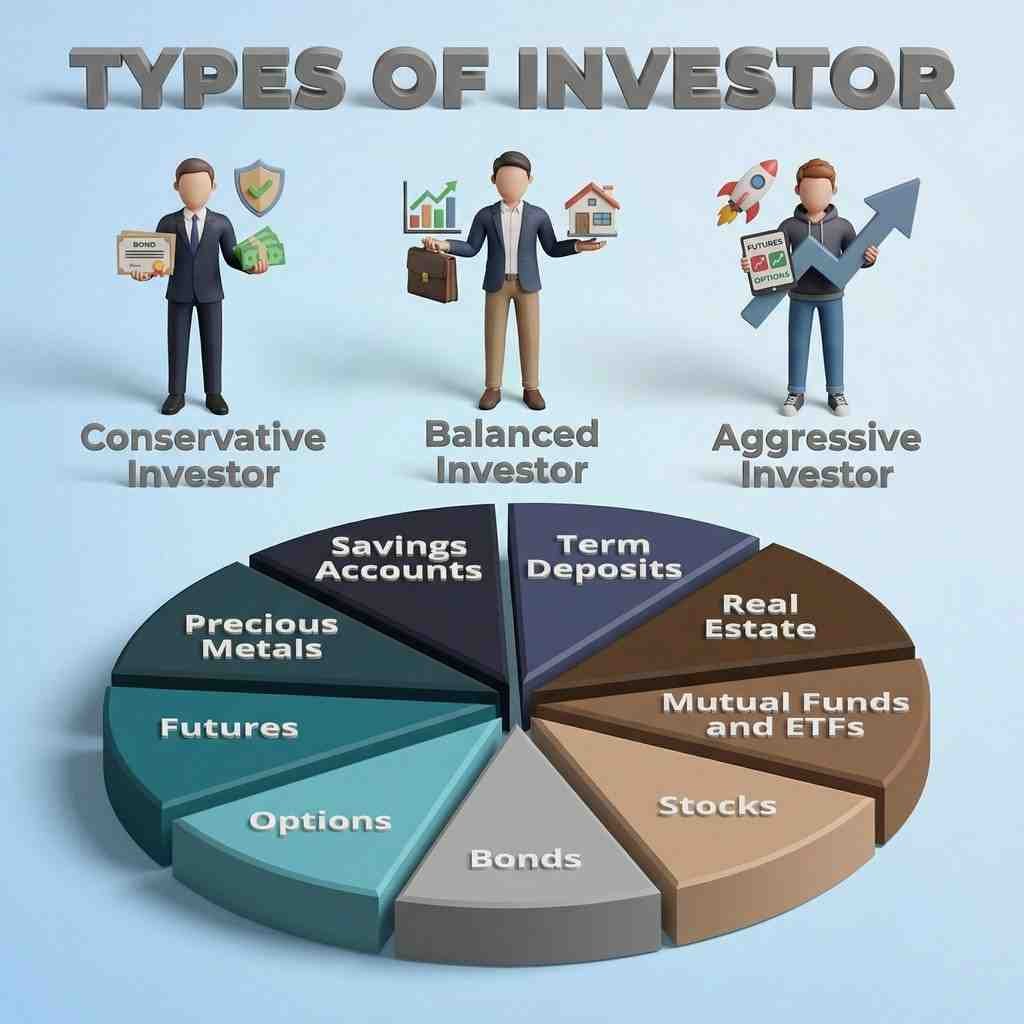
Mutual Funds and Exchange Traded Funds (ETFs) are baskets of many different stocks. Because they hold a mix of companies, applying the “balance sheet” method is impossible.
For these funds, the 30% Proxy Rule is the industry standard for long-term investors. However, there is a caveat:
- Aggressive Growth Funds: If you are trading an ETF rapidly (day trading the SPY, for example), you must switch back to the Active Trader rule and pay on the full 100% value.
- Dividend ETFs: If you hold a fund specifically for income, use the 30% rule on the capital value, but remember to pay 2.5% on the actual cash dividends you received during the year.
7.Calculating Zakat on cryptocurrency and Digital Assets
Cryptocurrency is a new frontier for Zakat, but the rules of Fiqh are timeless. The treatment of crypto depends on its utility.
Payment Tokens
(Stablecoins like USDT, USDC):
These function like digital cash because their value stays linked to real currency. Add the total balance you hold on your Zakat date and pay 2.5% on the full amount. No deductions apply since they represent liquid money.
Exchange Tokens
(Bitcoin, Ethereum):
If bought for resale or profit, the entire market value is Zakatable. If kept as long-term savings, the safer scholarly view is still to pay 2.5% of full value. They are treated as wealth assets rather than equipment.
8. The Hidden Step: Purification of "Mixed" Income
This is a step that distinguishes the “Average” investor from the “Conscious” Muslim investor. Even if you invest in “Shariah-Compliant” stocks (like Apple or Google), these companies often keep their spare cash in interest-bearing bank accounts.
This generates a small amount of Haram (interest) income, which technically “taints” your earnings. To purify your wealth, you must donate this percentage.
How to Purify Your Dividends
- Use an App: Tools like Zoya or Islamicly will list the “Purification Rate” for each stock (e.g., 0.05%).
- Calculate: Multiply your Dividend Income (not the stock price) by this percentage.
- Donate: Give this amount to charity. Note: You cannot count this donation as Zakat or Sadaqah; it is simply “disposal” of impure wealth.
Asset Class
Strategy
Asset Class
Zakat Rate
Zakat Rate
N/A
100% of Value
2.5%
Individ-
ual Stocks
Active / Trading
100% Market Value
2.5%
Individ-
ual Stocks
Passive / Long-Term
~30% of Market Value
2.5%
Mutual Funds / ETFs
Long-Term Hold
~30% of Market Value
2.5%
401(k) / IRA
Retire-
ment
Net Access-
ible Value (After tax/
penalty)
2.5%
Crypto-
currency
Trading / Holding
100% Market Value
2.5%
Real Estate
Invest-
ment (Rental)
0% of Property Value (Tax is on Rental Income only)
2.5%
Final Thoughts
Navigating modern financial markets as a Muslim doesn’t have to be an overwhelming spiritual challenge. While the investment vehicles—from 401(k)s and ETFs to cryptocurrencies—are distinctly modern, the divine principles governing them remain timeless. Fulfilling your Zakat on these assets is far more than a mathematical exercise; it is a profound act of worship, a purification of your earnings, and a vital bridge to those in need.
By clarifying your intentions as an active or passive investor and applying established frameworks like the 30% Proxy Rule or calculating Net Accessible Cash, you can grow your wealth with confidence and integrity. Remember: Zakat doesn’t diminish your wealth; it invites barakah (blessing) into it. When you calculate with care and give with certainty, you are not just securing your financial future—you are actively uplifting the most vulnerable members of society.
FAQs: Zakat and Sustainability (Eco-Friendly Projects)
1. How does my strategy (active vs. passive) change my Zakat?
Active traders (short-term) pay 2.5% Zakat on the full market value of their portfolio. Passive investors (long-term) only pay Zakat on the company’s liquid assets (cash/inventory), not its fixed assets like buildings.
2. Do I pay Zakat on the full value of my long-term ETFs or stocks?
No. Since finding exact liquid assets is difficult, scholars allow the “30% Proxy Rule.” Yo
3. How do I calculate Zakat on a 401(k) or IRA if I can't touch the money?
You only pay on the Net Accessible Cash. Take your total balance, subtract early withdrawal penalties (usually 10%) and estimated taxes (20-30%), then pay 2.5% on the remaining amount.
4. Do I owe Zakat on cryptocurrency?
Yes. For both stablecoins (like USDC) and exchange tokens (like Bitcoin), the standard scholarly view is to treat them as wealth assets and pay 2.5% on their full current market value.
5. What is "purification" of dividends, and does it count as Zakat?
Even Shariah-compliant companies earn small amounts of impermissible interest. You must donate this exact percentage of your dividends to charity. No, this does not count as Zakat or Sadaqah; it is simply disposing of impure funds.