
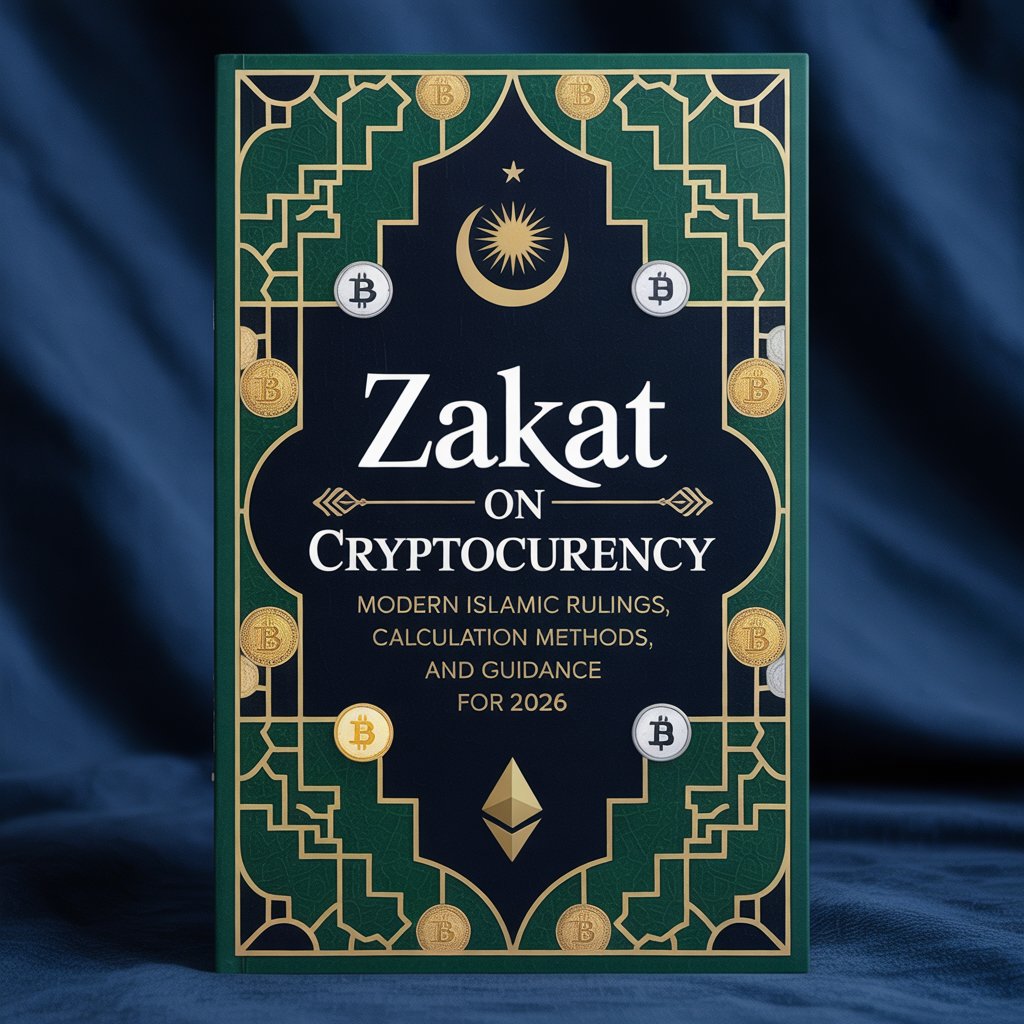

Zakat on Cryptocurrency: Modern Islamic Rulings for 2026
Cryptocurrency is no longer a niche asset held by a few tech enthusiasts. By 2026, millions of Muslims worldwide own digital assets such as Bitcoin, Ethereum, and stablecoins—whether as long-term investments, active trading portfolios, or stored wealth. This growing adoption naturally raises an important question: how does Zakat on cryptocurrency work?
Zakat principles were revealed in a very different economic era, yet Islam provides a framework flexible enough to address modern financial realities. Contemporary scholars have examined cryptocurrencies carefully, and while opinions vary on certain technical details, there is broad agreement on one core principle: cryptocurrency is Zakatable when it represents wealth.
This guide explains modern rulings, practical calculation methods, and best practices for paying Zakat on cryptocurrency in 2026.
Why Cryptocurrency Raises New Zakat Questions
Unlike traditional assets, cryptocurrency is:
- Fully digital
- Highly volatile
- Decentralized
- Easily transferable across borders
These features create confusion about whether crypto should be treated like cash, trade goods, or investments. For many Muslims, the uncertainty is not about avoiding Zakat—but about getting it right.
As crypto becomes part of everyday financial life, clarity on Zakat obligations is essential.
Is Cryptocurrency Zakatable in Islam?
Most contemporary scholars agree that cryptocurrency is subject to Zakat when it is owned as wealth. This includes crypto that is:
- Held as an investment
- Used for trading
- Stored as a store of value
The reasoning is straightforward: cryptocurrency functions as money or a wealth asset, even if it is not issued by a government.
In Islamic jurisprudence, Zakat applies to assets that:
- Hold measurable value
- Can be owned and transferred
- Are capable of growth or storage
Cryptocurrencies meet all three criteria.
Zakat on Cryptocurrency as Stored Wealth
If cryptocurrency is held long-term without frequent trading, it is treated similarly to cash or savings.
When Zakat Becomes Obligatory
Zakat on cryptocurrency is due when:
- The total value reaches the nisab threshold
Ownership lasts for one full lunar year (hawl)
Zakat Rate
- 2.5% of the market value on the Zakat due date
Even if the crypto is not actively traded, it still represents stored wealth and remains Zakatable.
Zakat on Cryptocurrency Used for Trading
Active crypto traders often buy and sell frequently to profit from price movements. In this case, cryptocurrency is treated like business or trade assets.
How Zakat Is Calculated
- Zakat applies to the total portfolio value, not just profits
- Includes coins, tokens, and stablecoins held for trading
- Rate remains 2.5%
This approach aligns crypto trading with classical rulings on trade inventory (urūḍ al-tijārah).
What About Long-Term Investment vs. Trading?
Some owners distinguish between “investment” and “trading,” assuming Zakat rules change. In practice, both remain Zakatable.
The difference lies in how the asset is viewed, not whether Zakat applies.
Holding Type
Zakat Treatment
Long-term holding
Treated like savings
Active trading
Treated like business assets
In both cases, Zakat is due on the market value, not just realized gains.
How to Calculate Zakat on Cryptocurrency in 2026
Step 1: Choose Your Zakat Date
Fix a consistent lunar date each year to assess all Zakatable assets, including crypto.
Step 2: Determine Market Value
Use the market value on your Zakat anniversary date, regardless of:
- Purchase price
- Average cost
- Market volatility
This ensures fairness and consistency.
Step 3: Add All Crypto Holdings
Include:
- Coins held on exchanges
- Assets in personal wallets
- Stablecoins
- Tokens with recognized market value.
Step 4: Check Nisab
If the total value exceeds nisab, Zakat is obligatory.
Step 5: Apply the Zakat Rate
Pay 2.5% of the total value.
Dealing With Cryptocurrency Volatility
Crypto markets fluctuate dramatically, sometimes within hours. This volatility raises concerns about fairness in valuation.
Scholarly Guidance
Most scholars recommend:
- Using the value on the exact Zakat due date
- Avoiding daily averaging
- Maintaining consistency year to year
Volatility does not cancel Zakat obligations. Instead, it reinforces the importance of discipline and clarity.
Nisab and Cryptocurrency
Nisab is the minimum threshold that makes Zakat obligatory.
- Based on gold or silver value
- Applies to total Zakatable wealth, including crypto
- Updated annually
If your cryptocurrency value alone or combined with other assets meets nisab, Zakat becomes due.
Common Misconceptions About Zakat on Cryptocurrency
Many sincere Muslims fall into avoidable misunderstandings.
Misconception 1: “Crypto Isn’t Real Money”
Islam considers value, not physical form. Digital wealth still counts.
Misconception 2: “Zakat Is Only on Profits”
Zakat applies to ownership, not realized profit.
Misconception 3: “Volatility Cancels Zakat”
Market risk does not remove obligation.
Understanding these points helps avoid underpayment.
Practical Example: Zakat on Cryptocurrency
A Muslim owns crypto worth ₹800,000 on their Zakat date.
- Nisab threshold: ₹400,000
- Zakatable amount: ₹800,000
Zakat due:
₹20,000 (2.5%)
This applies whether the crypto was purchased recently or held long-term.
Zakat is not only about compliance—it’s about justice.
As digital wealth grows, excluding crypto from Zakat would:
- Reduce support for the poor
- Concentrate wealth further
- Undermine Zakat’s social role
Paying Zakat on cryptocurrency ensures Islamic finance remains relevant, ethical, and socially responsible in a digital economy.
Tips for Accurate Crypto Zakat Payment
- Fix one lunar Zakat date annually
- Track crypto holdings clearly
- Use a reliable Zakat calculator
- Avoid guessing or averaging prices
- Consult a scholar if unsure
Consistency matters more than perfection.
Final Thoughts
Cryptocurrency is one of the defining financial developments of our time. Islam’s Zakat system, rooted in justice and balance, is fully capable of addressing it.
By understanding Zakat on cryptocurrency and applying modern rulings correctly, Muslims in 2026 can honor both their faith and the realities of a digital economy. Paying Zakat on crypto is not a burden—it is a way to ensure that modern wealth continues to serve timeless values.
FAQs
1. Is Zakat payable on cryptocurrency?
Yes. Most contemporary scholars consider cryptocurrency a Zakatable asset.
2. What is the Zakat rate on crypto?
The standard Zakat rate of 2.5% applies.
3. Is Zakat due on crypto held long-term?
Yes. Long-term holdings are treated as stored wealth.
4. How is crypto valued for Zakat?
Based on its market value on your Zakat due date.
5. Does crypto trading change Zakat rules?
Trading crypto is treated like business assets, but the Zakat rate remains the same.
6. Do I still pay Zakat if prices drop later?
Yes. Zakat is calculated using the value on your Zakat anniversary date.