

COMMUNITY & GIVING
Problems Faced by Elderly
Problems Faced by Elderly: practical guidance, five planning checks, source context and clear questions about evidence, responsibilities and support.
Published by Unessa Foundation · Editorial update: 1 November 2026
On this page
- Problems Faced by Elderly: a practical starting point
- Practical context
- Practical Solutions to Support Elderly
- Role of Society
- Importance of Old Age Homes
- Importance of Awareness and Care
- Conclusion
- 5 practical checks for problems faced by elderly
- Evidence and support: keep the scope clear
- Sources and further reading
- Continue reading
Problems Faced by Elderly: a practical starting point
Use the practical ideas as starting points to adapt with the responsible educator, learner and family. Define the task and the support needed before expecting a result. A suggested activity, illustrative example or broad research finding is not a documented Unessa outcome.
For context, use UNICEF’s transferable-skills framework as background for planning learning activities. The link is not evidence of a measured result for an individual classroom, donation or programme described in this guide.
For comparing the actual residential arrangement and responsibilities, read old age home comparison guide.
Practical context
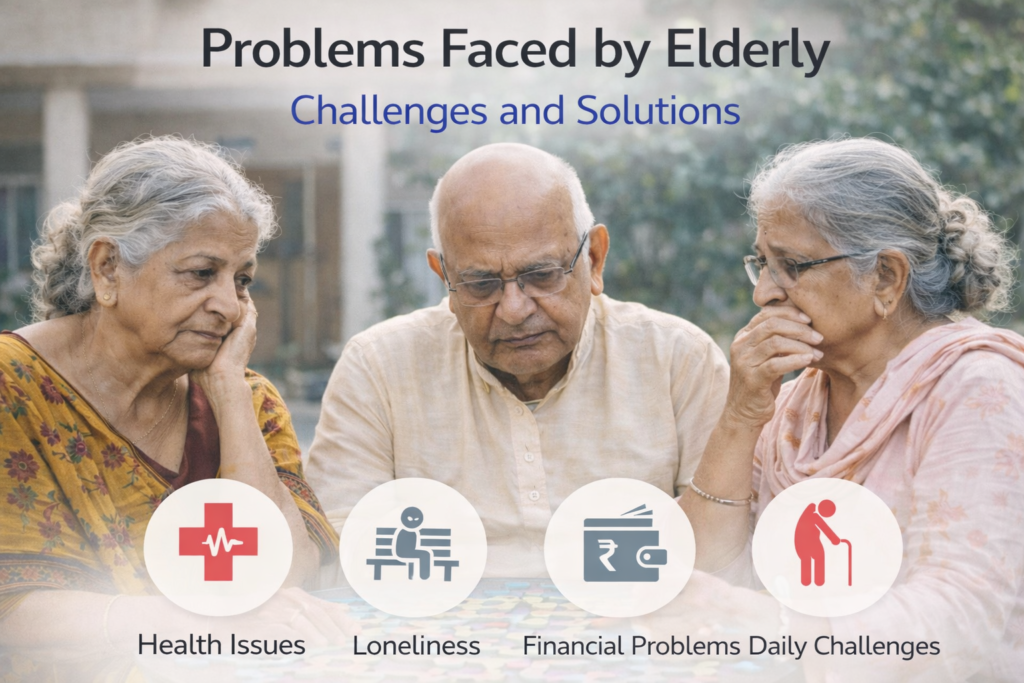
The problems faced by elderly people are increasing due to changing lifestyles and lack of support.Aging is a natural phase of life, but it often comes with several challenges that affect physical health, emotional well-being, and financial stability. In today’s fast-paced world, many senior citizens struggle to cope with changing lifestyles, reduced family support, and increasing health issues.
Understanding the individuals is essential to create a more compassionate and supportive society. By identifying these challenges, we can also find effective solutions to ensure a better and more dignified life for seniors.
Read more about elderly care:
old age homes in india
1. Health Problems Faced by Elderly
One of the most common problems faced by elderly is declining health.
They often suffer from:
- Chronic diseases
- Mobility issues
- Weak immunity
Learn more about ageing and health:
https://www.who.int/news-room/fact-sheets/detail/ageing-and-health
2. Loneliness and Isolation
Many elderly people feel:
- Emotionally disconnected
- Socially isolated
- Neglected
This leads to depression and anxiety.
3. Financial Problems
After retirement, income sources reduce, leading to:
- Dependency on others
- Difficulty managing expenses
- Lack of savings
4. Lack of Family Support
Modern lifestyles and migration result in:
- Children living far away
- Less time for elderly care
- Emotional distance
5. Safety Concerns
Elderly individuals living alone face risks like:
- Theft
- Fraud
- Physical harm
6. Mental Health Issues
Common problems include:
- Depression
- Memory loss
- Stress and anxiety
7. Difficulty in Daily Activities
Simple tasks like:
- Walking
- Cooking
- Taking medicines
become challenging.
8. Lack of Proper Healthcare Access
Not all elderly people have access to:
- Quality hospitals
- Regular check-ups
- Affordable treatment
9. Social Neglect
Sometimes society overlooks the needs of elderly individuals, making them feel unimportant.
Practical Solutions to Support Elderly
- 1. Better Healthcare Facilities
Providing affordable and accessible healthcare is essential.
- 2. Emotional Support
Regular interaction with family and community reduces loneliness.
- 3. Financial Planning
Encouraging savings and pension plans helps ensure stability.
- 4. Safe Living Environment
Old age homes and assisted living facilities provide security.
- 5. Community Engagement
Social activities and clubs help elderly stay active.
- 6. Government Support
Schemes and policies can improve elderly welfare.
- 7. Use of Technology
Apps and devices help in:
- Health monitoring
- Communication
- Emergency alerts
- 8. Family Awareness
Families must understand the importance of caring for elders.
- 9. Professional Care Services
Caregivers and trained staff can assist elderly individuals effectively.

Unessa Foundation activity: children working with colourful paper during a Bengaluru group activity.
SUPPORT CHILDREN’S EDUCATION
Help learning become a regular part of a child’s life.
Support Unessa Foundation’s education programmes and volunteer-led learning activities.
Role of Society
Society plays a crucial role in improving the lives of seniors by:
- Respecting elders
- Providing support systems
- Promoting awareness
Importance of Old Age Homes
Old age homes help address many problems faced by elderly by providing:
- Medical care
- Social interaction
- Safe environment
Importance of Awareness and Care
Raising awareness about the problems faced by elderly is essential for building a supportive society. Families, communities, and organizations must work together to ensure that seniors receive proper care, respect, and attention.
Simple actions like regular communication, emotional support, and timely medical help can greatly improve their quality of life. Understanding the problems faced by elderly helps in creating better solutions and ensuring their well-being.
Conclusion
The problems faced by elderly individuals are real and growing. However, with proper care, awareness, and support, these challenges can be reduced significantly.
It is our responsibility to ensure that elderly people live with dignity, respect, and happiness.
5 practical checks for problems faced by elderly
- Choose a clear learning task and ask what the learner already understands.
- Check language, materials, accessibility, supervision and time.
- Agree the facilitator’s responsibility and a manageable next activity.
- Record an observation or suitable learning task rather than assuming improvement.
- Invite learner/family feedback and adapt the next step to the actual context.
Keep a brief record of the date, task or enquiry, responsible person, source, what happened and what remains uncertain. Do not publish private learner, patient, donor or applicant details. Label a hypothetical example clearly and do not turn it into a real beneficiary account or a guaranteed result.
Evidence and support: keep the scope clear
A number needs its original source, population, period, definition and limitations. Activity counts, receipts, satisfaction and long-term outcomes answer different questions. If the evidence does not settle a claim, do not repeat it as verified. This guide does not claim an audited programme result, current approval or named professional review.
The education donation buttons lead to Unessa’s education campaign. They do not fund every third-party provider, item or service mentioned here. Read the programme information and confirm any allocation or service condition important to you before giving.
Sources and further reading
Frequently asked questions
How can families understand an older person’s practical difficulties?
Ask about the person’s priorities and specific barriers involving daily activities, access or communication. Avoid assuming that all older people have the same needs, and distinguish practical support discussions from professional assessment of a health concern.
How should a family prioritise elderly-support enquiries?
Identify the issue, the person’s preferred involvement and the appropriate responsible contact. Record what has been agreed and what remains unresolved, then review the arrangement instead of relying on a general list of age-related problems.
Continue reading

Related guide

Related guide
Support children’s learning with Unessa Foundation.