
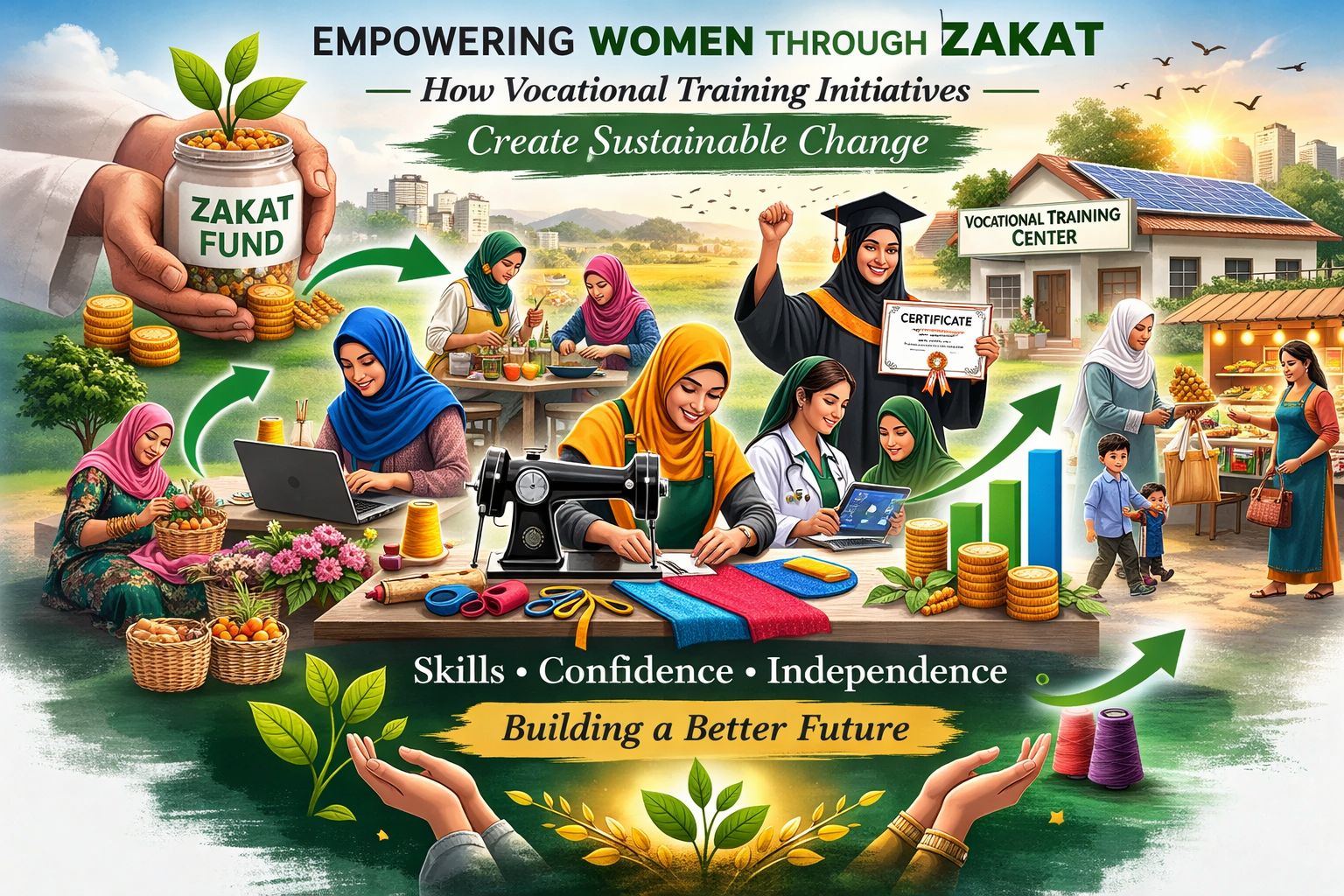

Empowering Women Through Zakat: How Vocational Training Initiatives Create Sustainable Change
Across many communities, poverty wears a woman’s face. When income is uns table, education is limited, and opportunities are scarce, women often carry the heaviest burden. Yet within Islamic social finance lies a powerful, underutilized solution: Empowering Women Through Zakat via structured vocational training initiatives.
This is not just charity. It is transformation.
When Zakat moves beyond short-term assistance and supports skill development, women shift from dependency to dignity. Families stabilize. Communities grow stronger. Local economies expand.
Let’s explore how empowering women through Zakat-funded vocational training creates long-term impact—and why this model matters now more than ever.
“Learn more about Spiritual Benefits of Zakat.

Why Empowering Women Through Zakat Matters Today
Globally, women represent a significant portion of the poor. According to UN data, women are more likely to experience economic vulnerability due to:
- Limited access to education
- Wage inequality
- Informal employment
- Cultural restrictions
- Caregiving responsibilities
According to data from the United Nations Women (UN Women), women are disproportionately affected by poverty and economic instability.
In many developing regions, women lack access to formal financial systems. Without capital or skills, starting a business becomes nearly impossible.
This is where empowering women through Zakat becomes revolutionary.
Instead of one-time financial support, Zakat can fund training programs that equip women with marketable skills—turning recipients into entrepreneurs, earners, and leaders.
Understanding Zakat as a Development Tool
Zakat is one of the five pillars of Islam. It is a mandatory contribution designed to redistribute wealth and support specific beneficiary categories (asnaf), including:
- The poor (al-fuqara)
- The needy (al-masakin)
- Those in debt
- Travelers in hardship
Traditionally, Zakat has addressed immediate needs: food, shelter, and basic survival. However, modern Islamic scholars increasingly advocate for productive Zakat—using funds for income-generating activities.
This approach aligns with the broader objectives of Islamic law (Maqasid al-Shariah), particularly:
- Preservation of wealth
- Protection of dignity
- Social justice
When empowering women through Zakat focuses on long-term capacity building, the impact multiplies.
From Relief to Resilience: The Shift to Productive Zakat
Imagine two scenarios:
Scenario A: A widow receives Zakat for groceries. It helps for a month.
Scenario B: The same widow receives Zakat-funded tailoring training, a sewing machine, and basic business guidance. Within six months, she earns stable income.
Which creates lasting change?
Productive Zakat does not replace emergency support. It builds resilience after survival needs are met.
Empowering women through Zakat-funded vocational training transforms financial aid into economic empowerment.
How Vocational Training Changes Lives
Vocational training provides practical, market-oriented skills. These programs are especially effective for women because they:
- Require shorter training periods
- Offer flexible work options
- Support home-based businesses
- Demand relatively low startup capital
Common vocational training initiatives include:
1. Tailoring and Fashion Design
With minimal investment, tailoring businesses can generate steady income. In many regions, local demand for clothing alteration and custom garments remains strong.
2. Food Processing and Catering
Home-based catering businesses often grow quickly. Women trained in food safety, packaging, and branding can access local markets and events.
3. Handicrafts and Embroidery
Traditional crafts have increasing demand in global markets through e-commerce platforms.
4. Digital Literacy and Online Business
Digital skills open doors to freelancing, online selling, and remote work—especially important in post- pandemic economies.
5. Beauty and Wellness Services
Short-term certification programs enable women to operate small salons or provide home services.
When empowering women through Zakat supports these skills, it creates sustainable income pathways.
A Practical Framework for Empowering Women Through Zakat
For impact to be measurable and sustainable, implementation must be structured.
1. Careful Beneficiary Identification
Zakat committees should prioritize:
- Widows
- Single mothers
- Women-led households
- Low-income families
Targeting ensures funds reach those most economically vulnerable.
2. Market-Based Skill Selection
Training must align with real demand. Before launching programs:
- Conduct local market surveys
- Identify income gaps
- Analyze competitor saturation
- Assess supply chains
Empowering women through Zakat only works if skills translate into income.
3. Structured Training Programs
Effective programs include:
- Certified trainers
- Hands-on practice
- Business basics
- Financial literacy modules
Adding entrepreneurship education significantly improves survival rates of micro-enterprises.
4. Starter Kits and Micro-Capital
Training alone is not enough.
Providing tools—such as sewing machines or cooking equipment—removes entry barriers. Small capital injections enable women to purchase raw materials and begin operations immediately.
5. Monitoring and Mentorship
The difference between temporary impact and long-term success often lies in follow-up support.
Mentorship programs should include:
- Monthly income tracking
- Business troubleshooting
- Networking opportunities
- Digital marketing guidance
Empowering women through Zakat requires continuous engagement, not a one-time intervention.
Real-World Examples of Success
Across Southeast Asia and the Middle East, structured Zakat programs are already demonstrating measurable outcomes.
- Community-based Zakat institutions provide sewing machines alongside entrepreneurship coaching.
- Digital literacy initiatives help women launch online micro-businesses.
- Food production programs connect women with cooperative marketing networks.
These initiatives show that empowering women through Zakat is not theoretical—it is practical and scalable.
Measurable Benefits of Zakat-Funded Vocational Training
When properly implemented, the outcomes extend beyond individual income.
1. Poverty Reduction
Household income stability reduces reliance on continuous charity.
2. Increased Economic Participation
Women contribute directly to local GDP growth through micro-enterprises.
3. Improved Family Welfare
Studies show women reinvest earnings into children’s education and healthcare.
4. Enhanced Confidence and Social Status
Financial independence strengthens decision-making power within families.
5. Reduced Long-Term Zakat Dependency
Beneficiaries may eventually become contributors.
Empowering women through Zakat creates a virtuous cycle of economic upliftment.
Current Trends Supporting This Model
Several global trends make this approach even more rele vant:
- Growth of the halal economy
- Rise of Islamic fintech platforms
- Expansion of microfinance models
- Digital marketplace access
- Increasing emphasis on sustainable development
Islamic social finance is evolving. Institutions that integrate vocational training into Zakat distribution are positioning themselves for long-term community impact. “Read our guide on Zakat Payment Deadlines 2026”
Challenges That Must Be Addressed
No model is without obstacles.
Key challenges include:
- Lack of transparency in Zakat management
- Poor-quality training programs
- Cultural restrictions on women’s mobility
- Limited access to broader markets
- Weak monitoring systems
However, these barriers can be overcome through:
- Strong governance frameworks
- Public-private partnerships
- NGO collaboration
- Transparent reporting systems
Empowering women through Zakat demands accountability and strategic planning.
Policy Recommendations for Sustainable Impact
To scale empowering women through Zakat effectively:
- Develop national productive Zakat policies.
- Partner with vocational institutes and skill councils.
- Integrate financial literacy into all programs.
- Encourage digital business training.
- Establish performance measurement systems.
- Promote public awareness about productive Zakat models
Policy support strengthens institutional credibility and community trust.
The Bigger Picture: Why This Model Deserves Attention
When communities discuss Zakat, the conversation often centers on obligation. But empowering women through Zakat reframes it as opportunity.
This approach:
- Preserves dignity
- Builds economic resilience
- Reduces generational poverty
- Strengthens community stability
Instead of temporary relief, it fosters transformation.
Imagine a generation of women who were once recipients of aid now running businesses, employing others, and contributing back to Zakat funds. That is sustainable impact.
Final Thoughts
Empowering women through Zakat-funded vocational training is more than a social initiative—it is a strategic development model grounded in faith, justice, and economic logic.
When Zakat shifts from consumption support to capacity building, it unlocks human potential. Women gain skills. Families gain stability. Communities gain growth.
The real question is not whether this model works.
The real question is: how quickly can it be scaled. “Explore our article on Zakat via Mobile Apps”
Frequently Asked Questions (FAQs)
What does empowering women through Zakat mean?
Empowering women through Zakat means using Zakat funds to provide skills training, tools, and business support so women can earn sustainable income instead of relying on temporary financial aid.
How can Zakat be used for vocational training?
Zakat can fund skill development programs, provide starter kits (like sewing machines), support micro-enterprises, and offer mentorship to eligible women from poor and needy categories.
Is productive Zakat permissible in Islam?
Yes. Many scholars support productive Zakat as long as funds are distributed to eligible beneficiaries (asnaf) and directly benefit them through income-generating opportunities.
What types of vocational training are supported through Zakat?
Common programs include tailoring, food processing, handicrafts, digital skills, beauty services, and small-scale entrepreneurship training.
How does empowering women through Zakat reduce poverty?
By providing sustainable income opportunities, women can support their families, reduce dependency on charity, and improve long-term financial stability.
Who qualifies for Zakat-funded vocational training?
Women who fall under Zakat-eligible categories—such as widows, single mothers, low-income households, and the poor—may qualify for these programs.
What are the benefits of Zakat-funded skill development programs?
Benefits include increased household income, improved confidence, financial independence, reduced long-term dependency, and stronger community development.
How can organizations ensure transparency in Zakat programs?
Organizations can maintain transparency through regular reporting, beneficiary tracking, financial audits, and impact measurement systems.