

Why Paying Zakat in Person Still Matters
In an era of one-click donations and automated transfers, many Muslims still prefer Paying Zakat in Person.
It’s not about technology. It’s about trust.
For some, handing over Zakat at the mosque feels spiritually grounding. For others, visiting a registered charity office ensures accountability and documentation. Both methods are valid. But they serve different needs.
So the real question isn’t “Which is correct?”
It’s “Which is right for your situation?”
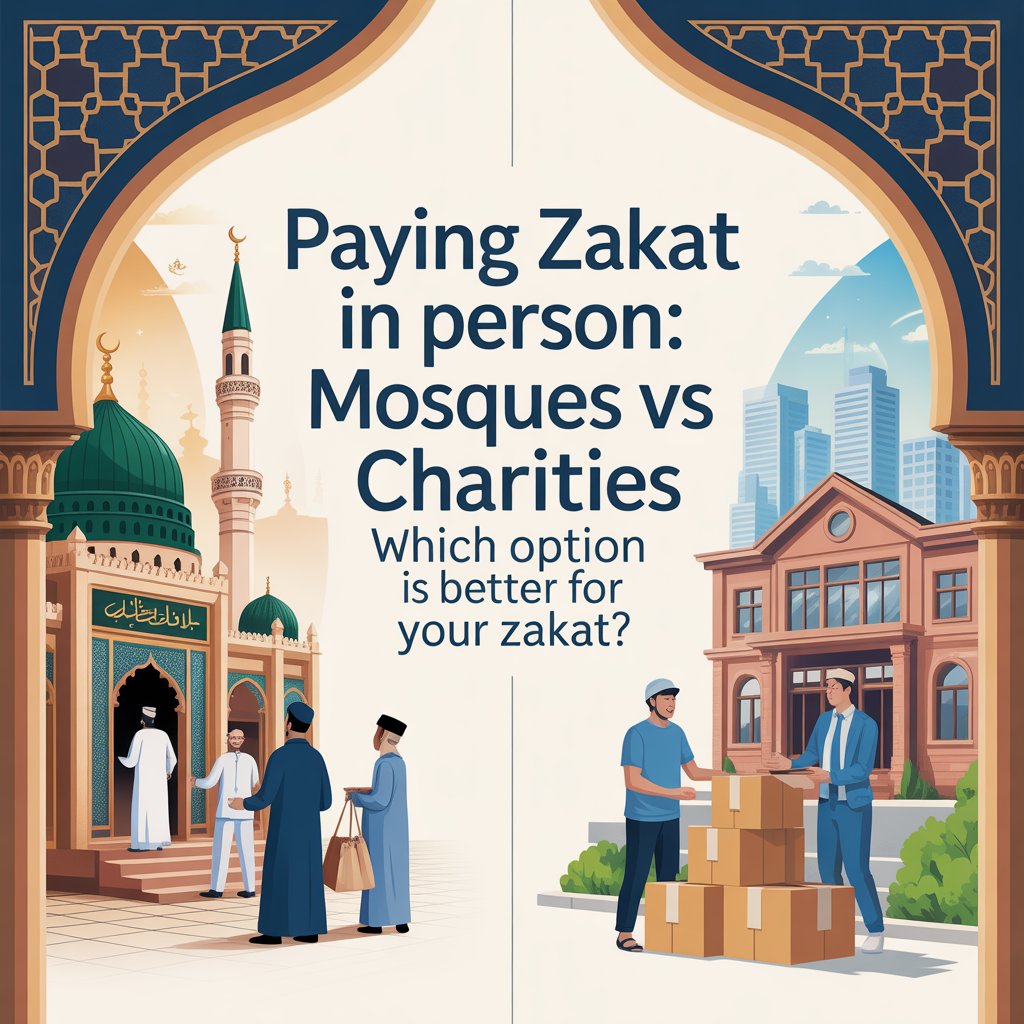
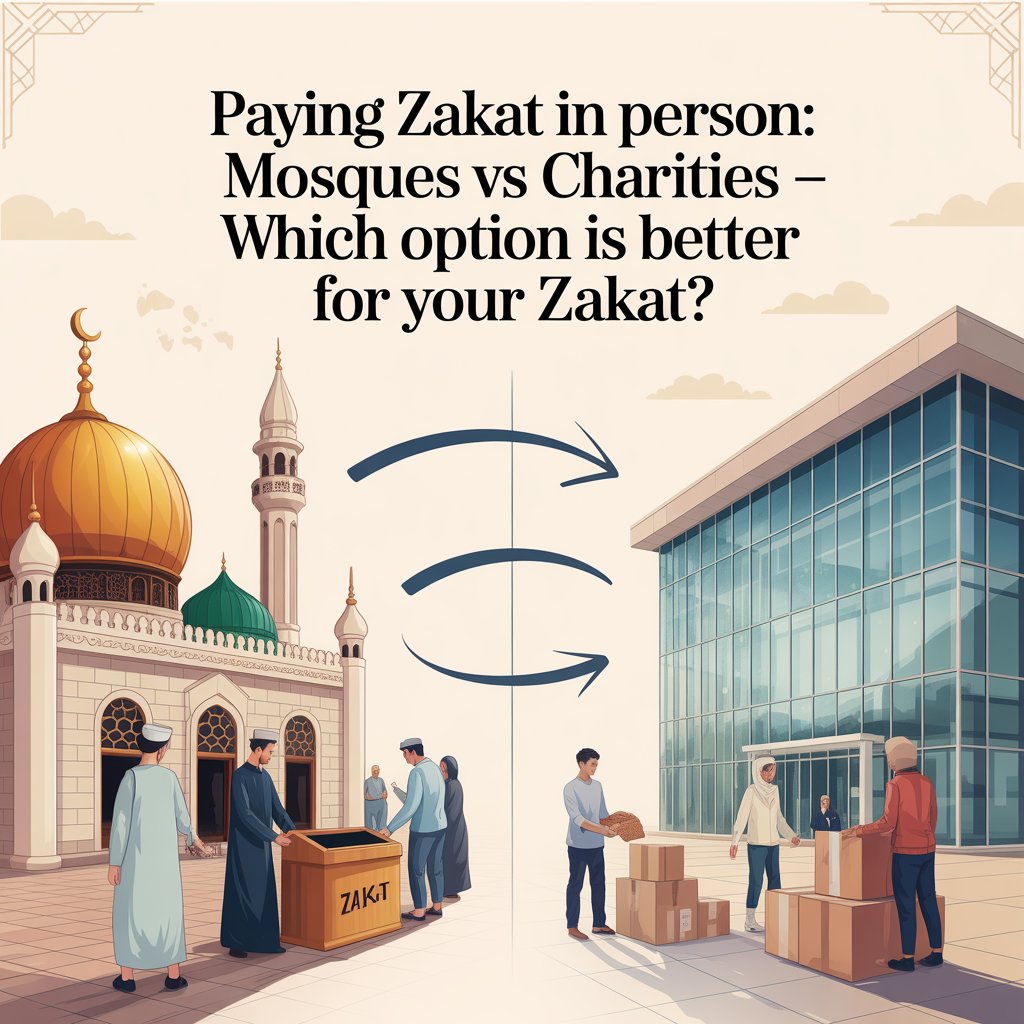
This guide explores Paying Zakat in Person: Mosques vs Charities, helping you make an informed, confident decision.
Why Many Muslims Prefer Paying Zakat in Person
Despite the growth of online giving, in-person Zakat payments remain common—especially during Ramadan.
Here’s why:
- It feels personal and intentional
- There is face-to-face interaction
- Trust is built through community relationships
- Immediate questions can be addressed
- Some donors prefer cash transactions
Behavioral research in charitable giving shows that physical interaction increases emotional engagement. When donors see where funds go, they feel stronger accountability and connection.
For many, Paying Zakat in Person is not just about distribution—it’s about experience.
Understanding the Purpose of Zakat Before Choosing
Before comparing mosques and charities, it’s essential to remember:
Zakat must be distributed to eligible categories (asnaf), including:
- The poor (fuqara)
- The needy (masakin)
- Those in debt
- Travelers in difficulty
- Other eligible recipients defined in Islamic law
The core requirement is proper distribution—not the channel used.
Now let’s compare the two primary in-person options.
👉 To know about zakat follow this guide : what is Zakat
Option 1: Paying Zakat in Person at Mosques
Mosques are often the first place Muslims think of during Zakat season.
They are trusted community hubs and frequently collect Zakat—especially in Ramadan.
Advantages of Paying Zakat at a Mosque
1. Strong Community Trust
Imams and mosque committees are familiar faces. This personal connection builds confidence.
In close-knit communities, trust matters more than formal systems.
2. Local Distribution
Many mosques prioritize helping families within the community.
This ensures:
- Immediate impact
- Direct support for neighbors
- Stronger local solidarity
If you personally know struggling families, local mosque distribution can feel deeply meaningful.
3. Spiritual Environment
There’s something powerful about giving inside a mosque.
The atmosphere reinforces:
- Sincerity
- Reflection
- Worship-centered intention
For many donors, Paying Zakat in Person within a mosque strengthens spiritual awareness.
4. Immediate Clarification
You can ask:
- How is Zakat distributed?
- Who qualifies?
- When will it be delivered?
Face-to-face dialogue increases comfort.
Considerations Before Paying Zakat at a Mosque
However, not all mosques operate with structured financial systems.
Potential concerns include:
- Limited formal documentation
- Inconsistent record-keeping
- No official tax receipts (depending on country)
- Lack of audited transparency reports
Before paying, ask:
- Is there a dedicated Zakat committee?
- Are funds separated from general donations?
- Is distribution aligned with Shariah categories?
Transparency protects your obligation.
Option 2: Paying Zakat in Person to Registered Charities
Established charities specialize in structured Zakat collection and distribution.
Their systems are often formalized and documented.
Advantages of Paying Zakat to Charities
1. Structured Distribution Systems
Professional charities usually have:
- Eligibility verification processes
- Needs assessments
- Financial tracking systems
This reduces misallocation risks.
2. Wider Geographic Impact
Charities often operate:
- Nationally
- Internationally
- In crisis zones
Your Zakat could support:
- Refugee programs
- Food insecurity initiatives
- Emergency medical aid
- Disaster relief
This broader reach expands impact beyond local communities.
3. Official Documentation and Receipts
Many registered charities provide:
- Donation receipts
- Annual statements
- Tax-deductible documentation (where applicable)
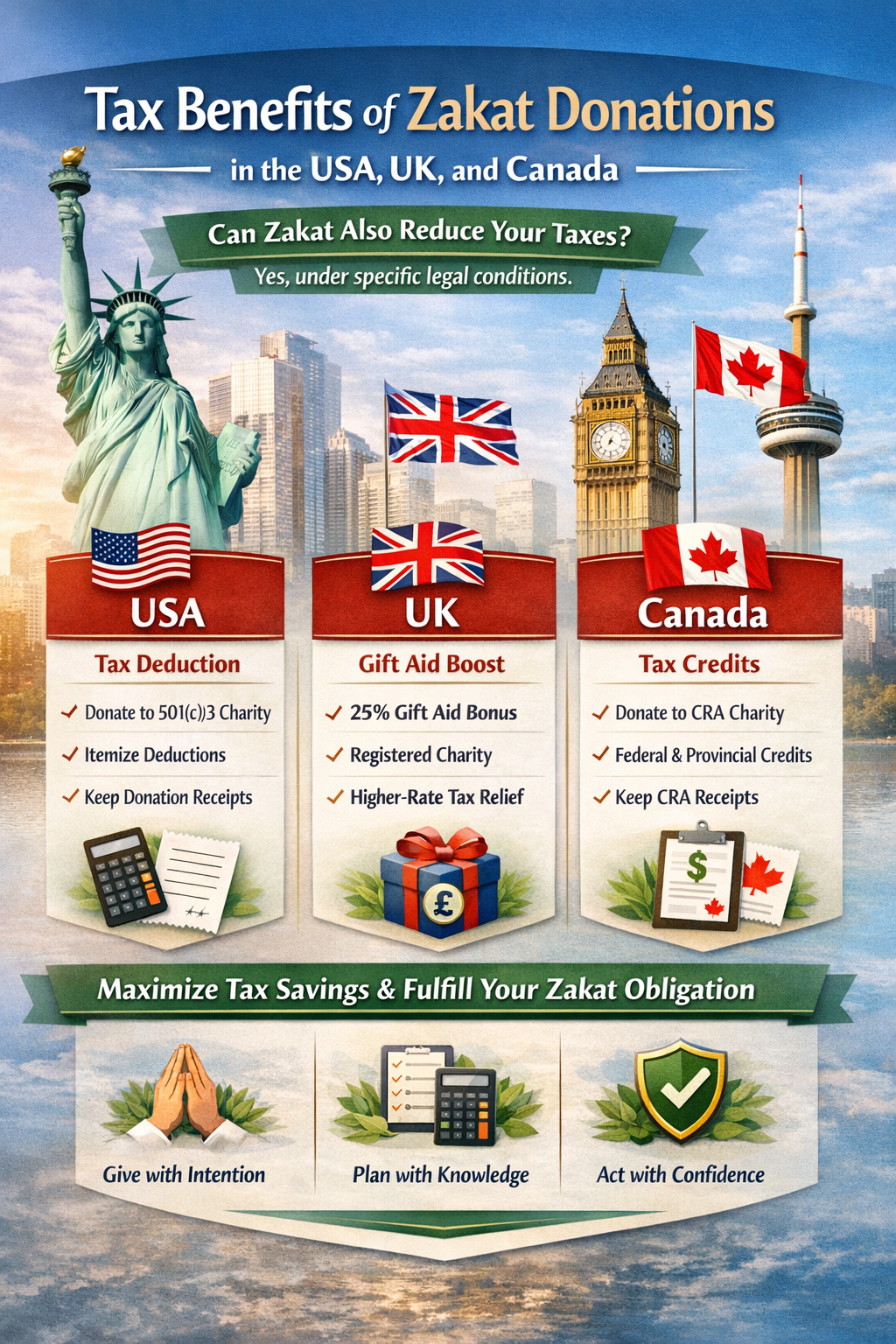
This is particularly important in countries like the USA, UK, and Canada.
For donors requiring records, Paying Zakat in Person through charities offers administrative clarity.
4. Program-Based Impact
Rather than distributing funds individually, charities often run structured programs:
- Food distribution networks
- Orphan sponsorship systems
- Medical treatment funds
- Education initiatives
This allows scale and sustainability.
Considerations Before Choosing a Charity
Not all charities are equal.
Before paying Zakat in person to a charity, verify:
- Legal registration status
- Shariah compliance policies
- Transparency reports
- Administrative expense ratio
Look for organizations that publish impact reports.
Due diligence protects both your wealth and your intention.
Key Differences: Mosques vs Charities
Factor
Mosque
Registered Charity
Community Focus
Mostly local
Local + national + international
Transparency
Varies
Structured reporting
Documentation
May vary
Official receipts provided
Tax Benefits
Depends on registration
Often eligible
Distribution Scale
Smaller
Larger programs
Personal Interaction
High
Moderate
Both options support valid Zakat distribution when managed correctly.
Yusuf
He wants his Zakat to support refugee relief in multiple countries. He also needs tax documentation.
For him, a registered charity provides better alignment.
Neither is wrong. The difference lies in priorities.
Can You Combine Both?
Absolutely.
Many Muslims split their Zakat:
- 50% to local mosque
- 50% to registered charity
This approach:
- Strengthens local community support
- Contributes to global humanitarian efforts
It balances intimacy with scale.
Transparency Checklist Before Paying Zakat in Person
Regardless of where you give, ask:
- Are recipients verified as eligible?
- Is Zakat separated from Sadaqah funds?
- Are financial records maintained?
- Is distribution timely?
Zakat is a sacred trust. Oversight ensures compliance.
Trends in In-Person vs Structured Zakat Giving
Recent nonprofit sector trends show:
- Increased demand for transparency
- Growth in structured impact reporting
- Rising preference for hybrid models (local + global giving)
However, mosques remain central to community-based Zakat distribution—especially in diaspora communities.
This shows that Paying Zakat in Person remains relevant, even in the digital age.
FAQs
Is paying Zakat at a mosque valid?
Yes, if funds are distributed according to Shariah guidelines.
Are charities more transparent than mosques?
Often yes, but it depends on the organization.
Can I split my Zakat?
Yes. You may divide it among multiple eligible recipients or institutions.
Do mosques provide tax receipts?
Some do, if legally registered. Always confirm beforehand.
Which option has greater impact?
Mosques offer local impact. Charities often offer broader, global reach.
Final Thoughts: Making the Right Choice
When it comes to Paying Zakat in Person, the best choice depends on your priorities:
- Do you value local impact?
- Do you need documentation?
- Do you prefer structured systems?
- Do you want broader humanitarian reach?
Mosques offer familiarity and spiritual intimacy.
Charities offer structure, scale, and administrative clarity.
👉 Know about How to pay Zakat Online with Unessa