

Zakat and Sustainability: How Eco-Friendly Projects Can Transform Communities Through Islamic Giving
The conversation around climate change is no longer limited to environmental activists. It now influences economics, philanthropy, and even religious giving and how we view Zakat and Sustainability. In 2026, a growing number of Muslims are asking a powerful question:
How do Zakat and Sustainability work together?
Traditionally, Zakat focuses on poverty relief and social welfare. However, sustainable development offers something deeper—long-term resilience. When structured properly, Zakat and Sustainability complement each other in meaningful ways.
Let’s explore how.
Understanding Zakat in a Modern Context
Zakat is not simply charity. It is a structured obligation designed to:
Reduce
wealth inequality
Circulate resources within society
Protect vulnerable communities
Strengthen economic stability
Islamic social finance experts increasingly emphasize that Zakat should not only relieve immediate hardship but also prevent recurring poverty.
That is where sustainability enters the picture.
What Does Sustainability Mean in Islamic Giving?
Sustainability refers to meeting present needs without compromising future generations. In the context of Zakat and Sustainability, this means:
Creating long-term income opportunities
Reducing
dependency
Building environmentally responsible infrastructure
Promoting
self-sufficiency
The Qur’anic objective of empowering the poor aligns naturally with sustainable development principles.
Can Zakat Fund Eco-Friendly Projects?
Yes—if the beneficiaries qualify under Islamic guidelines.
Zakat must be distributed to eligible recipients. However, eco-friendly projects become permissible when they directly benefit:
- Low-income families
- Vulnerable communities
- Debt-ridden individuals
- Displaced populations
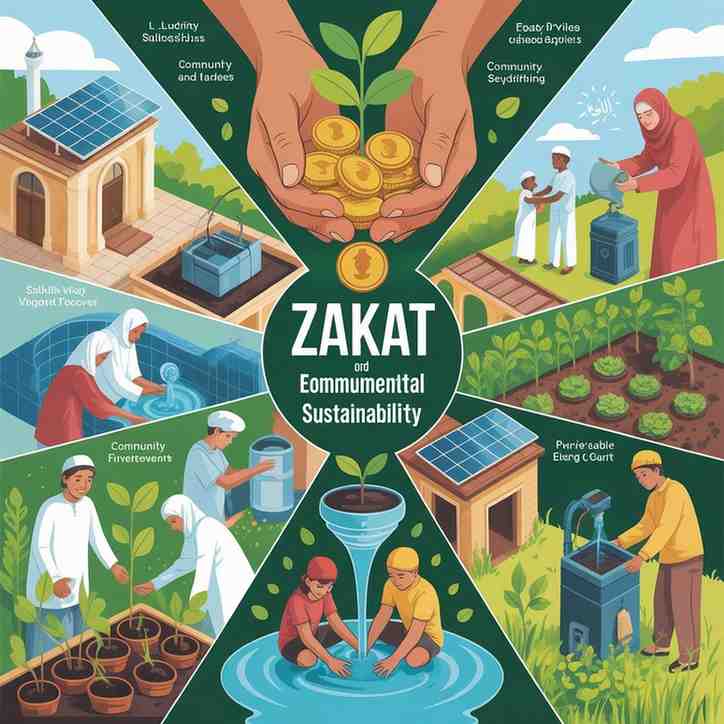
Here’s how Zakat and Sustainability intersect in practical terms:
1. Solar Panels for Low-Income Communities
Installing solar panels in poor neighborhoods:
- Reduces electricity expenses
- Provides reliable energy access
- Enables home-based businesses
A family saving on utility costs can redirect funds toward food, education, or healthcare.
2. Clean Water Systems
Sustainable water projects:
- Reduce disease
- Lower medical expenses
- Improve agricultural productivity
Clean water initiatives funded through Zakat can serve eligible beneficiaries while preserving natural resources.
3. Sustainable Farming Programs
Providing eco-friendly farming tools or drip irrigation systems:
- Increases crop yield
- Conserves water
- Generates long-term income
Instead of one-time food distribution, families gain recurring earning capacity.
4. Green Housing Projects
Energy-efficient homes reduce:
- Cooling costs
- Environmental impact
- Maintenance expenses
This approach reflects both financial responsibility and environmental care.
Why Zakat and Sustainability Matter in 2026
Global economic instability, rising food prices, and climate-related disasters have increased vulnerability worldwide. Reports from development agencies consistently show that climate change disproportionately affects low-income populations.
This reality strengthens the case for integrating Zakat and Sustainability.
Short-term aid solves immediate hunger.
Sustainable aid prevents future hunger.
That difference changes everything.
Key Benefits of Eco-Friendly Zakat Projects
When structured properly, sustainable Zakat initiatives offer:
Long-Term Poverty Reduction
Empowers recipients beyond one-time aid.
Cost
Efficiency
Reduces recurring operational expenses.
Environmental Protection
Supports climate-conscious development.
Community Stability
Builds local economic independence.
Measurable
Impact
Creates tangible outcomes donors can track.
Important Shariah Considerations
While Zakat and Sustainability are compatible, compliance is essential.
Before funding eco-friendly projects:
- Confirm beneficiaries qualify under Zakat categories
- Ensure ownership or direct benefit transfers to recipients
- Avoid allocating funds to general environmental activism
- Maintain transparent reporting
Consult knowledgeable scholars or certified Islamic finance advisors when structuring projects.
In 2026, Islamic charitable organizations are increasingly:
- Funding solar micro-grids
- Supporting climate-resilient agriculture
- Investing in sustainable vocational training
- Developing green microfinance models
Donors today seek impact-driven giving. Transparency, accountability, and measurable results influence decision-making more than ever.
The shift reflects a broader global move toward ethical and responsible philanthropy.
Practical Guide: How to Implement Zakat and Sustainability
If you’re considering supporting eco-friendly Zakat initiatives, here’s a simple framework:
Step 1:
Assess Eligibility
Ensure recipients qualify under Islamic guidelines.
Step 2:
Evaluate Impact
Ask:
- Does this project reduce long-term poverty?
- Does it improve financial independence?
Step 3:
Check Transparency
Choose organizations that publish:
- Financial audits
- Impact reports
- Beneficiary case studies
Monitor Outcomes
Sustainable projects require follow-up to ensure continued benefit.
Step 4:
Common Misunderstandings
“Zakat should only be given as cash.”
Not necessarily. Direct asset provision is permissible when it benefits eligible recipients.
“Environmental projects are not a priority.”
If they directly reduce poverty and hardship, they align with Zakat objectives.
“Sustainability is a modern trend, not Islamic.”
Islam emphasizes balance, stewardship (khalifah), and responsible resource use.
Measuring the Impact of Zakat and Sustainability
Impact measurement matters.
Effective sustainable Zakat projects should track:
- Income growth among beneficiaries
- Reduction in utility costs
- Increased agricultural output
- Improved health outcomes
- Community self-sufficiency levels
Data-driven reporting strengthens donor trust and enhances accountability.
The Spiritual Dimension
Zakat purifies wealth.
Sustainability protects future generations.
When combined, Zakat and Sustainability create a cycle of:
- Spiritual growth
- Economic empowerment
- Environmental responsibility
Giving becomes more than obligation—it becomes legacy.
The Bigger Picture: Ethical Wealth in a Changing World
Today’s Muslim donor is more informed and globally aware. Climate challenges, economic disparities, and social injustice demand thoughtful solutions.
Integrating Zakat and Sustainability reflects:
- Responsibility
- Wisdom
- Forward-thinking generosity
It transforms giving from reaction to strategy.
Conclusion: A Future-Oriented Approach to Zakat
Zakat and Sustainability are not separate conversations.
They intersect naturally when eco-friendly projects:
- Directly serve eligible recipients
- Promote long-term stability
- Uphold Islamic guidelines
As global challenges evolve, so must our approach to fulfilling religious obligations.
When structured correctly, sustainable Zakat projects reduce hardship today while protecting tomorrow.
That is impact.
That is responsibility.
That is Zakat done thoughtfully.
FAQs: Zakat and Sustainability (Eco-Friendly Projects)
1. Can Zakat be used for eco-friendly projects?
Yes, if the project directly benefits eligible Zakat recipients such as the poor or those in financial hardship. The primary condition is Shariah compliance.
2. Is funding solar panels through Zakat allowed?
It can be allowed if the solar panels are installed for low-income families and directly reduce their living expenses or improve income generation.
3. Can Zakat support clean water or farming projects?
Yes. Sustainable water systems or farming tools are permissible when they serve eligible beneficiaries and help reduce long-term poverty.
4. Is Zakat allowed for general environmental causes?
No. Zakat cannot be used for broad environmental activism unless the project specifically benefits individuals who qualify under Zakat categories.
5. Why combine Zakat and sustainability? Q
Because sustainable projects create long-term impact. They reduce dependency and empower communities instead of offering only short-term relief.
6. How can I ensure my Zakat is used properly?
Choose transparent organizations, review their impact reports, and confirm that funds are distributed according to Islamic guidelines.
7. Does sustainability change the rules of Zakat?
No. The rules remain the same. Sustainability simply applies those rules in ways that create lasting social and economic benefit.