

The impact of quality education plays a crucial role in shaping the future of underprivileged children. Education is often described as the key to success, but for underprivileged children, quality education is the key to survival, dignity, and transformation. While access to education is important, the quality of education determines whether a child truly benefits from it.
Across the world, millions of children attend school but do not receive meaningful learning due to poor infrastructure, lack of trained teachers, and limited resources. For underprivileged children, this gap between access and quality can mean the difference between escaping poverty and remaining trapped in it.
This article explores the profound impact of quality education on underprivileged children’s lives and why it is essential for building a better future. You can also read our article on Barriers to Education for Underprivileged Children
What Is Quality Education?
Understanding the impact of quality education helps in creating better learning systems. Quality education goes beyond basic literacy and numeracy. It ensures that children:
- Understand concepts deeply
- Develop critical thinking skills
- Gain practical knowledge
- Build confidence and creativity
It includes:
- Well-trained teachers
- Modern teaching methods
- Adequate infrastructure
- Inclusive and engaging curriculum
Key idea:
Quality education empowers children to apply knowledge in real-life situations.
Why Quality Education Matters for Underprivileged Children
For children from disadvantaged backgrounds, education is often the only pathway to a better life. However, poor-quality education fails to provide the skills needed to succeed.
Quality education ensures:
- Equal opportunities
- Better learning outcomes
- Long-term personal and professional growth
It bridges the gap between potential and achievement.
1. Breaking the Cycle of Poverty
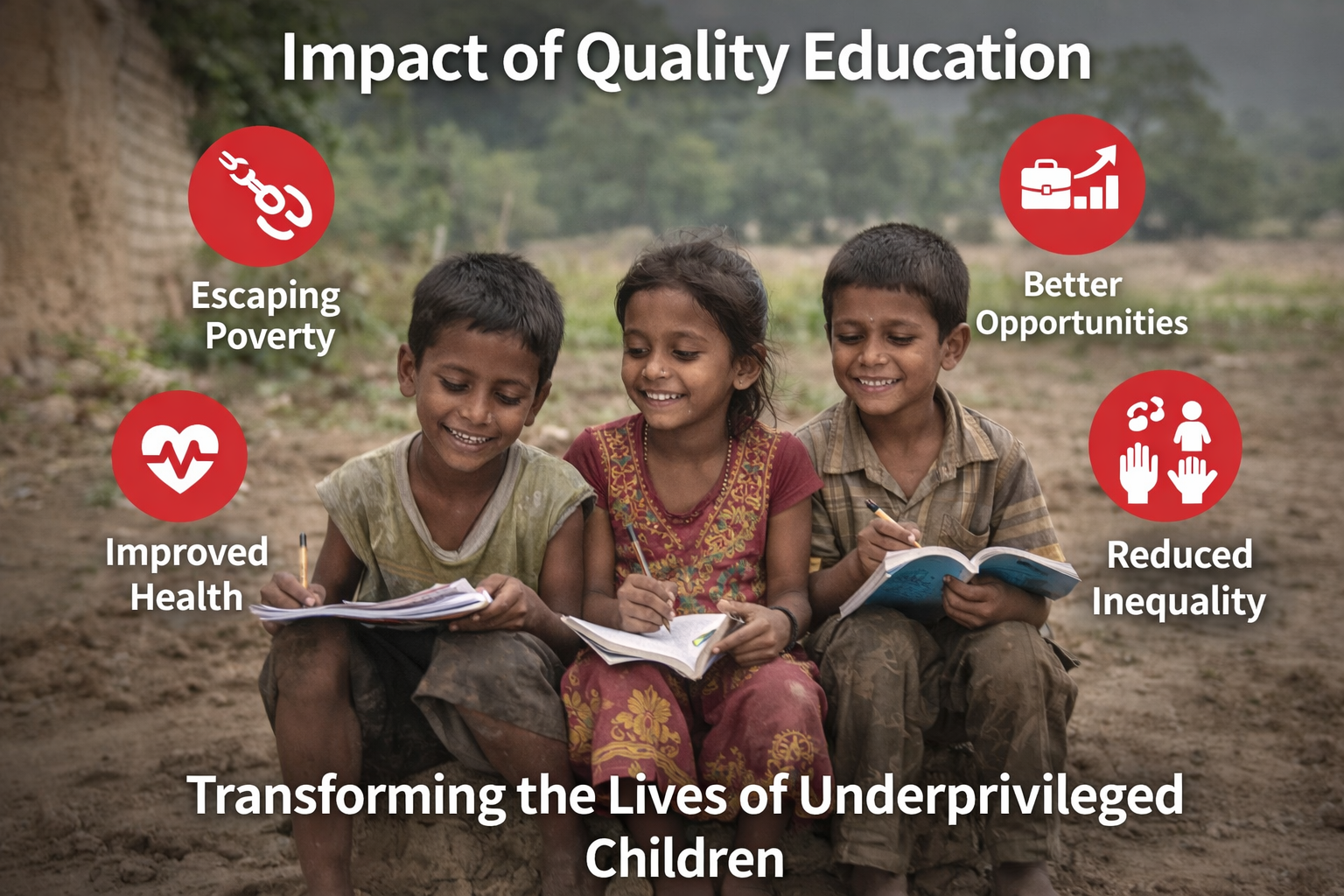
One of the most significant impacts of quality education is its ability to break the cycle of poverty.
How it works:
- Provides skills for better employment
- Increases earning potential
- Promotes financial independence
An educated individual is more likely to secure stable employment and improve their family’s economic condition.
2. Improving Academic and Cognitive Skills
Quality education enhances a child’s ability to:
- Read and write effectively
- Solve problems
- Think critically
- Make informed decisions
These skills are essential for success in both academic and real-world settings.
3. Boosting Confidence and Self-Esteem
Underprivileged children often face low self-confidence due to their circumstances. Quality education helps by:
- Encouraging participation
- Recognizing achievements
- Providing supportive learning environments
This builds self-esteem and motivates children to aim higher.
4. Opening Doors to Better Career Opportunities
Quality education equips children with the skills required for modern careers.
Opportunities include:
- Technology and IT
- Healthcare
- Business and entrepreneurship
- Skilled professions
This leads to financial stability and improved living standards.
5. Promoting Health and Well-being
Education is closely linked to better health outcomes.
Educated children are more likely to:
- Practice good hygiene
- Understand nutrition
- Access healthcare services
They also grow into adults who make informed health decisions for themselves and their families.
6. Encouraging Social and Emotional Development
Quality education focuses on holistic development, including:
- Emotional intelligence
- Communication skills
- Teamwork
- Leadership abilities
These skills help children build strong relationships and navigate life challenges.
7. Reducing Social Inequality
Education is a powerful tool for promoting equality.
Quality education:
- Bridges the gap between rich and poor
- Reduces discrimination
- Provides equal opportunities
It creates a more inclusive and fair society.
8. Empowering Girls and Marginalized Groups
Quality education plays a crucial role in empowering girls and marginalized communities.
Benefits include:
- Delayed early marriages
- Increased independence
- Better career opportunities
Educated girls contribute to healthier families and stronger communities.
9. Encouraging Innovation and Creativity
Quality education fosters creativity and innovation by:
- Encouraging curiosity
- Promoting problem-solving
- Supporting new ideas
This is essential for progress in today’s rapidly changing world.
10. Creating a Ripple Effect in Communities
The impact of quality education extends beyond individuals.
Ripple effect:
- Educated children uplift their families
- Families contribute to community development
- Communities drive national progress
One educated child can transform an entire community.
Challenges in Providing Quality Education
Despite its importance, several challenges exist:
1. Lack of Infrastructure
Many schools lack proper facilities.
2. Shortage of Trained Teachers
Quality teaching is often unavailable.
3. Limited Resources
Schools may lack books, technology, and materials.
4. Poverty
Financial constraints affect access and quality.
5. Digital Divide
Limited access to technology restricts learning opportunities.
Solutions to Improve Quality Education
1. Invest in Teacher Training
Well-trained teachers improve learning outcomes.
2. Improve Infrastructure
Better facilities create a conducive learning environment.
3. Integrate Technology
Digital tools enhance learning experiences.
4. Provide Learning Resources
Books, devices, and materials support effective education.
5. Promote Inclusive Education
Ensure equal access for all children.
Role of NGOs and Government
Both NGOs and governments play a vital role in improving education quality:
- Building schools
- Training teachers
- Providing scholarships
- Running awareness campaigns
Collaboration between these sectors is essential for sustainable change.
Organizations like UNICEF and World Bank support quality education initiatives.
How Individuals Can Contribute
You can make a difference by:
- Donating to education programs
- Volunteering as a tutor
- Sponsoring a child
- Providing learning materials
- Raising awareness
Every effort counts.
Learn how you can Donate for Education
Real-Life Impact Examples
- A child gains quality education and becomes an engineer
- A girl completes her studies and becomes a teacher
- A community improves literacy through education initiatives
These examples highlight the transformative power of quality education.
Long-Term Impact of Quality Education
Quality education leads to:
- Reduced poverty
- Economic growth
- Social equality
- Improved quality of life
It is an investment in a better future for all.
Conclusion
The impact of quality education is powerful enough to transform lives globally. Quality education is not just about attending school—it is about truly learning, growing, and succeeding. For underprivileged children, it is the most powerful tool to overcome challenges and build a better life.
By focusing on improving education quality, we can ensure that every child has the opportunity to reach their full potential. The impact of quality education goes beyond individuals—it transforms families, communities, and nations.
Let us work together to make quality education accessible to every child.
FAQs
What is quality education?
It is education that provides meaningful learning, skills, and overall development.
Why is quality education important for underprivileged children?
It helps them gain skills, improve their lives, and escape poverty.
How does quality education reduce poverty?
It increases job opportunities and earning potential.
What challenges affect education quality?
Poor infrastructure, lack of teachers, and limited resources.
How can we improve education quality?
By investing in teachers, infrastructure, and technology.
What role do NGOs play?
They provide resources, training, and support for education programs.