

Donate to child education charity is a decision many people think about, often more than once. You have probably been considering it for a while. Something keeps drawing you to it — a news story, a conversation, a personal memory that stays with you. And yet, something holds you back — uncertainty about where to give, doubt about whether your contribution will truly make a difference, or simply the friction of not knowing exactly what step to take next.
This post addresses all of that. Here are 10 evidence-backed reasons why donating to a child education charity today is one of the highest-impact decisions you can make — along with exactly how to do it well.
Quick Insight: According to GiveWell, education interventions for low-income children rank among the top 5 most cost-effective charitable investments globally — ahead of many health and infrastructure programmes.
1. What Your Donation Actually Does
Concrete understanding of impact is the single biggest driver of donation decisions. Here is what a typical donation to a verified child education charity actually funds:
- Rs 500/month: Learning materials (textbooks, stationery, art supplies) for one child for one term
- Rs 1,000/month: One child’s full educational support including materials, uniforms, and nutrition for one month
- Rs 5,000/month: Contributes to the salary of a community educator for one month
- Rs 10,000 one-time: Funds a child’s complete year of education at a community learning centre
- Rs 50,000 one-time: Establishes a micro-library with books, digital devices, and furniture for a community centre
2. 10 Reasons to Donate to Child Education Charity Today
Reason 1: The Need Is Real and Urgent
244 million children are out of school globally. In India alone, over 6 million children between ages 6-14 are not in school. This is not historical data — it is the current, verifiable reality. Every month of delay is a month of lost learning for a specific, identifiable child.
Reason 2: Education Has the Highest Long-Term ROI of Any Social Investment
The Heckman Equation shows returns of 7-13% annually for every dollar invested in early childhood education for disadvantaged children. No other social investment comes close. When you donate to child education, you are investing — not spending.
Reason 3: Your Contribution Is Multiplied
When you donate to a credible education charity, your money attracts matched government grants, corporate CSR partnerships, and institutional funding. A Rs 1,000 donation to a well-leveraged NGO often results in Rs 3,000-5,000 of total programme impact.
Reason 4: The Impact Is Measurable
Unlike many forms of giving, educational charity impact is directly measurable — through learning assessments, attendance records, and graduation rates. You can see exactly what your money produced. This accountability makes education giving uniquely verifiable.
Reason 5: You Are Breaking Intergenerational Poverty
An educated child is not just a better-off individual. They are a statistically better parent — more likely to educate their own children, less likely to rely on child labour, more capable of navigating healthcare systems and civic processes. One child’s education ripples forward across generations.
Reason 6: Girls' Education Has Particularly High Multiplier Effects
Every additional year of schooling for a girl in a developing country reduces her likelihood of child marriage by 5-10% and increases her income by 10-20%. Donating to charities that specifically address girls’ education produces compounding societal returns.
Reason 7: The Tax Benefits Are Significant
In India, donations to registered educational charities with 80G certification are fully deductible under Section 80G of the Income Tax Act. A Rs 10,000 donation from a taxpayer in the 30% bracket costs only Rs 7,000 in effective terms. The government, in effect, co-funds your donation.
Reason 8: Monthly Giving Creates Stable, Planned Programmes
NGOs that receive predictable monthly donations can hire full-time staff, plan multi-year programmes, and invest in quality. A recurring Rs 500/month is worth more operationally than a one-time Rs 6,000 donation — because stability enables long-term planning.
Reason 9: Your Network Follows Your Lead
Research on charitable giving shows that a professional’s public declaration of support for a cause increases giving from their social network by an average of 18-25%. When you donate and share that decision, you catalyse further giving.
Reason 10: Waiting Costs a Child Their Future
This is not manipulation. It is arithmetic. Every month a child is not in school is a month of learning lost — permanently. Learning windows, particularly for language acquisition and foundational numeracy, do not remain open indefinitely. Delay has a real cost, measured in a child’s future capability.
Reflective Question: If you knew a specific child’s future depended on your donation today, how much friction would you tolerate before giving? That child exists. Their need is today.
3. How to Choose the Right Charity
Not all education charities are equally effective. Apply these filters before giving:
- Published learning outcome data — not just enrollment or attendance figures
- Third-party annual audit — independently verified financial accounts
- 80G certification for tax deductibility in India
- Overhead ratio below 20% — meaning at least 80 paise of every rupee reaches programme delivery
- Community participation — families involved in programme governance
- Child safeguarding policy — explicitly published and actively implemented
4. How to Maximise Your Donation's Impact
Give Monthly, Not Once
As noted above, recurring giving provides operational stability that one-time donations cannot. If you can only give once, a larger one-time gift is better than a small one. But if you can commit to monthly giving, do so — even at a lower amount.
Give Unrestricted Funding
Restricted donations (for example, ‘only for school supplies’) limit an NGO’s ability to direct resources to where they are most needed. Unrestricted programme funding allows organisations to respond to emerging needs dynamically.
Tell People You Gave
Your social influence is a multiplier. Sharing your giving decision — with context, data, and a link to the charity — reliably drives additional donations from your network.
5. A Case Study: What Rs 10,000 Can Fund
Background
A donor in Pune — a mid-level IT professional — made a one-time donation of Rs 10,000 to Unessa Foundation’s community learning centre programme.
What It Funded
The donation was allocated to one child’s full year of educational support: learning materials for two terms, uniform and school bag, mid-day meal contribution for 6 months, and contribution to educator training costs.
Outcome
The child — a 9-year-old girl from a daily wage labourer family — completed her first full year of schooling, passing all quarterly assessments. By year-end, she was reading at grade level for the first time.
Lesson
Rs 10,000 is approximately 2-3 restaurant meals for an urban professional. It is one year of education for a child who had none. The disproportion is not moral guilt-tripping. It is simply context.
6. Tax Benefits of Donating to Education Charities in India
Contributing to education charities not only creates a meaningful social impact but also provides financial advantages through tax benefits under Indian law. These provisions are designed to encourage individuals and organizations to actively participate in nation-building by supporting causes such as child education. However, to fully benefit from these incentives, it is important to understand the applicable rules, eligibility criteria, and compliance requirements.
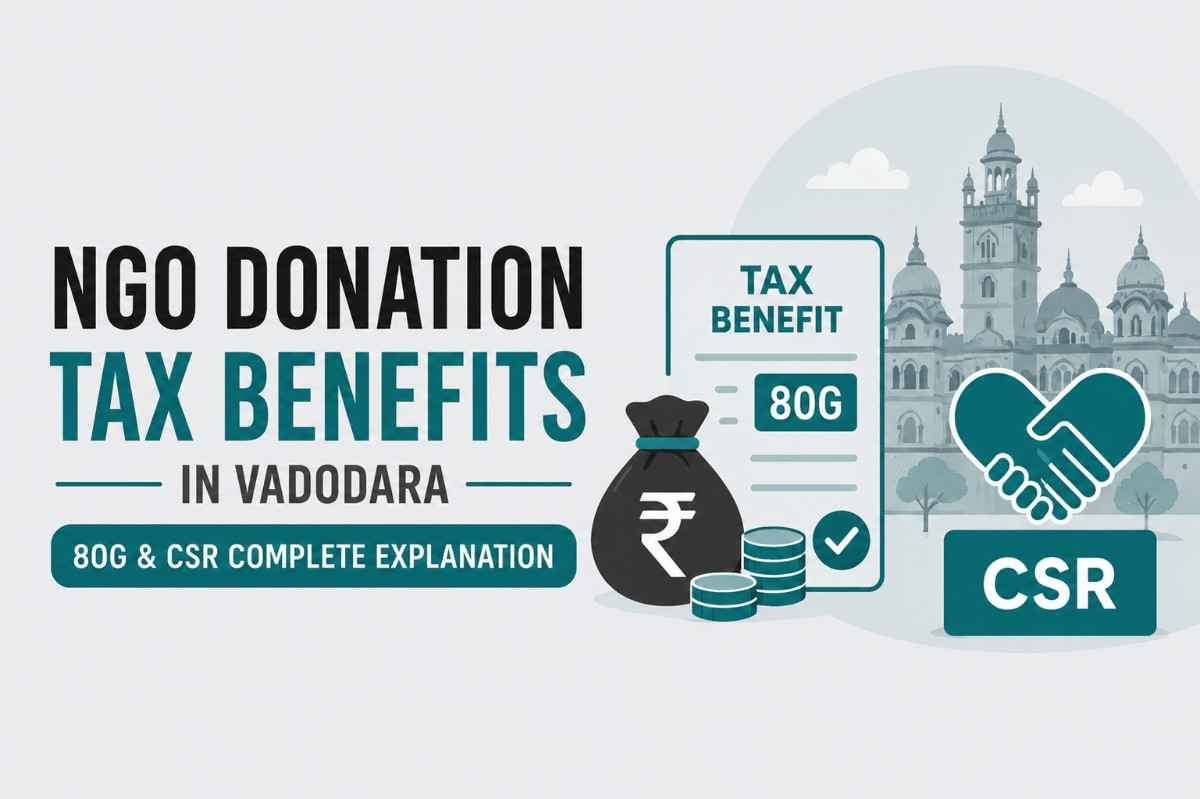
Section 80G Deduction
Donations made to NGOs registered under Section 80G of the Income Tax Act, 1961 are eligible for tax deductions, allowing donors to reduce their taxable income. This makes charitable giving more financially efficient while supporting important social initiatives.
The percentage of deduction depends on the classification of the NGO:
- Some organizations qualify for 100% deduction, meaning the entire donated amount is deductible
- Others fall under 50% deduction, where only half of the donation amount can be claimed
Additionally, certain donations may be subject to qualifying limits (such as 10% of adjusted gross total income), depending on the type of institution.
To ensure that your donation is eligible for tax benefits, it is essential to follow proper due diligence:
- Verify the NGO’s 80G registration number before donating, as only approved organizations qualify for deductions
- Check validity of the certificate, since 80G registrations may have expiration or renewal requirements
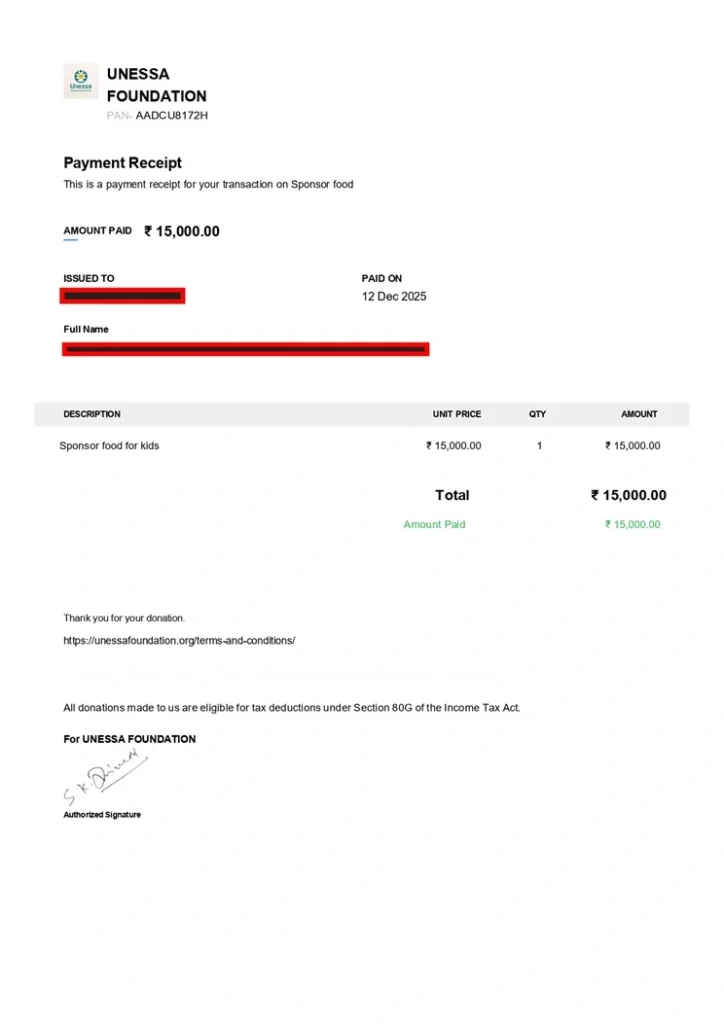
- Obtain a proper donation receipt, which must include the NGO’s name, PAN number, 80G registration number, donation amount, and date
- Ensure payment is made through traceable methods, such as bank transfer, cheque, or digital payment, as cash donations above a specified limit may not qualify
- Claim the deduction while filing your Income Tax Return (ITR) under the appropriate section in the same financial year
When done correctly, Section 80G not only reduces your tax liability but also ensures that your financial contribution is directed toward credible and accountable organizations.
CSR Funding (Corporate Social Responsibility)
Under Section 135 of the Companies Act, 2013, companies meeting certain financial thresholds are required to allocate a portion of their profits toward Corporate Social Responsibility (CSR) activities.
The eligibility criteria include companies with:
- A net worth of ₹500 crore or more, or
- A turnover of ₹1,000 crore or more, or
- A net profit of ₹5 crore or more
Such companies are mandated to spend at least 2% of their average net profit (over the last three years) on CSR initiatives, and education is one of the key sectors identified under this mandate.
This creates a significant opportunity for scaling educational impact, as CSR funding often supports large-scale programmes such as:
- Establishment of learning centers
- Teacher training initiatives
- Digital education programmes
- Scholarships and sponsorship schemes
If you are employed in an eligible organization, you can play a crucial role by:
- Advocating for partnerships with credible education NGOs
- Presenting impact-driven proposals to CSR committees
- Encouraging long-term collaborations rather than one-time funding activities
CSR funding has the potential to create high-impact, scalable change, often exceeding individual contributions by a large margin. When aligned with outcome-based programmes, it can significantly improve access, quality, and sustainability in education for underprivileged children.
👉Click here to know more about : Help Underprivileged children education
7. FAQ — People Also Ask
How do I donate to a child education charity in India?
Visit the NGO’s website, use their online donation portal or UPI link, ensure they have 80G certification, and request a receipt for tax purposes.
Is donating to child education charities tax deductible in India?
Yes, donations to NGOs registered under Section 80G of the Income Tax Act are deductible. Verify 80G status before donating and retain your receipt for tax filing.
How much should I donate to make a real difference?
Even Rs 500/month makes a tangible difference when given consistently to a well-run organisation. The predictability of monthly giving matters more than the size of any single donation.
How do I know my donation is being used effectively?
Request and review the NGO’s annual impact report, learning outcome data, and third-party audit. Credible organisations publish this information proactively.
8. Conclusion
The 10 reasons in this post are not arguments. They are facts about the world as it currently is. 244 million children out of school. Education’s proven ROI. The multiplier effects of girls’ schooling. The arithmetic of a child’s learning window.
Donating to a child education charity today is not a sacrifice. It is a sound investment in a measurable outcome, with tax benefits attached.
Act today. Give monthly. Tell your network. And hold the organisation you choose accountable for delivering on the outcomes they promise.