

Why Recurring Zakat Payments Are Becoming Popular
Every year, millions of Muslims calculate their Zakat and prepare to pay 2.5% of their eligible wealth. For some, it’s straightforward. For others, it becomes a last-minute calculation during Ramadan—rushed, stressful, and sometimes delayed.
This is where Recurring Zakat Payments offer a practical alternative.
Instead of paying one large amount annually, you can divide your obligation into manageable monthly installments. This method not only eases financial pressure but also creates a steady stream of support for those who rely on Zakat.
In today’s digital world—where automated subscriptions manage everything from utilities to investments—setting up monthly Zakat donations is both convenient and impactful.
Let’s explore how recurring Zakat payments work, whether they are permissible, and how you can implement them properly.
What Are Recurring Zakat Payments?
Recurring Zakat Payments refer to dividing your annual Zakat obligation into smaller, scheduled installments—usually monthly—rather than paying it in one lump sum.
Instead of waiting until your Zakat due date and transferring the full amount, you:
- Estimate your annual Zakat
- Divide it by 12
- Set up automated monthly donations
For example:
If your annual Zakat is ₹60,000
Monthly recurring Zakat payment = ₹5,000
This method transforms a once-a-year obligation into consistent charitable action.
Is It Permissible to Pay Zakat Monthly?
A common concern is whether paying Zakat in installments is Islamically valid.
The majority of contemporary scholars agree:
- Zakat can be paid in advance
- Zakat can be paid in installments
- The full amount must be completed within the Zakat year
The key conditions are:
- Your calculation must be accurate
- The total obligation must be fulfilled before the next Zakat date
- Any underpayment must be adjusted at year-end
If wealth increases significantly during the year, a final recalculation ensures accuracy.
This flexibility allows Muslims—especially salaried individuals and business owners—to manage obligations responsibly without delay.
Why Recurring Zakat Payments Make Financial Sense
1. Budget-Friendly Giving
Paying ₹60,000 at once may strain liquidity. Paying ₹5,000 monthly feels manageable.
For salaried professionals, monthly Zakat aligns naturally with monthly income cycles.
It prevents:
- Cash flow disruption
- Emergency borrowing
- Delayed payments
Financial planners often recommend spreading large obligations across predictable intervals. Recurring Zakat follows the same principle.
2. Continuous Impact for Beneficiaries
Charities operate year-round—not just in Ramadan.
When Zakat arrives only during peak seasons, organizations face:
- Funding gaps in off-peak months
- Difficulty planning long-term programs
- Interruptions in food and medical support
Recurring Zakat Payments create:
- Predictable funding streams
- Sustainable program planning
- Year-round aid delivery
For example, educational sponsorship programs rely on consistent monthly funding—not annual spikes.
3. Reduced Risk of Forgetting or Delaying
Studies in behavioral finance show that automation increases compliance. When payments are automated, people are more likely to fulfill obligations on time.
Monthly Zakat donations:
- Remove procrastination
- Reduce calculation anxiety
- Eliminate last-minute rush
Automation strengthens discipline.
4. Spiritual Consistency
Zakat is more than a transaction. It purifies wealth and nurtures empathy.
Paying once annually can feel procedural.
Paying monthly builds:
- Ongoing awareness
- Habitual generosity
- Continuous spiritual reflection
Instead of one reminder per year, recurring Zakat keeps the purpose alive every month.
How to Calculate Recurring Zakat Payments Correctly
Accuracy matters. Follow these steps carefully.
Step 1: Calculate Total Zakatable Wealth
Include:
- Cash and savings
- Gold and silver
- Investment accounts
- Business inventory
- Rental income savings
- Cryptocurrency holdings
Exclude:
- Personal residence
- Personal vehicle
- Daily-use assets
Subtract short-term liabilities due within the year.
Step 2: Apply 2.5% Rule
Zakat = 2.5% of eligible wealth (above Nisab)
Example:
Total eligible wealth: ₹10,00,000
Zakat = ₹25,000 annually
Step 3: Divide by 12
₹25,000 ÷ 12 = ₹2,083 monthly
Round up slightly to avoid underpayment.
Step 4: Recalculate at Year-End
At your Zakat anniversary:
- Reassess wealth
- Compare total paid
- Adjust the difference
This ensures full compliance.
👉To know about common mistakes in zakat calculation follow this guide : common mistakes in zakat calculation
Annual vs Monthly Zakat: A Clear Comparison
Feature
Annual Zakat Payment
Recurring Zakat Payments
Payment Frequency
Once per year
Monthly installments
Cash Flow Impact
Large lump sum
Smaller manageable amounts
Risk of Delay
Higher
Very low (automated)
Budget Planning
May require saving
Integrated into monthly budget
Charity Impact
Seasonal spike
Continuous support
Spiritual Engagement
Once yearly
Ongoing awareness
Administrative Ease
One-time calculation
Requires annual adjustment
Both methods are valid. The choice depends on financial structure and discipline.
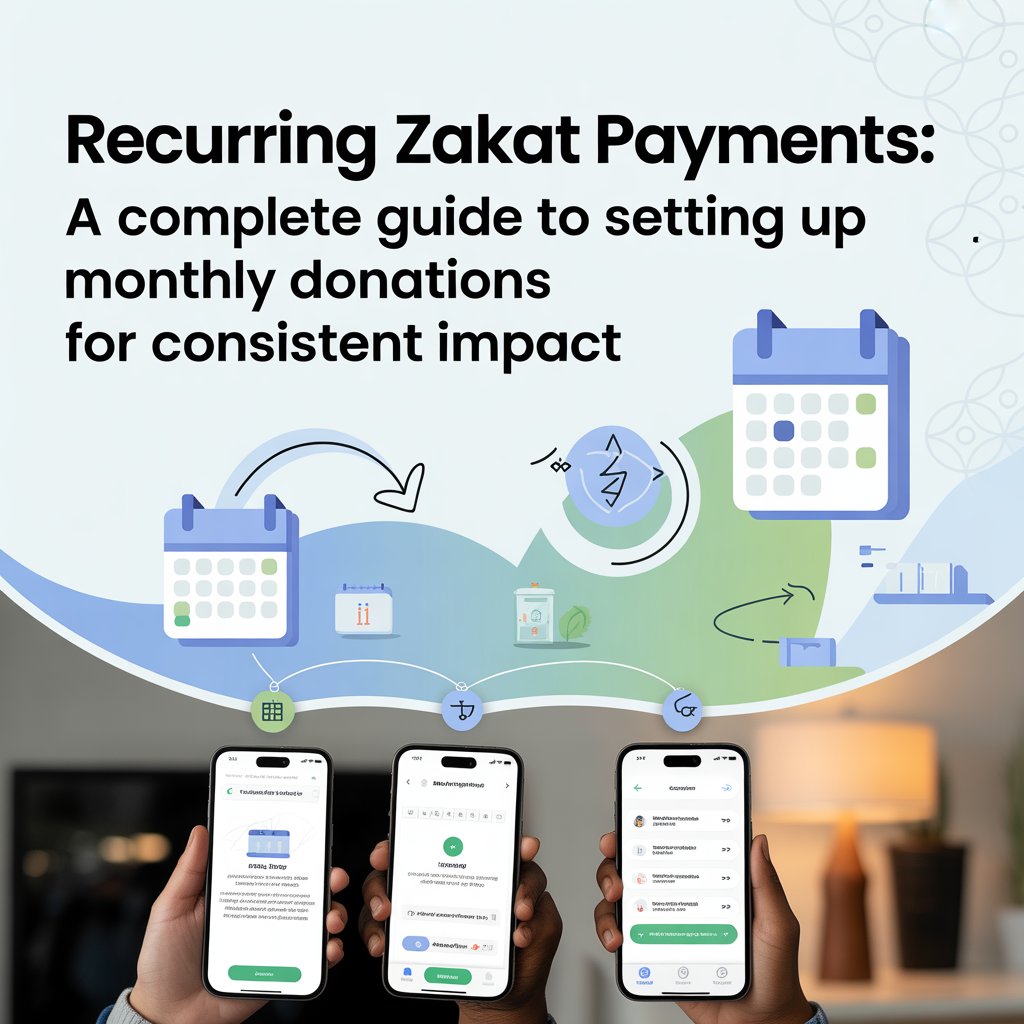
How to Set Up Monthly Zakat Donations
Setting up Recurring Zakat Payments is straightforward:
- Choose a trusted, Shariah-compliant organization
- Confirm it distributes Zakat properly
- Select “Recurring Zakat” option
- Enter calculated monthly amount
- Enable automated debit
- Save confirmation receipts
Many platforms provide dashboards where you can:
- Track payments
- Download receipts
- Adjust monthly contributions
Digital transparency builds trust.
Common Mistakes to Avoid
Even with automation, mistakes can happen.
1. Not Recalculating Annually
Your wealth may increase. Always review annually.
2. Confusing Sadaqah with Zakat
Specify clearly that funds are allocated as Zakat.
3. Underestimating Assets
Don’t forget:
- Investment profits
- Savings across multiple accounts
- Digital assets
4. Ignoring Currency Fluctuations
For international donors, exchange rates may affect totals.
Accuracy protects your obligation.
Current Trends in Digital Zakat Giving
Recent nonprofit reports show:
- Online donations have increased significantly in the past five years
- Recurring giving models improve donor retention
- Automated contributions increase compliance rates
Muslim charities worldwide are now integrating:
- Subscription-based donation systems
- Mobile-friendly dashboards
- Instant receipt generation
Recurring Zakat Payments fit perfectly into this digital transformation.
👉 Know about How to pay Zakat Online with Unessa
FAQs
Can I pay Zakat before my due date?
Yes. Paying in advance is permissible as long as full obligation is met.
What if my wealth decreases?
Recalculate at year-end and adjust accordingly.
Is it better to pay during Ramadan?
Ramadan increases reward, but Zakat is due on your personal Zakat anniversary.
Can I cancel recurring payments?
Yes, but ensure you still fulfill the total annual obligation.
Can crypto losses cancel Zakat?
Losses reduce net wealth but do not cancel obligation if Nisab is met.
Final Thoughts: Turning Obligation Into Ongoing Responsibility
Recurring Zakat Payments are not about convenience alone. They represent structured generosity.
Instead of a once-a-year rush, you create a system that:
- Supports beneficiaries consistently
- Protects your obligation
- Strengthens financial planning
- Encourages spiritual mindfulness
If managed carefully and reviewed annually, monthly Zakat donations transform a fixed religious duty into sustained impact.
And for many modern Muslims balancing careers, families, and investments, that structure makes all the difference.