

Introduction
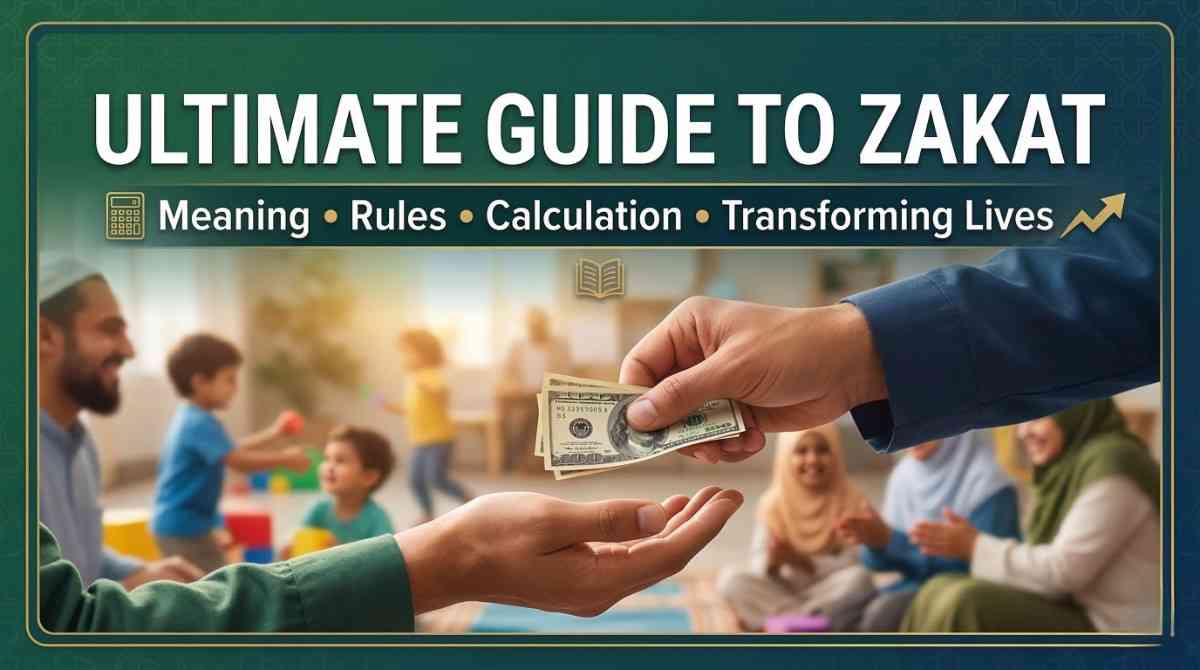
Imagine a world where every wealthy person shared just a small portion of their wealth with those in need.
- Hunger would decrease.
- Communities wouldstrengthen.
- Economic inequality would shrink.
More than 1.8 billion Muslims around the world follow a powerful system designed to do exactly this. That system is Zakat.
Zakat is not merely charity. It is an obligation, a spiritual purification, and a social justice system embedded within Islam.
As the Prophet Muhammad (PBUH) said:
“Protect your wealth by giving Zakat.” — Hadith
In this Ultimate Guide to Zakat, we will explore:
- What Zakat means
- Why it is one of Islam’s pillars
- Who must pay Zakat
- How to calculate it
- Who can receive it
- The spiritual and societal impact of Zakat
Whether you are a new Muslim, a curious learner, or someone wanting to fulfill their obligation properly, this guide will give you a clear and complete understanding of Zakat.
What Is Zakat?
Zakat literally means “purification” and “growth.”
In Islamic teachings, it refers to a mandatory charitable contribution that Muslims give from their wealth each year.
Typically Muslims give 2.5% of their accumulated wealth if it exceeds a certain threshold known as Nisab.
But Zakat is not just financial charity. It is a spiritual act of obedience to Allah that purifies wealth and strengthens communities.
A simple way to understand Zakat is this:
- Prayer purifies the soul.
- Zakat purifies wealth.
For new Muslims, understanding the basics can be helpful, which is why many scholars recommend reading a beginner overview of Ultimate Guide to Zakat before diving deeper into the rules.
👉 Click here to get a complete and easy-to-understand guide: Zakat
Why Zakat Is the Third Pillar of Islam
1.Shahada
declaration of faith
2.Salah
prayer
3.Zakat
charity
4.Sawm
fasting during Ramadan
5.Hajj
pilgrimage to Mecca
Zakat being the third pillar highlights its importance.
It is not optional generosity.
It is a required act of worship.
The Quran repeatedly connects prayer and Zakat:
“Establish prayer and give Zakat.” — Quran 2:43
This pairing appears more than 30 times in the Quran, showing how deeply charity is integrated into Islamic practice.
The History of Zakat
Zakat was established during the time of Prophet Muhammad (PBUH) in the early Islamic community.
It served several purposes:
- Supporting the poor
- Helping travelers in need
- Strengthening community bonds
- Redistributing wealth fairly
The early Muslim state collected Zakat and distributed it to those eligible.
Historical records show that during the reign of Caliph Umar ibn Abdul Aziz, the system worked so effectively that poverty was nearly eliminated in some regions.
Understanding the history of Zakat from the Prophet’s time to today helps us appreciate how powerful this institution has been for centuries.
👉 Click here to get a complete and easy-to-understand guide: History of Zakat
Zakat vs Sadaqah
Many people confuse Zakat with Sadaqah.
Both involve giving charity, but they are different.
Zakat
- Voluntary charity
- Can be any amount
- Can be given anytime
- No restrictions on recipients
Sadaqah
- Mandatory
- Specific percentage (usually 2.5%)
- Given once per year
- Only for eligible recipients
Think of it like this:
Zakat is obligation.
Sadaqah is generosity.
Both are encouraged in Islam, but Zakat carries religious responsibility.
👉 Click here to get a complete and easy-to-understand guide: Zakat VS Sadaqah
Who Must Pay Zakat?
Not every Muslim is required to pay Zakat. Zakat becomes obligatory when a person meets certain conditions.
A Muslim must:
- Be an adult
- Be mentally capable
- Own wealth above the Nisab threshold
- Hold that wealth for one lunar year
The Nisab is based on the value of:
- 87.48 grams of gold
or - 612.36 grams of silver
If a person’s wealth exceeds this threshold for a year, Zakat becomes mandatory.
What Wealth Is Zakat Paid On?
Zakat is calculated on specific types of wealth.
These typically include:
Cash savings
Gold and silver
Business assets
Investment profits
Stocks and shares
Rental income
Agricultural produce
However, personal items like:
clothing
houses you live in
cars
furniture
are not subject to Zakat.
How to Calculate Zakat
The standard Zakat rate is 2.5%.
Here is a simple example.
Imagine a person owns:
Savings: $10,000
Gold value: $2,000
Investments: $3,000
Total wealth = $15,000
Zakat owed:
2.5% of $15,000 = $375
That amount must be given to eligible recipients.
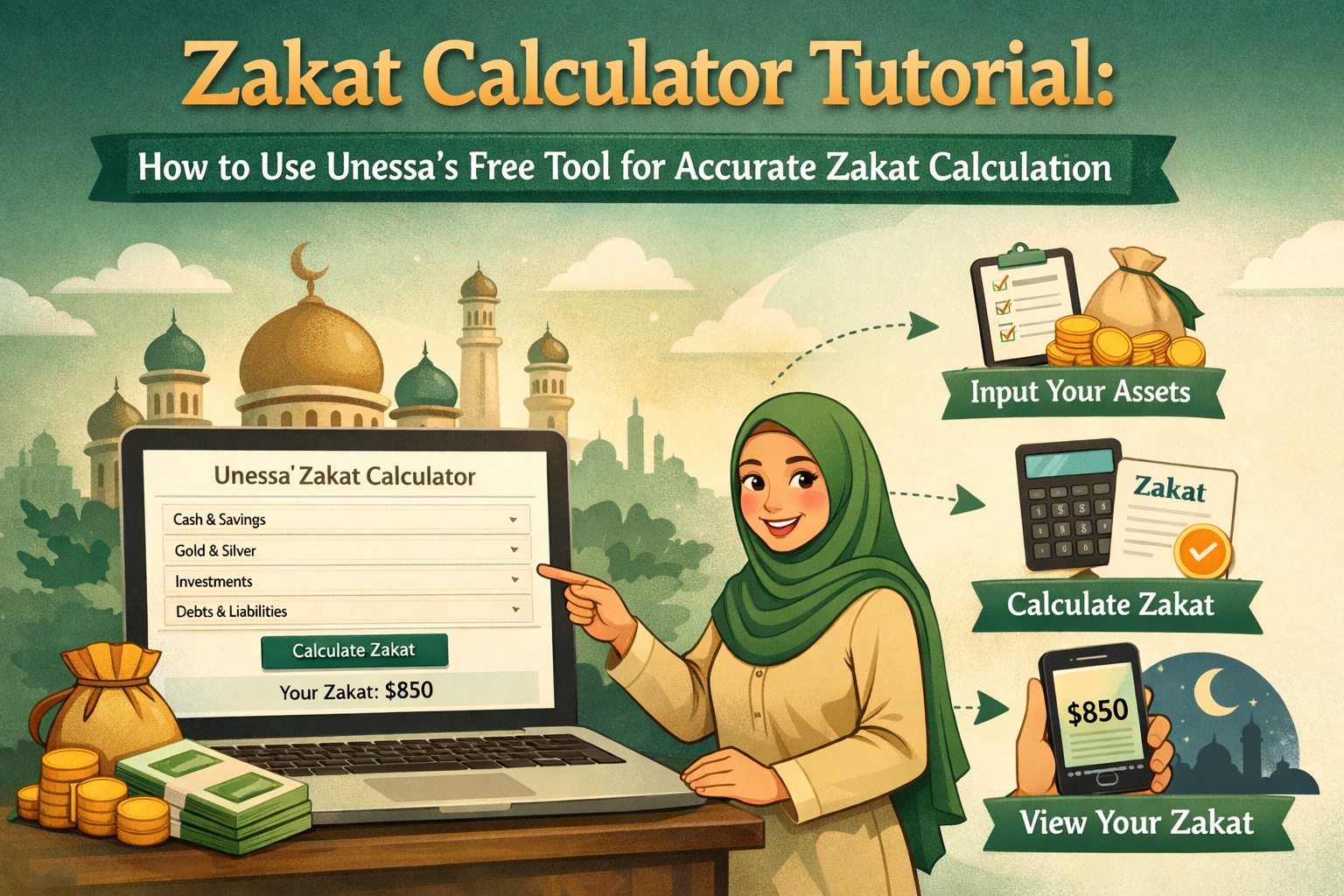
Many Muslims now use Zakat calculators to make the process easier and more accurate.
How to Calculate Zakat
The Quran clearly defines eight categories of people who can receive Zakat.
These include:
- The poor
- The needy
- Zakat administrators
- Those whose hearts are to be reconciled
- People in debt
- Those striving in the cause of Allah
- Travelers in need
- Those in bondage seeking freedom
This ensures Zakat is distributed fairly and ethically.
The Spiritual Benefits of Zakat
Zakat is not just about helping others. It transforms the giver as well.
Islam teaches that Zakat brings:
Purification of wealth
When Muslims give Zakat, they acknowledge that wealth ultimately belongs to Allah.
Barakah (blessings)
Many believers share stories of how giving charity increases prosperity in unexpected ways.
Freedom from greed
Regular charity helps people detach from excessive attachment to money.
👉 Click here to get a complete and easy-to-understand guide: Spiritual benifits of Zakat
Common Myths About Zakat
Despite its importance, several misconceptions exist.
Myth 1: Only rich people pay Zakat
Reality: Anyone whose wealth exceeds the Nisab must pay.
Myth 2: Zakat only helps Muslims
Reality: Zakat is primarily intended for Muslims, but Islamic charity broadly benefits humanity.
Myth 3: Zakat reduces wealth
Reality: Islamic teachings emphasize that charity increases blessings and prosperity.
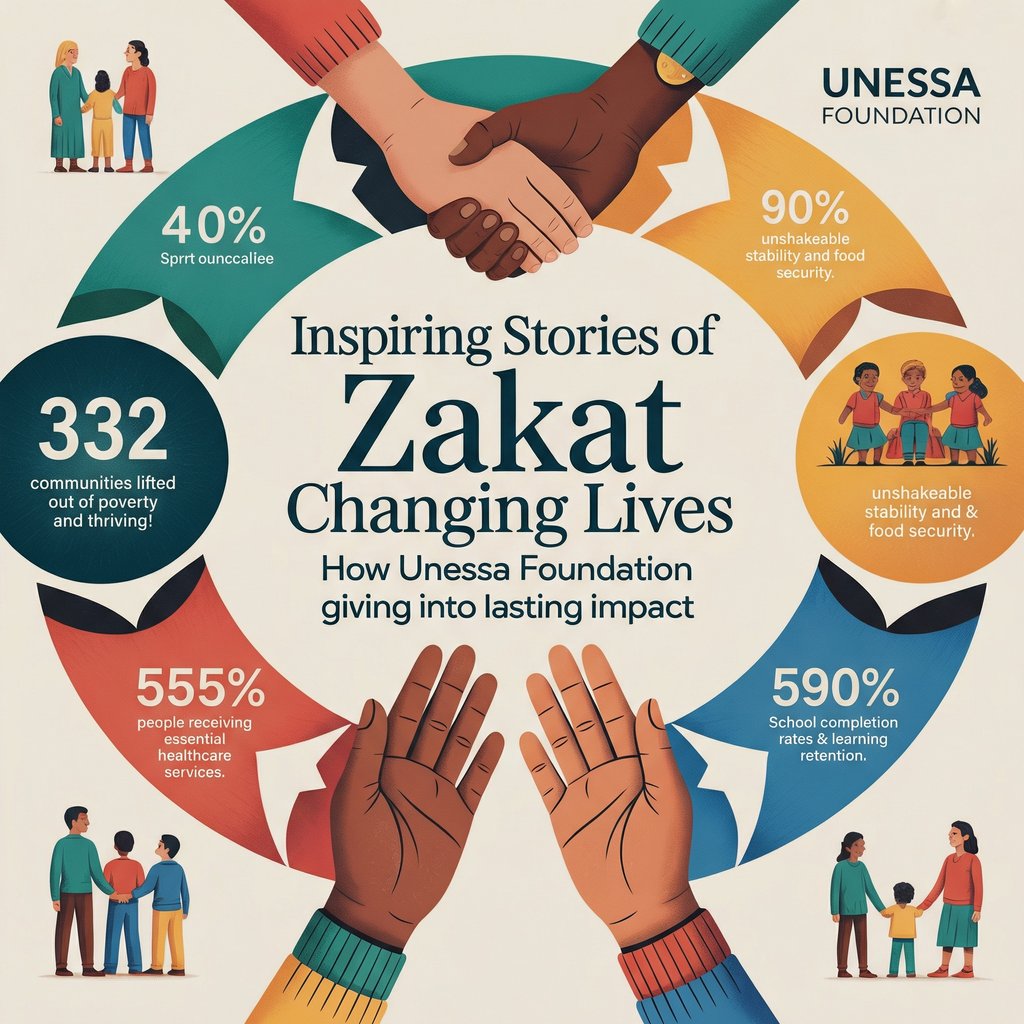
Inspiring Stories of Zakat
Many people have witnessed how Zakat changes lives.
One volunteer shared a story:
“A small Zakat contribution paid school fees for an orphan child. Today that child is studying medicine.”
Moments like this show how a small act of giving can transform a future.
Organizations like Unessa highlight many such inspiring stories where Zakat has uplifted entire families.
Conclusion
Zakat is far more than a financial obligation.
It is a system of compassion, justice, and spiritual purification.
Through Zakat:
- Wealth is shared
- Poverty is reduced
- Communities become stronger
- Faith becomes action
As the Prophet Muhammad (PBUH) beautifully said:
“Charity does not decrease wealth.”
Understanding and fulfilling Zakat is one of the most meaningful ways Muslims can live out their faith.
When practiced sincerely, Zakat becomes a powerful force for good — both spiritually and socially.
Additional Resources
Recommended books
Helpful tools
Communities
- Local mosques
- Islamic charitable organizations
- Global Zakat networks