
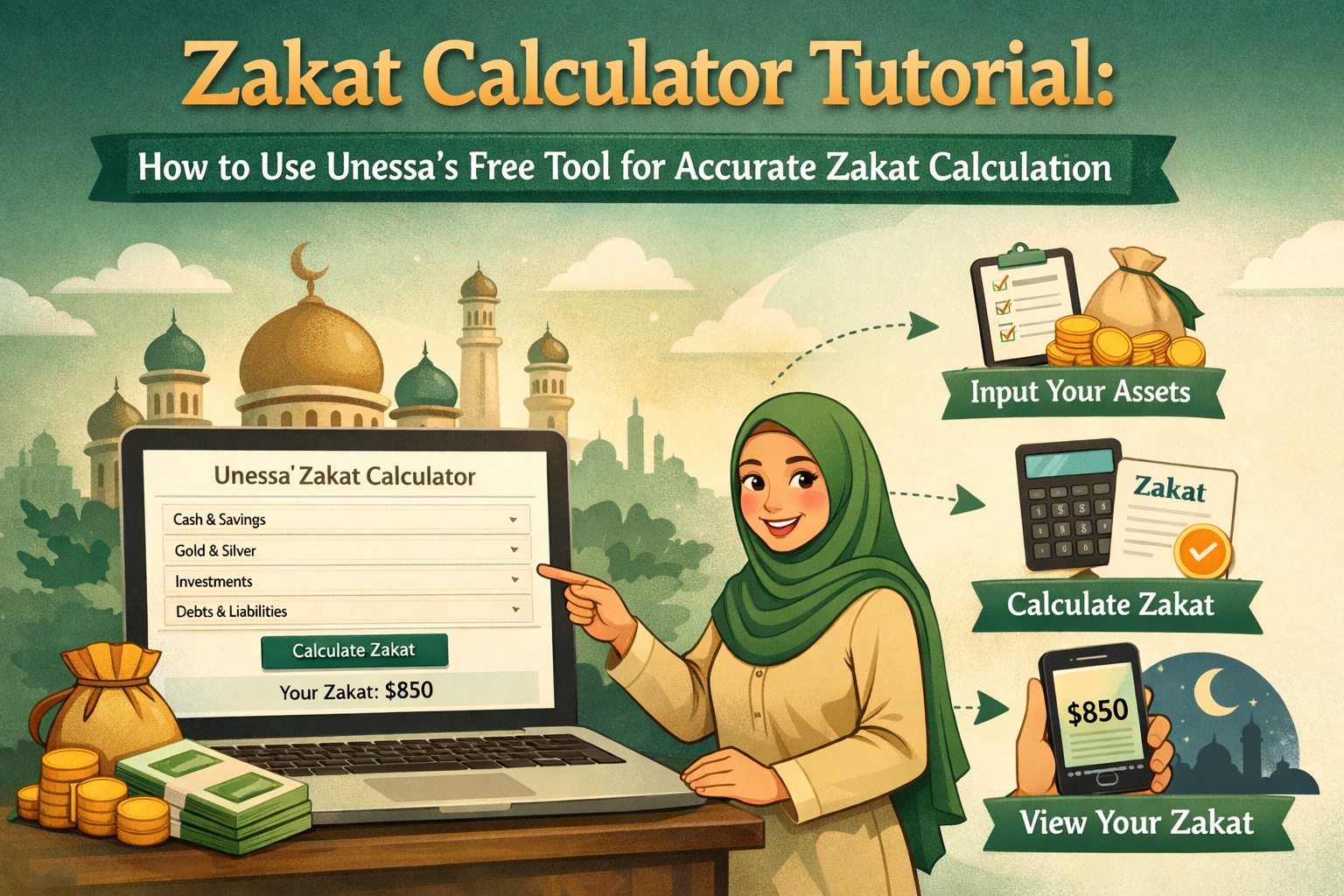

Zakat Calculator Tutorial: How to Use Unessa’s Free Tool for Accurate Zakat Calculation
Calculating Zakat is a deeply meaningful act of worship, but for many people, it can also feel confusing. Multiple income sources, savings spread across accounts, gold holdings, business assets, debts — all of this can make even sincere Muslims unsure whether they are calculating correctly.
This is where a reliable Zakat Calculator Tutorial becomes essential.
Unessa’s free Zakat Calculator was created to remove confusion from the process and replace it with clarity, confidence, and correctness. This guide walks you through how the tool works, why it matters, and how you can use it to fulfill your Zakat obligation accurately and responsibly.This Zakat Calculator Tutorial is designed to guide Muslims step by step through the entire Zakat calculation process.
Why Zakat Calculation Is Often Misunderstood
Zakat is not simply 2.5% of everything you own. It applies only to specific categories of wealth and only when certain conditions are met. Understanding the Nisab threshold is essential before calculating Zakat, as explained by Islamic scholars and educational resources like Islamic Relief.
Common challenges people face include:
- Forgetting which assets are Zakat-eligible
- Confusion about the nisab threshold
- Uncertainty about debts and expenses
- Mixing personal and business finances
- Miscalculating rental or business income
Even small mistakes can lead to either underpaying or overpaying Zakat. Both situations matter — one affects obligation, the other affects personal financial balance.
A structured Zakat Calculator Tutorial helps solve these issues systematically.
What Is Unessa’s Zakat Calculator?
Unessa’s Zakat Calculator is a free online tool designed to help individuals, families, and business owners calculate their Zakat accurately based on Islamic principles.
Instead of relying on guesswork or manual spreadsheets, the calculator:
- Organizes assets into clear categories
- Applies the correct Zakat rate automatically
- Considers nisab thresholds
- Allows deduction of eligible liabilities
- Produces instant, easy-to-understand results
The tool is especially useful in today’s world, where income and assets are rarely limited to one source.
Who Can Use This Zakat Calculator?
Unessa’s tool is built for a wide range of users, including:
- Salaried professionals
- Freelancers and consultants
- Business owners and traders
- Landlords earning rental income
- Families managing joint finances
Students with savings above nisab
If you are unsure whether Zakat applies to you, the calculator helps clarify that too.
Step-by-Step Zakat Calculator Tutorial: Using Unessa’s Free Tool
Step 1
Enter Cash and Bank Savings
Start by entering:
- Cash in hand
- Bank account balances
- Emergency funds
- Any liquid savings
These are among the most common Zakat-eligible assets and often form the largest portion of Zakat calculations.
Step 2
Add Gold and Silver Holdings
Include:
- Gold jewelry
- Gold coins or bars
- Silver items
The calculator allows you to enter current values, helping align your Zakat with real-time market worth rather than outdated purchase prices.
Step 3
Include Business Assets (If Applicable)
For business owners, this step is critical.
You can add:
- Inventory for sale
- Business cash
- Receivables expected to be collected
The calculator helps separate trade assets from fixed assets, reducing common calculation errors.
Step 4
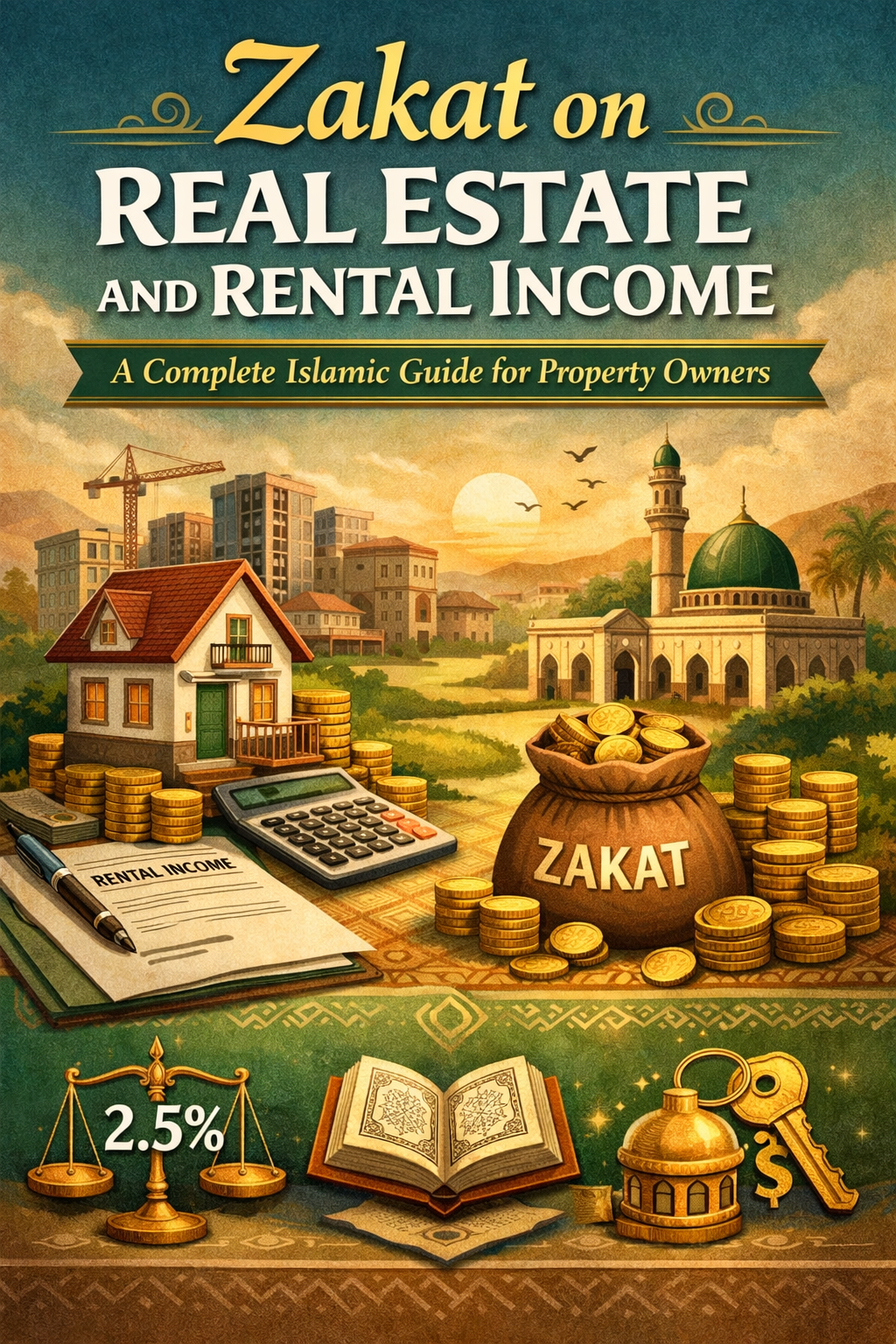
Enter Rental or Investment Income
If you earn rental income:
- Add saved rental income only
- Exclude property market value
Unessa’s Zakat Calculator aligns with standard Islamic rulings by applying Zakat to eligible income, not fixed property assets.
Step 5
Deduct Eligible Debts and Liabilities
This step ensures fairness.
You may deduct:
- Immediate debts
- Short-term liabilities
- Outstanding payments due
The calculator adjusts your net Zakatable amount automatically, ensuring accuracy without manual math.
Step 6
Review Nisab and Final Zakat Amount
Once all details are entered:
- The tool checks whether your wealth meets the nisab threshold
- Applies the 2.5% Zakat rate
- Displays the total Zakat due instantly
This final screen provides clarity and confidence — no uncertainty, no recalculations.
Why Using a Zakat Calculator Matters Today
In earlier times, wealth was simpler: livestock, crops, and coins. Today’s financial lives are far more complex.
Modern Muslims deal with:
- Digital banking
- Investments and mutual funds
- Multiple income streams
- Cross-border earnings
A well-designed Zakat Calculator Tutorial bridges classical Islamic principles with modern financial realities.
Accuracy, Trust, and Peace of Mind
One of the biggest benefits of using Unessa’s Zakat Calculator is peace of mind.
You know that:
- The calculation follows recognized Zakat principles
- No eligible category is missed
- No ineligible asset is wrongly included
This confidence allows you to focus on the spiritual purpose of Zakat rather than worrying about numbers.
Common Zakat Calculation Mistakes the Tool Helps Avoid
Many people unintentionally make errors such as:
- Paying Zakat on personal assets
- Forgetting saved income
- Ignoring receivables
- Double-counting business wealth
- Misunderstanding nisab
Using a guided calculator minimizes these risks significantly.
How Zakat Calculators Support Social Impact
When Zakat is calculated correctly:
- Funds reach rightful beneficiaries
- Distribution becomes fairer
- Trust in Zakat institutions increases
- Community welfare strengthens
Tools like Unessa’s calculator play a quiet but powerful role in strengthening the Zakat ecosystem.
Tips for Getting the Most Accurate Results
To ensure precise Zakat calculation:
- Use current asset values
- Be honest about savings and income
- Separate personal and business finances
- Recalculate annually
- Consult a scholar if unsure
The calculator works best when inputs are accurate and updated.
If you want to understand the rules before calculating, read our detailed guide on Zakat Rules for Women: Jewelry and Inheritance Explained Clearly.
Final Thoughts
Zakat is an act of faith, compassion, and responsibility. While its spiritual value is immense, its calculation does not need to be stressful. By following this Zakat Calculator Tutorial, anyone can calculate their Zakat accurately and confidently.
This Zakat Calculator Tutorial shows how Unessa’s free tool simplifies the process without compromising accuracy or Islamic integrity. By using the calculator, you move from uncertainty to clarity — and from obligation to impact.
When Zakat is calculated correctly, it becomes more than a number. It becomes a source of barakah for you and dignity for those who receive it.
Frequently Asked Questions (FAQs)
Is Unessa’s Zakat Calculator free to use?
Yes. The Zakat Calculator is completely free and accessible to everyone.
Who can use this Zakat Calculator?
Individuals, families, salaried professionals, business owners, and landlords can all use the tool.
Does the calculator consider the nisab threshold?
Yes. The calculator automatically checks the nisab before calculating Zakat.
What assets should I include in the calculator?
You should include cash, savings, gold, business assets, and saved rental income.
Can I deduct debts and expenses?
Yes. Eligible short-term debts and liabilities can be deducted for accurate calculation.
What Zakat rate does the calculator use?
The calculator applies the standard Zakat rate of 2.5% where applicable.
Is Zakat payable on property value through this tool?
No. The calculator applies Zakat based on eligible income and trade assets, not personal or rental property value.
How often should I use the Zakat Calculator?
It is recommended to use the calculator once every lunar year or whenever your financial situation changes.