

Introduction: Why Zakat Rules for Women Matter More Than Ever
When discussing Zakat rules for Women Jewelry and Inheritance many assume financial obligations are straightforward. Yet for women, questions often arise around personal assets — especially gold jewelry and inheritance.
With more women today owning investments, receiving inheritance, and managing independent finances, understanding Zakat rules for women has become increasingly important. Whether you are a homemaker with wedding gold, a professional managing investments, or someone who recently inherited property, clarity brings confidence.
This guide explains Zakat rules for women in detail — covering jewelry, inheritance, scholarly differences, calculation methods, and practical examples.
According to Islamic scholars explained on IslamQA, Zakat on jewelry differs based on different schools of thought.
You can also check current gold prices used for Nisab calculation on the World Gold Council website.
Zakat Rules for Women: Understanding the Foundation of Zakat
Before diving into specific cases, let’s review the core principles.
Zakat becomes obligatory when:
- Wealth reaches the Nisab threshold
- One lunar year (Hawl) passes
- The individual has full ownership and control
- The wealth is Zakatable (cash, gold, investments, business asset
Importantly, Zakat is tied to wealth — not gender. Women and men are equally responsible if they meet the conditions.You may also read our guide on How to Calculate Zakat on Savings and Investments to better understand Zakat calculations.
Zakat Rules for Women Jewelry and Inheritance
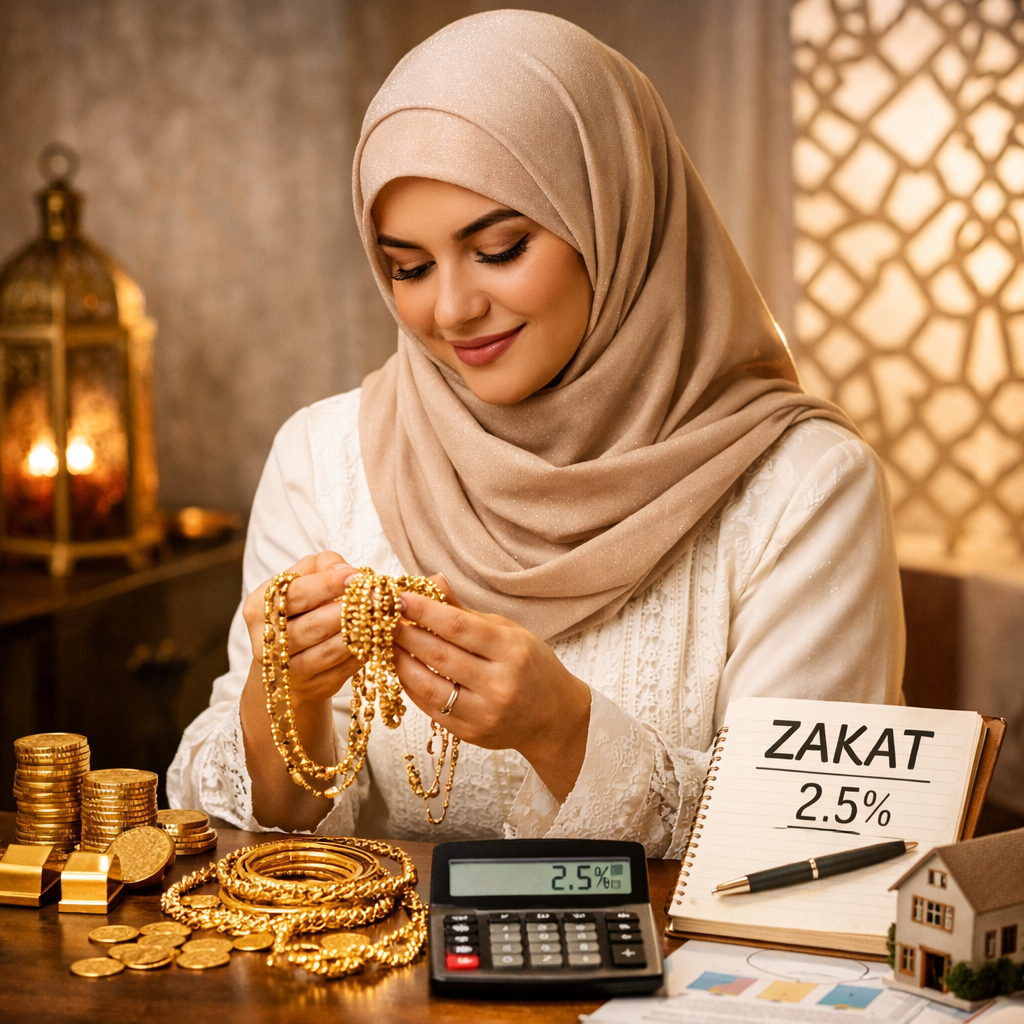
Jewelry is one of the most common personal assets women own. Wedding gold, gifts, and family heirlooms often carry both emotional and financial value.
But is Zakat due on jewelry?
The answer depends on:
- The value of the jewelry
- Whether it reaches Nisab
- The school of Islamic jurisprudence followed
What Is the Nisab for Gold?
The Nisab for gold is approximately 85 grams of gold.
If a woman owns gold equal to or above this amount and one lunar year passes, Zakat may become due.
For example:
- If gold is valued at $60 per gram
- 85 grams equals $5,100
- Zakat at 2.5% would be $127.50 annually
These numbers fluctuate based on current gold prices.
Scholarly Opinions on Zakat for Jewelry
Understanding scholarly interpretation is key when discussing Zakat rules for women.
1. Majority Opinion (Maliki, Shafi’i, Hanbali Schools)
Personal jewelry worn regularly is not subject to Zakat, as it is considered personal use — similar to clothing or household items.
2. Hanafi Opinion
Zakat is obligatory on gold and silver jewelry, even if worn regularly, provided it reaches Nisab and one year passes.
This difference explains why families often receive different advice.
Practical Example
Consider Aisha:
- She owns 120 grams of gold jewelry.
- She follows the Hanafi school.
- One lunar year has passed.
She must calculate 2.5% of the total gold value and pay Zakat.
If she follows the Shafi’i school, she may not be required to pay — provided the jewelry is for personal use and not investment.
Because interpretations differ, consulting a trusted scholar ensures accuracy.
What About Excess or Unused Jewelry?
Some scholars state:
- Jewelry kept solely for investment or savings is Zakatable.
- Extremely excessive amounts may also fall under Zakat obligation.
Intent and usage matter.
Zakat on Inheritance: When Does It Become Due?
Inheritance raises another common question in Zakat rules for women.
A woman may inherit:
- 💵Cash
- 💰Gold
- 🏠Property
- 📈Investments
- 🏢Rental income
- 🏭Business shares
The key principle is ownership.
Is Zakat Due Immediately After Inheriting?
No.
Zakat is not due immediately upon receiving inheritance.
Instead:
- The inherited wealth must remain above Nisab
- One lunar year must pass
- The wealth must remain in possession
Only then does Zakat become obligatory.
Example Scenario
Consider Aisha:
- She owns 120 grams of gold jewelry.
- She follows the Hanafi school.
- One lunar year has passed.
She must calculate 2.5% of the total gold value and pay Zakat.
If she follows the Shafi’i school, she may not be required to pay — provided the jewelry is for personal use and not investment.
Because interpretations differ, consulting a trusted scholar ensures accuracy.
Property Inheritance and Zakat
What if inheritance comes in the form of property?
It depends on purpose:
1. Property for Personal Use
No Zakat due.
2. Rental Property
Zakat is due on rental income saved after one year — not on the property value itself.
3. Property for Sale (Investment)
Zakat may be due annually on market value if intended for resale.
Intent plays a major role in Zakat rules for women managing inherited property.
Why Financial Awareness Among Women Is Increasing
Globally, women now control a growing share of wealth. Studies indicate that women are expected to manage nearly two-thirds of private wealth in the next decade in some regions.
More women are:
- Receiving inheritance
- Investing in stocks and mutual funds
- Owning gold assets
- Running businesses
With financial independence comes religious responsibility.
Understanding Zakat rules for women is not just about obligation — it is about spiritual accountability.
How to Calculate Zakat on Jewelry and Inheritance
Here’s a simple step-by-step guide:
Step 1: Determine Total Zakatable Assets
Include:
- Cash savings
- Gold and silver
- Investment balances
- Business profits
- Inherited cash still held
Step 2: Check Nisab Threshold
Compare total assets to Nisab value.
Step 3: Confirm One Lunar Year Has Passed
Step 4: Calculate 2.5%
Multiply total eligible wealth by 0.025.
Step 5: Pay Promptly to Eligible Recipients
Common Mistakes Women Make with Zakat
Understanding Zakat rules for women helps avoid common errors:
- Assuming the husband automatically pays for everything
- Ignoring inherited wealth
- Forgetting gold stored for years
- Miscalculating Nisab based on outdated gold prices
- Not tracking lunar year correctly
Each individual is responsible for her own wealth.
Real-Life Case Study
Consider Sara, a working professional.
She owns:
- 100 grams of gold
- $8,000 savings
- $5,000 inherited funds
Her total wealth exceeds Nisab.
If she follows the Hanafi school, she calculates:
Total gold value + cash + inheritance
Then pays 2.5%.
By understanding Zakat rules for women, she ensures compliance without confusion.
Emotional and Spiritual Dimension
Jewelry often carries sentimental value — wedding gifts, heirlooms, cultural traditions.
Paying Zakat on it may feel difficult.
However, Zakat purifies wealth and strengthens faith. It transforms personal assets into community support.
Many women report feeling spiritually lighter once they understand and fulfill their Zakat obligations correctly.
Final Thoughts
Understanding Zakat rules for women ensures clarity, confidence, and spiritual integrity.
Jewelry and inheritance are blessings. Managing them responsibly strengthens both financial discipline and faith.
Whether you follow the majority opinion or Hanafi view, what matters most is knowledge and sincerity. When unsure, consult a qualified scholar familiar with your circumstances.
By learning and applying Zakat rules for women correctly, you not only fulfill an obligation — you contribute to a system designed to uplift communities and support those in need.
Frequently Asked Questions (FAQs)
Do women pay Zakat on wedding jewelry?
It depends on scholarly interpretation and whether the jewelry reaches Nisab.
Is Zakat due on inherited property?
Only if it is for resale or rental income is saved for one year.
Does a husband pay Zakat for his wife?
No. Each person is responsible for their own wealth.
What if gold value changes during the year?
Zakat is calculated based on value at the time of payment.
Is inheritance immediately Zakatable?
No. One lunar year must pass after receiving it.