
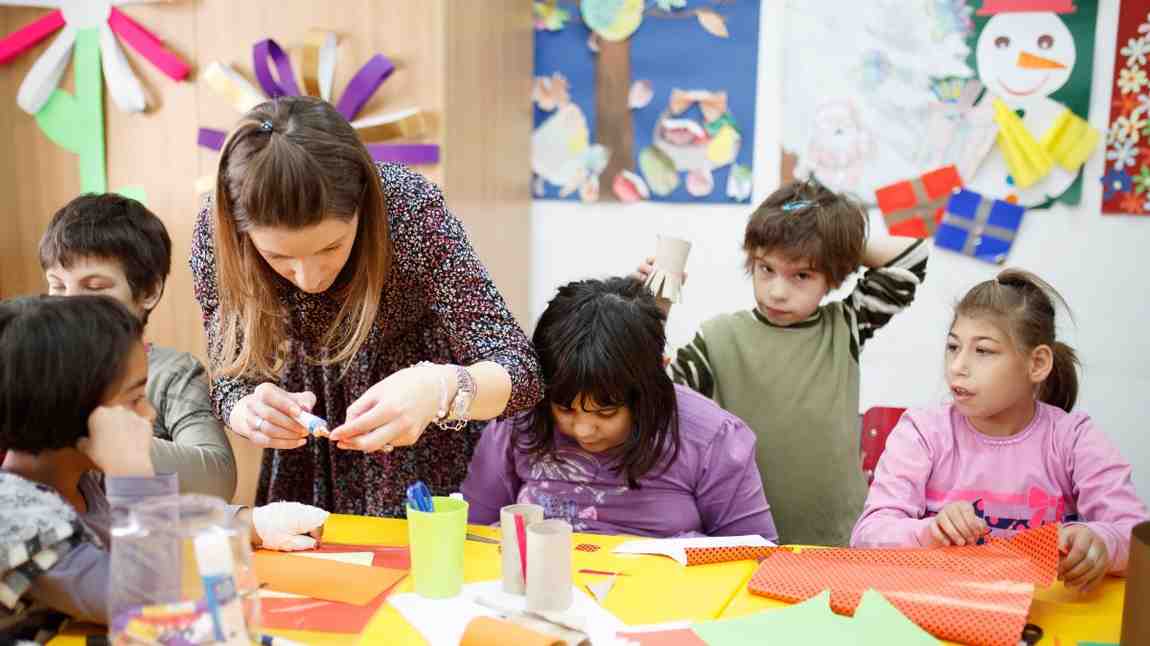

Life Skills Every Child Should Learn Alongside School Education- Ask any parent what they want most for their child’s future, and the answer is rarely “just good exam marks.” They want their child to be confident, capable, and ready for real life — able to manage money, solve problems, handle stress, and get along with people. Yet most school curricula are still built around textbooks, exams, and rote memorization, leaving little room for the practical, everyday abilities children actually need once they step outside the classroom.
This gap is no longer just a parenting concern — it is a national policy priority. NITI Aayog’s 2026 roadmap for school education specifically calls for promoting holistic education and student wellbeing, including mental health, socio-emotional learning, and life skills as core components of schooling, not optional add-ons. Meanwhile, employability data shows why this matters: only about 42–55% of Indian graduates are considered job-ready, depending on the survey used, with employers repeatedly citing weak communication, poor problem-solving, and low adaptability — not lack of subject knowledge — as the biggest gaps.
This article covers the essential life skills every child should learn alongside school education, explains why they matter, shares practical tips and age-wise examples for parents and teachers, and answers common questions — all grounded in data from WHO, UNICEF, NITI Aayog, ASER, and other credible sources.

What Exactly Are "Life Skills"?
The World Health Organization defines life skills as the abilities for adaptive and positive behaviour that enable individuals to deal effectively with the demands and challenges of everyday life. WHO, along with UNICEF and UNESCO, jointly identified 10 core life skills that form the foundation of every life-skills framework used in schools today.
| # | Core Life Skill | What It Helps a Child Do |
|---|---|---|
| 1 | Self-awareness | Understand their own emotions, strengths, and weaknesses |
| 2 | Empathy | Understand and relate to other people’s feelings |
| 3 | Critical thinking | Analyze situations and information objectively |
| 4 | Creative thinking | Generate new ideas and solutions |
| 5 | Decision-making | Make thoughtful, well-considered choices |
| 6 | Problem-solving | Find practical solutions to real challenges |
| 7 | Effective communication | Express thoughts clearly and listen actively |
| 8 | Interpersonal relationships | Build and maintain healthy relationships |
| 9 | Coping with emotions | Manage feelings in a healthy way |
| 10 | Coping with stress | Handle pressure without being overwhelmed |
These ten skills form the base. Around them, modern educators have added practical, functional skills — financial literacy, digital safety, first aid, and time management — that are equally essential for children growing up in today’s world.
Why Life Skills Matter More Than Ever: The Data
It’s easy to treat life skills as a “nice-to-have.” The numbers suggest otherwise.
- Employability gap: The India Skills Report 2025 (CII, Wheebox, AICTE) found overall graduate employability at 54.81%, while the Mercer-Mettl India Graduate Skill Index 2025 put it at a lower 42.6%. Either way, close to half of India’s graduates are not considered job-ready — and both reports point to soft skills, critical thinking, and communication as the biggest gaps, not technical knowledge.
- Mental health crisis among young people: UNICEF India notes that half of all mental disorders begin by age 14, and 75% by the mid-20s. An NCERT survey found that 11% of students reported anxiety, 14% experienced extreme emotions, and 43% experienced mood swings — yet only 41% of young people in India believe it is good to seek support for mental health problems, compared with an average of 83% across 21 countries surveyed by UNICEF.
- Digital exposure is now universal, but digital skill isn’t: ASER 2024 found that around 90% of both boys and girls aged 14–16 have access to a smartphone at home, but only 85.5% of boys and 79.4% of girls actually know how to use one confidently — highlighting a real digital literacy and online-safety gap, not just an access gap.
- Policy is catching up: NITI Aayog’s school education roadmap explicitly recommends mainstreaming vocational education, socio-emotional learning, and future-ready skills such as AI literacy, coding, and computational thinking as integral parts of schooling — a clear signal that India’s education system is shifting from “marks-only” to “life-ready.”
Together, this data tells a consistent story: children today are academically supported but life-skills deficient, and that gap shows up later — in employability, mental health, and everyday decision-making.

14 Essential Life Skills Every Child Should Learn
Below are the practical life skills every child should learn alongside school education, grouped by category, with simple tips and examples parents and teachers can use right away.
1. Financial Literacy and Money Management
Most children finish school without ever learning how to budget, save, or understand interest. Basic money sense — saving pocket money, understanding needs versus wants, and using a piggy bank or bank account — builds lifelong financial discipline. Tip: Give children a small weekly allowance and let them decide how to divide it between spending, saving, and giving. Example: A 10-year-old saving part of their pocket money each week to buy a cricket bat learns delayed gratification and goal-based saving.
2. Communication Skills
Clear speaking, active listening, and confident expression matter as much as academic knowledge — employers now rank communication among the top soft-skill gaps in Indian graduates. Tip: Encourage children to narrate their school day in detail instead of one-word answers. Example: Practicing short “show and tell” presentations at home builds public-speaking confidence early.
3. Critical Thinking and Problem-Solving
These are two of WHO’s core life skills and are essential for navigating misinformation, exams, and real-world dilemmas. Tip: Ask “why” and “what if” questions instead of giving direct answers. Example: When a toy breaks, let the child try to figure out the cause before fixing it for them.
4. Emotional Intelligence and Coping with Stress
Given that mood swings and anxiety are already common among school-age children in India, teaching emotional regulation early is protective, not optional. Tip: Name emotions together (“You seem frustrated because…”) rather than dismissing them. Example: Deep-breathing exercises before an exam can reduce test anxiety.
5. Time Management and Self-Discipline
Balancing homework, play, screen time, and rest teaches structure that carries into adulthood. Tip: Use a simple visual timetable or checklist rather than constant reminders. Example: A child who plans study and play blocks independently develops ownership over their schedule.
6. Digital Literacy and Online Safety
With smartphone access nearly universal among teens, cyber safety, screen-time balance, and responsible online behaviour are now core life skills, not optional extras. Tip: Set clear, age-appropriate rules for screen time and discuss online risks openly instead of only restricting access. Example: Teaching a 14-year-old to recognize a scam message or fake profile before they encounter one in real life.
7. Decision-Making
From choosing subjects to resisting peer pressure, decision-making is a skill that improves only with guided practice. Tip: Let children make small, low-risk decisions (what to wear, which book to read) and experience the outcomes. Example: Choosing between two weekend activities teaches trade-off thinking.
8. Interpersonal Relationships and Teamwork
Cooperating, resolving conflict, and building friendships are skills schools rarely grade but life constantly tests. Tip: Encourage group activities, team sports, or group projects that require compromise. Example: Resolving a disagreement during a group project without adult intervention builds negotiation skills.
9. Empathy
Understanding others’ feelings is foundational to kindness, leadership, and healthy relationships later in life. Tip: Discuss characters’ feelings while reading stories or watching shows together. Example: Asking “how do you think your friend felt?” after a conflict builds perspective-taking.
10. Basic Cooking and Household Management
Simple domestic skills — cooking basic meals, doing laundry, keeping a room organized — build independence and self-reliance. Tip: Assign small, age-appropriate chores consistently rather than occasionally. Example: A 12-year-old who can prepare a simple breakfast gains real confidence and responsibility.
11. Personal Hygiene and Health Awareness
Understanding hygiene, nutrition, and basic body awareness protects long-term health and builds self-care habits. Tip: Make hygiene routines (handwashing, dental care) consistent and explain the “why,” not just the “do this.” Example: A child who understands why handwashing matters is more likely to do it without reminders.
12. First Aid and Basic Safety
Knowing how to respond to small injuries, road safety, and emergency numbers can be genuinely life-saving. Tip: Teach basic first aid (cleaning a cut, calling for help) through simple, calm demonstrations. Example: A child who knows how to dial an emergency number confidently is safer in a crisis.
13. Adaptability and Resilience
The ability to handle failure, change, and setbacks without giving up is increasingly cited as a top employability trait. Tip: Avoid solving every problem for your child; let them experience manageable failure and recover from it. Example: Losing a school competition and trying again next year builds resilience more than winning does.
14. Civic Sense and Environmental Responsibility
Respecting public spaces, understanding rules, and caring for the environment shape children into responsible citizens. Tip: Involve children in small community or environmental activities like segregating waste or planting a tree. Example: A child who waters a planted sapling regularly develops a sense of ownership toward the environment.
Life Skills vs. Traditional Academic Learning
| Aspect | Traditional Academic Learning | Life Skills Education |
|---|---|---|
| Primary Goal | Subject knowledge, exam performance | Practical competence for daily life |
| Assessment | Marks, grades, ranks | Behaviour, confidence, independence |
| Where It’s Learned | Classroom, textbooks | Home, school, real-life situations |
| Key Outcome | Academic qualification | Employability, wellbeing, self-reliance |
| Examples | Maths, Science, Languages | Money management, communication, empathy |
| Long-Term Impact | Career entry qualification | Lifelong adaptability and resilience |
Both are essential — one without the other leaves a child either knowledgeable but unprepared for real life, or practically capable but lacking formal qualifications. The goal is integration, not replacement.
Age-Wise Roadmap: Teaching Life Skills at the Right Stage
Children absorb life skills differently at different ages. Here is a simple, practical roadmap:
| Age Group | Focus Life Skills | Suggested Activities |
|---|---|---|
| 3–5 years (Early Childhood) | Self-awareness, basic hygiene, sharing | Simple chores, storytelling, sharing toys |
| 6–9 years (Primary) | Communication, empathy, basic money sense | Piggy bank saving, show-and-tell, group play |
| 10–12 years (Upper Primary) | Time management, decision-making, digital basics | Homework planning, simple cooking, screen-time rules |
| 13–15 years (Middle School) | Critical thinking, coping with stress, online safety | Debates, mindfulness exercises, cyber-safety discussions |
| 16–18 years (Senior School) | Financial planning, career decision-making, resilience | Budgeting an allowance, internships, goal-setting exercises |
This progression mirrors the approach recommended in NEP 2020 and NITI Aayog’s education roadmap, which call for age-appropriate, experiential, and competency-based learning rather than one-size-fits-all instruction.
The Role of Parents and Schools
Parents are the first and most consistent life-skills teachers. Everyday moments — a broken toy, an argument with a sibling, a difficult exam result — are natural opportunities to build resilience, empathy, and problem-solving, far more effectively than any formal lesson.
Schools, meanwhile, are increasingly expected to formalize this. NITI Aayog’s school education roadmap recommends mainstreaming socio-emotional learning, mental health support, arts, sports, and vocational exposure directly into the curriculum, moving away from a purely exam-centric model. NCERT’s National Curriculum Framework similarly emphasizes competency-based, experiential learning over rote memorization.
Practical ways schools and parents can work together:
- Encourage project-based and experiential learning over pure memorization
- Introduce financial literacy and digital safety modules from middle school onward
- Normalize conversations about emotions and mental health at home and in classrooms
- Assign real responsibilities (chores, class duties) instead of only academic tasks
- Use questions and guided reflection instead of giving children ready-made answers
Common Challenges in Teaching Life Skills in India
- Exam-centric mindset: Marks and rankings still dominate parental and institutional priorities, leaving little time for non-academic development.
- Limited teacher training: Many teachers are not formally trained to deliver structured life-skills or socio-emotional learning programs.
- Digital divide: While smartphone access is nearly universal among teens, meaningful digital literacy — including online safety — still lags, especially among girls.
- Mental health stigma: Low willingness among young people in India to seek support for mental health issues, compared to global averages, limits how effectively emotional coping skills are reinforced.
- Overscheduled children: Packed academic and tuition schedules leave little unstructured time for the real-world practice that life skills require.
Recognizing these barriers is the first step toward addressing them — through policy support, teacher training, and, most importantly, consistent practice at home.
Frequently Asked Questions (FAQs)
Q1. At what age should children start learning life skills?
Life skills can begin as early as age 3–4 with simple habits like sharing, hygiene, and basic self-awareness. Complexity should increase gradually with age, following a child’s cognitive and emotional development.
Q2. Are life skills more important than academic subjects?
Not more important — complementary. Academic knowledge qualifies a child for opportunities; life skills determine how well they use those opportunities in real situations, relationships, and careers.
Q3. How can schools include life skills without reducing academic focus?
Through experiential and project-based learning, short weekly life-skills sessions, integration into existing subjects (e.g., budgeting in maths), and extracurricular activities like sports, debates, and community service — approaches already recommended in India’s National Education Policy 2020.
Q4. What is the easiest life skill for parents to start teaching at home?
Basic responsibility through age-appropriate chores and simple financial habits like a piggy bank are usually the easiest starting points, since they require no special training and fit naturally into daily routines.
Q5. How do life skills affect a child's future career?
Employability data consistently shows that communication, critical thinking, adaptability, and problem-solving — not just technical knowledge — are the biggest gaps employers report in new graduates, making these skills directly relevant to future job readiness.
Q6. Is digital literacy considered a life skill?
Yes. With smartphone access now near-universal among teenagers, digital literacy — including safe and responsible online behaviour — is considered an essential modern life skill, alongside the traditional ten identified by WHO.
Conclusion
Academic education prepares a child to pass exams; life skills prepare a child to navigate life. From managing money and emotions to communicating clearly and staying safe online, the life skills every child should learn alongside school education are not optional extras — they are the foundation for confidence, resilience, and long-term success. With national policy (NEP 2020, NITI Aayog’s education roadmap) increasingly recognizing this, the responsibility now lies equally with parents, schools, and communities to move beyond marks and actively nurture capable, well-rounded individuals — one everyday lesson at a time.