


Introduction: Transparency Is the Backbone of Trust in India’s NGO Sector
Donating to an NGO is not just a financial act—it is an act of trust. But trust cannot exist without transparency.
In India’s fast-growing nonprofit ecosystem, donors increasingly expect:
- Verified documentation
- Authentic impact reporting
- Accurate receipts
- Transparent fund utilization
- Ethical communication
- Public accountability
Unfortunately, many NGOs operate with low or zero transparency, making it difficult for donors to understand:
- How funds are used
- Who benefits from donations
- Whether the NGO is compliant
- Whether their contribution creates real impact
This expert guide explains why NGO Transparency is essential, what documents NGOs must provide, how donors can verify authenticity, and why organizations like Unessa Foundation set the standard for transparency in India
What Is NGO Transparency?
NGO Transparency is the practice of openly sharing:
- Legal documents
- Financial records
- Impact data
- Receipts and acknowledgments
- Program updates
- Beneficiary results
Transparency allows donors to see exactly where their money goes and how it creates real social change.
Why Transparency Is Essential for NGOs in India
Here are the six core reasons why transparency matters:
1. Builds and Sustains Donor Trust
Donors are more likely to give repeatedly when NGOs provide:
- Genuine reports
- Clear updates
- Proof of work
Lack of transparency = lack of donor confidence.
2. Protects Against Fraud & Misuse
Transparent NGOs reduce the risks of:
- Illegal fund diversion
- Mismanagement
- Fake receipts
- Non-compliant operations
3. Ensures Legal Compliance
Documents like:
- 12A
- 80G
- Annual audits
…are required to maintain compliance under Indian law.
4. Improves Operational Accountability
Transparent NGOs track:
- Where money goes
- How resources are distributed
- Who benefits from the program
It ensures ethical use of funds.
5. Increases CSR & Institutional Funding Eligibility
Corporates prefer transparent NGOs because:
- They need audit trails
- They need measurable impact
- They need governance documentation
Section 135 CSR norms require strict due diligence.
6. Enhances Public Credibility
NGOs seen as transparent gain:
- National recognition
- Media visibility
- Sector collaborations
- Long-term partnerships
Transparency is not optional—it is a strategic asset.
Key Documents Every Transparent NGO Must Provide
Below is the complete list of documents donors should expect.
1. Legal Registration Certificate
One of the following:
- Trust Registration Certificate
- Society Registration Certificate
- Section 8 Incorporation Certificate
2. 12A Certificate (Income Tax Exemption for NGO)
Ensures the NGO is legally allowed to receive tax-free donations.
3. 80G Certificate (Tax Deduction for Donors)
Allows donors to claim a 50% tax deduction. This is one of the strongest indicators of legitimacy.
4. PAN Card (NGO’s Name)
Must match the NGO name exactly.
5. Bank Account in NGO Name
Receipts must reflect this name. Personal accounts indicate potential fraud.
6. Annual Audit Reports
Transparent NGOs publish:
- Income & expenditure
- Balance sheets
- Auditor remarks
7. Impact Reports
Should include:
- Beneficiary statistics
- Activities
- Achievements
- Photos/videos
- Program evaluations
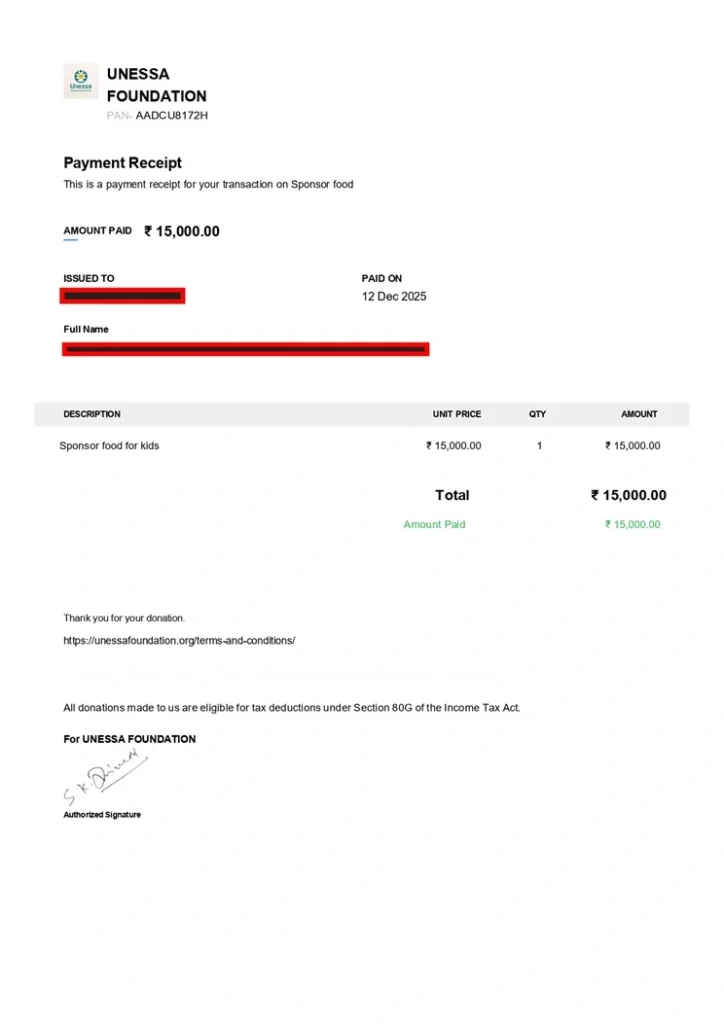
8. Donation Receipts & 80G Receipts
A proper donation receipt includes:
- Donor name
- Amount
- Purpose
- PAN
- NGO details
- 80G number
- Signature & seal
9. Governance Documents
Should list:
- Trustees / Directors
- Leadership team
- Board structure
Fake NGOs hide this information.
10. Operational Policies
Well-run NGOs maintain:
- Child protection policy
- Anti-fraud policy
- Volunteer code of conduct
- Financial control systems
What Should a Legitimate Donation Receipt Contain?
Required Item
Why It Matters
Donation amount
Confirms transaction
Donor name
Mandatory for 80G
NGO name (legal name)
Avoids fraud
PAN of NGO
Required by law
80G registration number
To claim tax deduction
Date & receipt number
Audit trail
Digital or physical signature
Authenticity
Mode of payment
Traceability
If an NGO cannot issue a proper receipt → do not donate again.
Impact Reporting: The #1 Indicator of a Genuine NGO
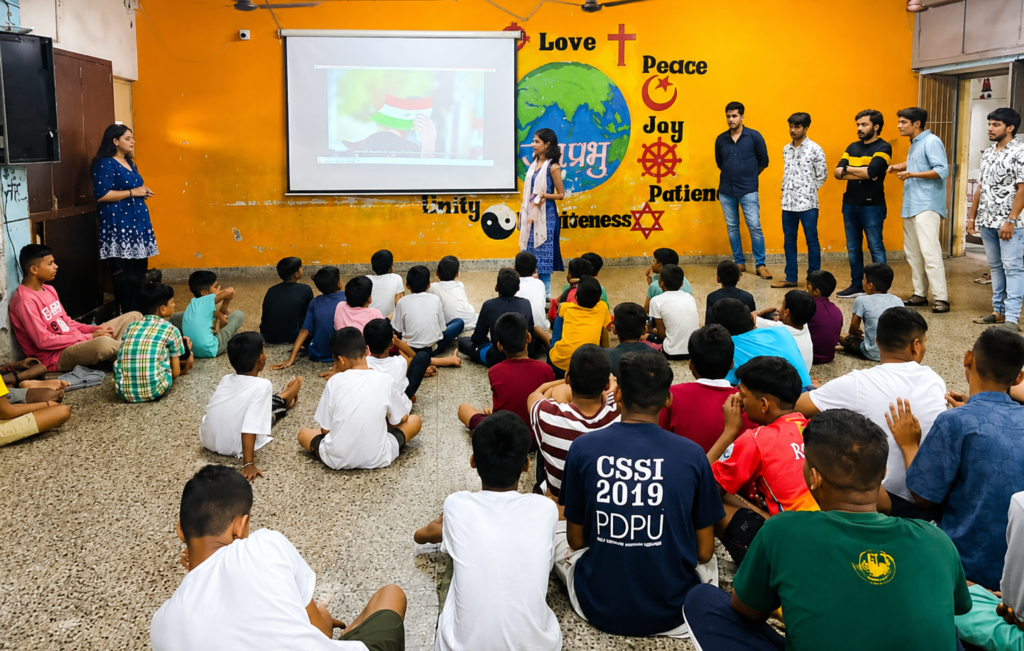
Impact reporting is proof of work, including:
- Case studies
- Photos & videos
- Beneficiary stories
- Statistical outcomes
- Before-and-after documentation
- Distribution logs
- Program evaluations
Transparent NGOs never hide impact.
Fake NGOs:
- Steal images
- Use stock photos
- Use AI-generated pictures
- Share irrelevant images
Comparison Table: Transparent vs Non-Transparent NGOs
Feature
Transparent NGO
Non-Transparent NGO
Documents
Complete & updated
Missing/inconsistent
Receipts
Issued clearly
Not provided
Bank Account
NGO name
Personal account
Photos & Reports
Authentic
Stock/A.I. images
Annual Audit
Public
Hidden
Governance Info
Clear
Unknown
Donor Communication
Regular
None
Risk Level
Low
Very High
Checklist: How to Identify a Transparent NGO in India
- Registered under Trust/Society/Section 8
- Valid 12A & 80G
- Annual audit available
- PAN verified
- NGO bank account
- Real impact photos
- Beneficiary testimonials
- Public updates
- Proper donation receipts
- Clear governance
- No personal UPI collections
- Real-time donor communication
If even 6 or more are missing, reconsider supporting the NGO.
Learn More About this!
Why Transparency Is the Strength of Unessa Foundation
Unessa Foundation is recognized for its high transparency standards, including:
- Valid 80G & 12A
- Public governance information
- Clear donation receipts
- Verified PAN & bank details
- Detailed impact reports
- Authentic field photos & videos
- Annual audits published
- Ethical beneficiary practices
- Zero fund misuse
Unessa Foundation sets a national benchmark for transparent, ethical, compliant NGO operations.
Support Verified, Transparent & Impactful Work — Donate Through Unessa Foundation.
Why Donors Should Avoid NGOs That Lack Transparency
- Misuse of funds
- No accountability
- Zero tax benefits
- No real beneficiaries helped
- High fraud risk
- Reputation risk for corporates
Transparency protects donors, beneficiaries, and the integrity of the social sector.
Choose Trust. Choose Transparency. Choose Unessa Foundation — India’s Verified & Ethical Social Impact Organization.
FAQ
1. What is the most important transparency document for an NGO?
80G and 12A certificates are essential indicators of compliance and transparency.
2. Why are receipts crucial?
Receipts ensure donations are recorded, traceable, and eligible for tax benefits.
3. How do NGOs prove impact?
Through authentic photos, case studies, videos, and distribution records.
4. What makes Unessa Foundation transparent?
Unessa publishes all key documents, maintains strict audits, and shares real-time impact updates.
5. Can an NGO be trusted if it only operates on social media?
Only if it provides complete legal documents and compliance proofs.