

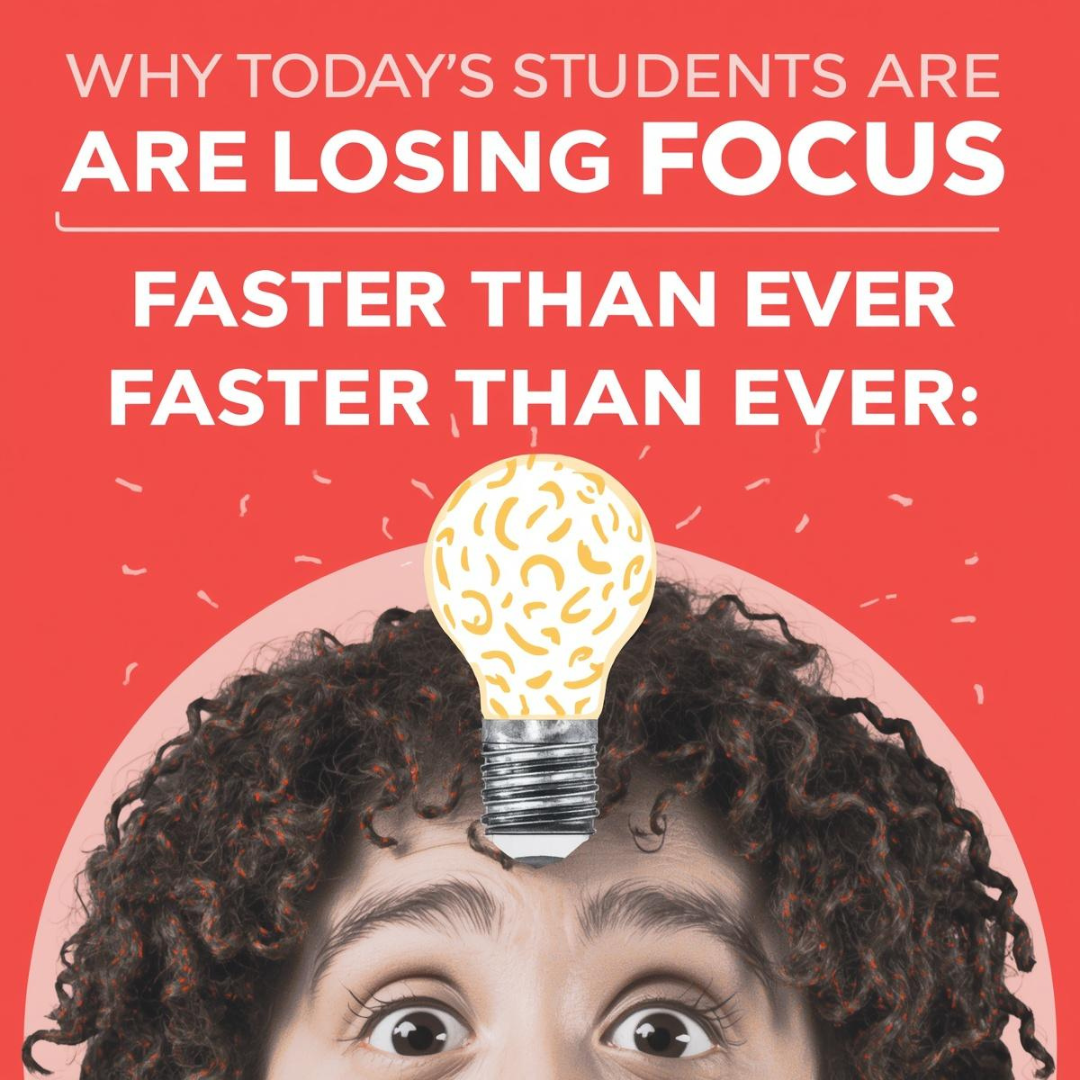


Why can’t students concentrate the way they used to just a few years ago?
Across schools and colleges, a growing concern is emerging—students are losing focus faster than ever before. Tasks that once required sustained attention now feel difficult to complete without distraction.
Whether it’s studying, reading, or even attending classes, students today struggle to maintain concentration for long periods. This is not just a personal issue—it reflects a broader shift in lifestyle, technology use, and learning environments, where students are losing focus due to constant digital and mental distractions.
The result is clear:
- Reduced attention span
- Increased distractions
- Lower productivity
- Difficulty in deep learning
As students are losing focus more frequently, it becomes harder for them to engage in meaningful learning or retain information effectively.
Understanding why this is happening is essential—not just for students, but also for educators and parents who want to improve learning outcomes and address the reasons why students are losing focus in today’s fast-changing environment.
What “Losing Focus” Really Means Today
Focus is not just about sitting with a book—it is the ability to sustain attention on a task without distraction.
Today, students may spend hours studying but only a fraction of that time is actually productive. Frequent interruptions—both internal and external—break concentration and reduce efficiency.
Insight:
The issue is not lack of effort—it is lack of sustained attention.
The Rise of Digital Distractions
Smartphones, social media, and instant notifications create an environment where attention is continuously divided.
Students are exposed to:
- Notifications every few minutes
- Constant content updates
- Easy access to entertainment
This constant exposure is a major reason why students are losing focus, as their attention is continuously divided between multiple sources of stimulation. Over time, this environment trains the brain to expect frequent changes, which is why students are losing focus even during important tasks like studying or attending classes.
Example:
A student studying for one hour may check their phone multiple times, breaking their focus repeatedly.
Insight:
Even small interruptions can significantly reduce concentration and increase study time.
Impact of Short-Form Content Consumption
One of the most significant reasons behind students losing focus faster is the rapid rise of short-form content. Platforms that deliver information in a few seconds have fundamentally changed how students process and engage with information.
Short-form content is designed to be quick, engaging, and constantly changing. While it makes information easily accessible, it also trains the brain to expect instant stimulation and rapid rewards. Over time, this reduces the ability to stay focused on longer, more demanding tasks.
Students are habituate to consuming information in seconds, which makes longer tasks like reading or studying feel difficult.
This leads to:
- Reduced patience for deep learning
- Preference for quick information
- Difficulty focusing on detailed explanations
Example:
Watching short videos repeatedly trains the brain to expect constant stimulation.
Insight:
Attention span adapts to consumption habits.
👉 Click here to know about Rote Learning in India: Why It Fails Modern Students
Multitasking and Its Hidden Costs
Multitasking is often seen as a productive habit, especially among students who try to manage studying, messaging, and browsing at the same time. However, in reality, multitasking is one of the key reasons behind students losing focus faster.
The human brain is not designed to perform multiple attention-heavy tasks simultaneously. Instead, it rapidly switches between tasks. Each switch may seem small, but it comes with a mental cost—reducing efficiency and breaking concentration.
Over time, this habit trains the brain to:
- Avoid sustained focus
- Seek constant switching
- Struggle with deep concentration
Reduced Efficiency:
Switching between tasks slows down overall performance because the brain needs time to refocus each time.
Impact:
- More time required to complete tasks
- Lower productivity despite longer study hours
Example:
A student studying while checking messages may take twice as long to complete the same work.
Lower Quality of Work:
Divided attention leads to mistakes and shallow understanding.
Impact:
- Increased errors
- Weak conceptual clarity
- Poor retention of information
Insight:
Quality drops when focus is split across multiple tasks.
Increased Mental Fatigue:
Constant switching puts extra strain on the brain, leading to faster exhaustion.
Impact:
- Reduced energy levels
- Difficulty maintaining concentration
- Higher chances of burnout
Weak Memory Retention:
When attention is divided, the brain struggles to store information effectively.
Impact:
- Difficulty recalling studied topics
- Need for repeated revision
- Reduced long-term learning
Lack of Deep Learning Habits
Modern study habits often prioritize speed over depth.
Students tend to skim content, highlight notes, or watch quick explanations instead of engaging deeply with material.
This leads to:
- Weak understanding
- Poor retention
- Increased revision time
Example:
Reading multiple chapters quickly without testing understanding results in surface-level knowledge.
Insight:
Deep learning requires effort, time, and focus.
Real Example: Study Time vs Actual Focus
A student plans to study for 3 hours.
Reality:
- 30 minutes lost to phone usage
- 20 minutes lost to distractions
- 40 minutes of low-focus reading
Outcome:
Only about 1–1.5 hours of effective study happens.
Lesson:
Time spent does not equal productivity—focus determines effectiveness.
Psychological Impact of Constant Distraction
Continuous distractions affect not just productivity but also mental well-being.
Students may feel:
- Overwhelmed
- Mentally fatigued
- Frustrated with low productivity
Insight:
Reduced focus leads to stress, which further reduces focus—creating a cycle.
Why Focus is Declining Faster Now
The decline in attention is not random—it is the result of multiple changes in how students live, learn, and interact with information. The reason students losing focus faster has become a widespread concern is because modern environments are constantly competing for attention.
Increased Screen Time:
Students spend a significant portion of their day on screens—whether for study, entertainment, or communication. Constant switching between apps and content reduces the brain’s ability to stay focused on a single task.
Constant Dopamine Stimulation:
Digital platforms are designed to provide quick rewards—likes, messages, short videos—which create a habit of seeking instant gratification.
Shortened Content Formats:
The rise of short-form content trains the brain to process information quickly but superficially.
Academic Pressure Without Strategy:
Students are often expected to study more, but not necessarily taught how to study effectively.
Multitasking Culture:
Modern habits encourage doing multiple things at once—studying, messaging, browsing—which divides attention.
Lack of Mental Rest:
Continuous engagement with devices leaves little time for the brain to rest and reset.
Key Insight:
Focus is declining faster today because the environment is designed to distract. The more fragmented the attention becomes, the harder it is to return to deep, sustained concentration.
Lesson:
Improving focus is not just about studying harder—it is about reducing distractions, managing stimulation, and rebuilding the ability to concentrate over time.
Practical Ways to Improve Focus
Improving focus is not about sudden drastic changes—it is about building consistent habits that train the brain to concentrate better over time. Since the issue of students losing focus faster is often linked to lifestyle and study patterns, the solution lies in creating a structured and distraction-free approach to learning.
✔ Structured Study Sessions:
Instead of studying randomly, students should divide their study time into clearly defined sessions with specific goals. Knowing exactly what needs to be completed in a session helps the mind stay engaged and reduces unnecessary wandering.
✔ Reduce Digital Interruptions:
Constant notifications and easy access to devices break concentration repeatedly. Keeping the phone away, turning off notifications, or using focus modes can significantly improve attention span.
✔ Active Learning:
Passive reading often leads to distraction. Engaging with the material through questioning, self-testing, or problem-solving keeps the brain actively involved.
✔ Regular Breaks:
Techniques like studying for 25–50 minutes followed by short breaks help maintain mental energy and prevent burnout.
✔ Environment Control:
Your surroundings directly affect your ability to concentrate. A quiet, organized space with minimal distractions helps maintain focus for longer periods.
Key Insight:
Focus is not something you either have or don’t—it is a skill that can be developed through consistent practice and the right environment.
Effect of Sleep Deprivation on Focus
Sleep plays a critical role in maintaining attention and cognitive performance, yet many students compromise on it.
Irregular sleep patterns, late-night screen usage, and academic pressure reduce sleep quality. When the brain does not get enough rest, its ability to concentrate drops significantly.
This leads to:
- Slower thinking and reaction time
- Reduced memory retention
- Increased mental fatigue
Example:
A student studying late at night may feel productive, but the next day struggles to focus during classes or revision.
Insight:
Focus is directly linked to mental energy, and sleep is the primary source of that energy.
Conclusion
The issue of students losing focus faster is not just about individual habits—it is a result of changing environments, technology use, and learning patterns.
While distractions are increasing, the ability to focus remains one of the most valuable skills for learning and growth.
Improving focus does not require drastic changes—it requires consistent, small adjustments in how students approach their time, environment, and study methods.
Frequently Asked Questions
Why are students losing focus faster today?
Due to digital distractions, short-form content, and constant multitasking.
Does technology reduce attention span?
Excessive use of fast-paced content can reduce the ability to focus for long periods.
Can focus be improved?
Yes, through structured study habits, reduced distractions, and active learning techniques.
Is multitasking effective for studying?
No, it reduces efficiency and increases mental fatigue.
How long can students focus effectively?
Typically 25–50 minutes with proper breaks.