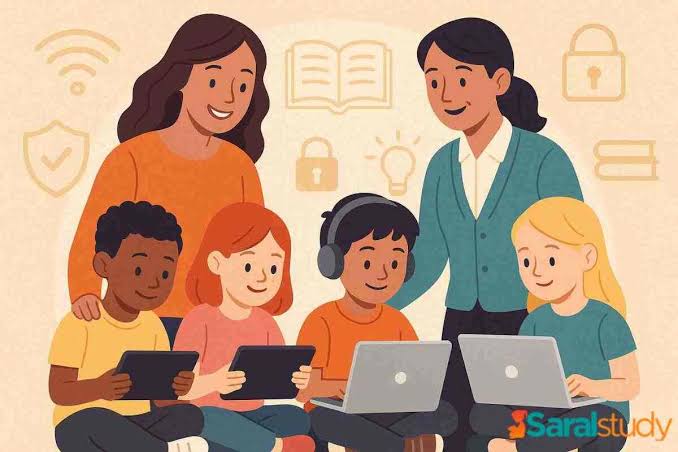

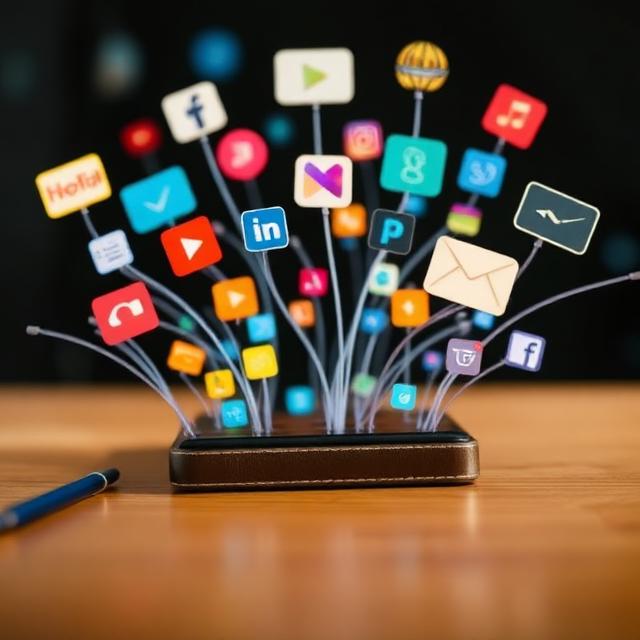

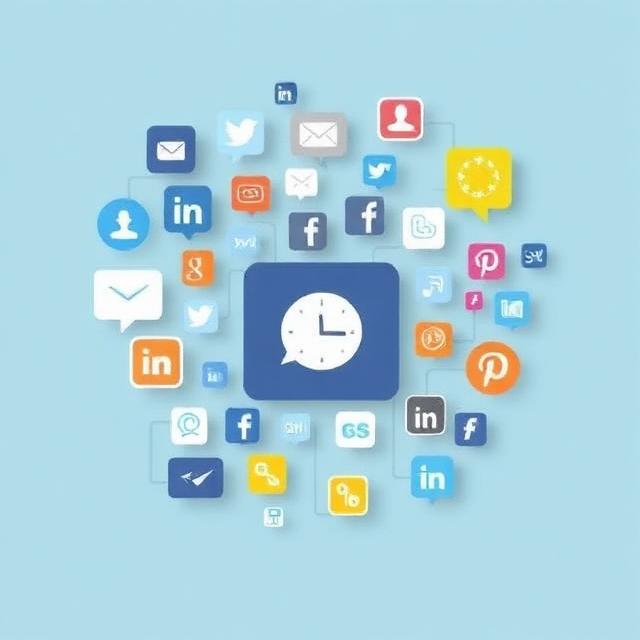
Social media has rapidly evolved from a platform for entertainment into a powerful learning ecosystem. Social Media Affects Student Learning in many ways as, for today’s students, education is no longer limited to classrooms, textbooks, or scheduled lectures. Concepts, tutorials, and study resources are now available instantly through short videos, discussion groups, creator-led explanations, and peer communities.
Whether it is learning coding, revising formulas, understanding science concepts, or exploring career opportunities, Social Media Affects Student Learning by changing how quickly and easily students access information, with learners increasingly relying on social media as part of their daily learning routine.
This shift is fundamentally changing not just what students learn, but how they learn, and Social Media Affects Student Learning by shaping attention spans, study habits, and engagement patterns across digital platforms.
Overall, Social Media Affects Student Learning by redefining traditional education boundaries and making learning more flexible, accessible, and continuous.
Learning Has Moved Beyond the Classroom
Traditional learning follows a structured path—lectures, textbooks, notes, assignments, and exams. Social media has introduced a much more flexible and student-driven learning model.
Students now consume knowledge through:
- short educational reels
- tutorial videos
- live doubt-solving sessions
- study communities
- creator-led explainers
- peer-shared notes
This accessibility allows students to learn anytime and anywhere.
A student preparing for a networking exam may watch a quick subnetting tutorial on their phone while commuting, then later join a peer discussion group for problem solving.
Insight:
Learning has become on-demand. Students no longer wait for the next class to clarify doubts.
This convenience makes learning faster and often more engaging.
Short-Form Content Is Reshaping Attention and Understanding
One of the biggest changes social media has introduced is microlearning.
Students now prefer learning in short bursts instead of long study sessions.
Instead of reading a full chapter, they may watch a 60-second explanation of a concept.
This works particularly well for:
- revision
- quick concept understanding
- formula recall
- coding syntax refreshers
- exam tips
For example, a student learning React may understand hooks faster through a short creator demo than through dense documentation.
Short-form content is one of the key ways in which Social Media Affects Student Learning, because it changes how students consume and process information in smaller, faster chunks. Instead of long study sessions, learners often prefer quick videos that explain one concept at a time.
However, this is also where Social Media Affects Student Learning in a more complex way, as constant exposure to short content can reduce attention span and make long-form studying feel difficult.
At the same time, Social Media Affects Student Learning positively when used for revision and quick concept reinforcement, especially when combined with deeper practice and structured learning.
Overall, Social Media Affects Student Learning by reshaping how students balance speed of learning with depth of understanding in modern education.
Practical Tip:
Use short-form educational content for revision, but always follow it with deeper textbook or hands-on learning.
This ensures retention instead of passive consumption.
Peer-to-Peer Learning Has Become Stronger
Social media has made collaborative learning easier than ever.
Students are constantly interacting through:
- WhatsApp study groups
- Telegram channels
- Discord communities
- LinkedIn learning circles
- Reddit discussions
These spaces allow instant doubt solving and idea exchange.
A concept explained by another student in simple terms may often feel easier to understand than a formal lecture.
Case Study:
A second-year engineering student struggling with Data Structures joined an online student coding group. Through peer-shared explanations and daily problem-solving discussions, the student improved significantly and later cracked a coding internship.
This shows how social learning can improve both confidence and performance.
Social Media Is Influencing Study Habits
One major shift is that many students now confuse content consumption with actual learning. Social Media Affects Student Learning by changing how students perceive productivity, often making them feel they are learning just by watching videos.
Watching multiple educational videos can create the feeling of productivity, even when no active recall or practice is happening. This is another way Social Media Affects Student Learning, as it encourages passive learning instead of active engagement.
Learning requires:
- note-making
- self-testing
- revision
- practical implementation
Without these, retention remains weak.
Lesson: Watching educational content is only the first step. Real learning happens when students apply what they consume. This is also where Social Media Affects Student Learning most significantly, because without application, knowledge does not convert into skill.
For example, watching a Python tutorial is useful only if followed by coding practice. Otherwise, the impact of Social Media Affects Student Learning remains limited to short-term memory rather than long-term understanding.
The Negative Impact on Focus
While social media offers learning benefits, it also significantly affects concentration.
Students often begin with educational content but quickly get distracted by entertainment-based recommendations.
A study reel can instantly be followed by memes, celebrity clips, or trending videos.
This constant switching trains the brain to expect fast rewards.
As a result, many students struggle with long reading sessions and deep focus.
Insight:
The same platform that helps students learn can also weaken their ability to concentrate.
This is one of the biggest challenges modern learners face.
👉 Click here to know about Why Today’s Students Are Losing Focus Faster Than Ever: Shocking Reasons You Must Know
Increased Exposure to Diverse Learning Styles
One major advantage is exposure to multiple teaching styles.
Different creators explain the same concept in different ways.
Some use animations, others use storytelling, practical examples, or visual demonstrations.
This diversity helps students find a style that matches their understanding.
For example, one student may understand machine learning through mathematical derivation, while another may understand it better through real-world examples.
Practical Tip:
Follow educators whose teaching style aligns with your learning preference.
This can significantly improve understanding speed.
Skill-Based Learning and Career Awareness
Social media is also helping students develop skills beyond academics.
Students now learn:
- web development
- graphic design
- AI tools
- freelancing
- resume building
- interview preparation
- communication skills
This career-focused learning is especially valuable for college students.
Platforms help students stay updated with industry trends and internship opportunities.
Case Study:
A CSE student began following frontend development creators and built multiple React projects through guided content. Within months, the student developed a portfolio and started applying for internships.
This demonstrates how social media can accelerate career readiness.
The Risk of Misinformation
While social media has made learning more accessible and engaging, it has also introduced one of the most serious challenges for students: misinformation.
Unlike textbooks, academic journals, or classroom lectures that typically go through expert review and verification, content on social media can be created and shared by almost anyone. This means that not every educational video, infographic, thread, or post is accurate.
A concept explained confidently does not always mean it is correct.
Students often trust content simply because it is presented in a polished format with animations, high-quality visuals, or a large number of likes and shares. However, popularity should never be confused with credibility.
For example, a short video explaining a scientific theory in just 30 seconds may oversimplify important details. While it may help students get a quick overview, missing context can lead to misunderstandings when the topic is applied in exams or real-world scenarios.
This problem becomes even more serious in subjects such as:
- science
- mathematics
- law
- finance
- medicine
- technical programming concepts
In these areas, even a small factual error can completely change the meaning of the concept.
A student learning SQL joins from an incorrect social media post, for instance, may continue practicing the wrong syntax and carry that misunderstanding into assignments, interviews, or projects.
Insight:
Social media content is often optimized for engagement and speed, not always for depth and academic accuracy.
Many creators simplify concepts to make them easier to consume, but excessive simplification can remove critical nuances.
Case Study:
A college student preparing for a web development internship relied mainly on short social media tutorials to learn React. While the videos helped them build basic UI components, some concepts were outdated and did not align with modern best practices. During the technical interview, the student struggled to answer questions related to updated hooks patterns and project structure standards.
This highlights how misinformation is not always completely false—it can also be partially correct but incomplete or outdated.
Building a Balanced Learning Approach
The real impact depends on how students use these platforms.
Used with discipline, social media can be an excellent learning tool.
Used without control, it can reduce productivity.
A balanced approach includes:
- scheduled learning time
- limited entertainment scrolling
- note-making after watching content
- deep study sessions offline
Key Takeaway: Social media should be a tool for structured learning, not endless passive scrolling.
Conclusion
Social media is undeniably transforming the way students learn.
It has made education faster, more interactive, personalized, and accessible. At the same time, it has introduced challenges such as distraction, shorter attention spans, and misinformation.
For modern students, the goal is not to avoid social media, but to use it intentionally.
The future of learning will belong to those who can balance fast digital learning with deep focused study.
Frequently Asked Questions
Can students fully trust educational content on social media?
Not always. While many creators provide valuable explanations, some content may be incomplete, oversimplified, or outdated. Students should always verify important concepts with trusted academic sources.
Why is misinformation harmful for students?
Misinformation can lead to incorrect understanding of concepts, poor exam performance, confusion during practical work, and mistakes in assignments or projects.
How can students identify reliable educational content online?
Students should check whether the content creator cites trusted sources, uses correct terminology, provides practical examples, and aligns with textbooks or official documentation.
Is short-form educational content always inaccurate?
No, short-form content can be useful for quick understanding and revision. The issue arises when students rely on it as their only learning source without deeper study.
What is the best way to use social media for learning safely?
Use it for concept discovery and quick revision, then cross-check the topic with verified sources like textbooks, teachers, university notes, or official documentation.