

Why Education Fundraising Requires Strategy, Not Just Goodwill
Goodwill alone does not fund a school year. A child’s education costs money — for fees, supplies, uniforms, transport, teacher salaries, and program management. Without a sustained, strategic funding stream, even the best-designed education programs collapse mid-year, leaving children worse off than if they had never started.
Effective efforts to raise funds for underprivileged kids education are not about one viral campaign or a single generous donor. It is about building a diversified, reliable funding base that includes individual donors, corporate partners, government grants, and community contributions — each playing a defined role in the funding ecosystem.
Unessa Foundation, for example, has successfully implemented multi-channel strategies to raise funds for underprivileged kids education, ensuring programs continue uninterrupted across multiple Indian states. By diversifying donors, Unessa Foundation has reduced dependency on a single source and increased long-term program sustainability.
👉 Click here to know about Top 10 Ways to Get Scholarships for Underprivileged Children
Understanding the Education Funding Gap in India
India spends approximately 2.9% of GDP on education — well below the 6% recommended by UNESCO. The gap between government funding and what is needed to provide quality education for every child is enormous. NGOs like Unessa Foundation fill part of that gap, but their capacity to do so depends entirely on the quality and consistency of their fundraising programs.
Case Study
- Background: A small education NGO in UP depended on two corporate donors for 90% of its budget.
- Challenge: When one donor exited due to internal policy changes, the NGO had to close three learning centers mid-year.
- Outcome: 450 children lost their learning support with no transition plan.
- Actions Taken: The NGO redesigned its fundraising strategy to include individual donors (40%), corporate CSR (35%), government grants (15%), and community contributions (10%).
- Outcome after two years: Budget diversification reduced vulnerability; the NGO sustained operations through two subsequent donor exits without program disruption.
- Lesson: Fundraising diversification is a risk management strategy, not just a growth strategy.
Pro Tips
- Set a funding diversification target: no single source should represent more than 40% of your total budget.
- Build reserves equal to at least three months of operating costs before scaling programs.
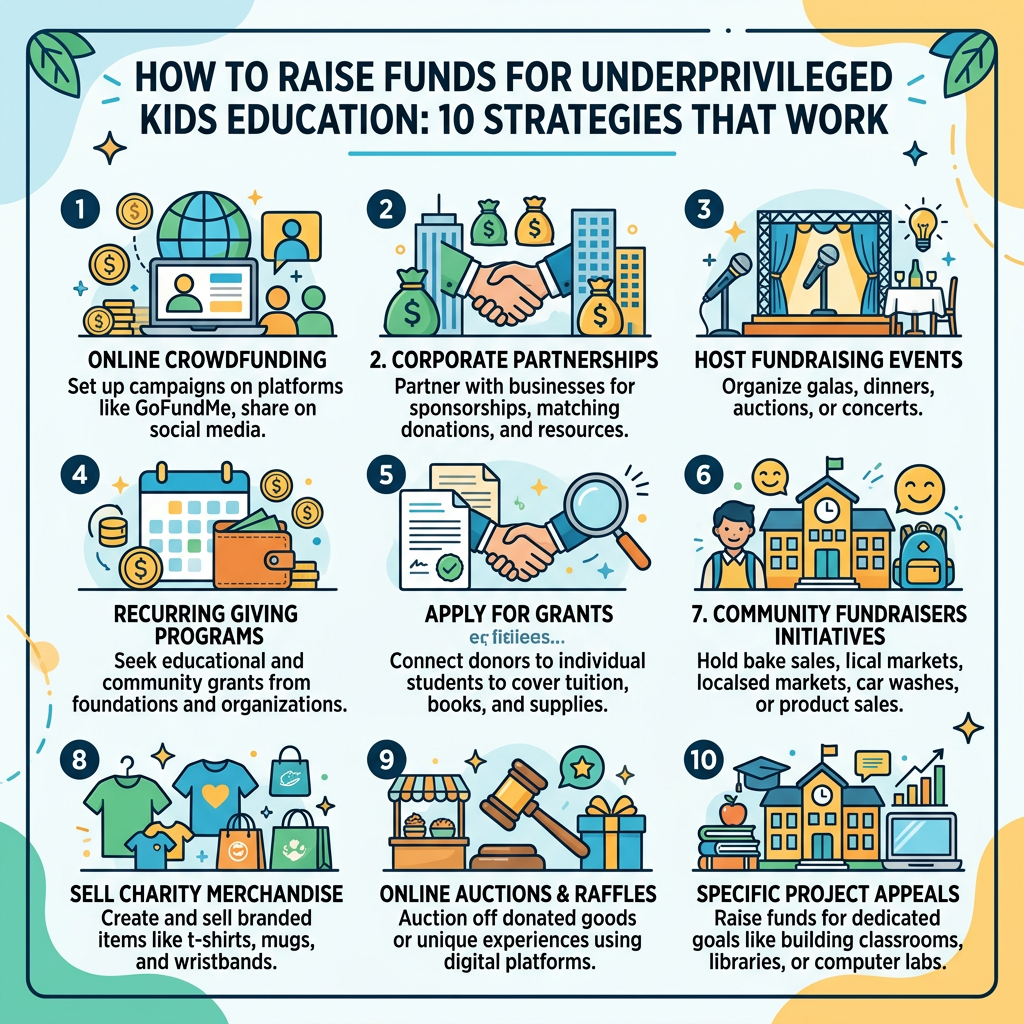
10 Proven Education Fundraising Strategies for Underprivileged Children
Not all volunteer teaching roles are the same. Understanding the type helps you choose the right fit.
1. Crowdfunding Campaigns on Dedicated Platforms
Milaap, GiveIndia, and Ketto allow NGOs and individuals to raise education funds online with transparent impact reporting and donor receipts. Unessa Foundation has raised significant funds through crowdfunding for its after-school and remedial programs, leveraging compelling storytelling and visuals to engage donors.
2. Corporate CSR Partnerships
Approach companies with CSR mandates under Section 135 of the Companies Act. Education is one of the most fundable CSR priorities. Tailor proposals to show measurable outcomes, such as number of children reached, improvements in learning levels, or community impact.
3. Monthly Giving Programs
Recurring donors are the most valuable — even Rs. 500 per month from 100 donors funds a learning center. Build a donor journey that converts one-time givers to monthly supporters. Highlight the compounding impact of monthly contributions.
4. Events and Runs for Education
Marathons, walkathons, and fundraising dinners build community, create media opportunities, and generate significant one-time funding. Unessa Foundation has successfully combined events with storytelling, inviting beneficiaries to share their experiences, increasing donor connection and retention.
5. Birthday and Anniversary Fundraisers
Encourage supporters to replace gifts with donations to your education program on their birthdays through Facebook Fundraisers or Milaap. Personal connections increase emotional engagement and donation likelihood.
6. Legacy Giving Programs
Encourage high-net-worth supporters to include education NGOs in their estate planning — this creates significant long-term funding. Legacy gifts can be structured as endowments, ensuring a perpetual funding stream for programs like teacher salaries or library expansions.
7. Grant Applications
Apply systematically to foundations — Tata Trusts, Sir Ratan Tata Trust, Azim Premji Foundation, and international bodies like USAID and GIZ all fund education programs in India. Successful grant applications require evidence-backed proposals, clear budgets, and strong monitoring & evaluation frameworks.
8. Government Schemes
Programs like Samagra Shiksha, PM POSHAN, and State Education Innovation Funds provide grants for education programs that meet defined criteria. Partnering with government initiatives can reduce operational costs while increasing reach.
9. Alumni Networks
Build a community of former beneficiaries who contribute back — even small amounts from many alumni create meaningful funding and powerful testimony. Unessa Foundation maintains alumni engagement through newsletters, mentorship programs, and annual reunions.
10. Peer-to-Peer Fundraising
Train your most committed supporters to fundraise among their own networks. Each becomes a fundraising center, multiplying your organizational capacity. Peer-to-peer fundraising leverages social proof and personal stories, often outperforming direct campaigns in conversion rates.
👉 Click here to know about Long-Term Benefits of Sponsor Education Programs: Why Investing Now Changes Everything
Crafting a Fundraising Message That Converts
The most effective education fundraising messages combine specificity, urgency, and proof.
- Specificity: tell donors exactly what their money does (‘Rs. 1,200 funds one year of education support for one child’).
- Urgency: explain why the need is immediate (‘School term begins in June; children need support now’).
- Proof: show outcomes, not just activities (‘73% of children in our program passed their board exams’).
Case Study
- Background: An NGO ran two crowdfunding campaigns for the same education program in consecutive years.
- Year 1 Message: ‘Help underprivileged children get education.’
- Year 2 Message: ‘Rs. 1,500 gives one child in Dharavi a full year of tutoring, supplies, and mentoring. 87% of our students passed their exams last year.’
- Outcome: Year 1 raised Rs. 2.4 lakh; Year 2 target was Rs. 5 lakh. Year 2 raised Rs. 6.1 lakh from 34% more donors.
- Lesson: Specific, evidence-backed messaging dramatically outperforms generic appeals.
Pro Tips
- A/B test your fundraising messages — even small changes in subject lines or opening sentences can significantly affect conversion.
- Send impact updates to all donors within 90 days of their gift; this is the single most effective driver of repeat donations.
Building Donor Relationships for Long-Term Education Funding
The best fundraising programs do not just raise money — they build communities of committed supporters who believe in the mission and act as ambassadors for the cause. This requires consistent, honest communication about program outcomes, challenges, and needs.
Unessa Foundation’s donor engagement model includes quarterly impact reports, annual donor visits to program sites, beneficiary story updates, and dedicated relationship managers for corporate partners. This level of engagement produces significantly higher donor retention rates than transactional fundraising.
Digital Fundraising Tools That Maximize Education Donations
Email marketing platforms (Mailchimp, Zoho Campaigns), CRM systems for donor management (Salesforce Nonprofit, DonorPerfect), and social media advertising for campaign amplification are now accessible and affordable for NGOs of all sizes.
A basic digital fundraising stack can be built for under Rs. 5,000 per month and managed by a part-time resource.
Case Study
- Background: A mid-size education NGO shifted from offline to digital fundraising during COVID-19 lockdowns.
- Challenge: Their entire fundraising was event-based and face-to-face.
- Actions Taken: Built an email list from existing donors, launched a monthly giving program, created a campaign-specific landing page, and ran targeted Facebook ads.
- Outcome: Within six months, online giving exceeded pre-COVID event revenue by 23%.
- Lesson: Digital fundraising is not a fallback — it is a scalable primary channel.
Pro Tips
- Invest in a good donation landing page — it is the single highest-ROI digital fundraising asset you can build.
- Use WhatsApp groups strategically for peer fundraising; it is India’s most accessible and trusted digital communication channel.
Conclusion
Every education program for underprivileged children runs on funding. Without it, learning centers close, teachers go unpaid, and children lose the support they have come to depend on.
The 10 fundraising strategies in this blog give you the tools to build a sustainable, diversified funding base for education programs that change lives. Start with one strategy, execute it well, and build from there.
Unessa Foundation is here to partner with you — as a program implementer, a fundraising advisor, or a co-campaigner. Together, we can ensure that no education program fails for lack of funding.
Support Unessa Foundation
Visit unessa.org to donate, volunteer, or partner with us in transforming education for underprivileged children across India.
Frequently Asked Questions
What are the best platforms for education crowdfunding in India?
Milaap, GiveIndia, and Ketto are the most established platforms for education crowdfunding in India, offering 80G receipts, impact reporting, and verified NGO listings.
How can companies contribute to education fundraising through CSR?
Companies can fund specific education programs as CSR projects under Schedule VII of the Companies Act, which includes basic education as an eligible category for CSR spend.
What percentage of fundraising goes directly to programs?
Best-practice NGOs allocate 70-80% of funds to programs and 20-30% to overhead including fundraising, administration, and monitoring. Always ask any organization you donate to for their program expense ratio.
Can small donors make a real impact on education programs?
Absolutely. Even small, recurring contributions of Rs. 500–1,000 per month can fund a child’s education for a year or support teacher salaries, books, and learning materials.
How can donors track the impact of their contributions?
Most professional NGOs, including Unessa Foundation, provide quarterly impact reports, photos/videos of beneficiaries, and success stories to ensure transparency and accountability.
Are there tax benefits for donating to education programs in India?
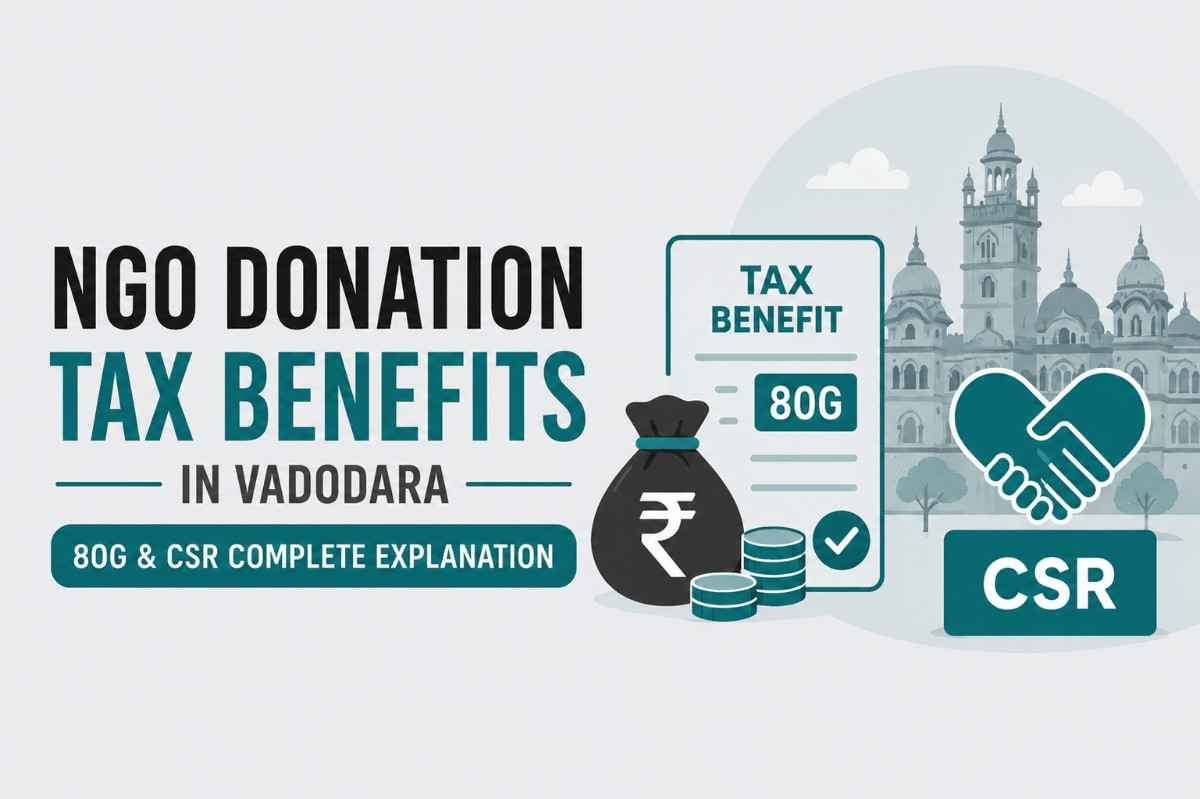
Yes. Donations to NGOs with 80G certification allow donors to claim 50% tax deduction under Section 80G of the Income Tax Act.