
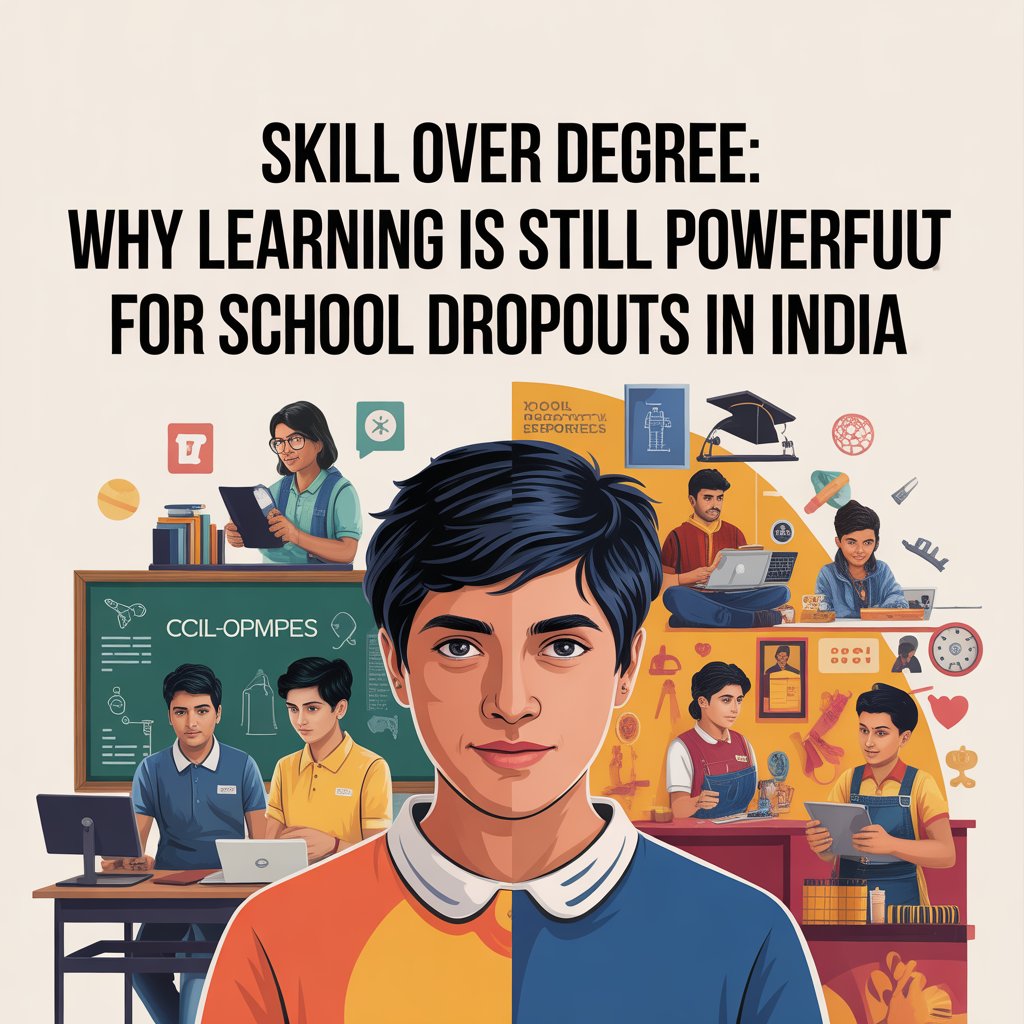

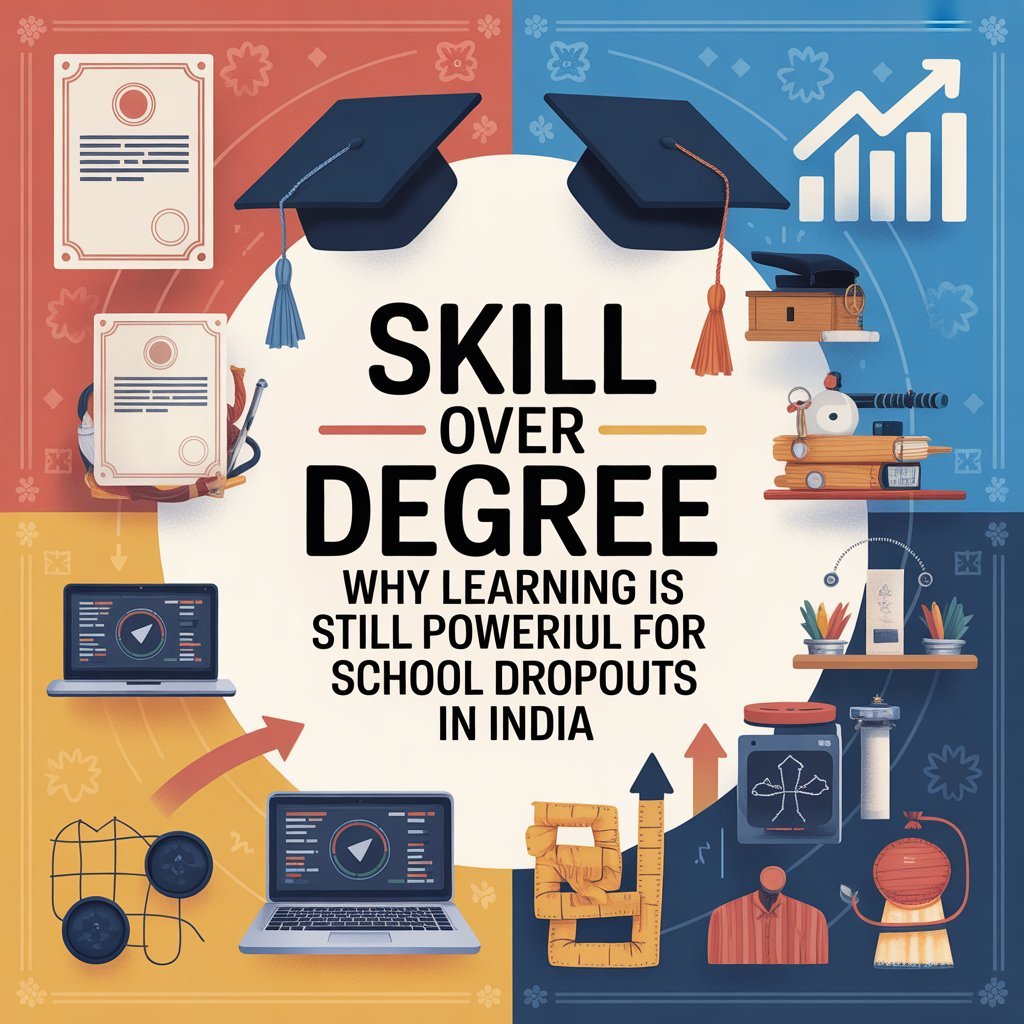
What if a degree is not the only path to success?
In India, millions of students leave school early due to financial pressure, family responsibilities, or lack of academic support. But today, the focus is shifting from degrees to skills that create real employment opportunities.
This is where learning is still powerful for school dropouts, and skill based learning for school dropouts in India becomes a game-changer in shaping future-ready careers.
Instead of traditional academic routes, learners are now building careers through vocational training, digital skills, and non-formal education programs, often supported by initiatives like Unessa Foundation, which works to improve access to education for underprivileged learners.
👉 Key Insight: In many industries, practical skills now matter more than formal degrees.
Why Skills Matter More Than Degrees
The modern job market is changing rapidly. Employers now prioritize:
- Practical ability
- Problem-solving skills
- Real-world experience
Key Reasons:
- Degrees don’t always reflect job readiness
- Skills are directly linked to productivity
- Entry-level jobs often require training, not degrees
For school dropouts, this shift clearly shows that learning is still powerful for school dropouts, especially when supported by initiatives like Unessa Foundation, which helps make education more accessible and skill-focused for underprivileged learners.
📌 Case Study
- Background:
Rahul, a school dropout from Uttar Pradesh, left education after Class 9 due to financial issues. - Challenge:
No formal degree, low confidence, limited job prospects. - Action Taken:
He joined a vocational training program focused on basic computer and customer service skills. - Outcome:
Within 6 months, Rahul secured a job in a retail support role. - Lesson:
Skills can replace degrees when applied to real job roles.
💡 Pro Tips
- Focus on industry-relevant skills, not just certificates
- Choose training aligned with job demand
Skill-Based Learning Ecosystem in India
India has one of the largest youth populations in the world, but also a high number of school dropouts. In this context, Learning Is Still Powerful for School Dropouts, especially when supported through skill-based systems.
Key reasons skill-based learning is important:
- Bridges the gap between education and employment
- Supports financially weaker communities
- Provides flexible learning opportunities
- Encourages entrepreneurship and self-employment
- Reduces dependency on formal degrees
Skill-based education is not just an alternative—it is becoming a mainstream pathway to employment.
📌 Case Study
- Background:
A group of rural dropouts in Rajasthan lacked access to higher education. - Challenge:
No formal schooling opportunities after dropout. - Action Taken:
They enrolled in a government-supported skill training program. - Outcome:
Many participants started working in local industries within 1 year. - Lesson:
Structured skill ecosystems improve rural employability.
💡 Pro Tips
- Combine offline + online learning methods
- Choose government-recognized programs for better job placement
India’s Skill Development Ecosystem
India has developed a wide ecosystem to support skill based learning for school dropouts in India, where Learning Is Still Powerful for School Dropouts and continues to create real opportunities.
Major components include:
- Government skill programs and initiatives
- Private vocational training institutes
- NGO-led education and upskilling programs
- Community learning centers in rural and urban areas
- Online learning platforms and certification courses
1. Government Skill ProgramsNational and state-level initiatives focus on vocational training, digital literacy, and job readiness.
2. Private Training Institutes
Short-term courses in IT, retail, hospitality, and technical trades.
3. NGO-Led Education Initiatives
NGOs provide free or low-cost training, especially for underprivileged learners.
4. Community Learning Centers
Local centers that offer accessible education support in rural and urban areas.
This ecosystem is designed to ensure that education is not limited by age, income, or school completion status.
Vocational Training and Employment Pathways
Vocational training is one of the strongest pillars of skill development in India, where Learning Is Still Powerful for School Dropouts and continues to open real career pathways, reinforcing that Learning Is Still Powerful for School Dropouts in shaping employability and growth.
High-demand sectors include:
- Information technology support
- Retail and customer service
- Hospitality and tourism
- Electrical and mechanical trades
- Data entry and office administration
- Digital marketing basics
These sectors often hire candidates based on skills, communication ability, and practical knowledge rather than degrees, making them highly suitable for school dropouts looking to restart their careers. Initiatives like Unessa Foundation also help bridge access to such vocational learning opportunities for underprivileged learners.
Why vocational training works:
- Short duration courses
- Direct job linkage
- Industry-specific training
- Faster employment entry
📌 Case Study
- Background:
An urban dropout in Mumbai had no academic qualification. - Challenge:
Needed stable income quickly. - Action Taken:
Joined a short-term vocational course in digital marketing basics. - Outcome:
Got an internship and later a junior executive role. - Lesson:
Short-term skill training can lead to long-term career growth.
💡 Pro Tips
- Pick short-duration, job-oriented courses
- Focus on sectors with high hiring demand
Role of NGOs and Community Learning Systems
NGOs play a crucial role in supporting education for school dropouts by bridging gaps in access, awareness, and opportunity, reinforcing that Learning Is Still Powerful for School Dropouts when proper support systems are in place.
These organizations act as a vital link between underserved communities and educational resources. In many rural and economically weaker regions, formal schooling alone is not enough to keep children engaged in education. NGOs step in to provide alternative learning environments, second-chance education programs, and skill-based training that help learners rebuild their academic and professional journeys.
They also focus on identifying students at risk of dropping out early and intervening through counseling, financial assistance, and mentorship. This early support often prevents long-term educational disruption and improves retention rates.
In addition, NGOs collaborate with local communities, schools, and training centers to create awareness about the importance of continuing education. They encourage families to understand that learning does not stop with formal schooling and that practical skills can also lead to stable employment and financial independence.
Many NGOs also integrate vocational training, digital literacy, and life skills education into their programs. This ensures that even those who cannot return to traditional classrooms still gain employable skills and confidence to enter the workforce.
Overall, NGOs help transform education from a rigid system into a flexible, inclusive pathway, ensuring that Learning Is Still Powerful for School Dropouts and continues to open doors to opportunity, dignity, and long-term growth.
They provide:
- Free or subsidized education programs
- Career counseling and mentorship
- Basic literacy and digital skills training
- Community engagement initiatives
Community learning systems also help by:
- Bringing education closer to learners
- Reducing travel and cost barriers
- Encouraging peer-based learning
Together, they ensure that learning continues beyond classrooms and formal institutions, reinforcing that Learning Is Still Powerful for School Dropouts when the right support systems are in place.
📌 Case Study
- Background:
A dropout learner preparing for certification exams lacked guidance. - Challenge:
No structured study plan or practice resources. - Action Taken:
Used NGO support + online exam preparation platform. - Outcome:
Cleared certification and secured entry-level IT job. - Lesson:
Combined learning systems increase success rates.
💡 Pro Tips
- Use digital platforms for exam preparation
- Seek mentorship from NGO programs
Challenges in Skill-Based Education
Despite its benefits, skill-based learning faces several challenges:
- Lack of awareness among families and students
- Limited access in rural areas
- Financial constraints for training programs
- Social stigma around school dropouts
- Unequal access to digital infrastructure
These challenges often prevent learners from taking full advantage of available opportunities, even though Learning Is Still Powerful for School Dropouts when proper support systems and awareness are in place.
📌 Case Study
- Background:
A rural center faced low participation in skill training. - Challenge:
Families did not understand program benefits. - Action Taken:
Community awareness sessions were conducted. - Outcome:
Enrollment increased significantly within months. - Lesson:
Awareness is key to education transformation. - 💡 Pro Tips
- Educate families about skill-based careers
- Promote success stories locally
Solutions and Future Opportunities
To strengthen skill-based education in India, several steps are needed:
Key Solutions:
- Expansion of digital learning infrastructure
- More industry-linked training programs
- Government + private partnerships
- Affordable or free certification courses
- Stronger career counseling systems
Future Opportunities:
- Growth of freelance and gig economy
- Expansion of remote work jobs
- Increasing demand for digital skills
- Entrepreneurship among skilled youth
The future clearly belongs to skills, adaptability, and continuous learning, reinforcing that Learning Is Still Powerful for School Dropouts when supported by the right ecosystem and opportunities.
Conclusion
India is rapidly moving toward a skill-driven economy where abilities matter more than degrees.
For school dropouts, this shift is not a limitation—it is an opportunity.
Through skill based learning for school dropouts in India, individuals can rebuild careers, gain financial independence, and contribute meaningfully to society, proving that Learning Is Still Powerful for School Dropouts in shaping successful futures.
Skill development is no longer an alternative path—it is a mainstream route to success.
Frequently Asked Questions
Can school dropouts get jobs without a degree in India?
Yes, many industries hire based on skills rather than degrees, especially in retail, IT support, and services.
What is skill-based learning?
It is a practical education approach focused on job-ready skills instead of academic theory.
Is vocational training useful for dropouts?
Yes, it helps learners gain employment quickly through short-term, practical courses.
Which skills are best for dropouts?
Digital skills, communication, retail management, and technical trades are in high demand.