
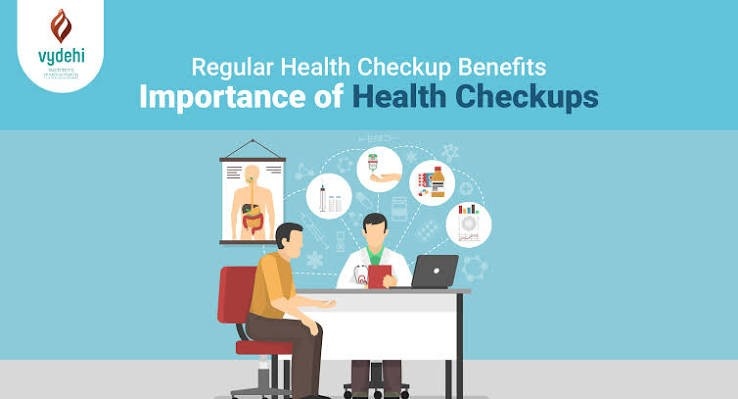

Most people visit a doctor only when they feel sick. This reactive approach to health is one of the biggest reasons chronic diseases go undetected until they become serious. Regular health checkups flip this pattern — they catch problems early, often before any symptoms appear, when treatment is simplest, cheapest, and most effective.
According to the World Health Organization, noncommunicable diseases (NCDs) such as heart disease, diabetes, cancer, and chronic respiratory illness caused at least 43 million deaths globally in 2021 — about 75% of all non-pandemic deaths worldwide. In India, the picture is just as urgent: NCDs now account for roughly 63% of all deaths in the country, according to a 2026 WHO report cited by the Ministry of Health and Family Welfare. Yet most of these conditions are preventable or manageable if detected early through routine screening.
This guide explains why regular health checkups matter, what a good checkup should include, how often you need one at different life stages, and how India’s public health data supports the case for preventive care over reactive treatment.
Top 10 Medical NGOs in India (2026): Best Healthcare & Free Medical Aid Organizations

What Is a Regular Health Checkup?
A regular health checkup is a scheduled medical examination — usually done annually or biannually — even when a person feels completely healthy. It typically includes:
- Blood pressure and pulse measurement
- Blood sugar and lipid profile tests
- Body Mass Index (BMI) and waist circumference
- Complete blood count and organ function tests (liver, kidney)
- Cancer screenings appropriate to age and gender
- Eye, dental, and hearing checks
- A general physical examination and health risk discussion with a doctor
Unlike a hospital visit triggered by symptoms, a checkup is proactive. Its entire purpose is to catch silent, symptom-free conditions like hypertension or prediabetes before they progress into heart attacks, strokes, or organ failure.
Why Regular Health Checkups Matter: The Data

1. Chronic Diseases Are Rising Fast — and Often Silently
India’s largest-ever diabetes and metabolic disease survey, the ICMR-INDIAB study (covering all 31 states and union territories), found the following weighted national prevalence among adults:
| Condition | National Prevalence | Estimated Affected Population |
|---|---|---|
| Diabetes | 11.4% | Over 10 crore (101 million) adults |
| Prediabetes | 15.3% | ~15.7 crore adults |
| Hypertension | 35.5% | Over 31.5 crore (315 million) adults |
| Generalised obesity | 28.6% | ~29.8 crore adults |
| Abdominal obesity | 39.5% | ~40 crore adults |
| Dyslipidaemia (abnormal cholesterol) | 81.2% | Majority of adults tested |
Source: ICMR-INDIAB National Cross-Sectional Study, Indian Council of Medical Research
The alarming part is not just the numbers — it’s awareness. Government-cited data shows that among people with hypertension, only about a third are even aware they have it, and control rates (people whose blood pressure is actually managed) remain in the low double digits. Diabetes shows a similar gap: national surveys report that only around a quarter of people with diabetes are aware of their condition, and fewer still have it under control. Without a checkup, most people simply do not know they are at risk until a major event — a heart attack, stroke, or kidney complication — forces the diagnosis.
2. School infrastructure has not caught up
Nowhere is the value of screening clearer than in cancer outcomes. Health data consistently shows that when cancer is caught early (localized, before it spreads), five-year survival rates exceed 90%, and for some cancers like early-stage breast cancer, they exceed 99%. Once a cancer reaches an advanced or metastatic stage, survival rates can fall below 30%. Women who undergo regular cancer screening have meaningfully lower cancer death rates than those who do not, simply because problems are found while still treatable.
This same principle — early detection changes outcomes — applies across nearly every major chronic disease: cardiovascular disease, diabetes, kidney disease, and chronic respiratory illness all respond far better to treatment when identified at an early or asymptomatic stage.
3. India's Health System Is Actively Promoting Preventive Screening
Recognising this gap, the Government of India has scaled up preventive care infrastructure through Ayushman Arogya Mandirs (formerly Ayushman Bharat Health and Wellness Centres), which focus on screening, early diagnosis, and community-level wellness promotion for NCDs including diabetes and hypertension. Between 2015–16 and recent years, tens of millions of people have been screened through designated NCD clinics under the National Programme for Prevention and Control of Non-Communicable Diseases (NP-NCD). The national target, aligned with WHO’s “25 by 25” goal, aims to reduce premature NCD mortality by 25% — a target that depends heavily on early screening at the population level.
4. The Economic Case for Prevention
Treating a disease after it becomes severe is far more expensive — for individuals and for health systems — than preventing or catching it early. Hospitalization for a heart attack, stroke, or advanced cancer involves surgery, prolonged care, and lost income, while a routine checkup costs a fraction of that and can eliminate the need for emergency treatment altogether. This is one reason global health bodies, including WHO and the World Bank, treat NCD screening infrastructure as a cost-effective investment rather than an expense.
5. Learning outcomes remain a global concern even as digital access grows
UNICEF’s 2025–2030 Digital Education Strategy notes that 600 million children are not achieving minimum proficiency levels in reading and mathematics, even though two-thirds of them are in school. This underlines that digital tools alone do not fix learning gaps — they need to be paired with genuine literacy, both academic and digital.
Recommended Checkup Frequency by Age Group
| Age Group | Recommended Frequency | Key Focus Areas |
|---|---|---|
| 18–30 years | Once every 2–3 years | BP, BMI, blood sugar, mental health, vaccination status |
| 31–40 years | Annually | Lipid profile, diabetes screening, thyroid, eye exam |
| 41–50 years | Annually | Cardiac screening, cancer screening (breast/cervical/prostate), bone health |
| 51–60 years | Every 6–12 months | Full cardiac workup, colonoscopy, diabetes/kidney panel, bone density |
| 60+ years | Every 6 months | Comprehensive geriatric screening, cognitive assessment, fall-risk evaluation |
Common Conditions Detected Through Routine Screening
| Condition | Screening Test | Why Early Detection Matters |
|---|---|---|
| Hypertension | Blood pressure measurement | Often symptomless; leading cause of stroke and heart disease |
| Type 2 Diabetes | Fasting blood glucose / HbA1c | Prevents nerve, kidney, and eye damage if caught early |
| High Cholesterol | Lipid profile | Reduces risk of heart attack and stroke |
| Breast Cancer | Mammography / clinical exam | 5-year survival exceeds 90–99% at early stage |
| Cervical Cancer | Pap smear / HPV test | Highly preventable with early screening |
| Colorectal Cancer | Colonoscopy / stool test | Detects precancerous polyps before they turn malignant |
| Chronic Kidney Disease | Creatinine, urine albumin | Slows or halts progression to kidney failure |
| Thyroid Disorders | TSH blood test | Prevents metabolic and cardiac complications |
| Osteoporosis | Bone density scan (DEXA) | Reduces fracture risk in older adults |
Myths vs. Facts About Health Checkups
| Myth | Fact |
|---|---|
| “I feel fine, so I don’t need a checkup.” | Conditions like hypertension, diabetes, and early cancer often show no symptoms until advanced stages. |
| “Checkups are only for older people.” | Metabolic conditions are increasingly diagnosed in people under 40 due to lifestyle changes. |
| “Health checkups are too expensive.” | Preventive screening costs far less than treating advanced disease, hospitalization, or emergency care. |
| “One checkup years ago means I’m covered.” | Health status changes yearly; risk factors like blood pressure and sugar levels must be tracked over time. |
| “Family history doesn’t matter if I’m healthy now.” | Family history significantly raises risk for conditions like diabetes, heart disease, and certain cancers, making earlier and more frequent screening essential. |
Practical Tips for Getting the Most Out of Your Checkup
- Keep a running health record. Track past results (BP, sugar, cholesterol) so trends — not just single numbers — guide your doctor’s advice.
- Disclose your full family history. Many risk calculations for diabetes, heart disease, and cancer depend heavily on hereditary factors.
- Don’t skip the “silent” tests. Blood pressure and blood sugar tests take minutes but catch the two biggest silent killers.
- Choose age- and gender-appropriate screenings. A 25-year-old and a 55-year-old need very different test panels — a generic package isn’t always enough.
- Follow up on abnormal results. A checkup only works if borderline findings are re-tested and acted upon, not filed away.
- Combine physical and mental health screening. Stress, sleep, and mood significantly affect chronic disease risk and are increasingly included in comprehensive checkups.
- Use community and government screening camps. Ayushman Arogya Mandirs and NCD screening camps offer free or subsidized testing, especially useful for lower-income households.
Illustrative Example: How Early Screening Changes Outcomes
Consider two hypothetical individuals in their mid-40s with similar lifestyles:
- Person A skips checkups for a decade. A heart attack at 46 reveals severe, long-standing hypertension and high cholesterol that had gone undetected. Recovery involves major surgery, months of rehabilitation, and permanent lifestyle restrictions.
- Person B gets an annual checkup. At 42, elevated blood pressure and borderline cholesterol are flagged. With medication, diet changes, and regular monitoring, Person B avoids a cardiac event entirely and continues an active life.
The biological risk factors were similar — the difference was detection timing, which is exactly what regular checkups are designed to provide.
Frequently Asked Questions (FAQs)
Q1. How often should a healthy adult get a full body checkup?
For most healthy adults aged 30–50, an annual checkup is recommended. Younger adults with no risk factors may space checkups every 2–3 years, while those above 50 or with existing conditions should test every 6–12 months.
Q2. What tests are considered essential in every checkup?
At minimum: blood pressure, blood sugar (fasting or HbA1c), lipid profile, BMI/waist circumference, and a general physical exam. These four cover the leading causes of preventable death: hypertension, diabetes, and cardiovascular disease.
Q3. Are health checkups necessary for young, healthy people?
Yes. National data shows metabolic conditions like prediabetes and hypertension increasingly appear in people under 40. Establishing a baseline early also makes it easier to track changes over time.
Q4. Can regular checkups really prevent cancer?
Checkups don’t prevent cancer itself, but screening tests (mammography, Pap smear, colonoscopy) detect cancer or precancerous changes early, when treatment success rates are highest — often above 90%.
Q5. Are free government health checkup programs reliable?
Yes. Programs run through Ayushman Arogya Mandirs and the National Programme for Prevention and Control of Non-Communicable Diseases are backed by the Ministry of Health and Family Welfare and are designed specifically for early NCD detection at the community level.
Q6. What should I do if my checkup shows abnormal results?
Don’t panic, but don’t ignore it either. Schedule a follow-up consultation, get confirmatory tests if advised, and start any recommended lifestyle changes or treatment promptly. Early-stage abnormalities are usually the most manageable.
Conclusion
The importance of regular health checkups cannot be overstated. Preventive healthcare helps detect silent conditions such as heart disease, diabetes, hypertension, and certain cancers before they become serious. Early disease detection not only improves treatment success but also reduces long-term healthcare costs and helps people maintain a healthier, more active lifestyle.
Making regular health checkups a part of your routine allows doctors to identify potential health risks early and recommend timely treatment or lifestyle changes. Whether you are a young adult, a working professional, or a senior citizen, routine health screenings provide valuable insights into your overall well-being and help prevent complications before symptoms appear.
Instead of waiting until illness develops, take a proactive approach to your health. Schedule regular health checkups, follow your doctor’s recommendations, maintain healthy lifestyle habits, and stay informed through trusted healthcare sources. Investing in preventive healthcare today is one of the smartest decisions you can make for yourself and your family, ensuring better health, greater peace of mind, and a healthier future.